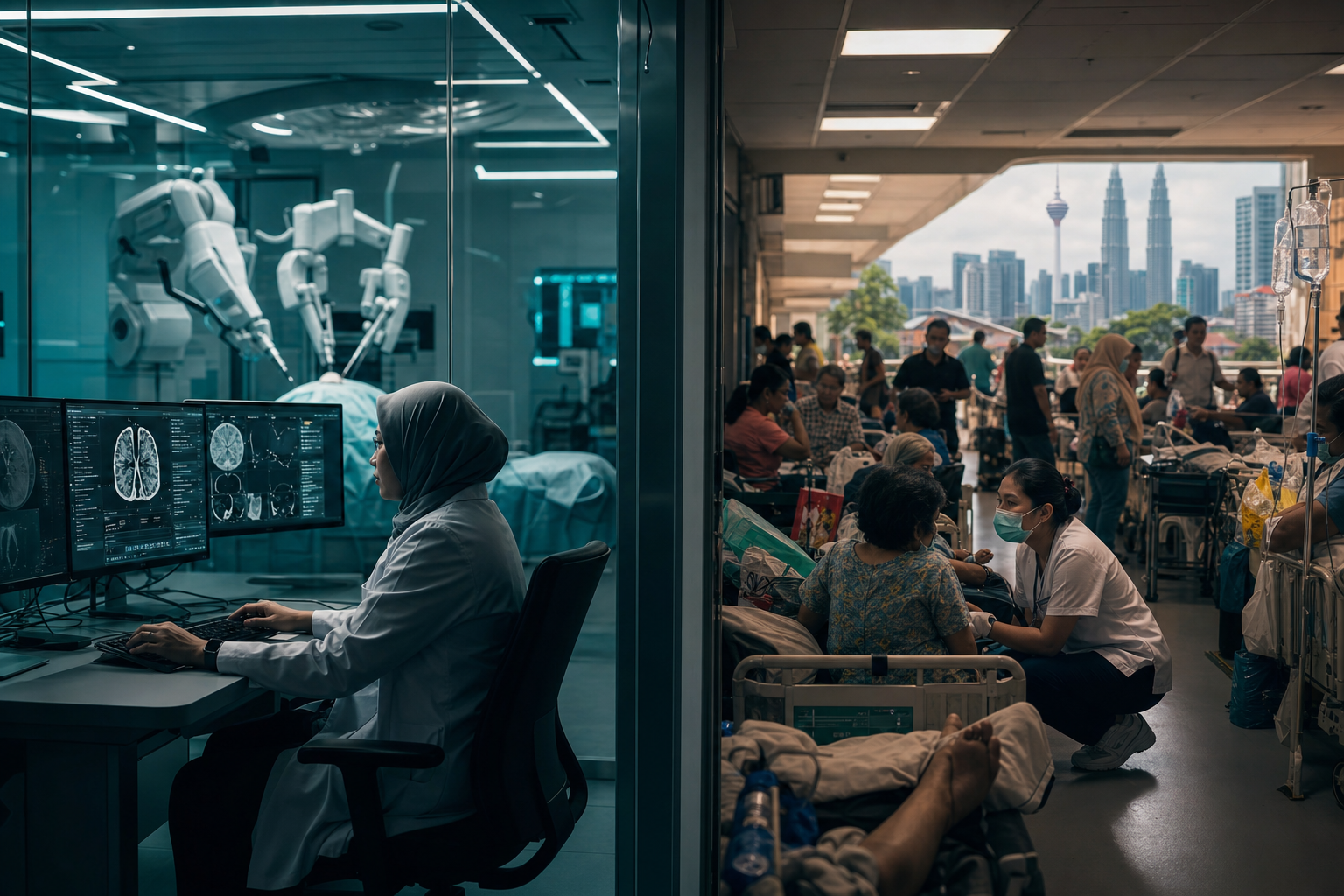
Malaysia's health industry is generating its most exciting headlines in years — AI-powered cancer care, HYROX fitness travel, next-gen weight-loss drugs. But based on Verbrol's analysis of 15+ signals from news, YouTube, and Eventbrite, the real story in June 2026 is a widening paradox: premium wellness has never been louder, while the public health system that most Malaysians actually depend on is quietly bleeding out.
Malaysia's Health Industry Is Having Two Very Different Years at Once
Let me tell you what the headlines want you to believe: Malaysia is having a wellness renaissance. AirAsia is flying fitness lovers to HYROX races across Asia Pacific. Pantai Hospital Kuala Lumpur just launched an AI-powered adaptive radiotherapy system that feels ripped straight from a sci-fi drama. Eli Lilly's new weight-loss drug is rivalling bariatric surgery. Even Genting Malaysia is embedding AI robotics into its hospitality ecosystem. On the surface, the Malaysian health and wellness space has never looked more dynamic, more modern, or more investable.
But here is what Verbrol's analysis of 15+ signals from news, YouTube, and Eventbrite over the past 48 hours is telling us: the gap between Malaysia's premium wellness economy and its public health infrastructure is not just wide — it is becoming structurally dangerous. And almost no brand, marketer, or agency in this market is pricing that tension into their strategy.
This is the paradox nobody is naming clearly enough. So let's name it.
The Premium Wellness Boom Is Real — And It Is Accelerating
If you are marketing to Malaysia's upper-middle class right now, the data is genuinely encouraging. The AirAsia x HYROX partnership is one of the clearest signals we have seen this year that purposeful travel — travelling specifically to participate in fitness events — is becoming a mainstream aspiration, not a niche hobby. For brands in sportswear, nutrition, recovery tech, or even travel insurance, this is a category that is growing fast and skewing younger.
Pantai Hospital KL's new AI-powered adaptive radiotherapy system marks a genuine leap for personalised oncology care in the region. This positions Malaysia as a potential medical tourism anchor for Southeast Asia — a narrative that the APHM International Healthcare Conference and Exhibition 2026 in its upcoming edition will almost certainly amplify further. For agencies pitching health-tech clients, this is your moment to tie brand storytelling to medical credibility.
And then there is the social media health content economy, which is running at full speed. "Spermmaxxing," microdosed Accutane, "Hollywood doses" of GLP-1 alternatives — global health anxiety is being monetised at scale, and Malaysian audiences are absolutely consuming this content. Based on Verbrol Pulse trend tracking, lifestyle health content that blends aspiration with anxiety — think "I tried this so you don't have to" formats — consistently outperforms straight educational health content in this market.
For brands working with creators in this space, platforms like Creamatch, Malaysia's managed creator content platform, are increasingly essential for identifying voices that can hold health credibility without veering into misinformation — a fine line that is getting harder to walk as TikTok wellness trends get wilder by the week.
But Underneath the Glow, the System Is Fracturing
Here is where I need you to sit with some discomfort, because this is the part that should be reshaping how every health brand in Malaysia positions itself right now.
A YouTube video flagging that Malaysia is cutting its health budget while nursing graduates are accepting higher-paying jobs abroad earned four engagements — modest in number, but significant in sentiment. When Malaysians share content about healthcare brain drain, it signals a level of public anxiety that brands cannot afford to ignore. CodeBlue has gone further, publishing an analysis arguing that budget cuts sound a death knell for Malaysia's healthcare system — a headline that deserves far more attention than it is currently getting.
Layer that against Malaysia recording the third-highest dengue caseload in ASEAN, a stronger El Niño expected to worsen heat and health risks by year-end, and a Psoriasis Association survey exposing critical insurance gaps for chronic disease patients, and you start to see a system under compound stress. The World Health Organization consistently flags that health system resilience depends on sustained public investment — precisely what Malaysia appears to be pulling back on.
And eight months after Act 852 (Malaysia's anti-smoking and vaping legislation), experts still cannot tell us whether behaviour is actually changing, because the data collection infrastructure simply does not exist. We are regulating in the dark.
What This Means for Brands and Marketers Right Now
Based on Verbrol's cross-signal analysis, here are the three strategic implications for health, wellness, and lifestyle brands operating in Malaysia in June 2026:
1. The "accessible wellness" positioning lane is wide open. Health advocates are literally calling for the government to reward Malaysians who practise healthy lifestyles — think grocery subsidies tied to step counts. Brands that can authentically bridge the gap between premium wellness aspiration and everyday Malaysian affordability will win disproportionate loyalty.
2. Chronic disease is the underserved content brief. Insurance brands, pharmaceutical companies, and digital health platforms are sitting on an enormous content opportunity. The gap between what chronic disease patients need from insurance and what products currently offer is not just a policy problem — it is a trust problem that good content can begin to solve. Creamatch creators who have personal chronic illness journeys are particularly well-positioned to carry these narratives authentically.
3. Environmental health is your Q4 story — start building it now. With El Niño intensifying and dengue caseloads already alarming, brands in hydration, vector control, sun care, and preventive health have a genuine, urgency-driven content runway heading into the second half of 2026. This is not fearmongering — this is responsible seasonal marketing backed by epidemiological data.
The Verbrol Thesis: Wellness Is Becoming a Class Marker
Here is what I believe no other Malaysian publication has stated directly yet: in 2026, wellness in Malaysia is rapidly becoming a class marker, not a lifestyle choice. The people who can afford HYROX travel, AI oncology, and GLP-1-adjacent drugs are thriving in a system that is increasingly designed around them. The majority of Malaysians — dependent on a public health system being hollowed out by budget cuts, facing dengue seasons without adequate infrastructure, and holding insurance products that do not cover their actual conditions — are being left behind.
For brands, this is not just a social responsibility observation. It is a market segmentation reality that demands honest strategic choices. Are you selling to the top 15%? Say so clearly and own it with excellence. Are you genuinely committed to the broader Malaysian health consumer? Then your pricing, your distribution, your creator partnerships, and your content must reflect that — not just your campaign tagline.
Verbrol will keep tracking how this tension plays out across consumer sentiment, creator content, and policy signals. The brands that see it now will be positioned to lead. The ones that don't will find themselves celebrating a wellness renaissance that a majority of their potential customers simply cannot access.
Track Health trends in real-time at verbrol.com
Read more on Verbrol Intelligence: