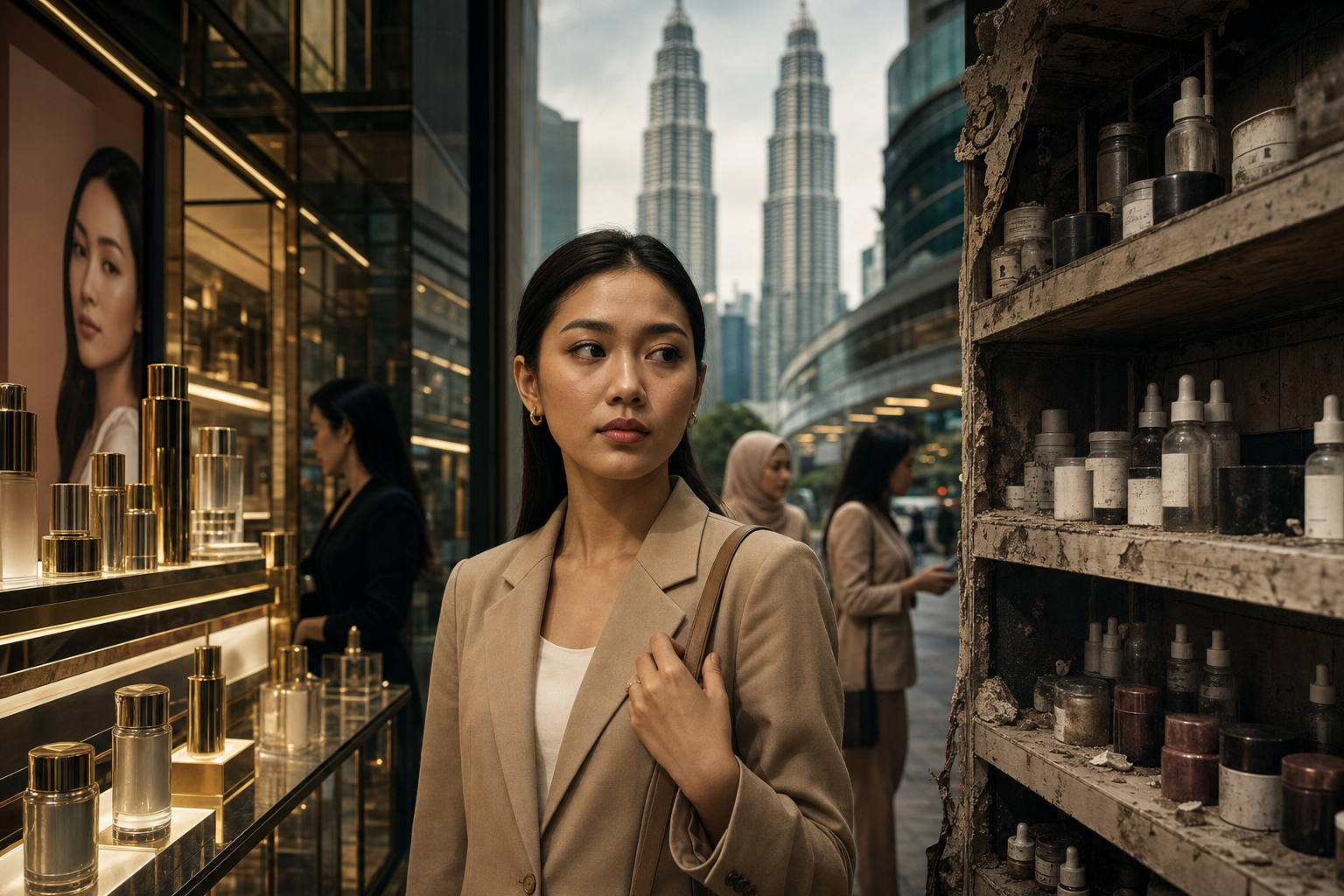
Big luxury names are rolling into Malaysia with pop-ups, and local brands are eyeing Asia-wide expansion — but a poisonous skincare scandal is reminding everyone that trust, once broken, is the hardest thing to rebuild.
Forty women had to band together on social media to raise the alarm before a banned skincare product was finally pulled from shelves. In a market this hungry for beauty, that gap — between regulatory action and actual consumer protection — is where the real story lives.
Malaysia's beauty industry is genuinely thriving right now. Luxury brands are staging immersive pop-ups in KL, K-beauty is finding its second wind with a whole new generation of fans, and homegrown labels are pushing into regional markets. But the past 48 hours of news have handed the industry something it didn't ask for: a sharp, uncomfortable mirror.
The Tati Skincare Incident Is a Wake-Up Call, Not a One-Off
The Health Ministry's ban on Tati Skincare products — found to contain poisonous substances — made headlines on NST Online this week. What made it more unsettling wasn't the ban itself, but the fact that 40 women had to publicly raise the alarm about the product still circulating on shelves after the ban was announced. That's not a supply chain hiccup. That's a systemic gap between policy and execution that beauty consumers in Malaysia are now acutely aware of.
For brand managers and marketers, this moment deserves more than a quiet scroll past. Malaysian shoppers — especially the under-35 skincare obsessives who are the engine of this market — are increasingly cross-referencing ingredients, checking Bernama health announcements, and comparing notes in WhatsApp groups faster than any press release can travel. Brands that think safety communication is someone else's job are going to find themselves on the wrong side of a very loud conversation.
Sendayu Tinggi and Safi have spent years building trust with Malaysian consumers through halal certification and transparent ingredient positioning. That equity is precisely why they've weathered market turbulence before. Newer entrants — local or imported — don't have that cushion.
K-Beauty and Luxury Aren't Slowing Down — They're Getting Louder
While the safety news dominated feeds, two other signals were quietly reshaping how premium beauty communicates in Malaysia. Korean beauty innovation is meeting growing local industry demand, with local stockists and beauty retailers actively seeking partnerships with Seoul-based innovators. Meanwhile, Dior's Summer Riviera pop-up in Malaysia turned Prestige coverage into social fuel — the kind of experiential marketing that Sephora Malaysia has mastered but luxury houses are now doing with even more deliberate cultural storytelling.
This isn't just aesthetic flex. These pop-ups and brand moments are trust-building exercises dressed in beautiful packaging. They say: we're here, we're invested in Malaysia, and we're not going anywhere. In a climate where consumer confidence in beauty products has taken a hit, that physical, tangible presence matters more than any banner ad.
Purito Seoul's decision to bring Natalia Dyer on as a K-beauty ambassador, covered by Utusan Malaysia, signals something broader: K-beauty brands are no longer relying purely on Korean pop culture proximity. They're building narratives that feel aspirational but approachable — which is exactly what Malaysian consumers respond to.
TikTok Shop Is the Distribution Layer Everyone's Racing to Own
YSL Beauty didn't just launch a TikTok Shop in Malaysia. They launched it with a Bukit Bintang kopitiam takeover — blending luxury fragrance launches with Malaysia's most beloved neighbourhood setting. That's not a marketing accident. That's a calculated move that says: we know who you are, and we're meeting you where you actually live.
For beauty brands still treating TikTok Shop as a nice-to-have, that campaign is a flashing signal. The platform has quietly become a primary discovery-to-purchase channel for beauty in Southeast Asia, and brands that control their TikTok Shop presence are controlling an increasingly significant slice of the conversion funnel. Guardian Malaysia and Watsons Malaysia have both been expanding their digital commerce integrations, but the luxury tier is now moving decisively into the same space — which means mid-market and indie brands are about to feel the squeeze from both ends.
For teams thinking about creator-led commerce, platforms like Creamatch — which manages creator content partnerships for Malaysian and regional brands — are becoming essential infrastructure, not optional add-ons. The days of one-off influencer posts are giving way to sustained, managed creator relationships that drive actual basket conversions.
What Local Brands Should Do Differently Right Now
Bartech Beautee's reported push into Asian markets is the kind of local-to-regional story that deserves more attention than it gets. Malaysian beauty brands have real equity in the halal-certified, skin-inclusive, tropical-climate-tested space — advantages that don't translate easily from Korean or European competitors. Velvet Vanity and SimplySiti have carved strong niches through community loyalty and authentic storytelling.
But the Tati Skincare episode is a reminder that the beauty market's low barriers to entry cut both ways. Here's what the data from Verbrol Pulse consistently shows in moments like this: consumer sentiment can shift in hours, and recovery takes months. The brands that win aren't necessarily the most innovative — they're the ones with the clearest safety communication, the most responsive customer channels, and the deepest reservoir of earned trust.
Three things worth acting on right now:
- Audit your claims. If your formulation or ingredient sourcing can't withstand a Reddit thread or a TikTok duet, fix it before someone else points it out.
- Own your TikTok Shop presence. Discovery and purchase are converging on one platform. Waiting is no longer a neutral position.
- Invest in creator relationships, not just campaigns. One-time KOL posts don't build the kind of trust that survives a news cycle. Managed, ongoing creator partnerships do — and Creamatch is built exactly for that kind of sustained approach.
The Market Is Big Enough — The Question Is Who It Trusts
Malaysia's beauty industry will keep growing. The appetite is real, the purchasing power is there, and the cultural investment in looking and feeling good runs deep across every demographic. What's shifting isn't the size of the opportunity — it's the sophistication of the consumer deciding who gets a place in her bathroom cabinet.
The brands that read this moment correctly — taking safety transparency seriously, showing up physically and digitally with intention, and building creator ecosystems that feel authentic rather than transactional — are the ones who'll still be here in five years. The rest will be a cautionary footnote.
For ongoing market intelligence on Malaysia's beauty sector and what's moving Southeast Asian consumers right now, explore what Verbrol tracks across social, news, and commerce signals.
Track Beauty trends in real-time at verbrol.com
Read more on Verbrol Intelligence: