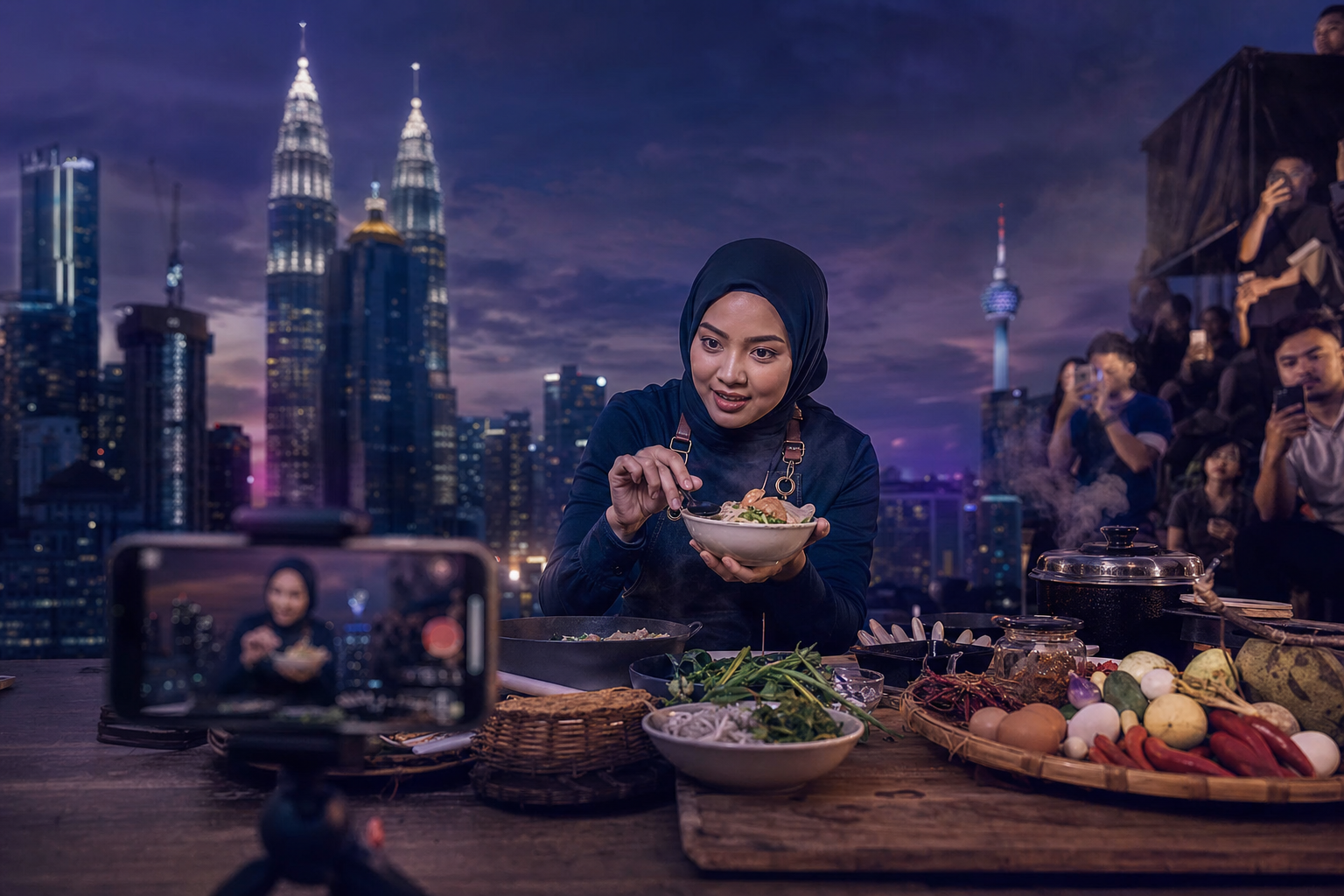
Big moves, bigger money — and a Malaysian food creator who just rewrote the rules of livestream commerce while global giants reshuffle the streaming deck.
Khairul Aming sold RM2.3 million worth of product in a single TikTok livestream. One session. One creator. One afternoon.
That number — a new Malaysia TikTok Shop record — tells you more about where the local entertainment and creator economy is heading than any boardroom strategy deck. It happened the same week Fox Corp announced a $22 billion acquisition of Roku, reshaping global streaming infrastructure from the top down. Meanwhile, on the ground in Malaysia, TikTok's parent company ByteDance quietly laid off 500 local content moderators as it pivoted to AI-driven moderation. Same platform, very different stories depending on which end of it you're sitting on.
This is your weekly read on what actually moved in Malaysian entertainment — and what it means for the brands, marketers, and media professionals working in this space.
Khairul Aming and the New Anatomy of a Malaysian Blockbuster
Forget the cinema opening weekend. The new benchmark for Malaysian entertainment commerce is a livestream.
Khairul Aming's RM2.3 million record on TikTok Shop Malaysia didn't happen by accident. It's the culmination of years of community-building, authentic storytelling, and a fanbase that trusts him enough to buy in real time. But it also signals something structural: TikTok Shop has become a genuine entertainment channel, not just a retail platform. The line between content and commerce has essentially dissolved.
This sits inside a much larger picture. TikTok's RM20 billion economic impact on Malaysia's economy is no longer a talking point — it's a policy-level reality. The platform now supports over 100,000 jobs in Malaysia, ranging from creators and logistics workers to small food-and-beverage entrepreneurs riding the live commerce wave.
For brand managers watching from the sidelines: if you haven't mapped your entertainment strategy around live-format content, Khairul Aming's Wednesday just became your Tuesday wake-up call.
What brands should take from this: Creator-led live commerce in Malaysia isn't a niche tactic — it's a proven revenue channel. Platforms like Creamatch exist precisely for this moment, connecting Malaysian brands with the right creators for managed content campaigns that go beyond a one-off post and actually build the kind of audience trust that converts at RM2.3 million a session.
The Fox-Roku Deal and What It Means for Malaysian Streaming Appetite
Fox Corp's $22 billion acquisition of Roku is the kind of deal that reshapes the global connected TV landscape — and its ripple effects will absolutely reach Malaysia.
The logic of the deal is simple: Fox gets Roku's 90-million-plus connected TV accounts and its advertising infrastructure; Roku gets Fox's content library, Tubi's free ad-supported streaming catalogue, and the editorial muscle of a major media company. Wall Street has questions about the valuation, but strategically, the play is clear — own the living room, own the eyeball.
Now map that onto Malaysia. Astro still commands significant household penetration, particularly in East Malaysia and semi-urban markets. Tonton, Media Prima's streaming arm, has been building its Malay-language content library steadily. But the connected TV battlefield is heating up globally, and Malaysian consumers — especially urban millennials — are already deep into multi-platform streaming habits that include Netflix, YouTube, and yes, TikTok on smart TVs.
The Fox-Roku merger raises a real question for local players: as global giants bundle content and distribution into single verticals, how do homegrown platforms differentiate? According to Bernama, Malaysian regulators have been watching the digital content space closely, and the MCMC's recent statutory demand served on TikTok over offensive posts involving royalty is a reminder that platform governance is very much a live issue here — not just in London or Washington.
For GSC and TGV Cinemas, the cinema-versus-streaming tension doesn't disappear with this deal, but it does intensify. The question isn't whether Malaysians will keep going to the movies — they will — but whether premium theatrical experiences can compete for wallet share against increasingly sophisticated home viewing setups.
Malaysian Content Is Earning Its Stripes — Literally
While platforms battle for distribution dominance, Malaysian-made content is quietly building credibility on its own terms.
Local film Chelot earned Malaysia Book of Records recognition for a five-minute continuous action sequence — a technical achievement that puts Malaysian filmmaking craftsmanship on the regional map. It's a small story in the feed, but a meaningful one: Malaysian productions are no longer just playing to local sentiment. They're competing on execution.
On the tourism front, Genting Dream's entertainment programmes are being cited as a driver of Malaysia's cruise tourism growth — a reminder that entertainment is as much an economic infrastructure play as it is a cultural one. When international visitors choose Port Klang over Singapore or Hong Kong as a cruise anchor point, entertainment programming is part of that decision matrix.
Meanwhile, enforcement is also tightening — Taiping entertainment outlets were raided this week for copyright breaches, signalling that authorities are serious about protecting content IP as the industry matures. For brand managers and content producers, this is also your reminder: rights management isn't optional in 2026.
The Layoffs, the Regulations, and the Long Game
There's a harder story inside this week's entertainment headlines. ByteDance's decision to lay off 500 Malaysian content moderators — replacing them with AI systems — is a significant labour market signal. These weren't peripheral roles. Content moderation at scale is what keeps platforms operating within local regulatory frameworks, and the move raises legitimate questions about whether AI systems can adequately parse Malaysian cultural and linguistic context, from Bahasa Malaysia nuances to the specific sensitivities around royalty, religion, and race.
The UK's move to ban social media for under-16s — announced this week by Prime Minister Keir Starmer — won't automatically land in Malaysian law, but it feeds a global conversation that MCMC and Malaysian policymakers are already tracking. According to Free Malaysia Today, platform governance is increasingly a shared concern across ASEAN regulators.
For Malaysian entertainment brands and marketers, the takeaway is this: the platforms you're building on are in flux — regulatory, structural, and technological. Diversification isn't just smart strategy. It's risk management.
What This Week Actually Tells You
Pull back and look at the full picture of this week in Malaysian entertainment:
- A local creator broke a commerce record that most retail brands can only dream about
- A $22 billion global deal reshuffled connected TV infrastructure
- A Malaysian film earned technical recognition on the international stage
- A major platform replaced 500 Malaysian jobs with AI
- Regulators served a statutory demand on TikTok, and enforcement raids hit physical venues
This isn't a slow news week. It's a week that shows an industry mid-transformation — platforms scaling up and cutting costs simultaneously, local talent punching above its weight, and regulators catching up to a reality that moved faster than the rulebook.
For marketers and brand managers: your entertainment strategy in Malaysia needs to account for all of these layers at once. The creator economy is real and trackable. Use tools like Verbrol Pulse to monitor which content formats and creators are gaining traction in real time, and work with managed platforms like Creamatch to activate the right voices for your brand before the next record gets broken.
The week in Malaysian entertainment doesn't wait for the Monday morning debrief. It moves on a Wednesday afternoon livestream.
Track Entertainment trends in real-time at verbrol.com
Read more on Verbrol Intelligence: