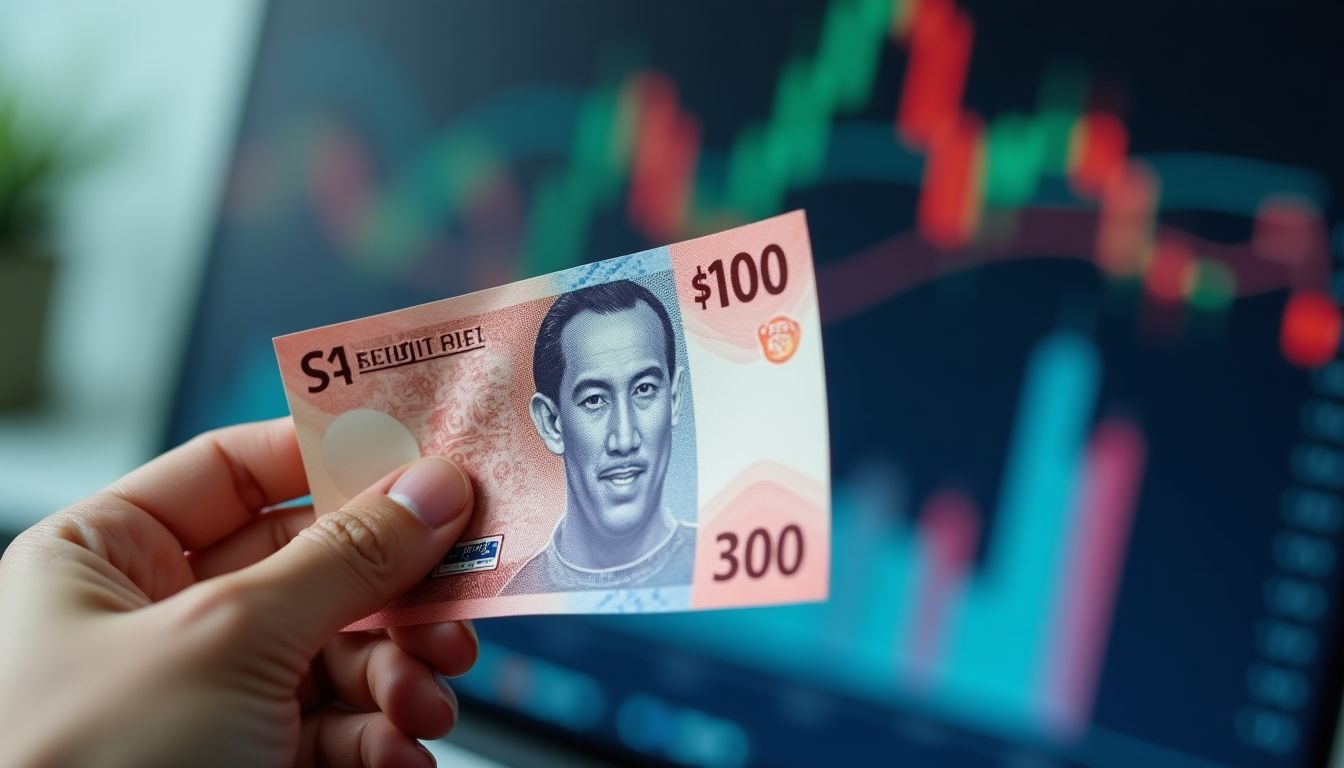
Malaysia is running two financial playbooks at once — chasing geopolitical ambition with ruble-ringgit deals while quietly building domestic capital depth through IPO pipelines and green financing. Big money is moving in — but are brands and investors reading the right signals?
The Week That Revealed Two Malaysias
I was in a kopitiam in Bangsar last Thursday morning, half-listening to a table of suits debate Bank Negara's rate decision over teh tarik, when my phone lit up with a Bloomberg alert: Anwar Ibrahim and Vladimir Putin discussing ruble-ringgit trade settlements. Two minutes later, another notification — SUM Technology just opened 59% above its IPO price on Bursa Malaysia's ACE Market.
Two signals. Two entirely different financial Malaysias. Both happening simultaneously, on the same morning.
That is the most honest way I can describe the state of Malaysia's finance sector right now: it is not in transition, it is in parallel operation. Geopolitical ambition on one track. Domestic capital deepening on the other. And the brands, investors, and marketers who will win the next 18 months are the ones who understand how to read — and position across — both.
The Ruble-Ringgit Signal Is Bigger Than It Looks
The Malaysia-Russia bilateral currency discussion is easy to dismiss as diplomatic theatre. Do not make that mistake.
When a Prime Minister sits across from a sanctioned-economy leader and floats the idea of removing USD dependency from trade settlements, he is not just sending a message to Moscow. He is sending one to Beijing, Riyadh, and Jakarta. Malaysia is actively positioning the ringgit as a viable instrument for South-South trade — an ambition that Bank Negara Malaysia has been architecting quietly through its Local Currency Settlement Framework for years.
For financial brands, the practical implication is this: foreign exchange products, hedging instruments, and cross-border payment infrastructure are entering a period of genuine strategic relevance — not just for multinationals, but for Malaysian SMEs who have historically priced everything in dollars by default. CIMB, which already operates across ASEAN with meaningful regional treasury infrastructure, is arguably best-placed among local banks to capture this shift. Maybank's regional footprint tells a similar story.
The rate environment adds another layer. Juwai IQI's CEO publicly indicated Bank Negara is likely to hold its Overnight Policy Rate this Thursday — but flagged the possibility of a hike later in the year. A hike cycle, even a modest one, reprices risk across the entire lending stack. Brands in property, auto financing, and consumer credit need scenario plans, not just forecasts. CIMB's new first-car financing programme for young buyers — launched specifically targeting first-time buyers under 35 — reads like an institution pre-positioning before rates move. Smart timing, or intentional sequencing? Probably both.
The ACE Market Is Doing Something Quietly Important
While macro headlines dominate the conversation, the real story of Malaysian capital markets right now is playing out on the ACE Market.
Bus Cap's IPO was oversubscribed 72 times. SUM Technology opened at a 59% premium on its first trading day. These are not statistical anomalies — this is retail and institutional capital converging on a segment of the market that was, not long ago, treated as speculative backwater.
The ACE Market is becoming a genuine proving ground for Malaysian tech and infrastructure companies. The MRCB unit's RM2.1 billion AI-ready data centre collaboration in Bukit Jalil — backed by the kind of financing ticket that signals institutional conviction — is the infrastructure layer that makes these listings credible over a five-year horizon. Aizo's RM346 million Islamic financing facility for the Kampar solar project is another data point in the same direction: Islamic green financing is no longer a niche — it is becoming the preferred structure for large-scale infrastructure in Malaysia.
For marketers tracking brand sentiment in financial services, this IPO momentum matters. Retail investor participation is rising. Platforms like Touch 'n Go eWallet and Versa — which have built investment access products alongside payment wallets — are going to see increased engagement from a population that is, measurably, more financially active than it was three years ago. StashAway Malaysia and BigPay are operating in a market where the average user's appetite for financial products is expanding. That is a content and education opportunity, not just a product one.
The Trust Deficit That No Rate Decision Can Fix
Here is the tension that does not resolve neatly: at the same time that capital markets are heating up and bilateral currency ambitions are expanding, Asia's financial system is absorbing a multi-billion-dollar fraud crisis that is directly eroding retail trust.
Singapore's flagging of Bybit on its Investor Alert List is a regional signal, not just a Singaporean one. When a major exchange gets flagged two markets over, Malaysian retail investors read that. And fintech platforms across Asia are grappling with whether trust can be rebuilt fast enough to sustain growth.
This trust gap is where brand strategy becomes financial strategy. Institutions like Public Bank and Hong Leong Bank — which have built reputations over decades on conservative, stable positioning — actually have a structural advantage in this environment. Their relative quietness on crypto and high-yield products is, right now, a brand asset.
For fintechs, the calculus is harder. Transparency in fee structures, clear fraud protection communication, and visible regulatory compliance are not just compliance checkboxes — they are the primary conversion lever for new user acquisition in 2026. Brands in financial services that want to build genuine authority in this climate should also consider what sustainable finance integration means for their own portfolio exposure — the World Bank's practical guidance for Malaysia's financial sector on nature-related risk is more operationally relevant than most brand teams currently treat it.
Financial services content marketing is also maturing. Brands that use creator-led education content to demystify products — rather than relying purely on performance ad spend — are seeing stronger retention. For teams building that kind of content pipeline, Creamatch, Malaysia's managed creator content platform, is worth examining as a distribution layer for reaching younger investor segments authentically.
What the Parallel Playbooks Demand From You
Malaysia's finance sector in mid-2026 is not waiting for a single defining trend to emerge. It is running on multiple tracks simultaneously — and the strategic error most brands and analysts make is trying to collapse that complexity into one clean narrative.
The actionable read looks like this:
- If you operate in FX, trade finance, or cross-border payments — the ringgit internationalisation agenda is accelerating. Build product and content around it now, before it becomes crowded.
- If you are a retail-facing financial brand — the ACE Market IPO cycle is generating a new cohort of engaged retail investors. They need education content, not just product pages.
- If you are in fintech — trust is your primary growth constraint, not product features. Invest in compliance communication as a brand function, not a legal one.
- If you are tracking all of the above — Verbrol Pulse monitors real-time sentiment and signal volume across Malaysia's financial sector, including social, news, and app store data, which is where early trust signals often surface first.
Two Malaysias are running in parallel. The finance brands that will lead are the ones building strategy for both — not waiting to see which one wins.
Track Finance trends in real-time at verbrol.com
Read more on Verbrol Intelligence: