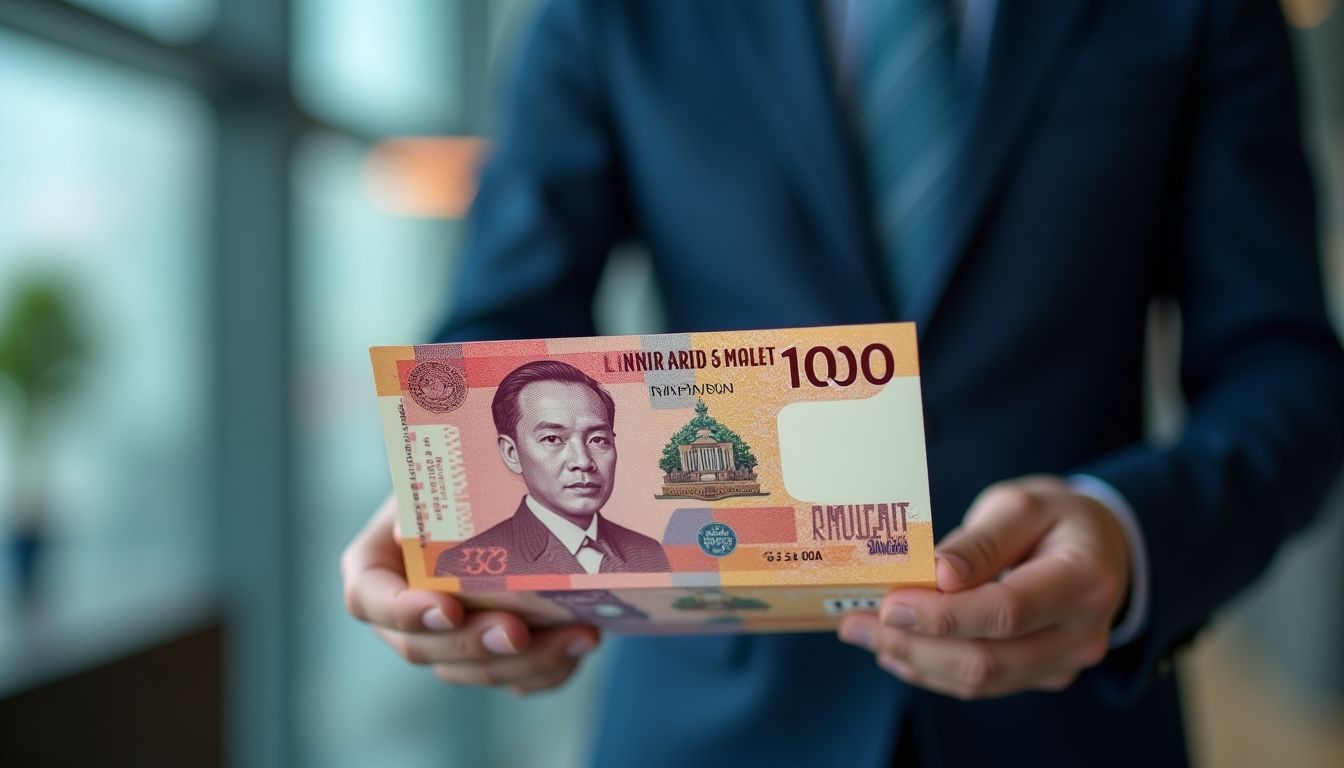
Big money is flooding Malaysia's capital markets — but with RM3bil floats, a contested market revitalisation programme, and trade topping RM3.1 trillion, the real question is whether the infrastructure behind the hype can keep up.
Malaysians have a particular relationship with the stock market. They check Bursa like they check the weather — habitually, sometimes anxiously, occasionally with genuine surprise. In kopitiams from Chow Kit to Penang, the conversation around 'market' still carries a certain weight, equal parts aspiration and caution. That instinct hasn't gone away. In mid-2026, it's being tested harder than it has been in years.
The IPO Pipeline Is the Story of the Year
Let's start with what's actually happening on the ground. Sunway Healthcare's listing became the biggest Malaysia IPO in nine years — Bloomberg's headline, not mine. The stock soared on debut. Within the same news cycle, Malaysia's largest pharmacy chain Big Caring is being reported to seek RM3 billion in a forthcoming IPO. And at the smaller end, RNG Tech is eyeing an ACE Market listing priced at RM0.13, eyeing a July 7 debut.
Three floats. Three different market tiers. Three different risk profiles. What they share is timing: they're all arriving in a window where tech and financial stocks are leading a Bursa Malaysia rally, and where Malaysia's total trade hit RM3.1 trillion in 2025, with Penang leading export numbers according to the Department of Statistics. That's macroeconomic wind in the sails. The question is whether the sails are rigged properly.
Bursa Malaysia data shows the exchange has been running a steadily expanding listing pipeline into 2026. The ACE Market in particular has absorbed a wave of smaller technology and services companies. RNG Tech's RM0.13 IPO price is modest by any measure — but it signals that appetite exists even at the retail end of the market, where Malaysian individual investors have always punched above their weight in participation rates.
MY Value Up: The Programme That Has to Earn Its Keep
Parallel to the listings boom sits a structural question. Malaysia's 'MY Value Up' programme — modelled loosely on South Korea's corporate governance push — is designed to close the persistent gap between the book value of Malaysian-listed companies and their market prices. The discount has been a long-running frustration for institutional investors, and the programme's logic is sound: pressure companies to improve returns on equity, buy back shares, and close the valuation gap.
But as one analysis on KLSE Screener notes, the programme must pass institutional investors' scrutiny to be anything more than window dressing. That's not cynicism — it's the correct threshold. Institutional capital is sticky when it trusts governance. It leaves fast when it doesn't. Indonesia is a live case study right now: Bloomberg's reporting on unpredictable state intervention under President Prabowo is already turning one of the region's former emerging-market darlings into a laggard. Malaysian policymakers would be foolish not to watch that closely.
The banks understand this calculus well. Maybank, CIMB, and Public Bank have all been beneficiaries of a relatively stable monetary environment — Bank Negara Malaysia has held its overnight policy rate steady, maintaining what Malaysiakini described as a record low, with the Ukraine conflict flagged as a key external risk. Stability at the policy level is load-bearing for the entire IPO pipeline. If BNM holds the line, the listings keep coming.
Digital Finance Is Filling in the Gaps the Banks Left
The conventional banking system in Malaysia is mature, concentrated, and profitable. What it isn't, consistently, is accessible at the margin — to gig workers, to micro-SMEs, to younger Malaysians who are financially active but not financially serviced in the traditional sense.
That's where the second layer of Malaysia's finance story is being written. Touch 'n Go eWallet has embedded itself into daily transaction behaviour across income levels. BigPay has pushed into cross-border remittances with genuine traction among migrant workers and young professionals. Versa and StashAway Malaysia are competing for the savings and wealth management behaviour of Malaysians who aren't walking into bank branches to open unit trust accounts.
Cloud infrastructure is reshaping how these services scale — not just in terms of speed, but in terms of the cost-to-serve for thin-margin, high-volume products like micro-savings or instant insurance. The fintech layer isn't replacing Maybank. It's expanding the overall addressable market by going where Maybank doesn't.
There's a financial literacy angle here too. As more retail investors enter through platforms and apps rather than traditional brokerages, the volume of first-time participants in markets like Bursa goes up — but so does the risk of uninformed participation. The World Bank's research on nature-linked financial risk for Malaysia's financial sector adds another dimension: ESG and climate-related financial risk are increasingly part of what institutional investors are asking about, and Malaysia's banks are being pushed to price those risks into lending and portfolio decisions.
What Brands and Marketers Should Actually Do With This
For anyone working in financial services marketing or brand strategy in Malaysia, the current environment presents a specific set of decisions.
-
IPO moments are brand moments. Sunway Healthcare's listing wasn't just a capital event — it was a visibility event. The media volume around a major IPO creates earned attention that most campaigns can't buy. Financial brands adjacent to the listing — RHB, AmBank, Hong Leong Bank as retail brokerages or IPO agents — need content strategies ready to activate within 24 hours of major listing news.
-
The MY Value Up narrative needs translating. Institutional language around price-to-book ratios doesn't move retail investors. If Malaysian-listed companies want to benefit from the programme, they need communications strategies that make governance improvements legible to the ordinary shareholder. That's a content and creator economy opportunity — and it's underexplored. Platforms like Creamatch, which connects brands with Malaysian creators for managed content, are increasingly relevant for financial brands that need to explain complex products without sounding like a compliance document.
-
Monitor the macro signals continuously. Trade data from DOSM at RM3.1 trillion, stable OPR, and a functioning IPO pipeline are all constructive. But Indonesia's current volatility is a reminder that regional sentiment can shift sharply. Cross-border portfolio flows move based on relative attractiveness, and Malaysia needs to keep its governance story clean.
The Verbrol Pulse has been tracking sustained engagement around Malaysia's capital markets conversation through mid-2026, with IPO-related content consistently generating the highest organic amplification of any finance sub-topic in the market.
The Bottom Line
Malaysia's finance sector is in a structurally constructive phase. The IPO pipeline is the most visible signal, but it rests on a foundation of macro stability, digital financial infrastructure, and a genuine policy push to improve market quality. None of that is guaranteed to last, and none of it is guaranteed to translate into broad wealth creation without better financial communication at every level.
The capital is there. The listings are there. Whether Malaysian investors — retail and institutional alike — are equipped to evaluate what they're buying into is the more important question. That's not a bearish view. It's the honest one.
Track Finance trends in real-time at verbrol.com
Read more on Verbrol Intelligence: