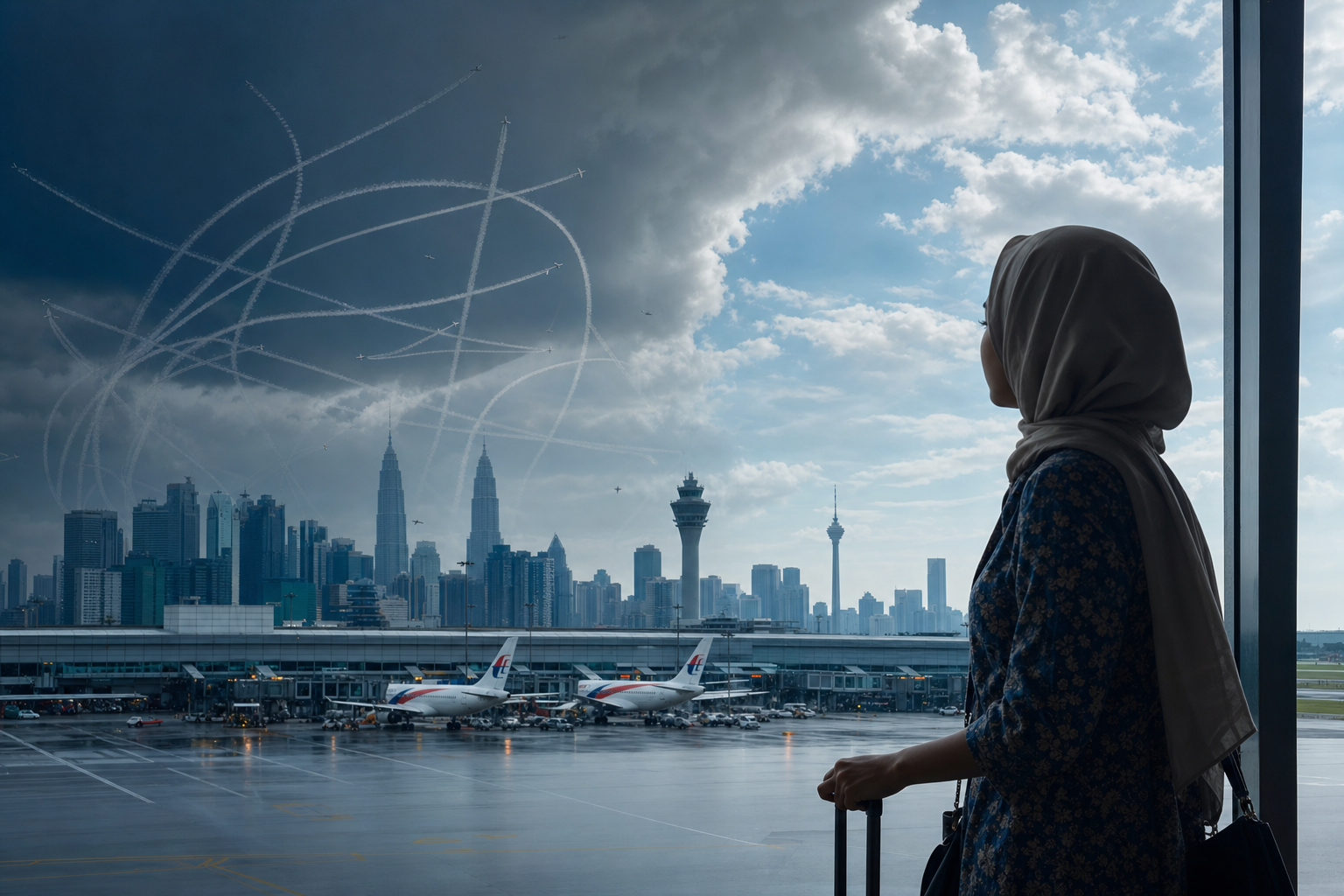
Malaysia's aviation and tourism sector is not simply recovering — it is being architecturally redesigned, with consequences for every brand that touches the travelling consumer.
There is a particular quality to the way Malaysians travel — an almost defiant optimism, the willingness to board a 6 a.m. flight for a long weekend, to pack Penang into forty-eight hours, to believe, sincerely, that the next destination will somehow be more meaningful than the last. That spirit never disappeared during the difficult years. What has changed, dramatically, in the first half of 2026, is the infrastructure gathering itself around that spirit.
The signals are arriving from multiple directions at once, and they are anything but ordinary.
AirAsia's American Ambition — and What It Signals for the Market
The headline that stopped the aviation world in its tracks this week: Capital A International, the parent company behind the AirAsia brand, is preparing to list on the United States stock market via a business combination with Aetherium Acquisition Corp. This is not a routine capital exercise. A US listing reframes AirAsia not as a regional budget carrier but as a globally investable aviation asset — a company that intends to compete for attention alongside the Uniteds and the Delta Airlines of this world.
Simultaneously, AirAsia X launched its Kuala Lumpur–Bahrain–London route, establishing Bahrain as its first European strategic hub — a move that repositions Kuala Lumpur International Airport as a genuine intercontinental junction, not merely an intra-ASEAN waypoint. That the Bahrain departure was subsequently postponed due to regional conflict underscores the volatility that still frames long-haul ambition in 2026, but the strategic intention is unmistakable.
And then there is Tony Fernandes himself — co-founder of AirAsia, reportedly planning to launch an entirely new airline. According to CNA's reporting, Fernandes's re-entry into aviation entrepreneurship would represent one of the more audacious personal bets of the year. Whether or not it materialises, the story alone reminds every player in the Malaysia travel ecosystem that this market rewards those who think structurally, not seasonally.
For brand managers and marketers watching these moves: when the distribution infrastructure of an industry reconfigures itself at this scale, the audiences shift too. Traveller profiles, booking windows, and aspiration sets all move in the upstream current of aviation expansion.
The Nomad Economy Arrives — Malaysia's Window Is Open
Malaysia has joined a compelling regional race. The Philippines became the latest Southeast Asian nation to announce digital nomad hubs and extended-stay visas, joining Thailand, Vietnam, Indonesia, Singapore, and Malaysia in a coordinated — if competitive — effort to capture the remote workforce boom. These are not niche programmes. They represent a structural pivot in how nations monetise mobility.
For Malaysia specifically, this creates a tourism marketing opportunity that Tourism Malaysia is uniquely positioned to capitalise on: the country's combination of English-language fluency, relatively affordable urban living, and connectivity through AirAsia and Malaysia Airlines makes it genuinely attractive to the location-independent professional. The question is not whether Malaysia can attract digital nomads — it demonstrably can — but whether the narrative reaching international audiences is sharp enough to compete with Bali's mythology or Bangkok's convenience.
This is precisely where content strategy becomes critical infrastructure. Brands working with creators who speak authentically to the nomad lifestyle — through platforms like Creamatch, Malaysia's managed creator content platform — can seed the kind of long-form, trust-building storytelling that a government tourism campaign rarely achieves with the same texture. The nomad audience is deeply skeptical of promotional language and extraordinarily responsive to lived experience.
Canada's recent expansion of visa-free air travel access for eligible Malaysians adds another dimension: outbound Malaysian travel is also expanding its geographic reach, with consequences for domestic operators who must now compete harder for the Raya long-weekend traveller who might just as easily be in Vancouver.
Domestic Recovery — The Unlimited Pass and the Loyalty Question
AirAsia's newly launched Unlimited Pass is one of the more interesting domestic market mechanisms to emerge this cycle. Designed to accelerate domestic tourism recovery, it invites Malaysians to commit to a travel subscription model — a psychological shift from transactional booking to habitual movement. If successful at scale, it reshapes the relationship between airline and passenger from episodic to continuous.
This matters enormously to brands in hospitality, F&B, and retail who orbit the domestic traveller. What Malaysia's festive travel patterns reveal is that Malaysians are not passive travellers — they move with purpose and with social context, whether for family, celebration, or increasingly, for curated experience. The Unlimited Pass, if it normalises flying the way a gym membership normalises exercise, could unlock a new class of spontaneous domestic tourist who currently defaults to driving.
Platforms like Agoda Malaysia and Traveloka will watch this closely — subscription-model travel fundamentally challenges the price-comparison dynamic that OTAs have long relied upon. The question becomes less "who has the cheapest flight?" and more "what experience justifies the journey?"
There is also the matter of AirAsia's ongoing reputational management. A BBC-reported allegation that the airline used an artist's work without consent arrived in the same news cycle as expansion announcements — a reminder that brand trust is not a passive asset. For marketers, this is a live case study in how quickly a creative IP dispute can dilute a premium narrative. The Verbrol Pulse feed on travel sentiment shows how these reputation signals move with surprising speed across Southeast Asian audiences.
What Brands Should Actually Do With This Moment
The reinvention of Malaysia's travel landscape is not a background story. It is the operating environment in which every hospitality brand, airline partner, retail player, and tourism marketer must now make decisions.
Three orientations matter most right now:
-
Think beyond the itinerary. The digital nomad arrival means a new traveller persona is entering Malaysia who stays longer, spends differently, and engages with place at a deeper register. Marketing to them requires content that reflects extended experience, not a highlights reel.
-
Position around the route changes. AirAsia X's long-haul ambitions — London via Bahrain, the forthcoming Singapore approvals, the Kuala Lumpur hub deals with Cambodia, India, and Australia — mean that inbound traffic profiles are shifting. Brands should audit whether their positioning speaks to the arriving audience these new routes will generate.
-
Invest in creator-led trust-building. At a moment when airline reputation stories can break in a single BBC headline, the brands that will hold ground are those with genuine community equity — built through authentic creator relationships rather than broadcast campaigns. Working with a platform like Creamatch to develop sustained, culturally fluent content is not a supplementary tactic; in 2026's information environment, it is foundational.
According to The Star, the broader Malaysian consumer is navigating significant social change — from digital access debates to evolving mobility patterns — and travel sits at the intersection of all of it. The brands that read this moment with precision, rather than defaulting to the safe campaign, will own the conversation.
Malaysia's sky is genuinely reshaping itself. The travellers already know it. The question is whether the brands that serve them are moving with the same intelligence.
Track Travel trends in real-time at verbrol.com
Read more on Verbrol Intelligence: