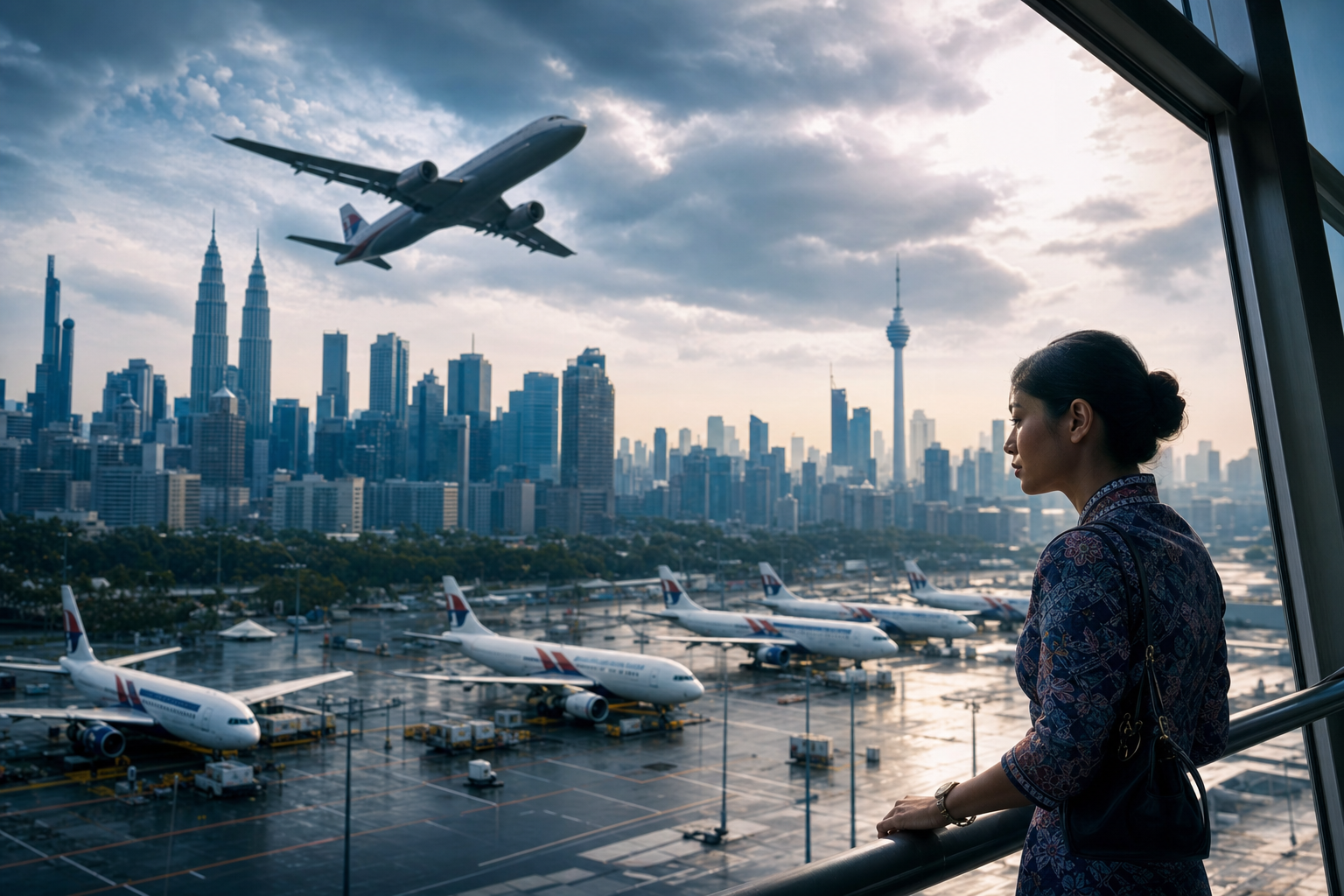
Big money is moving into Malaysian tourism — but the carrier that built mass travel here is having the worst week in years. What does that tension mean for brands, marketers, and the road to Visit Malaysia 2026?
The Ground Beneath the Boom
Have you noticed how Malaysian tourism conversation has split into two completely different stories running side by side, as though they belong to separate decades?
On one side, there is genuine, government-backed ambition. Malaysia is unveiling a bold high-value tourism vision built around luxury travel, eco-adventures, and cultural depth — with Visit Malaysia 2026 positioned as the centrepiece of a new national narrative. Sarawak just hosted the World National and World Asia Tapas 2026, a deliberately ambitious play to brand Borneo as a culinary destination on the global stage. Canada has expanded visa-free air access for eligible Malaysians, opening up fresh outbound corridors. The momentum is palpable.
On the other side, AirAsia X has just lost RM2.35 billion in market value in a single week of turbulence — a sell-off that spilled directly into Capital A — while the co-founder Tony Fernandes is reportedly planning an entirely new airline venture. The carrier that arguably invented accessible regional travel for ordinary Malaysians is, at this precise moment, navigating its most bruising news cycle in years.
For brand managers and marketers working in or adjacent to travel, understanding both stories — and the tension between them — matters more than tracking either one in isolation.
A Nation That Has Learned to Move
What Malaysia's festive travel patterns reveal is something quite specific: this is not a population that travels occasionally and cautiously. Malaysians are habitual, confident, multi-destination travellers who have internalised the budget airline model so completely that disruption to it registers as a personal inconvenience, not just a headline.
That cultural fluency with travel is the real asset sitting underneath the Visit Malaysia 2026 strategy. Tourism Malaysia is not trying to teach Malaysians to be tourists — it is trying to redirect and elevate a habit that is already deeply embedded. The distinction matters enormously for how brands should position themselves in this space.
Agoda Malaysia and Traveloka have both been beneficiaries of this habitual travel culture, each building their regional strongholds partly on the Malaysian propensity to book quickly, compare obsessively, and travel light. The online travel aggregator battle in Malaysia is not really about whether people will book — it is about capturing them at the precise, often impulsive, moment they decide to go somewhere new.
According to Bernama, domestic tourism expenditure has been a consistent pillar of Malaysia's post-pandemic recovery, and the government is now explicitly targeting higher-yield international visitors rather than simply growing arrival numbers. That pivot — from volume to value — changes everything about how tourism should be marketed.
The Carrier Problem Nobody Has Solved Yet
Here is where the honest complexity lives. AirAsia built the democratised travel model that made Malaysia one of Southeast Asia's most connected aviation hubs. But the week this article is being written, AirAsia X is at a three-year stock low, a Philippines affiliate is embroiled in regulatory disputes over unpaid dues, and the airline has simultaneously been called out by a BBC-reported story about allegedly using an artist's work without consent. That is a lot of noise from one brand in one news cycle.
Fernandes' reported plans to launch a new airline venture add a layer of strategic uncertainty that ripples out well beyond aviation. If the architect of the low-cost travel revolution in this region is already thinking about what comes after the current chapter, what does that signal about the structural health of the model itself?
For the travel marketing community, this is not an abstract governance story. Malaysia Airlines and Batik Air operate in the same ecosystem. Firefly serves regional routes that feed into larger networks. Any sustained credibility damage to the budget travel sector — whether through operational controversies, stock market sell-offs, or regulatory friction — reshapes consumer confidence in ways that affect booking patterns across the entire category.
The warning about not leaving tour bus operators behind in Visit Malaysia 2026 is a useful reminder that the ecosystem supporting tourism is far wider than headline carriers. Ground transport, local guides, heritage operators — these are the layers that turn a flight deal into an actual destination experience, and they need investment and visibility of their own.
What Smart Brands Should Be Doing Right Now
If the angle of this moment is the quiet shift from volume to value, then the actionable takeaway for marketers is deceptively straightforward: stop speaking to volume instincts and start speaking to aspiration ones.
The traveller being courted by the Visit Malaysia 2026 high-value strategy is someone who wants to feel that their specific choices — the Sarawak food trail, the eco-resort in Terengganu, the cultural itinerary in Georgetown — reflect something meaningful about them. That is a content and narrative brief, not just a media placement brief.
This is precisely where creator-led content earns its keep. Platforms like Creamatch, Malaysia's managed creator content platform, are designed for exactly this kind of layered, values-adjacent storytelling — matching brands with creators who can speak authentically to the niche experiences that high-yield tourists are actively seeking out. A generic flight deal post will not move this audience. A Penan guide's perspective on Sarawak's rivers, rendered through the right creator voice, absolutely might.
The Star has noted that Malaysia's outbound travel is also recovering strongly, which means brands serving returning Malaysian travellers — duty-free, airport retail, travel insurance, digital wallets — are operating in a genuinely live market, not a projected one.
For brand strategists, the signals tracked through tools like Verbrol Pulse reveal something worth sitting with: social noise around boycotts and airline controversies can coexist with genuine, enthusiastic travel intent from the same audience. Malaysians are not choosing between engaging with controversy and booking flights. They are doing both, sometimes in the same afternoon.
The strategic conclusion is not to panic at the turbulence or mistake noise for collapsed demand. It is to build brand presence that is resilient enough to hold through a difficult news cycle — and distinctive enough to claim the upswing when the dust settles.
The Road Into Visit Malaysia 2026
Malaysia's tourism story for the rest of this year is genuinely exciting, properly complicated, and rich with opportunity for brands that read it carefully. The infrastructure ambition is real. The traveller appetite is real. The policy signals — from high-value tourism positioning to new visa access corridors — are consistent and pointed in the right direction.
The turbulence is also real. An aviation sector under pressure, a carrier navigating a credibility crisis, and a broader question about what the next chapter of accessible travel looks like in this region — these are not footnotes. They are conditions that smart marketers need to factor into their planning.
The brands that will win in this environment are those that do not treat Visit Malaysia 2026 as a single campaign moment, but as the opening of a longer, richer conversation with a travelling public that is more sophisticated, more values-aware, and more discerning than the mass-volume era required them to be.
That is the real shift. And it is already underway.
Track Travel trends in real-time at verbrol.com
Read more on Verbrol Intelligence: