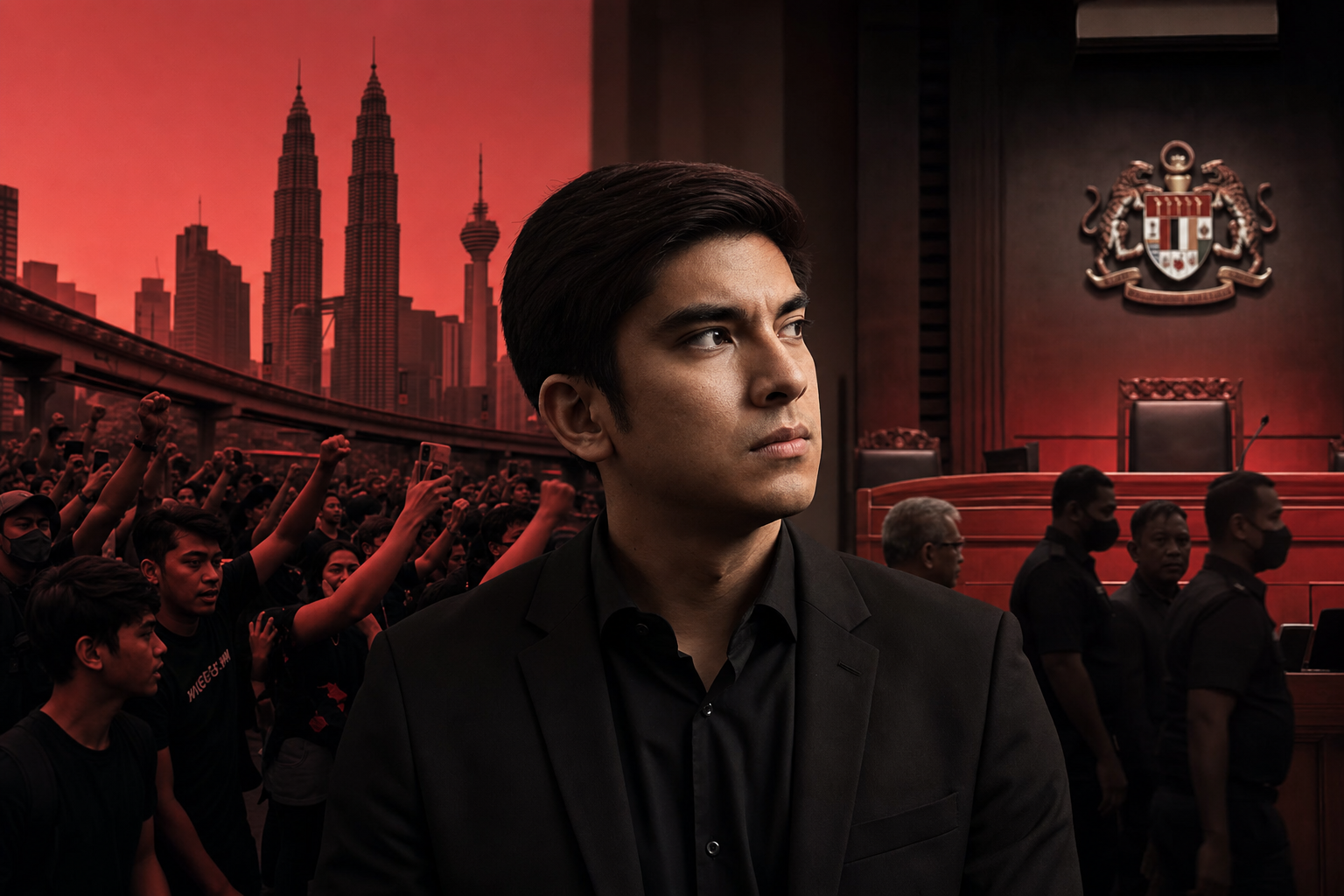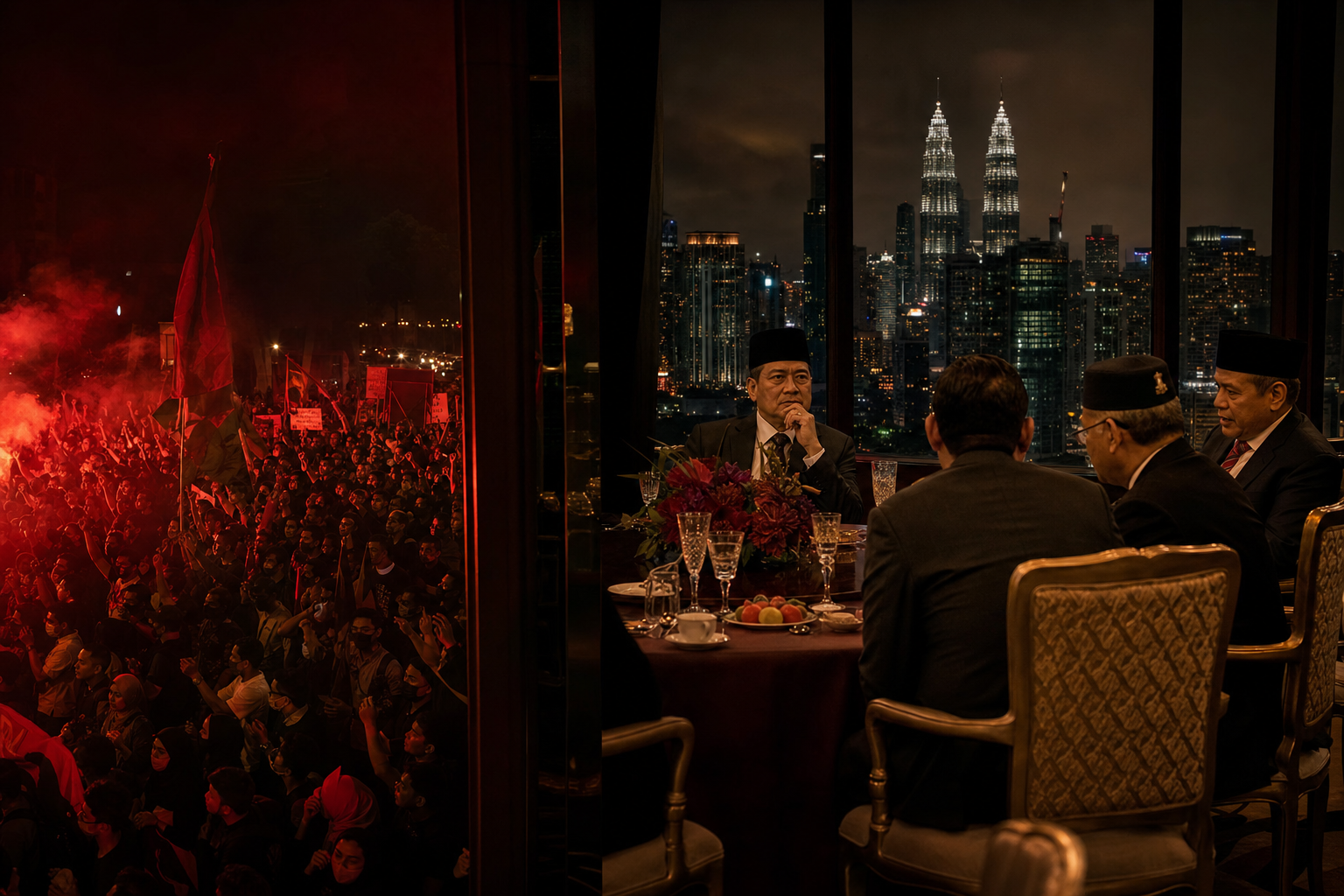
Malaysian politics has quietly become a content vertical — with audition-style candidate hunts and podcast MPs replacing ceramah. But underneath the rebranding, the structural rot stays funded.
Ada benda yang aku perasan belakangan ni. Bukan dalam briefing rasmi atau Hansard Parlimen. Aku perasan dalam cara orang scroll.
When your parliamentarian has a better Instagram Reels strategy than your favourite KL café, something structural has shifted. Malaysian politics isn't just being communicated differently — it's being constructed differently. The platform is the product now. The candidate is the content.
This isn't cynicism. This is a diagnosis. And the numbers behind it are worth taking seriously.
From Ceramah to Content: The Celebrity-Politics Pipeline
The transformation of Malaysian politics into celebrity culture didn't happen overnight. It accelerated when politicians realised that reach — not policy depth — was what moved constituencies in an era of 10-second attention spans.
But what's happening now goes further. Bersama, a newly formed political movement, is literally holding auditions for potential parliamentary candidates. Malaysia's got political talent, apparently. Apply within.
This is not satire. This is the 2025 electoral pipeline.
The audition model isn't accidental — it's a rational response to a broken party recruitment infrastructure. When grassroots party loyalty erodes and social media reach becomes the proxy for electability, you will end up with talent-show politics. The question isn't whether this is good or bad. The question is: who controls the casting?
For brand managers and political analysts tracking sentiment through tools like Verbrol Pulse, the signal is clear: political messaging is converging with influencer content strategy. Reach metrics, comment engagement, audience demographics — these are now vetting criteria for candidacy in some quarters.
Platforms like Creamatch, Malaysia's managed creator content platform, are already navigating this crossover terrain — where political adjacency, civic content, and brand-safe narratives intersect. The line between political communication and creator marketing is dissolving.
The Realignment Nobody Planned For
Sementara tu, di atas peta geopolitik domestik, ada gegaran yang lebih structural.
The PAS-Bersatu split signals something significant: the Malay-centric opposition bloc — which functioned as a near-monolithic electoral threat to Madani — is fracturing along ideological and ego fault lines. A new Malay-centric pact is being discussed, but it hasn't yet found its gravitational centre.
For the ruling coalition, this is a structural gift. Divide in Muafakat is consolidation space for Madani. But politically gifted doesn't mean politically stable.
PM Anwar Ibrahim is pursuing a parallel strategy — economic credibility as political insulation. The expected joint launch of Tesla Malaysia's headquarters in Cyberjaya by PM Anwar and Elon Musk is being read by Putrajaya as more than investment optics — it's a signal to the middle-class electorate and to international capital that Malaysia is governable, investable, and forward-facing. His recent pitch to Japanese companies on AI investment follows the same logic.
But here's the structural tension: governing through big-ticket announcements is not the same as governing. The rakyat in Kedah and Sabah aren't watching the Cyberjaya ribbon-cutting the same way a KL investor is.
The Price Tag on Systemic Corruption
Ini bahagian yang paling pedih.
Aliran's sharp analysis on the monetisation of Malaysian politics and its systemic corruption costs lands harder when you lay it next to this week's corporate news. Padini's shares hitting a six-year low following an MACC probe into external counterparties isn't just a fashion retail story — it's a reminder that the political economy of rent-seeking behaviour bleeds across sectors, from GLCs to listed consumer brands.
Khazanah and EPF are not immune to political interference pressure. When investment decisions at sovereign wealth level get coloured by coalition politics — as they periodically do — the downstream cost lands on ordinary contributors. EPF pemegang amanah untuk pekerja. Bukan kenderaan politik.
Bank Negara Malaysia has, to its credit, maintained institutional insulation from day-to-day political noise. But monetary independence is always one bad appointment away from compromise. That's not paranoia — that's institutional realism.
According to Free Malaysia Today, governance accountability continues to be a top concern among urban and semi-urban voters — the very demographic that decides swing-seat outcomes. The political class ignores this at its electoral peril.
What This Means for GE16 Positioning
Semua ini converge pada satu titik: GE16.
The signals this week — coalition fracturing, big-ticket investment optics, celebrity candidate pipelines, MACC probes into corporate counterparties — are all GE16 preloading, whether explicitly framed that way or not.
Here's what the data suggests for those tracking political intelligence:
- The Malay heartland vote is genuinely in play for the first time in years — not because of PAS or Bersatu alone, but because neither can now claim to represent a unified bloc.
- Economic credibility messaging (Tesla, Japanese AI investment, RM750m Touch 'n Go funding rounds) is Madani's play for the swing demographic — but it requires delivery, not just announcements.
- Anti-corruption fatigue is real. Consecutive MACC headlines, from Padini to previous GLC-adjacent investigations, are building a cumulative narrative that The Star and others are amplifying at scale.
- Political content strategy is now as important as policy depth for parties targeting urban voters under 40 — which is where audition-style candidate selection and podcast-friendly MPs make strategic sense, even if it feels unseemly.
Padini boleh jatuh. AirAsia X boleh menafikan. Tapi trust, once eroded by the monetisation of public office, takes longer to rebuild than a share price recovery.
Bukan Sekadar Politik — Ini Soal Institusi
The media landscape is shifting too. Media Prima's nine awards at Majlis Anugerah Media Kelantan, RTM's continued public spend on World Cup broadcasting — these are not neutral cultural moments. They are political infrastructure investments, whether they're framed that way in press releases or not.
Public media remains a political instrument in Malaysia. That's not a new observation. But in an era where Verbrol tracks how narratives move from broadcast to social to policy response, the feedback loops are faster and more consequential than ever.
Politik Malaysia 2025 bukan calang-calang. It's a multi-front operation — investment attraction, coalition management, media narrative control, digital candidate recruitment, and anti-corruption optics management — all running simultaneously, all under the shadow of an election that could arrive earlier than the official schedule suggests.
The rakyat deserve leaders who govern as hard as they campaign. Right now, the gap between those two activities remains the most important political data point of all.
Track Politics trends in real-time at verbrol.com
Read more on Verbrol Intelligence: