Retail sales came in below expectations and global cost shocks are still working their way through the supply chain — Malaysian retailers are caught between cautious consumers and rising costs, and the pressure is only going to get louder.
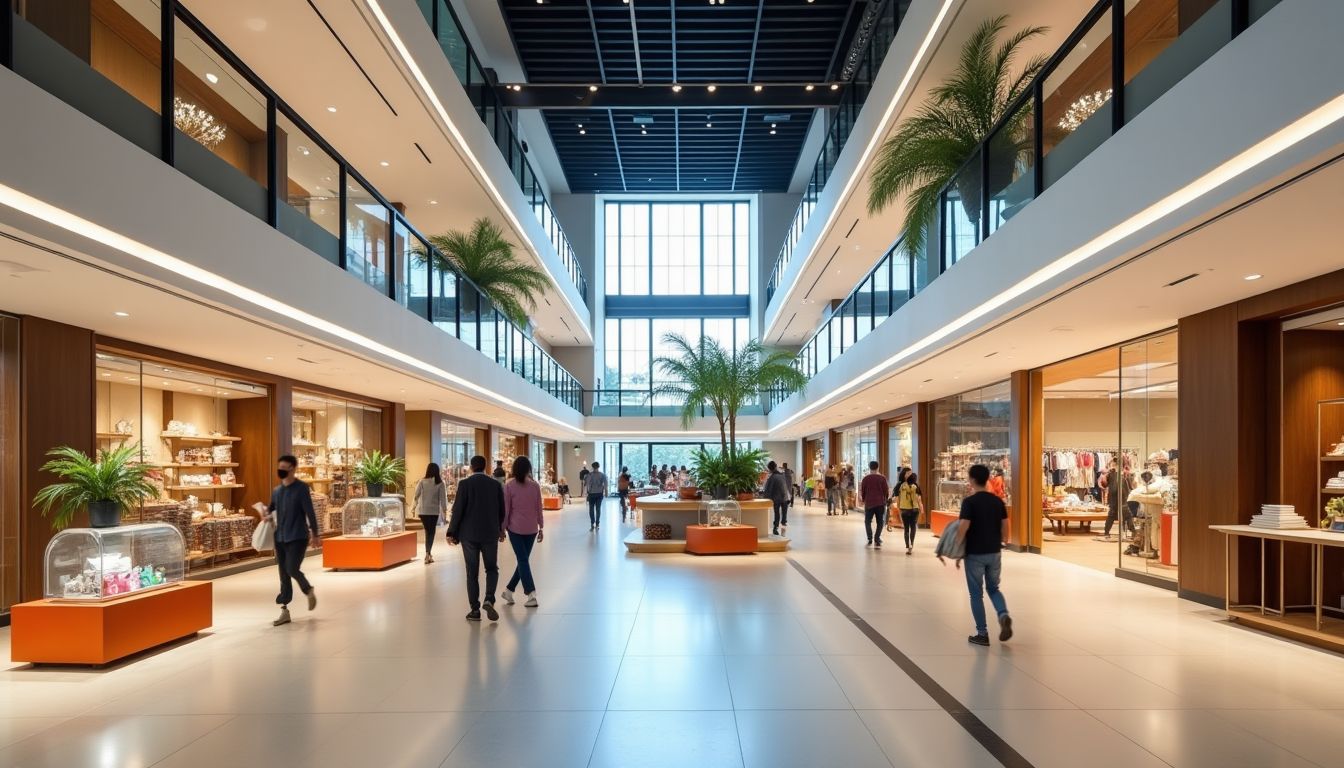
Last month I was walking through a mid-range mall in Petaling Jaya — one of those familiar anchor-tenant setups with an AEON outlet at one end and a mix of fashion and F&B filling the corridors between. It was a weekday afternoon, not peak hours, but even so the footfall felt thinner than I remembered. The AEON department store had a promotional banner running across nearly every column. The promotions were not subtle. They were the kind that say: we need you to buy today, not next week.
That scene, small and ordinary as it was, captures something real about Malaysian retail right now.
Q1 Numbers That Should Make Everyone Pay Attention
The headline figure is 3.7%. That is the retail sales growth Malaysia recorded in the first quarter of 2025 — and it came in worse than the industry expected, prompting the Retail Group Malaysia to revise its full-year forecast downward. To put that in context: this is not a rounding error or a single bad month. It is a signal that the sector's post-pandemic momentum has genuinely softened.
The NST's coverage of the Q1 retail figures confirms the miss was broad-based. It was not one channel or one segment dragging the average down. Consumer caution is showing up across modern trade — from hypermarkets to specialty retail — and shoppers are making harder choices about where to spend.
For brand managers and category leads, this demands a different kind of planning. A market growing at 3.7% when you were budgeting for 5% or 6% means someone in your portfolio is going to underperform. The question is who, and whether you saw it coming.
The Cost Shock That Has Not Fully Landed Yet
Here is the part that should genuinely concern anyone managing retail margins or pricing strategy in Malaysia right now: the cost pressures from global supply disruption have not finished moving through the system.
Malay Mail's reporting on the US-Iran conflict's spillover effects is pointed and specific: Malaysian retailers are warning that the worst price increases are still ahead. Freight costs, energy price volatility, and imported goods inflation are working through supplier contracts that were locked in months ago. When those contracts reset, the increases hit shelves.
This creates a genuinely uncomfortable position for retailers across the value spectrum. Value-focused chains like 99 Speedmart and Mydin — whose entire brand promise is built around affordability — face a harder conversation with suppliers when input costs rise. Their shoppers are price-sensitive almost by definition. Passing on cost increases risks the core loyalty relationship. Absorbing them kills margin.
At the other end, department store operators like Parkson and AEON are dealing with a different version of the same problem: their mid-to-premium shoppers have options — including skipping the physical store entirely and purchasing through Shopee or Lazada, where price comparisons happen in seconds and promotional mechanics are relentless.
According to Bernama, several retailers have already flagged the squeeze in their public communications this quarter. The tone is cautious. Nobody wants to be the brand that raises prices loudly while consumers are watching every sen.
Where the Smart Money Is Actually Moving
Against this backdrop, the retailers adapting well share a few specific characteristics worth studying.
First, they are investing in employment and community ties. The recent PERKESO and 7-Eleven Malaysia partnership to support return-to-work employment pathways is a good example of what this looks like in practice. It is a tie-up that extends 7-Eleven's brand presence into the social infrastructure conversation — employment, inclusion, community contribution. That is not corporate social responsibility as a checkbox. It is positioning a convenience retailer as a stakeholder in Malaysian working life. Brand managers should notice how that shifts the nature of the loyalty relationship.
Second, the strong players are doubling down on hyperlocal convenience. The expansion strategies of 99 Speedmart into smaller residential communities and the continued growth of neighbourhood-format stores reflect a clear read of Malaysian shopping behaviour: people want to spend less time getting to the store. Proximity wins when wallets are tight and time is scarce.
Third, content and creator-led commerce is quietly supplementing in-store performance. Brands that are using platforms like Creamatch — Malaysia's managed creator content platform — to drive localised product awareness are seeing measurable lift in consideration, particularly among younger Malay-majority shoppers who are deeply embedded in TikTok and Instagram commerce behaviour. This is not just influencer marketing in the old sense; it is systematic content-to-purchase infrastructure that smart retail brands are building now, ahead of a tougher second half.
You can track which retail categories are generating the most content traction using the Verbrol Pulse dashboard, which surfaces real-time signals across Malaysian social channels.
What Brand Managers Should Do Differently Right Now
The honest advice here is not complicated, but it requires discipline:
-
Reprice your growth assumptions. A 3.7% market is not the same as a 6% market, and your promotional calendar should reflect that. Running the same mechanics at the same frequency in a softer market just trains your shopper to wait for discounts.
-
Protect your value story with specificity. Vague affordability claims will not hold in a rising-cost environment. Retailers like Econsave and Lotus's that communicate specific price commitments — not just tone — will retain trust better when costs start to visibly shift.
-
Invest in non-price loyalty drivers now, before the price increases land. Service, convenience, community partnerships, and content relationships are all things you can build during this window. They are much harder to build after you have had to raise prices.
-
Watch the second half closely. As The Star has noted in its coverage of domestic consumer sentiment, Malaysian shoppers are not yet in panic mode — but the confidence indicators are fragile. A second wave of visible price increases, particularly in food and household staples, could shift behaviour faster than category plans currently account for.
The pressure on Malaysian retail right now is real, it is structural, and it is not going to resolve itself before year-end. But the brands that come out of this period stronger will be the ones that chose clarity over optimism in their planning — and community over transactions in their positioning.
For marketers and brand managers willing to read the signals honestly, there is still room to move well. The window is just narrower than it looked six months ago.
Track Retail trends in real-time at verbrol.com
Read more on Verbrol Intelligence: