Big money is moving into Malaysian beauty from every direction — French naturals, luxury TikTok stunts, B2B trade floors. But the brands quietly winning aren't always the ones making the loudest noise.
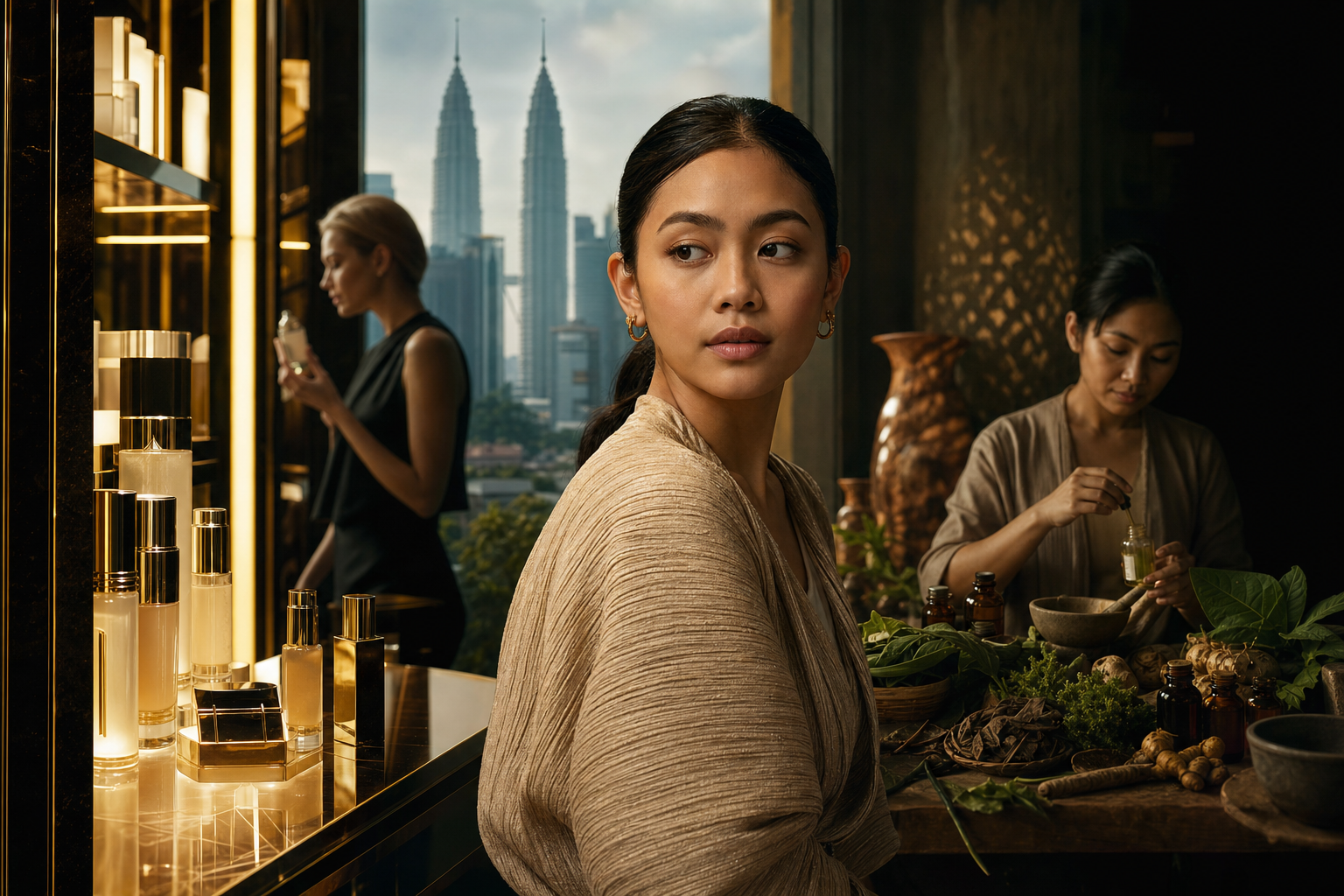
Malaysian women have a habit that confuses most foreign brand managers: they'll spend RM180 on a Sephora Malaysia serum in the morning, then restock their Safi toner at Watsons Malaysia on the way home, and not see any contradiction in that. Beauty spending here isn't tiered the way Western markets assume. It's layered — by occasion, by skin concern, by what their group chat recommended at 11pm. Understanding that layering is, right now, the most important thing a beauty brand can do in this market.
The past week alone has handed us a concentrated snapshot of where Malaysian beauty is headed. A French heritage brand is arriving. A luxury French cosmetics house just staged a street-level TikTok activation. A major B2B trade event is anchoring the calendar. And Shopee data is quietly telling us which skincare segments are actually moving product. Pull these threads together and a very specific picture emerges.
The Entry Play: Why Global Brands Keep Choosing Malaysia First
InNature's move to bring Yves Rocher to Malaysia is a telling signal. The French natural cosmetics brand — built around plant-based formulations and a direct-to-consumer heritage — isn't entering a vacuum. It's entering a market that has spent the last three years conditioning consumers to expect both halal credentials and a credible naturals story. That's a specific combination that Malaysia has developed faster than most of its regional peers.
InNature, which already operates The Body Shop franchise locally, knows the retail geography well. They understand that Guardian Malaysia and Watsons Malaysia together dominate the accessible beauty corridor, and that landing shelf space in either chain signals mainstream legitimacy in a way that a standalone boutique simply can't replicate at speed. For Yves Rocher, Malaysia isn't just a market — it's a proof-of-concept launchpad for broader Southeast Asian ambition.
This is part of a pattern that DHL's 2026 guide to scaling the cosmetic industry in Malaysia identifies clearly: Malaysia's regulatory environment, its digitally mature consumer base, and its established halal certification infrastructure make it the most operationally sensible first stop for beauty brands sizing up ASEAN.
The Activation Play: YSL Beauty and the Kopitiam Moment
If Yves Rocher's entry is a long game, YSL Beauty's recent move is the opposite — loud, fast, and very deliberately Malaysian in its cultural framing.
YSL Beauty's launch of its Malaysia TikTok Shop via a Bukit Bintang kopitiam takeover wasn't an accident of creative. It was a calculated trust signal. Kopitiam culture — neighbourhood, familiar, unpretentious — is the antithesis of luxury beauty's usual marble-and-mirror aesthetic. YSL put those two things in the same room deliberately, and the message was clear: we want to be part of your everyday, not just your occasion.
For brand managers watching this, the strategic implication is significant. TikTok Shop Malaysia has become a serious commerce layer, not just a discovery engine. Luxury brands entering TikTok Shop are no longer slumming it — they're meeting a consumer who researches on TikTok, buys on TikTok, and reviews on TikTok within the same session. The kopitiam framing made the content native. That's the part most brands still get wrong: they put luxury product on TikTok but keep luxury distance in the content. YSL collapsed that distance.
For brands working with Malaysian creators on activations like this, platforms like Creamatch — a managed creator content platform operating in this market — are increasingly how the logistical heavy lifting gets done. Matching the right creator profile to a brand's cultural register, especially when you're trying to do something as precise as a kopitiam-meets-luxury moment, requires more than a follower count spreadsheet.
The Trade Floor: What Cosmobeauté 2026 Is Actually Signalling
While consumer-facing activations grab attention, the real structural signals for Malaysia's beauty industry come from its B2B infrastructure. Cosmobeauté Malaysia and beautyexpo 2026 returns to KLCC with a clear mandate around B2B excellence and cross-border sourcing. This matters because it tells us where the supply-side pressure is building.
Malaysia is not just a consumer market for beauty — it's increasingly a manufacturing and formulation hub. Halal-certified contract manufacturers here are supplying brands across the Gulf, Indonesia, and beyond. The KLCC trade floor is where those relationships get forged, which means the brands showing up there in 2026 aren't just selling to Malaysian consumers. They're positioning for regional production partnerships.
The International Beauty Expo (IBE) 2026 further underscores this: Malaysia's event calendar for beauty has densified, and that density reflects genuine commercial momentum, not just marketing activity.
For locally grown brands — think Sendayu Tinggi's established halal positioning or Velvet Vanity's digital-native playbook — these trade platforms represent a genuine opportunity to punch into export conversations that were previously dominated by Korean and Japanese players.
What the Shopee Data Is Actually Telling You
Amid all the event news and brand activations, the most grounding data point right now comes from Shopee's own market share breakdown. According to Statista's March 2024 figures on skincare segments on Shopee Malaysia, facial skincare dominates platform share by a significant margin — which aligns with what anyone who has scrolled a Malaysian beauty haul video recently already intuits. The Watsons Malaysia makeup haul content circulating on YouTube right now is heavy on serums, toners, and sunscreens, not colour cosmetics.
This has a direct implication for brand managers: if you're allocating digital spend in Malaysia, the skincare funnel is where the transaction intent is highest. Colour cosmetics generate enormous content volume — reviews, tutorials, TikTok demos — but skincare is where the add-to-cart moment happens most reliably. SimplySiti's longevity in this market is partly a testament to that: a brand that understood skin concern-led positioning before it was the dominant framework.
You can track how these category dynamics shift week to week through tools like Verbrol Pulse, which surfaces platform-level consumer signals across Malaysian retail categories in real time.
What Brand Managers Should Actually Do With All of This
A few things are worth actioning now rather than filing under "watch this space":
- TikTok Shop is a commerce channel, not a campaign channel. Build fulfilment, not just content. YSL's kopitiam play only works if the Shop backend is clean and the checkout experience doesn't break the moment.
- Naturalness and halal are now table stakes, not differentiators. Yves Rocher is entering because it can credibly claim both. If your brand can't, you need a formulation roadmap, not a marketing workaround.
- Trade floor presence in Malaysia has regional implications. Cosmobeauté 2026 at KLCC is not just a local networking event. It's an access point to Gulf and Indonesian buyer relationships that are actively looking for halal-certified supply partners.
- Creator matching needs to be culturally precise. The kopitiam moment worked because the cultural register was right. According to Bernama, Malaysian consumers have consistently rewarded brands that demonstrate genuine local understanding over those that simply translate global campaigns. Get the creator brief right before you get the content brief right.
Malaysian beauty in June 2026 is a market where the stakes have genuinely risen — for international entrants, for local brands defending home ground, and for the retail channels caught in between. The brands that will be worth talking about by year-end are the ones making specific, culturally grounded bets right now, not the ones waiting for a clearer picture.
The picture is already clear enough. The question is whether you're moving.
Track Beauty trends in real-time at verbrol.com
Read more on Verbrol Intelligence: