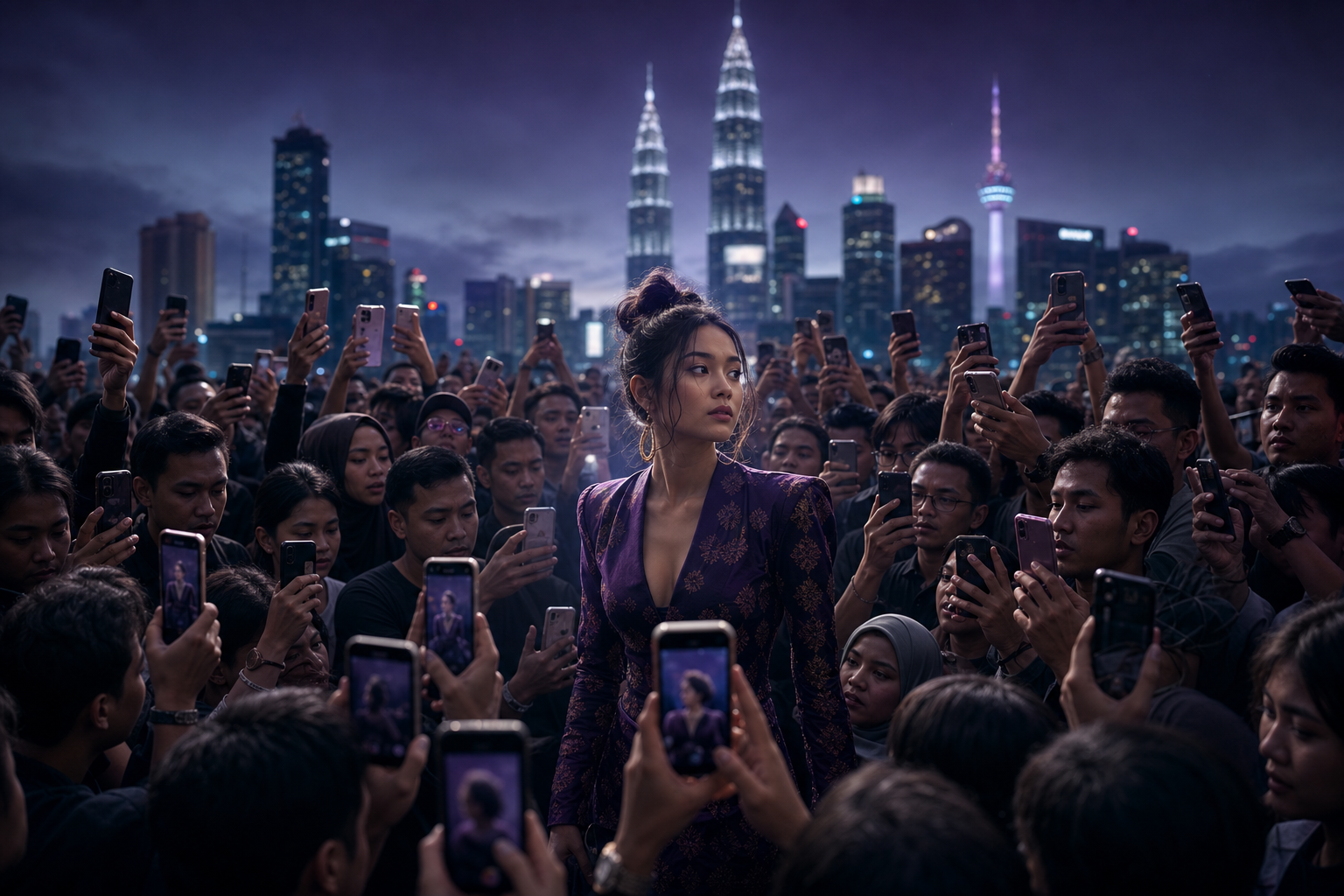
Malaysia's entertainment industry is living through something genuinely historic — and most brand managers are still sleeping on it. Verbrol's analysis of 30+ signals from news, Telegram, YouTube, and sports data this week reveals a single, uncomfortable truth: local IP is not just competing with global content, it is beating it. Here is why that changes everything for your brand strategy.
Malaysia's Entertainment Golden Age Is Already Here — Brands Are Just Late to the Party
Let me be direct with you, because that is what good intelligence demands: Malaysia is not approaching a golden age of local entertainment. It is already inside one, and the window to capitalise on it as a brand is closing faster than most marketing teams are moving.
Based on Verbrol's analysis of 30+ signals from news, Telegram, YouTube, and sports data tracked across the past 48 hours, one thesis emerges with striking clarity — Malaysian local IP is not merely surviving against global content giants; it is actively displacing them on the same platforms those giants built. This is not a feel-good cultural moment. This is a structural market shift with direct revenue implications for every brand manager reading this.
The Signal Everyone Missed: BoBoiBoy Is Not a Kids' Story — It Is a Platform Strategy Lesson
When local animation BoBoiBoy topped Netflix charts in Malaysia, Indonesia, and Singapore simultaneously, the mainstream media treated it as a charming cultural footnote. A nice win for Malaysian animation. Lovely.
That reading is dangerously shallow. What actually happened is this: a homegrown Malaysian IP, built on character loyalty and regional cultural resonance, outperformed the entire Netflix catalogue — including Hollywood tentpoles with budgets that dwarf Malaysia's annual film fund — across three Southeast Asian markets at the same time. This is not a fluke. This is proof of concept for an entire content model.
Meanwhile, actress Scha Alyahya has publicly articulated what the data already confirms: Malaysian entertainment is entering a golden phase, and the trajectory from productions like Awan Dania to Kata Hati illustrates a maturation of storytelling craft that audiences are responding to with their viewing hours, not just their sentiment.
For brands, the actionable implication is this: the audience aggregation happening around local IP right now represents premium, high-trust inventory. The brands positioned alongside BoBoiBoy, alongside the next breakout Astro drama, alongside the Malaysian film that earns the next international recognition — those brands inherit the emotional equity of that cultural moment.
The Hidden Winner: Malaysian Film's Craft Credibility Is Becoming a Global Conversation
While the streaming numbers dominate the headline, a quieter but equally significant signal emerged this week in the film space. Local film Chelot earned MBR recognition for its 5-minute action sequence, as reported by Free Malaysia Today. That is a technical, craft-based accolade — the kind that signals to international co-production partners and distributors that Malaysian filmmakers are operating at a globally competitive level.
This matters beyond national pride. Craft credibility attracts international co-production money. It attracts festival circuit attention. It builds the pipeline of the next generation of IPs that will do what BoBoiBoy is doing today but across even wider markets.
The Edge Malaysia has noted that the future of entertainment is not just better picture quality but a smarter experience — and the Malaysian content ecosystem is building exactly that: smarter narratives, sharper production craft, and culturally specific storytelling that travels.
The Live Experience Economy Is Recalibrating — And Brands Need to Move Now
The AirAsia Hausboom Festival 2025, powered by Hotlink and themed Paint the Town Red, is bringing together 32 local and international artists alongside Malaysia's biggest fashion and food festival. According to Bernama, this event represents a convergence play — music, fashion, food, and lifestyle colliding in a single brand-sponsored moment.
This is the live entertainment model that smart brands are investing in: not just sponsorship patches on a banner, but genuine co-creation of cultural experiences. The festival format allows brands to inhabit a lifestyle context rather than interrupt it.
Simultaneously, Telegram signals this week surfaced a significant legal development: national music icon Datuk M. Nasir and his company Luncai Emas Sdn Bhd have filed a suit against MyTeksi alleging unauthorised use of his name and brand for promotional purposes. This is a watershed moment for the Malaysian creator and talent economy. It signals that Malaysian cultural figures are asserting intellectual property rights with the same seriousness as global celebrities — and brands that do not have airtight agreements around talent usage are now operating with real legal exposure.
For marketers building influencer and talent partnerships, the lesson is clear. Platforms like Creamatch, Malaysia's managed creator content platform, exist precisely to structure these relationships correctly from the outset — ensuring that both creative and commercial terms are documented, protecting brands from exactly the kind of reputational and legal risk the M. Nasir case illustrates.
On the digital content side, YouTube's algorithm crackdown on AI-generated faceless content is another signal worth tracking via Verbrol Pulse: creators who built audiences on volume-based AI slop are losing distribution, while authentic local voices — like Chacha Maembong, who surfaced on YouTube feeds this week with genuine audience engagement around her drama performances — are the ones whose equity is appreciating. Authenticity is not just a brand value anymore. It is a platform survival mechanism.
What The BTS World Cup Moment Tells Us About Malaysian Audience Sophistication
The BTS FIFA World Cup 2026 halftime show is generating enormous search and social volume in Malaysia — and that matters strategically. Malaysian audiences are globally connected consumers who track international mega-events and champion homegrown content simultaneously. They are not choosing between local and global. They are consuming both, and they expect brands to understand that duality.
This is not a contradictory audience. This is a sophisticated one. The brand strategies that win in this environment are the ones that honour local cultural identity while acknowledging global cultural participation — not brands that assume local means limited.
The Verbrol Thesis: Local IP Is Now Malaysia's Most Underpriced Brand Inventory
Here is the conclusion that Verbrol's cross-signal analysis this week drives toward, and it is one you will not find in the standard agency deck: Malaysian local entertainment IP is currently the most underpriced brand partnership inventory in Southeast Asia.
BoBoiBoy is topping Netflix regionally. Malaysian films are earning international craft recognition. Live festivals are aggregating hundreds of thousands of culturally engaged consumers. Local talent is asserting IP rights that signal a professionalisation of the entire ecosystem. And AI-driven generic content is being penalised by platforms, making authentic local voices more valuable by the day.
The brands that move into deep, structural partnerships with Malaysian local IP owners now — before the international co-production money arrives and before the sponsorship premiums reset — will look prescient in 18 months. The brands that wait for the golden age to be officially declared will pay three times the price for the same access.
The golden age is not coming. According to Free Malaysia Today and the data signals Verbrol has tracked this week, it is already here. The only question is which brands are brave enough to act like it.
Based on Verbrol's analysis of 30+ signals from news, sports, Telegram, and YouTube data tracked across Southeast Asian markets.
Track Entertainment trends in real-time at verbrol.com
Read more on Verbrol Intelligence: