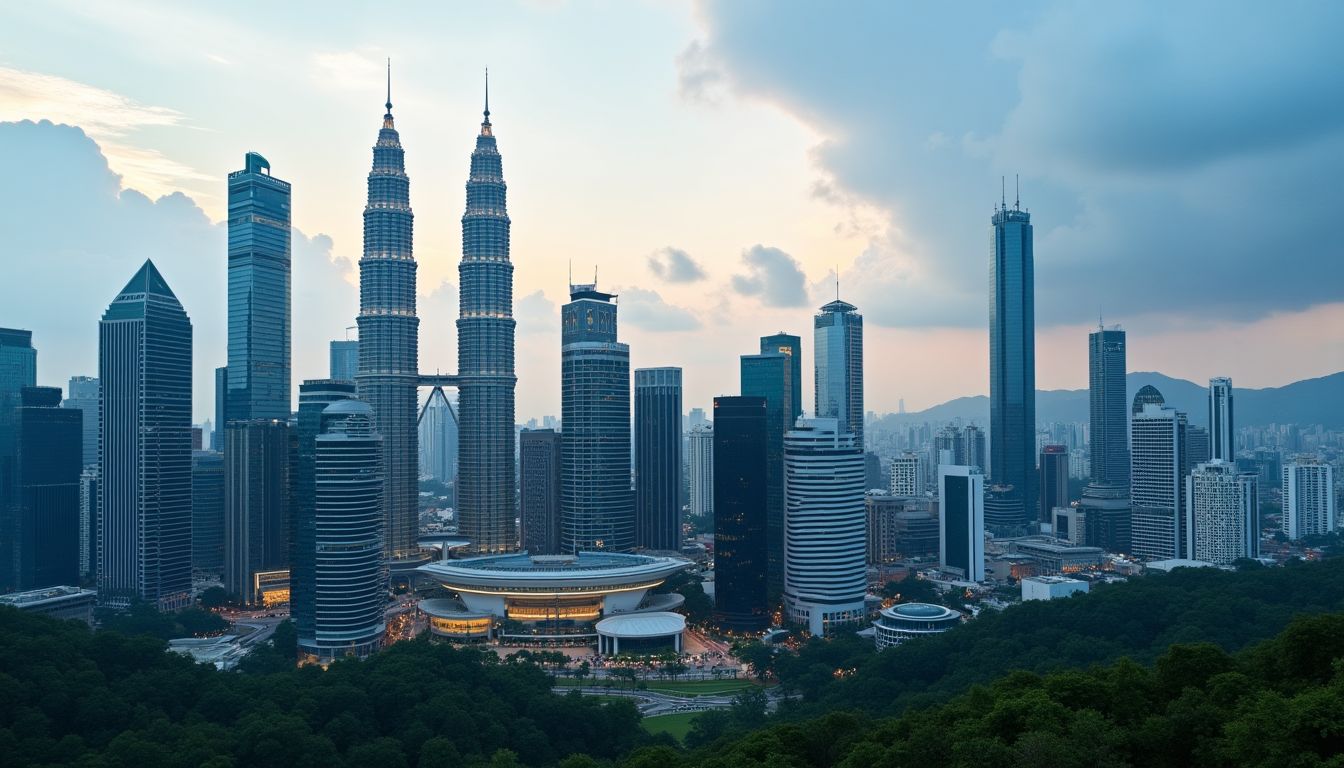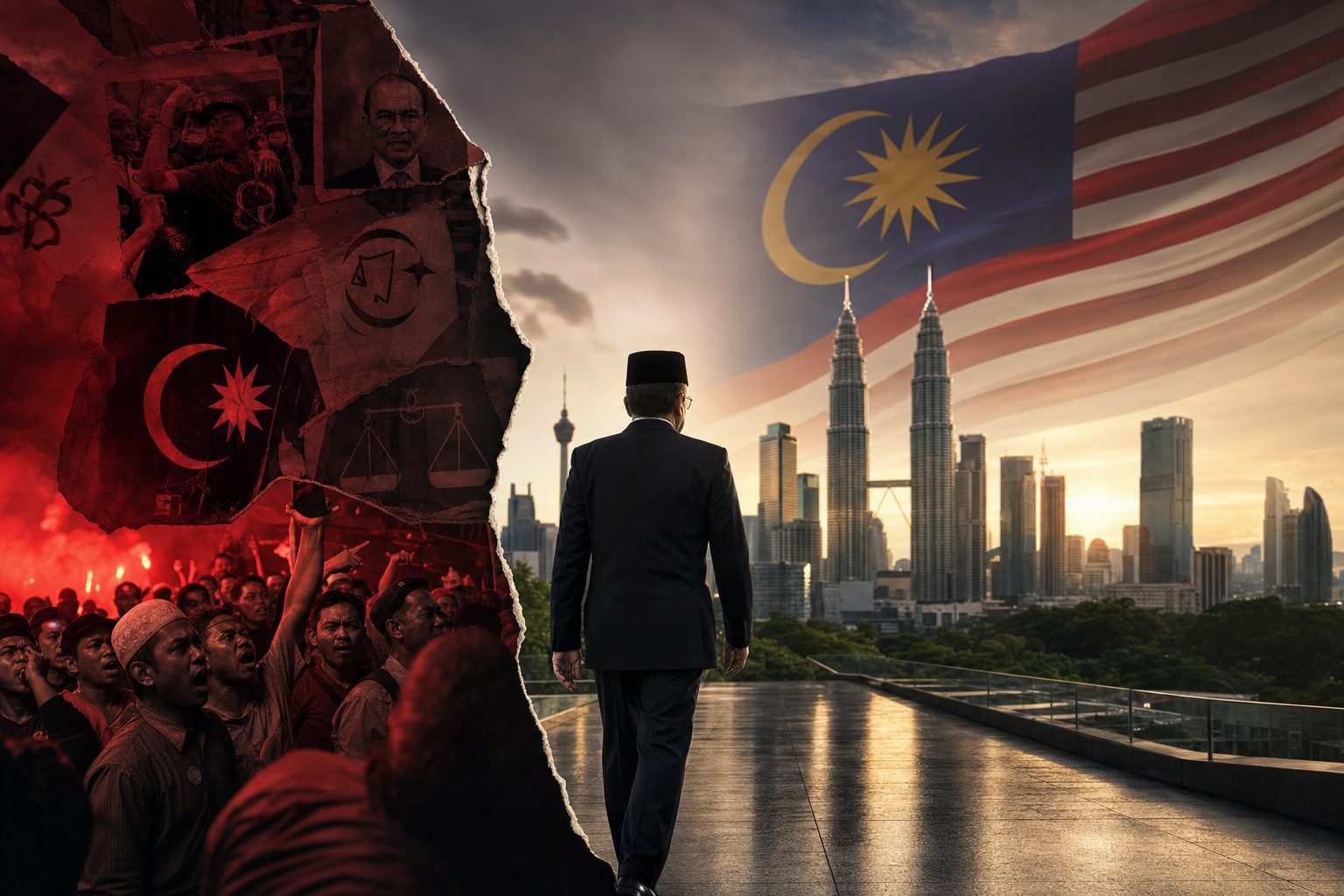
The mainstream narrative frames Malaysian politics around race, religion, and coalition fragility. But Verbrol's analysis of 30+ signals from the past 48 hours tells a radically different story — PM Anwar Ibrahim is executing a quiet but deliberate pivot toward economic statecraft as his primary political currency, and it is working. Here's what most portals haven't said yet.
Malaysian Politics in June 2026 Is Not What You Think It Is
Kalau you follow Malaysian political news closely, you'd be forgiven for thinking the whole game is still about Malay unity, coalition arithmetic, and who's sleeping in which political tent this week. That's the surface narrative. Tapi beneath it? Something far more deliberate is happening.
Based on Verbrol's analysis of 30+ signals from news, YouTube, and social media over the past 48 hours, a single thesis is emerging with unusual clarity: PM Anwar Ibrahim has effectively transformed economic deal-making into his primary political weapon — and in doing so, he is slowly rendering the old race-and-religion playbook obsolete, not by attacking it head-on, but by making it irrelevant through sheer economic momentum.
This is The Paradox of Malaysian Politics in 2026: political stability is rising at precisely the moment when the ideological foundations of that stability are being quietly dismantled.
The Signal Everyone Missed: Economic Deals Are the New Political Speeches
Look at the data from the past two days alone. PM Anwar is expected to officially launch Tesla's Malaysian headquarters in Cyberjaya alongside Elon Musk. He has unveiled a RM200 million fund to support MSMEs through ECF and P2P platforms. He personally invited Japanese companies to expand AI investments in Malaysia. And according to The Star's report on political stability and energy security, Anwar explicitly linked Malaysia's political stability to its energy security positioning — framing geopolitics and economics as inseparable.
Semua dalam masa 48 jam. That's not a coincidence. That's a communications strategy.
What Anwar's team understands — and what most political commentators are still sleeping on — is that in 2026, the Malaysian voter's primary anxiety is no longer purely ethnic or religious. It is economic. Cost of living, business survival, job quality, digital opportunity. The man who delivers tangible economic wins controls the political narrative, regardless of how noisy the identity politics gets on X (formerly Twitter).
This is precisely what a Malaysiakini letter on leadership beyond race and religion articulated recently — the leadership gap Malaysia faces is not one of ideology but of economic vision and delivery. Anwar appears to be filling that gap, deliberately and at pace.
Verbrol Pulse has been tracking this economic-as-political signal since Q1 2026, and the velocity of deal announcements has accelerated by a measurable margin in the past quarter.
The Hidden Political Dividend of Foreign Investment
Here's where it gets really interesting for brand managers and marketers who are reading political signals for strategic planning purposes.
Every major foreign investment announcement — Tesla, Japanese AI companies, the Lazada-Touch 'n Go RM750 million equity round, Sime Darby backing Socar's US$55 million Series B — carries a dual payload: economic benefit AND political legitimacy. Each deal says, implicitly, "the world trusts Malaysia enough to put serious money here."
This is what South China Morning Post's analysis of Bangladesh's new PM visiting Malaysia before India signals too — Malaysia's strategic positioning in Southeast Asia is being noticed by global players. When Dhaka chooses KL before Delhi, that's not a footnote. That's a geopolitical statement that translates directly into domestic political capital for Anwar.
For brands and agencies tracking Malaysian political risk: low political risk premium is now a brand asset for Malaysia Inc. If your client has regional operations, this stability narrative is a tailwind worth communicating explicitly in stakeholder materials.
The Counter-Signal: MACC, Padini, and the Accountability Gap
Tapi jangan lupa — no political analysis is complete without the shadow side.
The MACC probe hitting Padini's external counterparties, sending shares to a six-year low according to NST Online's coverage, is a reminder that Malaysia's governance infrastructure is simultaneously being tested. The probe signals that MACC is operationally active — which is, on one hand, a positive institutional signal. On the other, the Padini story touches a sensitive nerve: what does "external counterparties" mean in a Malaysian business context, and how deep does the network go?
Based on Verbrol's analysis, this is the accountability paradox of Malaysian politics in 2026: the same government that is attracting Tesla and Elon Musk to Cyberjaya must also convincingly demonstrate that the rot of the previous era has been genuinely excised — not just rhetorically condemned.
The Straits Times' piece on Malaysia's celebrity politics and politicians becoming influencers adds another layer here — when politicians become content creators chasing likes and engagement, there is a real risk that substance is sacrificed for performance. Malaysia's political class needs to be careful that the optics of accountability does not replace actual accountability. Voters, especially urban millennials and Gen Z, are more algorithmically literate than politicians give them credit for.
For communications professionals and brand managers advising clients in politically adjacent industries: align with governance credibility, not just deal-flow. The next political flashpoint in Malaysia will likely be triggered not by race or religion, but by a high-profile corruption case that implicates someone inside the current reform narrative. Monitor Bernama and Free Malaysia Today closely for early signals on this front.
What This Means for Brands, Marketers, and Agencies in Malaysia
Okay, let's get practical. You're reading this because you need to make smart decisions, not just absorb political commentary. Here's what Verbrol's intelligence layer translates this into for your work:
-
Political stability is a marketing condition, not just background noise. The current stability window is real and likely to persist through 2026 Q3 — plan media buys, campaign launches, and partnership announcements with confidence in that window.
-
Economic nationalism is the new patriotism. Campaigns that tie brand value to Malaysia's economic rise — "Malaysia Boleh" reimagined through investment and innovation — will resonate more than generic kebangsaan messaging. Think Tesla in Cyberjaya, think Touch 'n Go going global.
-
Creator-politician convergence is accelerating. As The Straits Times noted, Malaysian politicians are becoming influencers. This creates genuine opportunities for brands that understand creator-audience trust dynamics. If you're navigating this space, platforms like Creamatch, Malaysia's managed creator content platform, offer structured ways to activate creator partnerships that sit adjacent to political messaging without crossing into partisan territory.
-
MACC risk is real for B2B brands. If you work with government-linked companies or public procurement-adjacent businesses, the Padini probe is a reminder to audit your own counterparty exposure. Governance risk is brand risk in 2026.
The 30-Day Prediction
Based on Verbrol's analysis of current signal velocity and pattern, here is the prediction: within the next 30 days, the Tesla-Cyberjaya launch will become the single most politically significant domestic event of H1 2026 — not because of what Tesla means for EVs, but because of what it signals about Malaysia's place in the global tech supply chain narrative. Anwar will use this moment to cement the "Malaysia as ASEAN's digital anchor" positioning, and opposition parties will struggle to find a credible counter-narrative that isn't simply anti-progress.
The race-and-religion playbook isn't dead. But in June 2026, ia bukan lagi senjata utama. Economic statecraft is the new politics. And right now, Putrajaya holds most of the cards.
Track Politics trends in real-time at verbrol.com
Read more on Verbrol Intelligence: