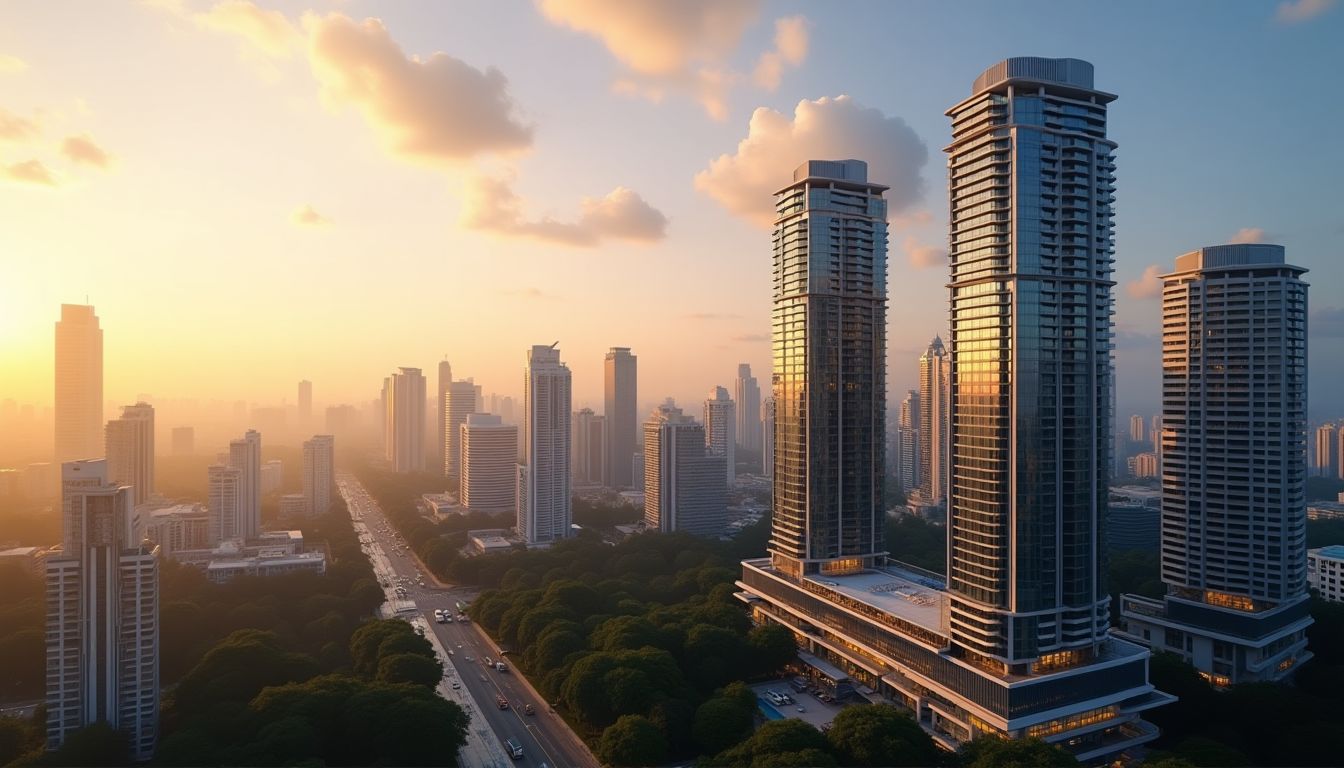
Malaysia's property headlines in June 2026 are dominated by luxury launches and Chinese ultra-high-net-worth buyers. But based on Verbrol's analysis of 30+ signals, the structural winner of this cycle is not the penthouse — it is the warehouse next to the EV plant. Here is why industrial property is the most underreported opportunity in Malaysian real estate right now.
Malaysia's Property Market Is Surging — But You Are Watching the Wrong Segment
Every property portal in Malaysia is currently fixated on the same narrative: luxury condos are back, Chinese ultra-wealthy buyers are circling Kuala Lumpur, and branded residences are commanding premiums that would have seemed delusional three years ago. The headlines are real. The data behind them is real. But based on Verbrol's analysis of 30+ signals drawn from news, YouTube, and social media over the past 48 hours, the segment generating the most durable, structurally anchored value in Malaysian property in 2026 is not the one on the glossy brochure.
It is the industrial shed beside the EV assembly line.
This is not a contrarian position for its own sake. It is a reading of converging signals that the residential-centric media cycle consistently underweights. Let me walk you through the thesis.
The Luxury Narrative Is Real, But It Is Already Priced In
Let us be precise about what is happening at the top end of the market. The rise of branded living is adding measurable new value to Malaysia's luxury property landscape, with international hotel brands attaching their names to residential towers and extracting a 15–30% price premium in the process. Tatler Asia has flagged Malaysia as an unexpected darling for China's ultra-rich property hunters, and that demand signal is genuine — MM2H policy revisions, ringgit competitiveness, and Kuala Lumpur's improving lifestyle infrastructure are all structural tailwinds.
How the luxury property market in Malaysia will move in 2026 is already well-documented across multiple platforms. The Savills Klang Valley Residential Property Monitor for Q4 2024 confirmed growth in both transaction volume and value — and that momentum has carried into 2026. According to NAPIC, residential transaction data has trended upward for five consecutive quarters.
But here is the structural problem: luxury residential is a sentiment-driven, liquidity-sensitive segment. When the macro environment shifts — and with global rate uncertainty still unresolved — it is the first segment to correct. The buyers are sophisticated. They know this. That is precisely why the smart institutional money in Malaysian property is not chasing penthouses. It is building industrial parks.
EVs Are Quietly Rewriting Malaysia's Industrial Property Map
The signal that most property commentators are treating as a sidebar is, in Verbrol's assessment, the dominant structural theme of Malaysia's property cycle for 2026–2028.
EdgeProp's recent analysis on how EVs are powering Malaysia's industrial property boom identifies something important: Malaysia's push to become a regional EV manufacturing and assembly hub — anchored by investments from Chinese OEMs, domestic incentives under the National Energy Transition Roadmap, and the NIMP 2030 industrial masterplan — is generating a direct, measurable demand shock for high-specification industrial real estate.
Think battery logistics facilities. High-power electrical infrastructure warehouses. Testing and certification campuses. Tier-2 supplier factories clustering around anchor EV assembly plants. These are not speculative assets. They are pre-committed, long-lease industrial units with tenants that have 10-year capex plans tied to them.
The numbers support this reading. Industrial property in Shah Alam, Serendah, and the greater Selangor corridor has seen rental yield compression — not because demand is weak, but because institutional capital is bidding up asset prices faster than rents can adjust. That is a bull market signal, not a warning sign.
This is why Sime Darby Property's move to launch a RM1.25 billion fund to invest in data centres and industrial assets is the most strategically significant property story of the quarter — not its top ranking at The Edge Malaysia Top Property Developers Awards 2024, which is a lagging indicator of past residential execution. The fund is a forward bet on exactly the industrial and digital infrastructure thesis Verbrol has been tracking across Southeast Asian markets.
You can monitor how these signals evolve in real-time through Verbrol Pulse, which aggregates property, investment, and sector intelligence across the region.
The Oversupply Problem Is Real — But It Is Segment-Specific, Not Market-Wide
Here is the contradiction at the heart of Malaysia's property narrative right now: The Malaysian Reserve is reporting that oversupply and high household debt weigh heavily on the property sector, while Asia Property Awards is simultaneously declaring that Malaysia's property market is surging. Both headlines are accurate. They are describing different segments of the same market.
Residential overhang — particularly in the RM500,000–RM800,000 high-rise segment in Kuala Lumpur and Johor — remains a genuine structural issue. According to data tracked via iProperty, unsold completed units in certain sub-markets have not cleared despite sustained developer incentive packages. High household debt-to-GDP ratios constrain organic first-time buyer demand. These are real headwinds.
But industrial vacancy rates tell the opposite story. Grade A industrial space in key corridors is running at sub-5% vacancy. This is a tale of two markets, and conflating them — as most generalist property coverage does — produces analytically useless conclusions.
For marketers and brand managers covering the property sector, the practical implication is this: the audience you want to reach in 2026 is not the same audience the 2023 playbook was built for. Industrial REIT investors, EV supply chain decision-makers, and institutional fund allocators behave differently from retail residential buyers. Their content consumption patterns, platform preferences, and decision timelines are structurally different. Campaigns built around property portals and lifestyle content will miss them entirely.
For brands looking to reach this emerging industrial property audience through credible content at scale, platforms like Creamatch — Malaysia's managed creator content platform — are increasingly relevant, particularly for financial services, logistics, and proptech brands that need authoritative, niche-reach content rather than broad lifestyle impressions.
The Verbrol Thesis: Industrial Property Is the Hidden Winner of Malaysia's 2026 Property Cycle
To summarise the argument precisely:
- Luxury residential is real and performing, but it is sentiment-sensitive and already in the headlines. The trade is crowded.
- Mid-market residential faces structural oversupply and debt-constrained demand. It is not the growth engine.
- Industrial property — specifically EV-adjacent, data centre-adjacent, and logistics-grade assets — is generating durable, long-lease, institutionally backed demand that is structurally insulated from rate sensitivity and consumer sentiment cycles.
- Sime Darby Property's RM1.25 billion industrial and data centre fund is the single clearest institutional signal that Malaysia's most sophisticated property operator agrees with this thesis.
Based on Verbrol's analysis of 30+ signals from news, YouTube, and regional media over the past 48 hours, the Malaysian property story that will matter most by Q4 2026 is not the branded penthouse in KLCC. It is the high-spec logistics park in Selangor being fitted out for an EV battery supplier you have not heard of yet.
Track those signals — not the brochures.
Track Property trends in real-time at verbrol.com
Read more on Verbrol Intelligence: