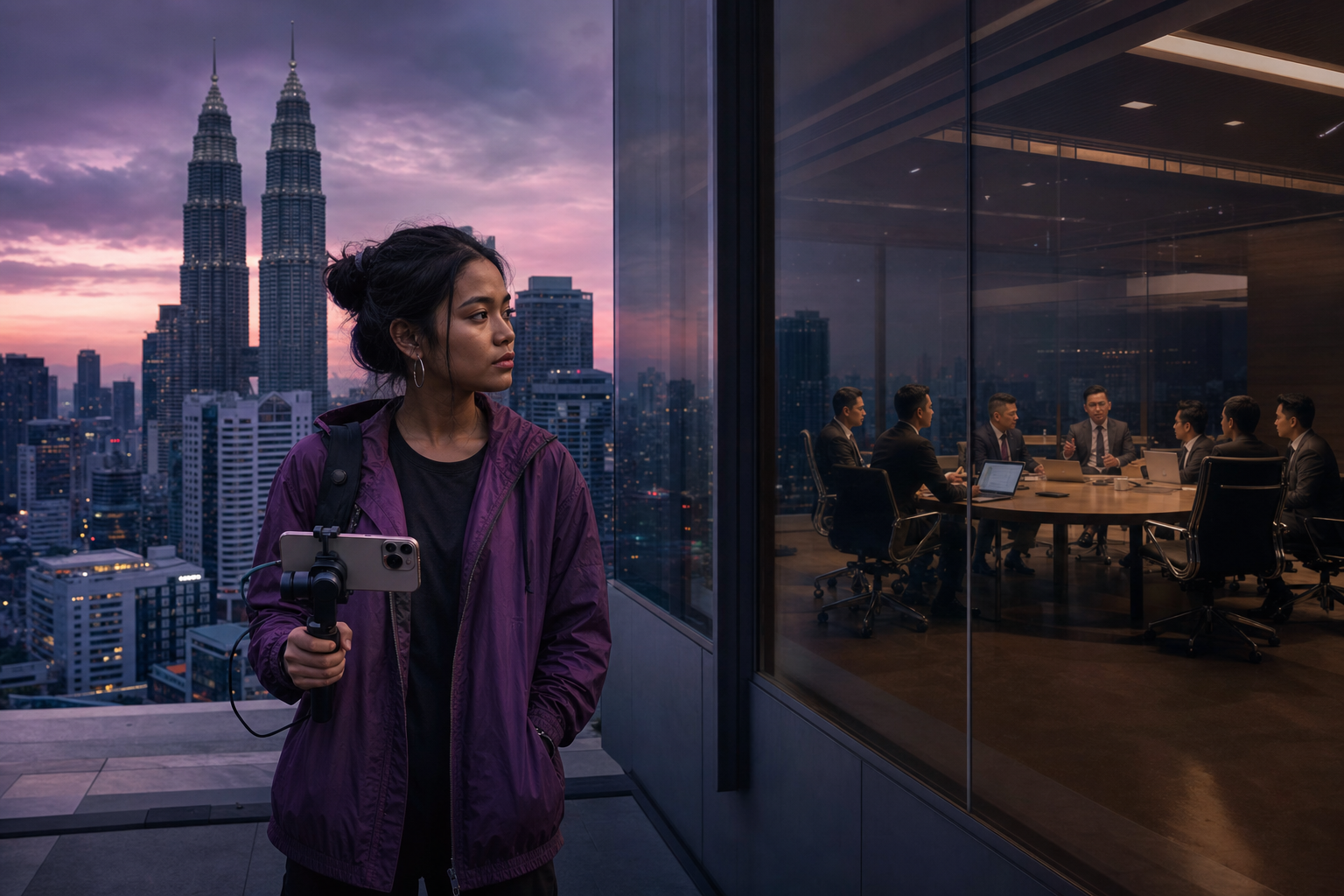
Big money is flowing into Malaysia's creator economy — but the infrastructure around it is tightening fast, and the creators caught in the middle are asking who this boom is actually for.
If you're a brand manager in Kuala Lumpur right now, the headline numbers look extraordinary. TikTok Shop Malaysia is logging over 100 million product searches daily, a figure that would have seemed like fiction three years ago. AnyMind Group has just dropped its Influencer Marketing in Malaysia 2026 Report, signalling that institutional money is taking this space seriously enough to build dedicated intelligence around it. Tourism Malaysia is partnering with influencers for domestic campaigns. Guardian is doing the same. On paper, this is the golden era for Malaysian creators.
So why does the ground feel so unstable?
The Platform That Built the Economy Is Also Shaking It
The tension at the centre of Malaysia's creator economy right now is almost entirely TikTok-shaped. ByteDance laid off over 700 staff at TikTok Malaysia — a cut that sent a clear signal about how the platform is recalibrating its cost structure even as its commerce numbers climb. Protesters gathered outside the TikTok office in Kuala Lumpur. The Malaysian Communications and Multimedia Commission (MCMC) summoned TikTok over the 'Player Knockout Battle' trend, raising questions about platform responsibility versus creator freedom. These are not background noise events — they are fault lines.
For Malaysian creators, TikTok is simultaneously their biggest opportunity and their most unpredictable landlord. When TikTok Shop launched its RM20 million #JomLokal stimulus package to support MSMEs and creators, it demonstrated both the platform's genuine economic footprint — estimated at RM20 billion impact on Malaysia's economy — and its strategy of using financial incentives to maintain goodwill while the regulatory ground shifts beneath it.
The lesson for brands partnering with creators on TikTok: the platform's commercial infrastructure is robust, but its political and regulatory environment is genuinely volatile. Factor that into campaign planning horizons.
When the IRB Comes for Your Free Gifts
The regulatory pressure is not limited to content moderation. The Inland Revenue Board's new guidelines have drawn sharp criticism from Malaysia's influencer community, who deem the new tax guidelines impractical — though tax experts argue they simply bring creators into line with other professionals. The detail that has caused the most anxiety: free gifts and digital tokens now count as taxable income under the new IRB guidelines.
For a mid-tier creator whose income is partly product seeding, partly cash, and partly barter — this is a bookkeeping nightmare. The sophistication required to comply is precisely what most independent creators lack.
This is where managed creator platforms become genuinely useful rather than just convenient. Creamatch, Malaysia's managed creator content platform, positions itself to handle exactly this kind of structural complexity — matching brands with creators while managing the commercial framework around the collaboration. As tax compliance becomes a real operational burden for individual creators, the platforms that absorb that friction will attract the most bankable talent.
The parallel legal case involving influencer Pui Yi's former business partner, who was remanded over a RM2.85 million tax fraud probe, underscores how seriously authorities are beginning to treat creator-adjacent financial structures. This is not hypothetical risk anymore.
Ethical Standards and the Question of Who Sets the Rules
Beyond tax, Malaysia is actively setting influencer ethical standards as digital speech regulations take shape. The government's move to criminalise cyberbullying — triggered in part by the suicide of a Malaysian influencer — marks a genuine moral turning point, but it also accelerates a broader pattern: the formalisation of an industry that built its identity on informality.
For brand managers, this creates a due-diligence imperative that didn't exist two years ago. The creator you partner with is not just a distribution channel — they carry reputational and, increasingly, legal exposure. Brands that treat creator vetting as a checkbox exercise are taking on risk they may not have priced.
SAYS and Cilisos, two of Malaysia's most established digital-native content platforms, have long operated with editorial structures that independent creators lack. As compliance requirements increase, the creators and platforms with professional infrastructure will pull ahead of those relying on instinct and reach alone. The gap between "popular creator" and "commercially sustainable creator" is widening.
RedNote's emergence as an alternative platform — particularly among Malaysians with ties to Chinese digital culture, as CNA reports on its role for those navigating China's 'involution' pressures — is a subplot worth watching. Platform diversification is no longer a growth strategy; for some creators, it is a risk management strategy.
What Brands and Agencies Should Actually Do With This
The creator economy in Malaysia is not slowing down — the AnyMind 2026 report and TikTok Shop's commerce numbers confirm that. But the operating environment has fundamentally changed, and strategies built for 2023 will underperform in this new landscape.
Here is what the current signals suggest for practitioners:
-
Treat creator compliance as a partnership responsibility. If your brand is seeding products, gifting experiences, or paying in digital tokens, understand how that lands under the new IRB guidelines. Work with creators or platforms like Creamatch that can structure deals correctly from the outset.
-
Diversify platform exposure without abandoning TikTok. TikTok Shop's 100 million daily searches in Malaysia is not a number you walk away from. But the layoffs, the regulatory summoning, and the protest outside the KL office are signals that concentration risk is real. Astro's owned digital channels, Shopee Live, and Lazada's creator affiliate programmes offer meaningful alternatives for campaign weight distribution.
-
Invest in creator due diligence infrastructure. The Malaysian Reserve's coverage of new ethical standards signals that regulators expect brands, not just creators, to model responsible behaviour.
-
Watch the micro-creator segment closely. The #JomLokal RM20 million stimulus is explicitly targeting MSMEs and smaller creators. That is where authentic commerce conversion — and lower CPMs — will live in the next 12 months. Bernama has been tracking government support for this segment consistently, and it aligns with the Xamble Express platform model enabling everyday creators, including mothers turning passion into income, to monetise systematically.
The Real Shape of This Boom
Malaysia's creator economy is not in crisis — but it is in a reckoning. The platforms that powered the boom are being scrutinised. The creators who built audiences on informal income streams are being formalised. The brands that rode cheap creator reach are being asked to take more responsibility. All of this was inevitable. The question is which players adapt fast enough to stay ahead of it.
You can track how these signals evolve — creator sentiment, platform policy shifts, brand partnership volumes — through Verbrol Pulse, which aggregates Southeast Asian market intelligence in real time.
The brands that will win the next phase of Malaysia's creator economy are not the ones with the biggest influencer budgets. They are the ones that understand creators are now operating in a genuinely complex regulatory and commercial environment — and build partnerships accordingly.
Track Creator Economy trends in real-time at verbrol.com
Read more on Verbrol Intelligence:
- Malaysia's Creator Economy Is Growing Up — Are Brands Ready?
- Creator Economy Malaysia 2026: Duit Besar, Risiko Lebih Besar
- Creator Economy Malaysia Sedang Berubah — Dan Kebanyakan Brand Masih Guna Playbook Lama
Related Reading
- Creator Economy Malaysia 2026: Duit Besar, Risiko Lebih Besar
- Malaysia's Creator Economy Is Growing Up — Painfully
- Malaysia's Creator Economy Is Growing Up — Are Brands Ready?
Frequently Asked Questions
Why is Malaysia's creator economy booming right now? Malaysia's creator economy is growing rapidly due to platforms like TikTok Shop logging over 100 million product searches daily, increased institutional investment in influencer marketing, and major brands like Tourism Malaysia, Guardian, and Astro partnering with creators for campaigns. This represents a significant shift in how Malaysian businesses approach digital marketing and e-commerce.
What happened to TikTok Malaysia and why does it matter for creators? ByteDance laid off over 700 staff at TikTok Malaysia, signaling the platform is cutting costs despite growing commerce numbers. This creates uncertainty for creators who rely on TikTok as their primary income source, making the platform simultaneously their biggest opportunity and most unpredictable business partner.
Is TikTok the only platform Malaysian creators depend on? While TikTok is the dominant platform for Malaysian creators, other platforms like Shopee and Lazada also play significant roles in the creator economy. However, TikTok's market dominance and recent instability make it the central point of tension affecting creator income and job security.
What regulatory issues are affecting Malaysian creators on TikTok? The Malaysian Communications and Multimedia Commission (MCMC) has summoned TikTok regarding the 'Player Knockout Battle' trend, raising questions about platform responsibility and creator freedom. These regulatory actions create additional uncertainty about what content is acceptable and who bears responsibility for platform-related issues.