Big money, new laws, and a platform in political crossfire — Malaysia's creator economy has stopped being a side hustle and started behaving like a proper industry. The brands that adapt now will own the next wave.
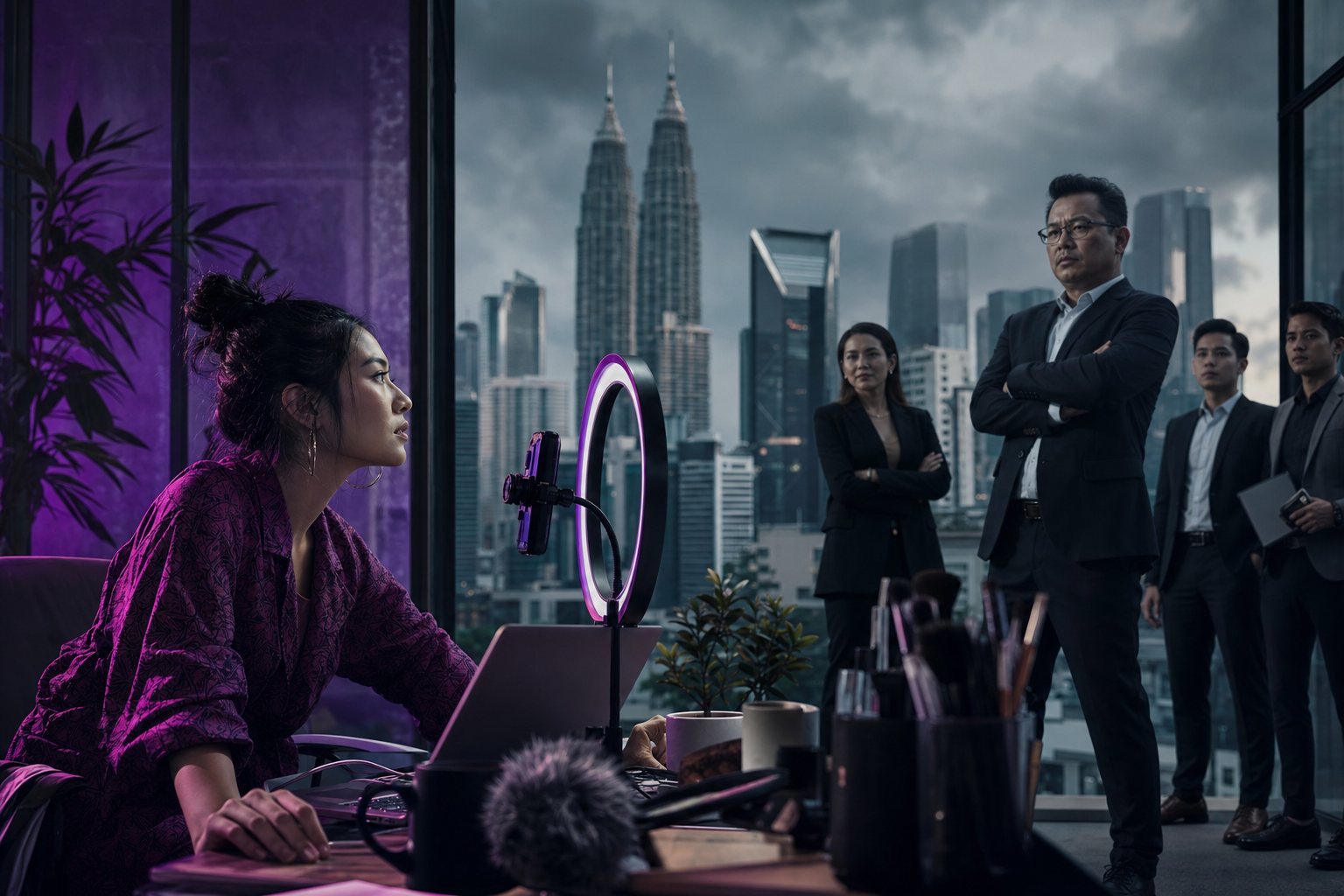
It is a weekday afternoon in Bangsar South, and a woman in her late twenties is filming her third unboxing video of the day. She has a ring light, a branded backdrop, and a Shopee affiliate dashboard open on her laptop. She is not famous — at least not in the traditional sense. She has 47,000 TikTok followers, a steady conversion rate that most retailers would envy, and a tax filing question she does not yet know how to answer.
This is where Malaysia's creator economy actually lives. Not in the headline numbers — though those numbers are genuinely staggering — but in the practical, structural questions that determine whether this industry matures or fragments.
The signals from the past 48 hours make one thing unmistakably clear: Malaysia's creator economy has entered a new phase. The era of unregulated, frictionless growth is closing. What replaces it will reward brands, agencies, and creators who understand how the rules of this market are being rewritten right now.
The Platform Moment: TikTok's Dominance and Its Contradictions
Let's start with the numbers that reframe everything else. TikTok Shop Malaysia now logs over 100 million product searches daily, a figure that positions it not merely as a content platform but as a genuine search and commerce engine competing with Lazada and Shopee on discovery intent. That single statistic should permanently change how brand managers allocate their content budgets.
Yet TikTok in Malaysia is simultaneously navigating serious structural turbulence. ByteDance has laid off over 700 staff at TikTok Malaysia — a restructuring that signals a leaner, more algorithmically-automated local operation. Protesters have gathered outside TikTok's Kuala Lumpur office. The Malaysian government has summoned TikTok over the viral 'PK Battle' trend, which raised concerns about its psychological impact on young users, with MCMC formally requesting answers from the platform. And separately, TikTok Shop has deployed a RM20 million stimulus package — the #JomLokal initiative — to onboard thousands of Malaysian MSMEs as sellers and creators.
This is not contradiction. This is what platform maturity looks like. TikTok is simultaneously the most commercially powerful creator channel in Malaysia and the most politically scrutinised. For brands, the strategic implication is clear: you need TikTok for reach and commerce, but you cannot afford to build your entire creator strategy on a single platform that faces regulatory volatility. Diversification is not just prudent — it is an architectural necessity.
The Regulatory Layer That Changes Everything
The creator economy in Malaysia has, until recently, operated in a relatively permissive grey zone. That zone is now being filled in rapidly, from multiple directions.
The Inland Revenue Board's new guidelines have declared that free gifts and digital tokens received by influencers constitute taxable income — a ruling that affects virtually every active content creator in the country. Many creators have pushed back, calling the guidelines impractical to implement, though tax experts have noted the framework ensures fairness across income categories. Meanwhile, Malaysia is moving to criminalise cyberbullying following the suicide of a prominent influencer, a tragic case that has accelerated long-pending digital speech legislation. And the government has also moved to formalise ethical standards for influencers as part of a broader effort to shape digital speech norms.
Then there is the Pui Yi case — where a former business partner of one of Malaysia's most-followed creators was remanded over a RM2.85 million tax fraud probe. The message to the industry is unambiguous: creator-adjacent businesses are now on the IRB's radar.
For brands and agencies, this regulatory acceleration is actually an opportunity. Creators who operate with financial transparency, documented deliverables, and proper commercial agreements become safer partners than those who operate informally. This is the moment to professionalise your influencer contracting framework — not because the law demands it of you directly, but because the creators who survive this environment will be the ones worth working with.
Where the Smart Brand Money Is Moving
AnyMind Group's newly released Influencer Marketing in Malaysia 2026 Report arrives at a pivotal moment. The report's release itself is a signal — the infrastructure of measurement, attribution, and managed campaigns is maturing rapidly around the creator space.
Tourism Malaysia and Guardian have both activated influencer partnerships for domestic tourism campaigns, reflecting a broader trend: government-linked entities and regulated consumer brands are now confident enough in creator marketing to allocate serious budgets. The platform Bernama has tracked multiple such government-aligned creator initiatives in recent quarters.
Separately, the Xamble Express platform is enabling a new category of creator — mothers converting personal passion and lived experience into monetisable influence — which signals that the creator workforce is diversifying well beyond youth-focused entertainment content.
For brand managers asking where to direct investment, the answer in mid-2026 is increasingly: managed, accountable creator relationships over one-off viral bets. Platforms like Creamatch — which specialises in connecting Malaysian brands with creators through a managed content model — represent exactly the kind of infrastructure that makes creator partnerships repeatable, measurable, and brand-safe in this more regulated environment. The era of a marketing manager sliding into a creator's DMs and wiring payment via bank transfer is ending. Managed platforms are its replacement.
The RedNote phenomenon is also worth watching. Chinese users fleeing platform restrictions have discovered Malaysia as a content destination on RedNote, drawing cross-border content attention to Malaysian lifestyle and culture. Brands with export ambitions — particularly in food, tourism, and fashion — should be mapping this audience flow now, not in 2027.
The Actionable Framework: What Marketers Must Do Before Q3 2026
The structural shifts above translate directly into tactical priorities. Here is where to focus:
-
Audit your influencer contracts now. With IRB guidelines active and fraud cases in the headlines, every brand partnership agreement needs documented deliverables, declared compensation values, and clear IP ownership clauses. Informal arrangements are a liability.
-
Build platform redundancy. TikTok delivers commerce volume that no other platform currently matches in Malaysia, but its regulatory situation demands that you maintain parallel content relationships on Instagram, YouTube, and emerging platforms like RedNote for specific demographics.
-
Move toward managed creator relationships. One-off campaigns optimised purely for reach are giving way to longer-term, performance-tracked creator partnerships. Tools that offer transparency on creator audience quality, content compliance, and conversion attribution — like those tracked through Verbrol Pulse — give brand managers the oversight they need in a more accountable environment.
-
Treat creators as business partners, not media placements. The SAYS and Cilisos model — where editorial credibility is the underlying asset — offers a template for brands thinking about content that outlasts a single campaign cycle. Invest in creator relationships that build genuine audience trust, not just momentary visibility.
-
Watch the micro-creator tier closely. The Xamble Express story — mothers building income through passion-led content — points to a micro-creator economy that is growing in both volume and authenticity. This tier frequently outperforms macro-influencers on engagement quality, at a fraction of the cost.
Malaysia's Creator Economy Is Now a Serious Industry
The morning of Malaysia's creator economy, when anyone with a smartphone and enough charisma could build an audience and monetise it without paperwork or accountability, is drawing to a close. What is replacing it is more complex, more regulated, more institutionalised — and considerably more valuable for brands that know how to navigate it.
The platforms are consolidating power and facing political scrutiny simultaneously. The regulators are drawing lines that the industry will have to work within. The measurement infrastructure is catching up to the spend. And the creators who will define the next five years of this market are already operating — they are just doing it with ring lights, affiliate dashboards, and, increasingly, proper accountants.
For Malaysian marketers and brand managers, the window to build structured, scalable creator strategy is right now — before the next wave of regulation closes off the informal pathways that your competitors are still relying on.
Track Creator Economy trends in real-time at verbrol.com
Read more on Verbrol Intelligence:
- Creator Economy Malaysia 2026: Duit Besar, Risiko Lebih Besar
- Creator Economy Malaysia Sedang Berubah — Dan Kebanyakan Brand Masih Guna Playbook Lama
- Creator Economy Malaysia Sedang Pecah — Dan Bukan Semua Orang Akan Selamat
Related Reading
- Malaysia's Creator Economy Is Booming — So Why Are Creators Getting Squeezed?
- Creator Economy Malaysia 2026: Duit Besar, Risiko Lebih Besar
- Malaysia's Creator Economy Is Growing Up — Painfully
Frequently Asked Questions
What is Malaysia's creator economy and how big is it? Malaysia's creator economy refers to content creators who monetize their work through platforms like TikTok, Shopee, and Lazada by creating content such as unboxing videos and product reviews. While exact size varies, TikTok Shop Malaysia alone logs over 100 million product searches daily, showing the creator economy has become a significant commerce and content platform comparable to traditional e-commerce giants.
How can creators make money in Malaysia's creator economy? Malaysian creators earn money primarily through affiliate programs on platforms like Shopee and Lazada, where they earn commissions on products they promote and sell through their unique links. Many also partner with brands directly or use monetization features on TikTok, combining content creation with e-commerce to build sustainable income streams.
What challenges are Malaysia's content creators facing? Creators in Malaysia are now facing new regulatory and tax compliance issues as the industry matures, moving away from an era of unregulated growth toward stricter rules and requirements. Many creators lack knowledge about tax filing and other legal obligations, creating practical challenges despite their commercial success.
Are brands ready to work with Malaysia's creators? According to the article, brands and agencies need to understand that Malaysia's creator economy has entered a new regulatory phase, requiring them to rethink their content budget allocation and strategies. Brands that adapt to these new market rules will be better positioned to succeed in partnering with creators compared to those using outdated approaches.