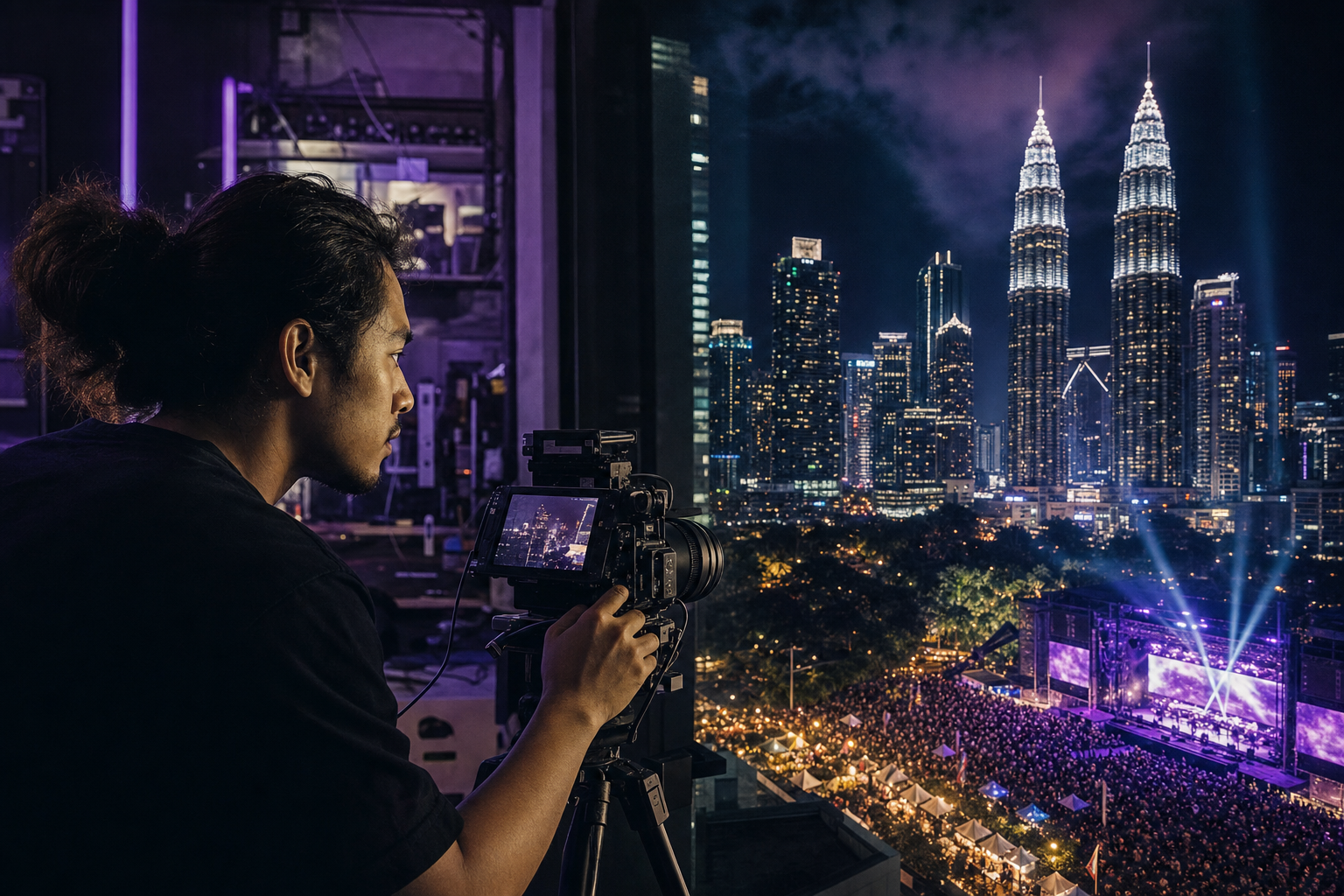
Malaysia's entertainment sector is having a genuine moment — local IP is cracking regional charts, festivals are back with serious scale, and homegrown film is earning global recognition. The question isn't whether the boom is real. It's who's actually monetising it.
Picture this: it's a Thursday night at Lalaport Bukit Bintang, and PartyBox 360 — with its rage rooms and Running Man-style game zones — has a queue snaking past the food court. Two floors up, someone's rewatching BoBoiBoy on their phone while waiting. That's the state of Malaysian entertainment right now: immersive, multi-format, and genuinely exciting. But if you're a brand manager or agency planner trying to ride this wave, the landscape is messier than the headlines suggest.
Local IP Is Having Its Biggest Year — And It's Not a Fluke
Let's start with the headline that actually matters. BoBoiBoy has topped Netflix charts in Malaysia, Indonesia, and Singapore, making it one of the clearest proofs yet that Southeast Asian audiences will actively choose homegrown content when the quality is there. This isn't a charity watch — it's competitive viewing against global tentpoles.
At the same time, local film is punching harder than it has in years. The Malaysian-produced action film Chelot is earning Malaysia Book of Records recognition for a five-minute continuous action sequence — the kind of craft milestone that signals a maturing production ecosystem, not just isolated viral moments. Actress Scha Alyahya recently described Malaysian entertainment entering a golden phase, pointing to a run of projects — from Awan Dania to Kata Hati — that are resonating not just domestically but regionally.
For marketers, the signal here is clear: IP-led entertainment is no longer a niche bet in Malaysia. Brands that previously defaulted to international content partnerships should be rethinking that calculus.
The Live Experience Economy Is Back, and It's Bigger Than Pre-Pandemic
The AirAsia Hausboom Festival 2025, powered by Hotlink, is returning with its "Paint the Town Red" concept — 32 local and international artists combined with Malaysia's largest fashion and food festival. That's not a concert. That's a full-spectrum cultural event, and it reflects where Malaysian audiences' appetite for live experiences has landed: they want immersion, they want community, and they want it packaged beautifully.
Mekdi All Stars drew massive crowds to Stadium Merdeka for a charity event blending celebrity culture with social impact. Happy Hour Club in KL is pulling foot traffic with DIY creative workshops and viral food concepts like croffle bars. These aren't separate trends — they're the same trend. Malaysians are spending on experiences that give them something to do, not just something to watch.
For brands attached to the old model of sponsoring a stage and slapping a logo on a banner, this is a genuine strategic gap. The value in 2025 is in designing the experience layer — the shareable moment, the participatory hook, the reason someone films their own content and distributes it organically. Platforms like Creamatch, which connects Malaysian brands with managed creator talent, are increasingly the bridge between these live activations and the digital amplification that actually drives ROI.
The Creator Economy Is Shifting — Fast
YouTube is cracking down on AI-generated faceless content, which matters enormously for Malaysian creators who built channels on that model. The algorithm shift toward authentic, personality-led content isn't just a platform policy change — it's a structural reset of what "content" means commercially.
Meanwhile, TikTok had protesters gather outside its Kuala Lumpur office this week, a reminder that the platform's operating environment in Malaysia remains politically charged even as it remains commercially dominant. Brands navigating creator partnerships here need to be thinking about platform risk in a way that wasn't necessary two years ago.
There's also a genuinely interesting case study emerging from East Malaysia. Local Sabahan and Sarawakian artists created a Kaamatan and Gawai music video in partnership with Maxis — a collaboration that demonstrates how telco brands can generate authentic cultural content when they stop treating it as a CSR checkbox and start treating it as real creative commissioning. According to Bernama, this kind of regional cultural representation is increasingly part of the conversation around what Malaysian entertainment actually looks like at a national level.
For agencies and brand managers, the takeaway isn't just "work with creators." It's: work with the right creators, on the right platforms, with enough creative latitude that the content lands as genuine rather than sponsored. The Verbrol Pulse feed tracking these creator and brand partnership signals shows consistent engagement spikes on content that leans into authentic cultural identity — whether that's East Malaysian festival music or a BoBoiBoy episode that parents and kids are watching together.
Where the Real Value Gap Is
Here's the contrarian read on all of this: Malaysia's entertainment ecosystem is producing genuine cultural hits — but the monetisation infrastructure hasn't caught up.
The Edge Malaysia notes that the future of entertainment is a smarter experience, not just better screens. That's true. But for Malaysian entertainment specifically, the gap is in how local IP owners, platforms, and brand partners are structured to capture value from the boom.
Astro remains the dominant aggregator for Malaysian premium content, but its model is under pressure from streaming-native audiences. Tonton has carved a niche in Malay-language drama, but regional distribution of Malaysian content still relies heavily on deals that favour global platforms over local producers. GSC and TGV Cinemas are recovering post-pandemic, but the theatrical model is increasingly competing with an experience economy that offers richer participation for similar ticket prices.
The brands winning right now are the ones treating entertainment as infrastructure, not as advertising inventory. Hotlink powering the Hausboom Festival isn't a sponsorship — it's a platform play. Maxis commissioning original cultural music content isn't a campaign — it's IP creation. That's the shift worth watching.
What Brand Managers Should Actually Do With This
- Back local IP early. BoBoiBoy's regional chart success didn't happen overnight — the IP has been built consistently over years. Brands that attached early are now sitting on genuinely premium association.
- Design for participation, not just visibility. Whether it's a festival activation or a creator brief, the ROI question in 2025 is: what does the audience do with this?
- Diversify platform bets. With TikTok's operating environment uncertain and YouTube's algorithm shifting, relying on a single platform for creator amplification is a structural risk.
- Look East. East Malaysian cultural moments — Kaamatan, Gawai, the distinct creative voices emerging from Sabah and Sarawak — are consistently underserved by KL-centric brand strategies.
Malaysia's entertainment moment is genuine. But the brands and agencies that turn it into durable commercial value will be the ones who treat it as a strategic ecosystem play, not a campaign opportunity. The infrastructure — from creator platforms to regional IP distribution — is still being built. That's not a warning. That's an opening.
Track Entertainment trends in real-time at verbrol.com
Read more on Verbrol Intelligence: