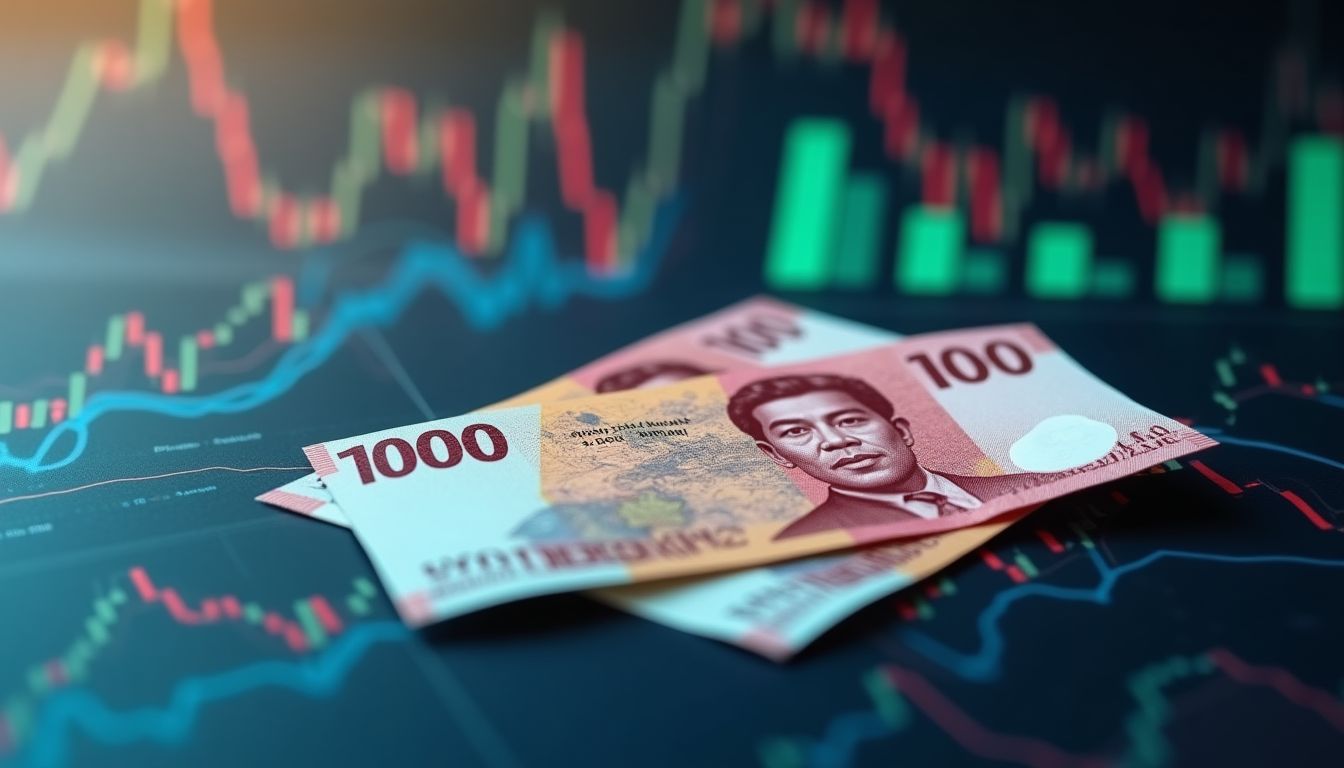
Big deals are arriving on Bursa Malaysia at a pace not seen in nearly a decade — but the harder question is whether the structural conditions exist to make this moment last.
The Morning the Market Woke Up
On the morning Sunway Healthcare's shares began trading, the dealing floor on Exchange Square carried the particular electricity that accompanies a genuine market event. This was not a routine listing. Sunway Healthcare's debut marked the biggest Malaysia IPO in nine years, according to Bloomberg — a statement of intent from a healthcare sector that has spent years building quietly in the background. Within days, reports emerged that Malaysia's largest pharmaceutical chain, Big Caring, is said to be seeking RM3 billion in its own IPO, an ambition that, if realised, would set a further benchmark for the market's appetite.
Taken together, these are not coincidental signals. They represent a genuine inflection point for Malaysian capital markets — one that merits serious scrutiny rather than celebration alone.
A Market in Motion, But Not Without Friction
The broader context supports cautious optimism. Malaysia's total trade reached RM3.1 trillion in 2025, with Penang emerging as the dominant export engine, according to the Department of Statistics Malaysia. Tech and financial stocks have been leading the recent Bursa Malaysia rally, and the ACE Market is showing its own momentum, with RNG Tech eyeing a July 7 listing at RM0.13 per share — evidence that the IPO cycle is not confined to headline-grabbing mega-deals but is percolating through smaller-cap territory as well.
At the same time, Bank Negara Malaysia has held its benchmark interest rate at a record low, a posture it has maintained against a backdrop of global uncertainty. The central bank has flagged geopolitical risk as a key variable — a prudent acknowledgement that external shocks remain capable of interrupting domestic momentum at short notice.
This is precisely where the conventional narrative becomes too comfortable. The temptation, when markets rally and IPOs oversubscribe, is to conclude that structural reform has arrived. The more considered reading is that liquidity conditions and sectoral timing have aligned — which is not the same thing.
The MY Value Up Question
Perhaps the most consequential development in Malaysian equity markets right now is neither a listing nor a rate decision. It is the MY Value Up programme, Kuala Lumpur's answer to Seoul's celebrated corporate governance push. The programme aims to encourage listed companies — particularly those trading at persistent discounts to book value — to articulate credible plans for improving shareholder returns.
The concept is sound. The execution remains unproven. As commentary in KLSE Screener has noted, the programme must pass institutional investors' scrutiny if it is to move markets in any durable sense. Domestic fund managers at institutions such as Maybank and Public Bank's asset management arms will be watching whether the initiative generates genuine earnings improvement or merely better investor relations packaging. Foreign institutional capital — which is what Malaysia ultimately needs to deepen its equity market — will be even less forgiving of optics unaccompanied by substance.
For brands and financial services operators tracking market positioning, Verbrol Pulse offers a useful lens on how these policy signals are landing in public and professional discourse. The divergence between headline optimism and institutional hesitancy is often visible in the signal layer before it appears in price action.
The Structural Bets Worth Watching
Beyond the IPO pipeline, three structural shifts deserve attention from anyone with capital or commercial exposure to Malaysian finance.
First, cloud infrastructure and digital finance are converging faster than regulation anticipated. As explored in analysis on how cloud infrastructure is shaping Malaysia's financial future, the back-end transformation of Malaysian banking is accelerating. Institutions such as CIMB and Hong Leong Bank have moved well beyond tokenistic app development into genuine infrastructure migration. The competitive pressure this exerts on mid-tier players is real, and the compliance cost implications for Bursa Malaysia-listed financial firms will appear in earnings in ways analysts have not yet fully priced.
Second, the retail investor layer is more sophisticated than it was even three years ago. The proliferation of platforms — Touch 'n Go eWallet's investment features, Versa's cash management offering, StashAway Malaysia's risk-tiered portfolios — has introduced a generation of investors who understand yield differentials and expect transparency. This cohort will not quietly absorb the kind of corporate governance failures that older market cycles absorbed. MY Value Up, if it succeeds, may partly owe its success to this constituency.
Third, the environmental risk conversation is arriving in Malaysian boardrooms. The World Bank's practical guide for Malaysia's financial sector on protecting nature and portfolios makes the institutional case directly: financial exposure to biodiversity and climate risk is no longer theoretical. For Malaysian banks — AmBank, RHB and Bank Islam among them — the translation of nature-related risk into loan book provisioning is a governance challenge that regulators will increasingly formalise.
What the Moment Actually Requires
The instinct to read Malaysia's current capital market activity as a vindication of reform is understandable. The Sunway Healthcare listing, the Big Caring IPO ambition, the trade surplus — these are legitimate positives. But durable market confidence is built on the foundations that do not make headlines: consistent enforcement of disclosure standards, genuine board accountability, and a rate environment that does not punish long-term capital allocation.
The contrast with Indonesia is instructive. Bloomberg's reporting on how unpredictable state intervention under President Prabowo is unsettling investor confidence in Jakarta serves as a useful reminder that Southeast Asian emerging markets are judged comparatively. Malaysia's relative institutional stability is an asset — but it requires maintenance, not assumption.
For marketers, brand strategists, and financial services operators seeking to understand how these dynamics are shaping audience sentiment and competitive positioning, the signal layer tracked through Verbrol provides the kind of granular, real-time intelligence that headline indices cannot. The gap between market narrative and market reality is where strategic advantage tends to live.
Malaysia's financial sector is not at a crossroads. It is at a moment of genuine possibility — one that will be squandered or sustained depending on whether the institutions involved choose substance over spectacle.
Track Finance trends in real-time at verbrol.com
Read more on Verbrol Intelligence: