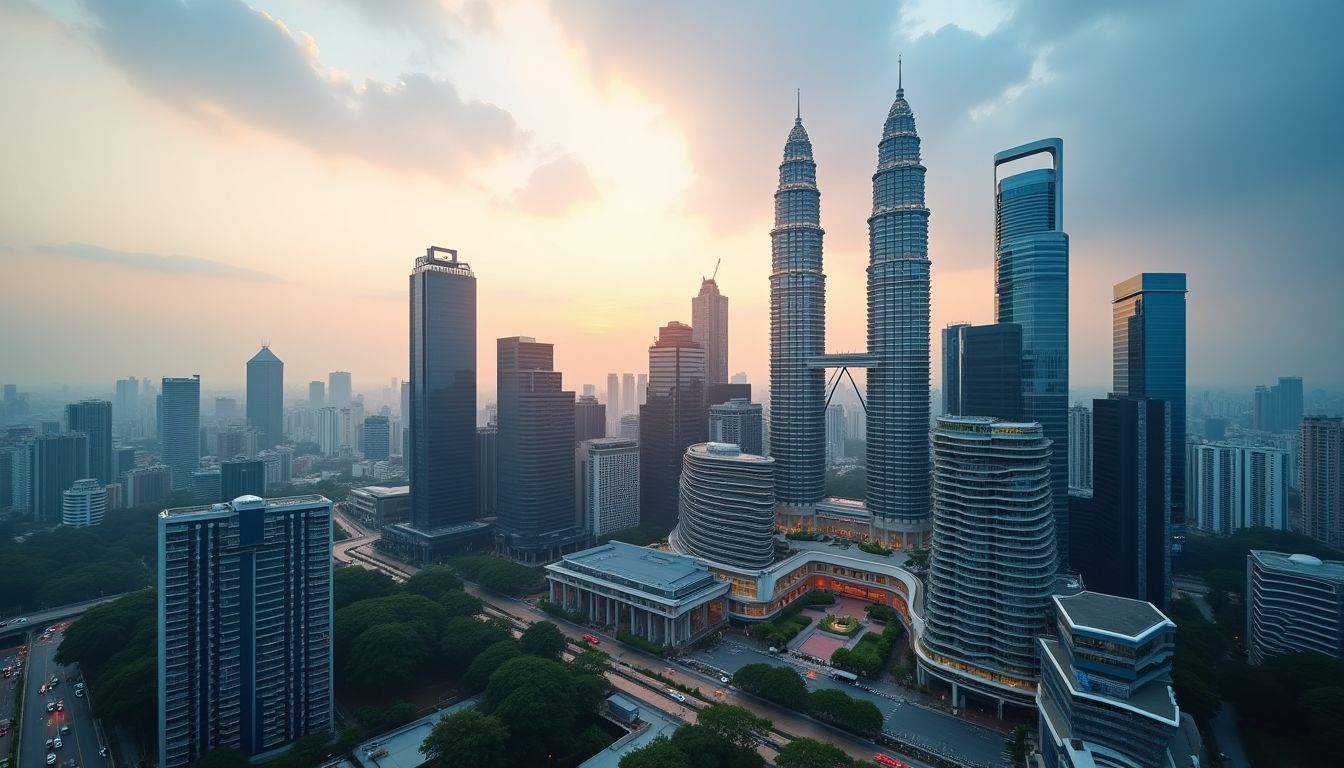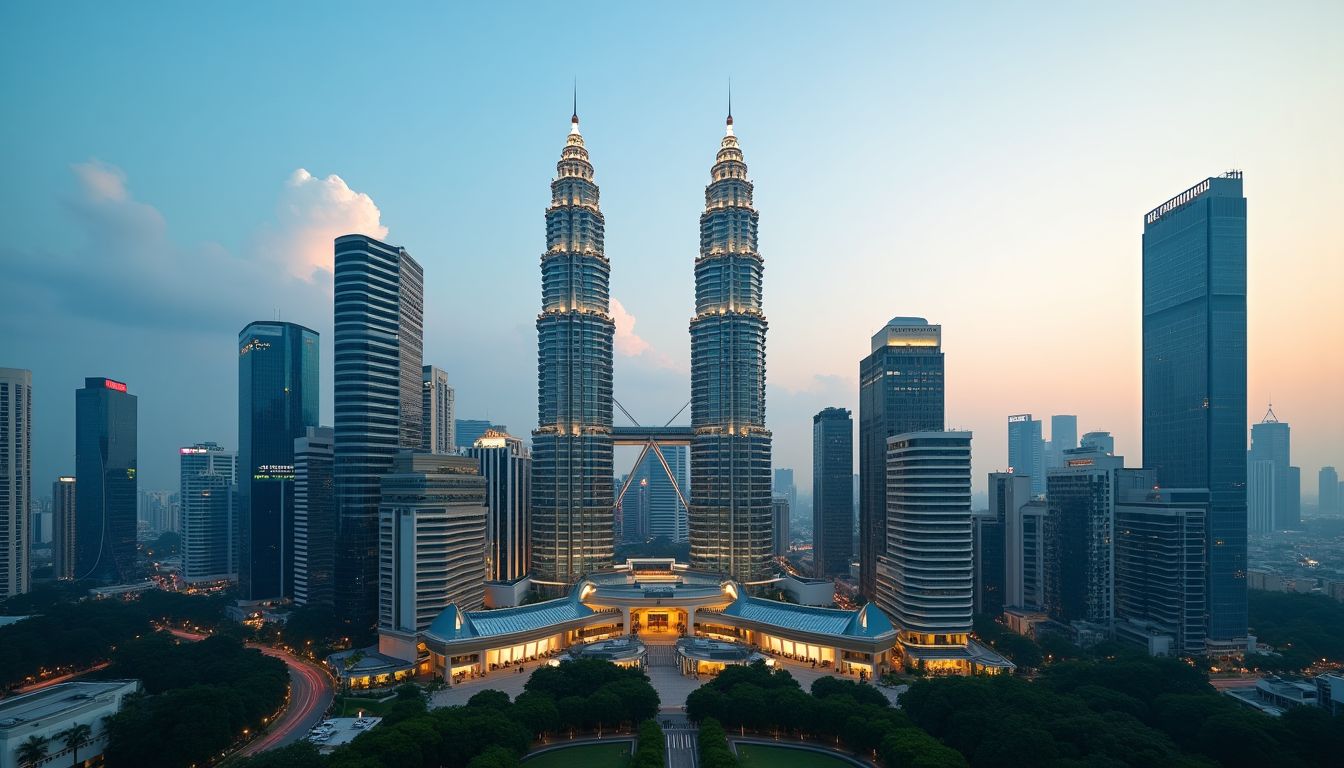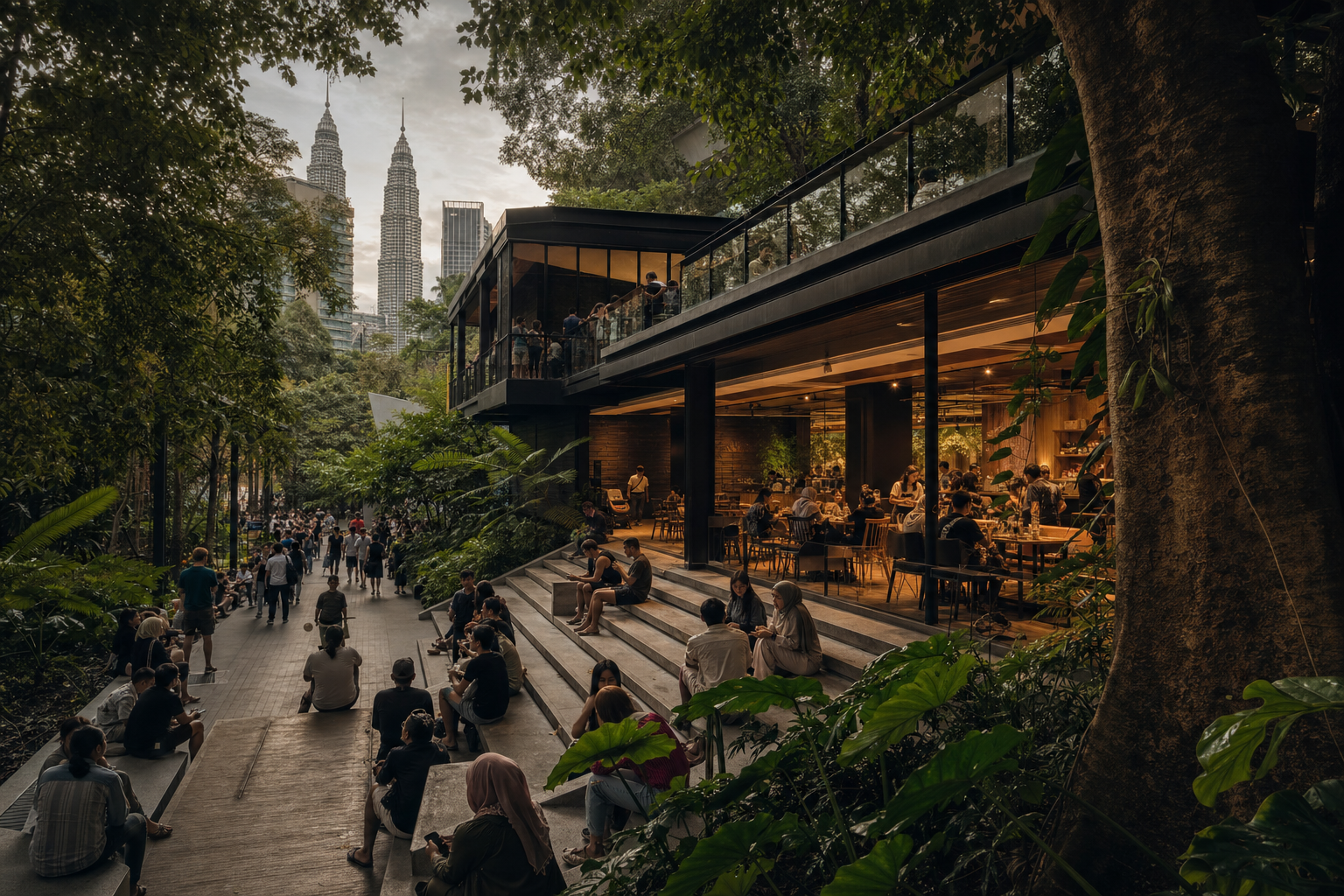
Malaysians aren't just buying more — they're buying differently. The biggest signal in this market right now isn't a product launch; it's a feeling people are willing to queue for.
The Queue Tells You Everything
Somewhere in Kuala Lumpur this week, someone waited forty-five minutes to draw on a wall, eat a croffle, and call it a Tuesday afternoon well spent.
That is not a trivial detail. It is, arguably, the most important signal in Malaysia's lifestyle market right now.
Happy Hour Club, one of KL's newest creative café concepts, has positioned itself as what its founders describe as among the first DIY creative cafés in Malaysia — a space where the activity is the product. You don't just consume; you make, you play, you photograph the process. The croffle is almost beside the point. What people are paying for is the story they get to tell afterwards.
This is the structural shift that Malaysian marketers need to internalise heading into the second half of 2026: the lifestyle market is no longer primarily organised around objects. It is organised around moments. And the brands that understand this distinction are pulling away from the ones that don't.
From the Mall Floor to the Memory Bank
For two decades, the architecture of Malaysian lifestyle retail was essentially vertical — anchor tenants like Aeon and Parkson holding the middle ground, specialty players like Padini and Bonia carving out their lanes on the fashion floor, and the whole structure held together by footfall logic. You came for one thing, you browsed, you bought.
That model hasn't collapsed — but it has been quietly hollowed out from below.
Consider what's drawing crowds in the same city right now. PartyBox 360 at Lalaport Bukit Bintang City Centre is packaging a running man game zone, a rage room, and an escape room under a single roof. These are not amenities attached to a retail experience. They are the experience, and the retail — merchandise, food, photo prints — follows naturally in their wake.
This matters for brand managers because it reframes the competitive landscape entirely. Your competitors are not necessarily other products in your category. They are other claims on a person's Saturday afternoon. The wellness class, the creative workshop, the FIFA World Cup watch party — these are all competing for the same discretionary hours that once went to mall browsing.
Speaking of which: the 2026 FIFA World Cup is driving its own lifestyle moment in Malaysia, with venues, F&B operators, and apparel retailers all manoeuvring around the tournament calendar. The jerseys and the sneakers are part of it — New Balance's summer 204L drop and the Caitlin Clark Nike Kobe colourway are both riding global cultural momentum — but the deeper opportunity is in the gathering itself. Brands that create the space for collective experience, rather than simply placing product adjacent to it, are the ones converting cultural energy into commercial loyalty.
The Wellness Undercurrent and What Government Is Starting to Notice
Run quietly beneath all of this is a wellness current that is becoming harder to ignore. Health advocates in Malaysia are now calling on the government to actively reward citizens who practise healthy lifestyles, citing preventive healthcare as a long-term cost solution for the public health system. According to Free Malaysia Today, proposals include incentive schemes tied to measurable healthy behaviours — exercise frequency, nutrition choices, preventive screenings.
For lifestyle brands, this is not a peripheral policy story. It is a market signal. When governments begin pricing healthy behaviour into the reward architecture of daily life, they are — whether intentionally or not — legitimising the entire wellness economy. Brands positioned at the intersection of lifestyle and wellbeing stand to benefit from a policy tailwind that could formalise consumer habits already forming organically.
Mr DIY, which has spent years building a value-led home and lifestyle proposition, is already living in this space — the idea that self-improvement, home improvement, and personal expression are not luxury impulses but ordinary ones. Uniqlo Malaysia has made a similar bet, anchoring its identity to functional comfort rather than pure fashion status. Both are, in their own way, lifestyle-as-infrastructure plays. Neither relies solely on aspiration. Both rely on repetition — the Sunday trip, the restocking habit, the quiet loyalty of utility.
The wellness conversation adds a new layer to that logic. Consumers who are actively thinking about how they live — not just what they wear — are more receptive to brands that speak to the whole picture.
Culture as the New Supply Chain
There is one more force reshaping this market that deserves its own paragraph: the acceleration of cross-border cultural exchange, and what it means for Malaysian identity in lifestyle terms.
Black Cat Dance Theatre's current work bridging Malaysian and Indonesian artistic traditions, as reported by Bernama, is a small story with large implications. Malaysian culture is not consuming global trends passively — it is participating in the production of regional ones. The growing Chinese diaspora attention documented in outlets like the South China Morning Post, where Malaysia is increasingly positioned as a destination of interest for those exhausted by China's intense competitive culture, points toward a Malaysia that is becoming culturally legible to new audiences.
For lifestyle brands, this creates both an opportunity and a responsibility. The opportunity is obvious: new consumers, new cultural reference points, an expanding appetite for what Malaysia is. The responsibility is subtler — to not flatten that cultural richness into generic "Southeast Asian aesthetic" content, but to engage with it specifically and honestly.
This is precisely where creator partnerships become critical. Platforms like Creamatch, Malaysia's managed creator content platform, are helping brands find voices that are genuinely embedded in these cultural conversations rather than observing them from the outside. Authentic local storytelling — the kind that knows the difference between a croffle trend and a cultural shift — is not a content nice-to-have. It is increasingly the primary mechanism by which lifestyle brands earn trust.
What This Means for Your Brand Strategy
Three things, stated plainly:
-
Design for the story, not just the sale. If your brand activation doesn't give someone something worth talking about — a moment, a skill, a shared memory — you are competing on price and losing. The DIY café and the rage room are not anomalies; they are early signals of a consumer expectation that is becoming standard.
-
Watch the wellness policy space. Malaysia's health advocacy conversation is moving from awareness campaigns into structural incentives. Brands that are already positioned around wellbeing, movement, and intentional living will have genuine relevance when that policy landscape solidifies.
-
Invest in cultural specificity. The brands winning in this market — in fashion, in home, in F&B — are the ones that know which Malaysia they're speaking to. That knowledge doesn't come from category research alone. It comes from being genuinely present in the conversations Malaysians are already having, on RedNote, at watch parties, in DIY cafés in KL on a Tuesday afternoon.
You can monitor exactly those conversations — in real time, across platforms — at Verbrol Pulse.
Track Lifestyle trends in real-time at verbrol.com
Read more on Verbrol Intelligence: