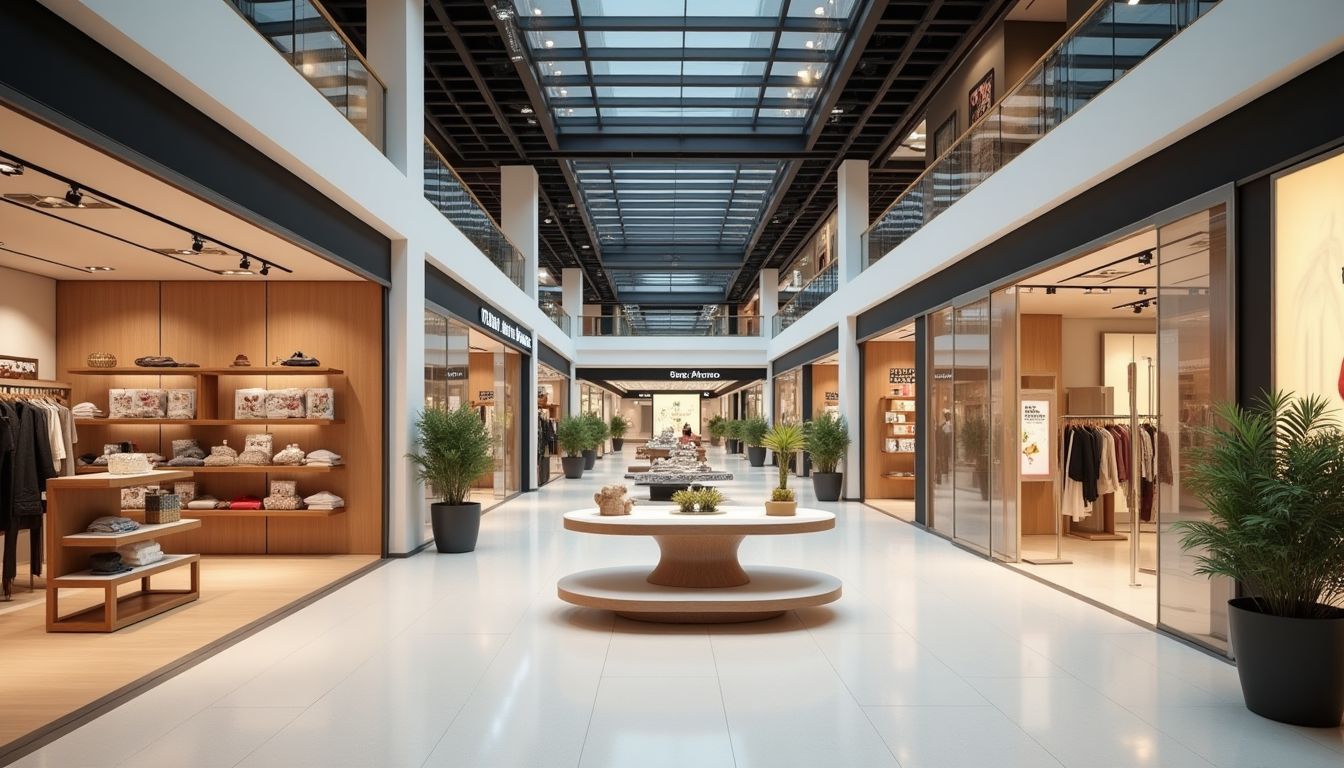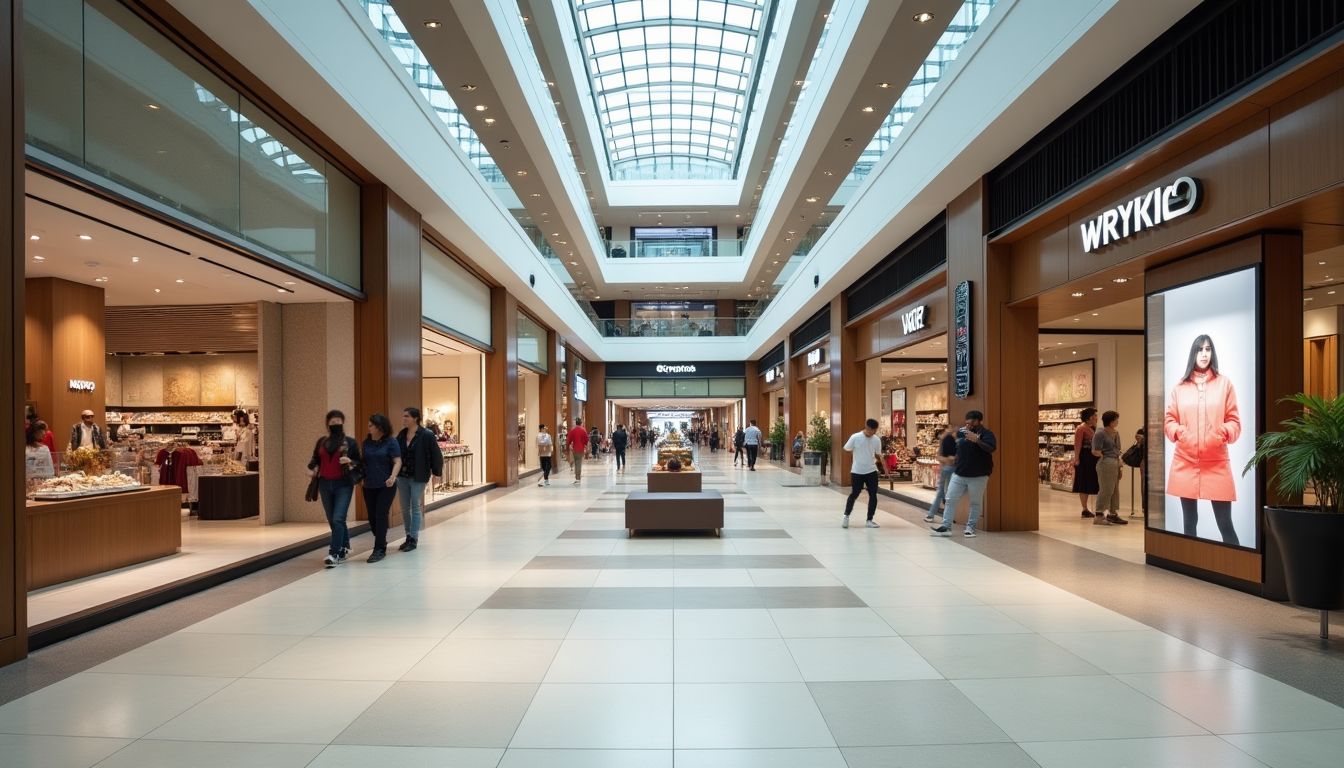
Growth came in below forecast — but the floor is holding, and the competition is getting sharper. Here's what June 2026 actually looks like on the ground.
Walk through any mid-tier mall in the Klang Valley on a Saturday afternoon right now. The food court queues are long, the sports and lifestyle stores are busy, and at least one new foreign brand has taken over a unit that used to be a telco booth. Business looks alive. And yet the headline number tells a more cautious story.
Malaysia's retail sector grew just 3.7% in Q1 2026, according to The Edge Malaysia — worse than the industry association expected, enough that the full-year forecast has already been revised downward. That gap between the vibe in the mall and the number on the spreadsheet is the most important thing happening in Malaysian retail right now.
What 3.7% Actually Means in This Market
Let's be precise about what we are looking at. 3.7% is not a crisis. It is a deceleration. Malaysian retail has been running on the tailwinds of post-pandemic pent-up demand and a tourism-driven bump for two solid years. That demand has now normalised, and what remains is organic, underlying consumer behaviour — which, frankly, is more useful intelligence than a sugar-rush recovery figure.
The honest read: Malaysian consumers are still spending, but they are more deliberate about where. The value-format players — 99 Speedmart, Econsave, Mydin — continue to consolidate their grip on daily household spend, particularly outside the Klang Valley where disposable income sensitivity is higher. These are not exciting growth stories for brand managers chasing premium positioning, but they are structurally resilient. When growth moderates, the discount and convenience tier does not collapse; it absorbs.
At the other end, Village Grocer and the premium supermarket segment face a tighter squeeze. Their shopper base is aspirational-middle-income, a group that has absorbed 18 months of elevated food prices and is now making more deliberate trade-down decisions on basket composition — buying premium in two or three categories, not across the whole trolley.
According to Bernama, broader consumer confidence remains fragile in the face of global economic uncertainty, which is consistent with this picture of selective, purposeful spending.
The Fuel Price Signal Retailers Should Not Ignore
Diesel prices in Malaysia dropped 30 sen to RM4.37 per litre for the week of June 18–24, 2026, while RON95 and RON97 held steady. This matters for retail in ways that are easy to underestimate.
First, logistics costs for retailers running their own distribution — and that includes every major hypermarket operator — get a meaningful near-term reprieve. Lotus's and Aeon, both operating large-format stores with significant supply chain infrastructure, benefit directly from diesel relief in their cost-to-serve numbers.
Second, and more interestingly, a diesel reduction is a quiet stimulus for the SME and hawker ecosystem that feeds foot traffic into neighbourhood retail strips and smaller malls. When the guy operating the frozen food van or the morning market supplier pays less to move product, that spending efficiency flows downstream. It is not dramatic, but it is real.
For brand managers planning promotional calendars: a fuel price drop, even a modest one, historically produces a small positive tick in discretionary spend within the following two to three weeks. It is worth building that into your June-July activation timing.
Foreign Brands Are Reading Malaysia as a Growth Market — Act Accordingly
While domestic indicators are mixed, foreign brands are voting with their capital. Singapore's PRISM+ is expanding its product range and widening its retail footprint in Malaysia, according to The Sun Malaysia — a deliberate, physical-retail-led push, not just a marketplace listing.
This pattern matters. Foreign consumer electronics and lifestyle brands entering Malaysia with brick-and-mortar ambition are not doing so because the market is easy. They are doing so because Malaysia's retail infrastructure — anchor malls, Shopee and Lazada as baseline digital discovery channels, a bilingual-confident consumer class — makes it one of the more commercially legible markets in Southeast Asia for a brand scaling regionally.
For local marketers, this is competitive pressure, but it is also a signal to pay attention to how these entrants build awareness. They are investing heavily in creator-driven discovery. Creamatch, Malaysia's managed creator content platform, has seen this pattern play out repeatedly — foreign brands entering Malaysia lean on local micro and mid-tier creators to bridge the cultural gap that paid media cannot close fast enough.
If you are running a local brand and watching PRISM+ take shelf space, the right response is not a price war. It is owning the local context story harder and faster than they can.
Gold, Capital Constraints, and What It Tells You About Consumer Priorities
One of the more revealing retail sub-stories of this quarter is in jewellery. Malaysian gold retailers are being squeezed on capital to acquire precious metal, as Nikkei Asia reports — a structural pinch from high bullion prices meeting tight working capital conditions.
But here is what this tells you about the consumer: demand for gold in Malaysia has not fallen. It has remained elevated enough that retailers are struggling to stock adequately. Gold buying in the Malaysian-Chinese and Malay consumer base is not purely aspirational — it is a savings behaviour, a hedge, a cultural signal of stability. When it persists through a growth slowdown, it tells you that certain spending categories are functionally non-discretionary for large segments of your market, even when those consumers are cutting back elsewhere.
For retailers in adjacent categories — fine watches, luxury accessories, premium homeware — this is a useful calibration. Your customer has not lost spending power wholesale. They are just prioritising the categories they trust to hold value.
You can track how these consumer priority shifts move in real time through Verbrol Pulse, which monitors sentiment and category-level conversation across Malaysia's digital landscape.
What Marketers Should Do With This Right Now
- Stop chasing the topline number. 3.7% growth is the average. Category variance is enormous. Know specifically where your category sits.
- Price your promotions around the diesel calendar. Fuel relief creates brief discretionary windows. Be ready to activate.
- Take the foreign brand competition seriously as a creative challenge, not just a shelf-space competition. Mr DIY's decade-long success is partly a masterclass in making sure that local relevance, pricing density, and store accessibility become moats that imports cannot easily buy their way past.
- Invest in creator-commerce infrastructure now. As discovery continues to shift toward short-form content, brands without a managed creator strategy are handing that budget to their competitors.
According to The Star, Malaysian consumers are increasingly making purchase decisions informed by social content before they ever enter a store or open a marketplace app. The retail touchpoint is downstream of the content touchpoint. Marketers who have not restructured their funnel around that reality are already behind.
The retail floor in Malaysia is not quiet. It is recalibrating. That is actually the more interesting moment to be paying close attention.
Track Retail trends in real-time at verbrol.com
Read more on Verbrol Intelligence: