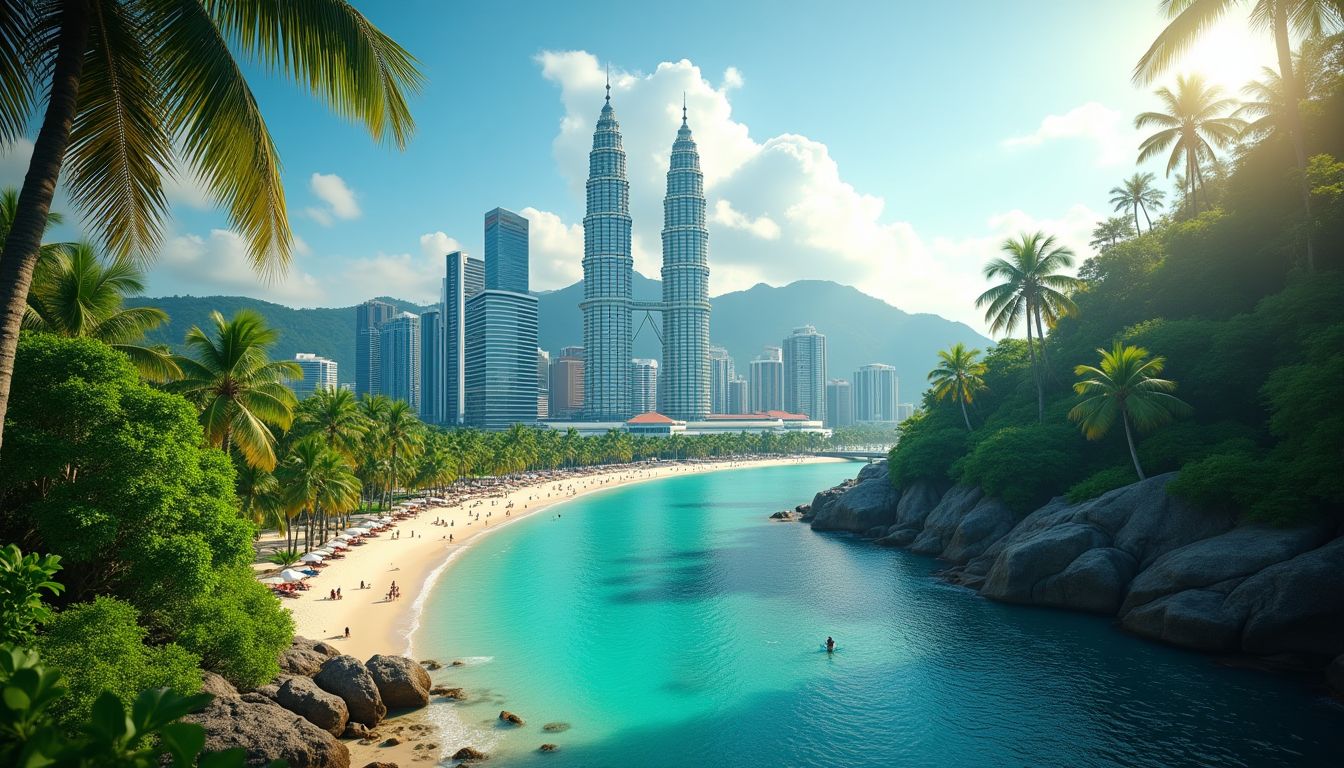
Big money is moving — and so is the map. Malaysia's travel industry is mid-transformation, and the brands watching carefully are the ones who will define the next wave.
Is Malaysia quietly becoming the most strategically important travel market in Southeast Asia?
The question feels audacious until you look at what has happened in the span of a single week. AirAsia X completed its acquisition of AirAsia Berhad and AirAsia Aviation Group Limited from Capital A — and announced it will simply be called AirAsia from next week, collapsing the architecture of an entire aviation group into one unified, consumer-facing brand. Simultaneously, Malaysia overtook Thailand as the preferred destination for Indian travellers, citing easier visa rules, affordable luxury, and hassle-free holiday planning. And Kuala Lumpur's LaLaport BBCC is now being positioned as a powerful transport hub linking tourists to rail, airports, shopping, and city attractions. None of this is coincidence.
For marketers, brand managers, and agency professionals operating in the Malaysian travel space, these signals converge into a single, urgent read: the structural foundations of Malaysian travel are being redrawn, and the window to position intelligently is narrow.
The AirAsia Consolidation: What One Brand Name Actually Changes
The renaming of AirAsia X to simply AirAsia is more than a cosmetic rebrand. It is the final chapter of Capital A's restructuring — a process years in the making that now presents the market with one consolidated aviation identity where there were previously several overlapping ones.
For the consumer, the simplification is welcome. For the travel industry, the implications are layered. A unified AirAsia means consolidated loyalty programmes, consolidated fare positioning, and — critically — a consolidated marketing voice competing directly with Malaysia Airlines across long-haul routes rather than occupying a separate, distinctly budget-adjacent lane.
The timing is bold. The group is simultaneously weathering a RM2.35 billion market loss in a week of turbulence and navigating a controversy involving its Philippines affiliate over allegedly unpaid regulatory dues — claims the airline has characterised as a smear campaign. Yet the group's leadership has pressed forward, appointing Bo Lingam as group CEO and betting on a new airline launch despite geopolitical tensions and jet fuel volatility.
For travel brands and agencies crafting partnerships in this climate, the volatility is real — but so is the strategic momentum. A newly unified AirAsia with a single brand identity is a more powerful co-marketing partner than the fragmented structure that preceded it. Agoda Malaysia and Traveloka, both deeply embedded in the low-cost carrier ecosystem, will be watching this consolidation closely as they recalibrate their bundle and fare-comparison positioning for the second half of 2026.
Malaysia vs Thailand: The Indian Traveller Shift Is a Market Signal, Not a Fluke
The rise of Malaysia as the preferred destination over Thailand among Indian travellers deserves more analytical attention than it is currently receiving. This is not simply a visa-policy story — though visa ease is a genuine accelerant. It reflects a deeper repositioning of Malaysia in the aspirational imagination of a traveller segment that is rapidly maturing in its expectations.
Indian outbound travellers are increasingly seeking what might be called affordable luxury with legibility — destinations where halal dining is effortless, where English is widely spoken, where shopping ranges from high street to heritage craft, and where the infrastructure does not punish the first-time international traveller. Malaysia, almost organically, checks every one of those boxes.
According to Bernama, Tourism Malaysia has been active in South Asian markets, and the effects are now measurable in booking data. The Agoda Summer Travel Report reinforces this, highlighting surging demand for low-cost flights across Asia with Kuala Lumpur–Penang ranking among the cheapest and most searched routes in the region.
For brands targeting inbound tourism — whether hotels, F&B operators, experience curators, or retail destinations — the Indian traveller segment in 2026 represents a high-yield, under-served audience. The marketing language that works here is not "budget." It is value with elegance — a distinction that matters enormously in how campaigns are conceived and executed.
Content creators who understand this cultural register are increasingly valuable. Platforms like Creamatch, Malaysia's managed creator content platform, are well-positioned to connect travel brands with creators who can authentically narrate Malaysia's luxury-accessible proposition to South Asian audiences — both domestically and in the source market.
Kuala Lumpur as Infrastructure: The Hub Effect and What It Unlocks
The LaLaport BBCC development signals something travel strategists should not overlook: Kuala Lumpur is investing in transit-integrated retail and tourism infrastructure at a moment when regional competitors are still debating theirs.
A transport hub that connects tourists seamlessly to rail, airport express services, retail, and city attractions is not just a convenience play — it is a dwell-time play. Every additional hour a traveller spends within a connected ecosystem is an hour of spend, experience, and brand exposure. For Tourism Malaysia, it is a proof point for the "Malaysia Truly Asia" narrative delivered in built form.
This also connects to a broader regional aviation shift. IndiGo's temporary cancellation of six critical international routes across Southeast Asia — including routes touching Malaysia — has created a redistribution of passenger flow that benefits carriers with established networks. Firefly and Batik Air, operating shorter regional and domestic routes, stand to capture connecting passengers who are rerouting through KL rather than flying direct to alternative hubs.
The Verbrol Pulse tracker has been monitoring the sentiment shifts around Malaysian aviation and inbound tourism throughout June 2026, and the directional read is consistent: Malaysia is accruing structural travel advantages faster than the noise around individual airline controversies would suggest.
What Travel Brands Should Actually Do With This
The AirAsia Hausboom Festival 2025 — returning with the theme Paint the Town Red and uniting 32 local and international artists with Malaysia's biggest fashion and food festival — is, at its core, a masterclass in experiential travel marketing. It positions flying not as a commodity but as the beginning of a cultural experience. The cabin crew uniform unveiled at KL Fashion Week, featuring regional craftsmanship, extends that narrative into every touchpoint of the passenger journey.
These are not isolated PR moments. They are consistent signals of a brand — and by extension, a destination — that understands modern travel is sold on feeling, not fare class.
For Malaysian marketers, the actionable read from this week's data landscape is threefold:
- Recalibrate your airline partnership strategy around a newly unified AirAsia identity — the old distinction between AirAsia and AirAsia X in your campaign briefs is now obsolete.
- Build creative that speaks to the Indian outbound traveller with the register of affordable luxury, not budget travel — the positioning gap here is significant and largely unclaimed.
- Invest in infrastructure-adjacent storytelling — KL's growing connectivity is a content opportunity that most travel brands are under-utilising, particularly for first-visit audiences who need journey confidence before they book.
Malaysia's travel industry in mid-2026 is not without its turbulence — financially, operationally, or geopolitically. But the structural indicators point toward a market that is consolidating intelligently, attracting new source markets, and building the physical infrastructure to convert interest into spend. The brands that read this moment clearly, and move with it, will find the runway unusually clear.
Track Travel trends in real-time at verbrol.com
Read more on Verbrol Intelligence: