A banned skincare product, 40 women raising alarms, and a market that keeps accelerating anyway — Malaysia's beauty industry is testing the limits of consumer trust and regulatory reach at the same time.
Malaysian women do not mess around when it comes to their skincare. Walk into any Watsons Malaysia outlet on a weekday afternoon and you will find shelves being scrutinised with the same intensity most people reserve for financial statements. Ingredients get googled mid-aisle. WhatsApp groups share unboxing videos before products even hit the checkout counter. This is a market that is deeply engaged — which makes the recent Tati Skincare episode not just a regulatory footnote, but a signal worth reading carefully.
When a Ban Isn't Really a Ban
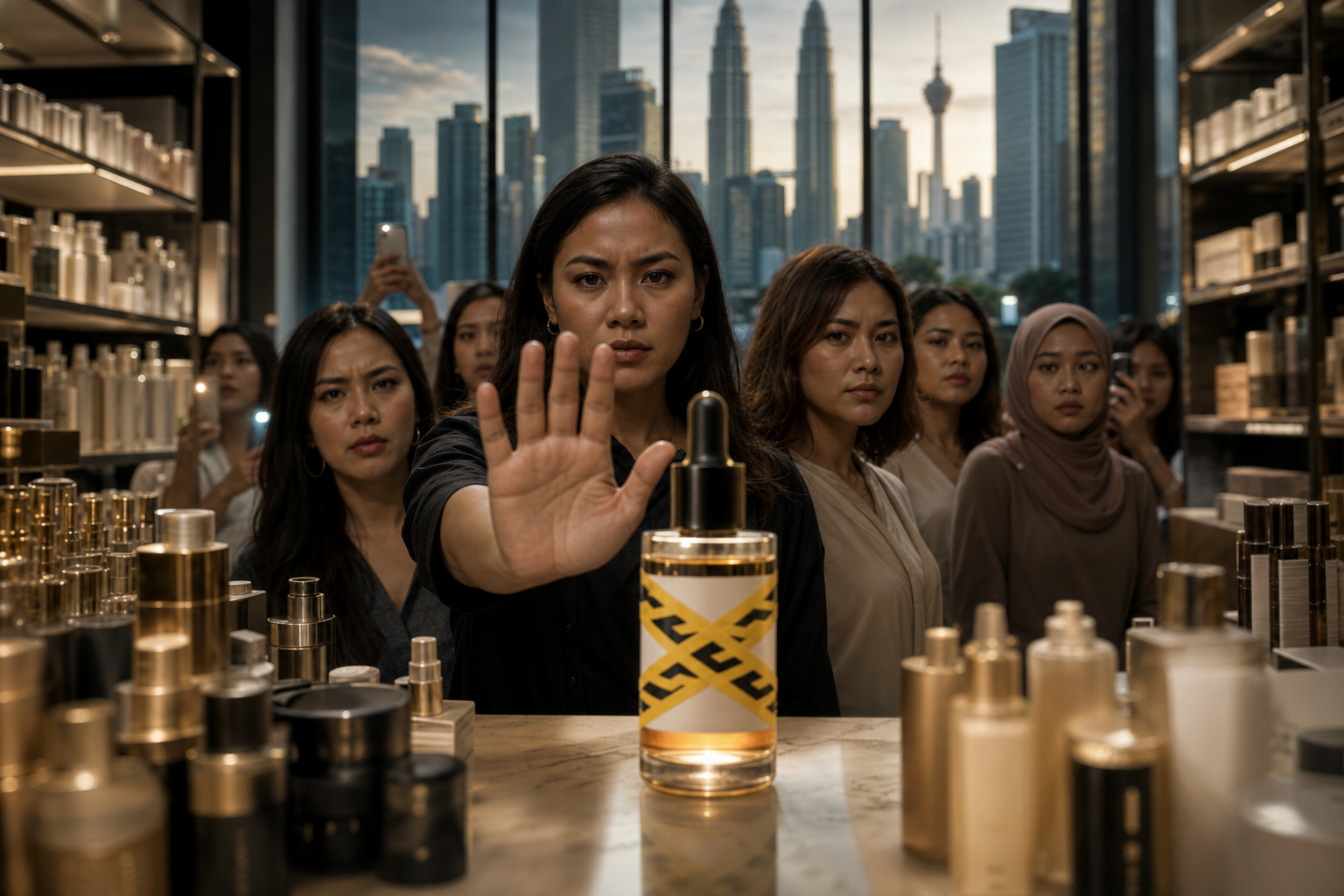
The Health Ministry's decision to ban Tati Skincare products containing poisonous substances should have been a clean, decisive moment. It was not. Within days, 40 women were raising alarms that the banned products were still being sold — on shelves, online, possibly through informal reseller channels that exist in every corner of the Malaysian market from Lazada to neighbourhood beauty boutiques.
This gap between regulatory announcement and ground-level reality is not new in Malaysia, but it is widening. The proliferation of social commerce — TikTok Shop, Shopee Live, Instagram storefronts — has created a distribution layer that moves faster than enforcement. A product banned at the import or wholesale level can persist in a seller's existing inventory for weeks. For beauty specifically, where the purchase decision is often driven by testimonials and before-and-after posts rather than label scrutiny, that lag time is dangerous.
For brand managers and marketers, the lesson here is structural: the regulatory clock and the commerce clock are running at different speeds. Brands that have not built clear, fast-response communication protocols for product crisis moments — whether it involves their own SKUs or a competitor's — are operating without a safety net.
The Market Keeps Growing Regardless
Here is the tension: while a contaminated product scandal was unfolding, the rest of Malaysia's beauty industry was having what can only be described as a very good month.
Korean beauty innovation continues to find fertile ground in Malaysia, with consumer demand pushing local retailers and brand distributors to expand their K-beauty ranges. Natalia Dyer's partnership with Purito Seoul shows how global K-beauty campaigns are being designed with enough cultural softness to translate directly into Southeast Asian markets — Malaysia included. The crossover appeal of Korean skincare aesthetics with Malaysian consumers' existing preference for brightening and gentle formulations is not accidental; it is the result of years of consistent positioning.
At the luxury end, Dior's Summer Riviera pop-up in Malaysia is a reminder that experiential retail is alive and performing in Kuala Lumpur. Pop-ups like this do not just generate foot traffic — they generate content, and content generates commerce. Sephora Malaysia understands this dynamic well; its in-store activations and exclusive launch events consistently drive social conversation that extends far beyond the physical space.
On the local brand front, Bartech Beautee is positioning for a wider Asian market push, signalling that Malaysian homegrown brands are increasingly thinking regionally, not just locally. This is a meaningful shift. For years, the narrative was about protecting domestic shelf space from international imports. Now, local players are asking a different question: what does it take to win in Singapore, Indonesia, and beyond?
Social Commerce Is the New Shelf, But the Rules Are Still Being Written
The YSL Beauty TikTok Shop launch, anchored with a Bukit Bintang kopitiam takeover, is a masterclass in local cultural translation. A French luxury house, a hawker-culture backdrop, a TikTok storefront — it works because it does not pretend Malaysia is Paris. It meets the consumer where she actually lives.
The broader platform story is also worth watching. Shopee's strong recent quarter underscores that e-commerce in Malaysia remains robust, and beauty is consistently one of its highest-performing categories. TikTok Shop's growth — even where it goes unacknowledged in earnings calls — is reshaping how discovery-to-purchase works, particularly for beauty brands targeting the under-35 segment.
For brands navigating this space, the creator layer is increasingly non-negotiable. Platforms like Creamatch, which connects brands with managed creator content specifically for Southeast Asian markets, have become a practical tool for beauty labels that need consistent, compliant content without building an in-house studio. The brands that are winning on TikTok Shop and Shopee Live are rarely doing it with polished agency videos alone — they are doing it with creators who sound like your cousin giving honest advice.
SimplySiti and Sendayu Tinggi, both brands with deep roots in Malaysia's Malay consumer segment, have navigated this shift with varying degrees of agility. The ones that invested early in creator partnerships and short-form content are now sitting on audiences that are harder for international competitors to replicate.
What Brand Managers Should Be Watching Right Now
Three things deserve attention from anyone running a beauty brand or planning a campaign in Malaysia this year:
-
Regulatory risk is a brand risk. The Tati Skincare situation is a warning, not just for the brand itself but for any player that relies on reseller networks without strong channel monitoring. According to Bernama, enforcement actions in the health and beauty space are becoming more frequent. Brands need compliance built into their distribution agreements, not added as an afterthought.
-
Men's grooming is an underplayed category. Globally, the men's beauty boom is accelerating in unexpected directions, driven partly by cultural shifts in how masculinity is discussed online. In Malaysia, Guardian Malaysia has quietly expanded its men's skincare shelving over the past two years. The category is earlier-stage here than in Korea or the UK, which means the positioning window is still open.
-
Fragrance is having a moment. With five key fragrance trends identified for 2025 by industry trackers, and Malaysian consumers increasingly treating perfume as a self-expression category rather than a functional purchase, the fragrance shelf — at Sephora Malaysia, at Watsons Malaysia, and online — is worth a closer look from any brand with a scent play in its portfolio.
The Malaysian beauty consumer in 2025 is more informed, more connected, and more willing to call out what does not work — literally and figuratively. Verbrol Pulse tracking of beauty-adjacent conversations consistently shows that Malaysian consumers are among the fastest in Southeast Asia to shift sentiment following a negative news event. The Tati Skincare story is not an isolated incident; it is a test of how quickly trust can erode and how much harder it is to rebuild than to lose.
Brands that treat safety, transparency, and creator-authentic communication as core strategy — not marketing add-ons — are the ones that will consolidate market share in the next 18 months. Everyone else will be playing catch-up.
Track Beauty trends in real-time at verbrol.com
Read more on Verbrol Intelligence: