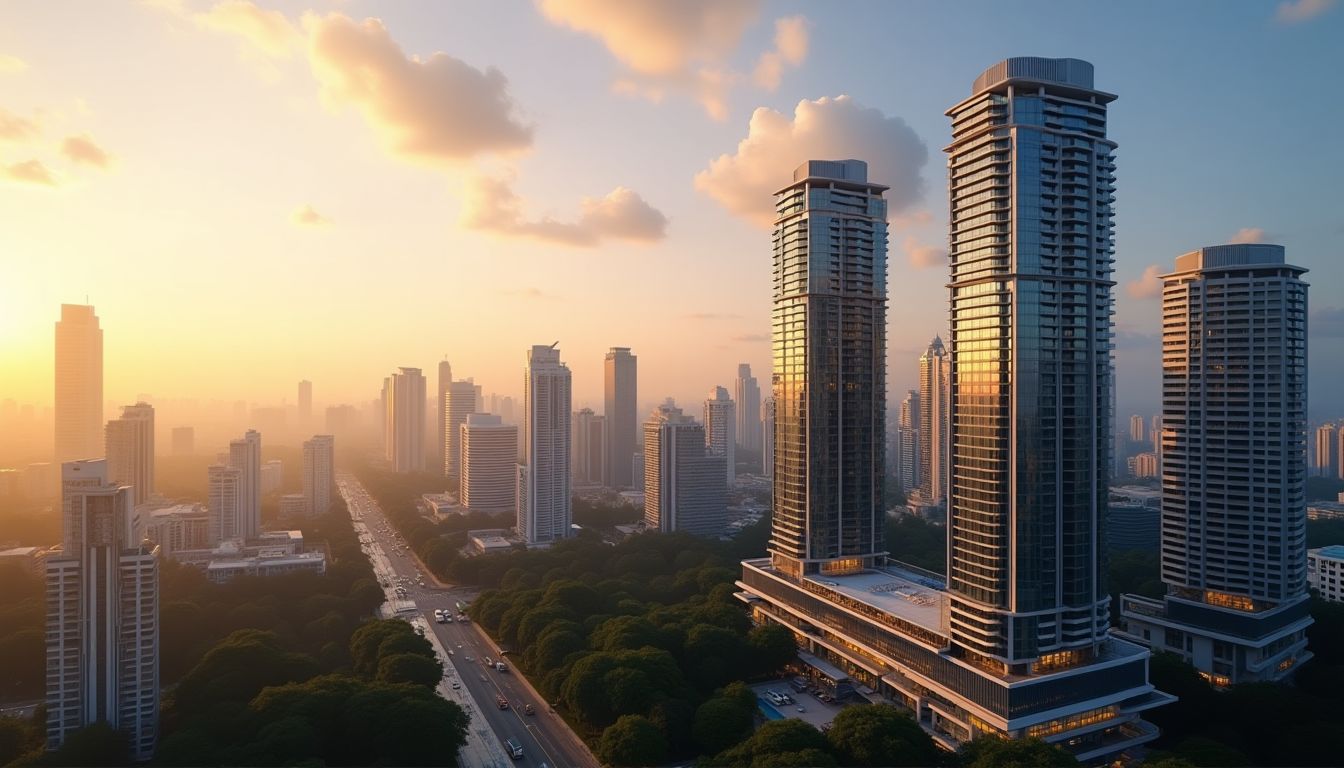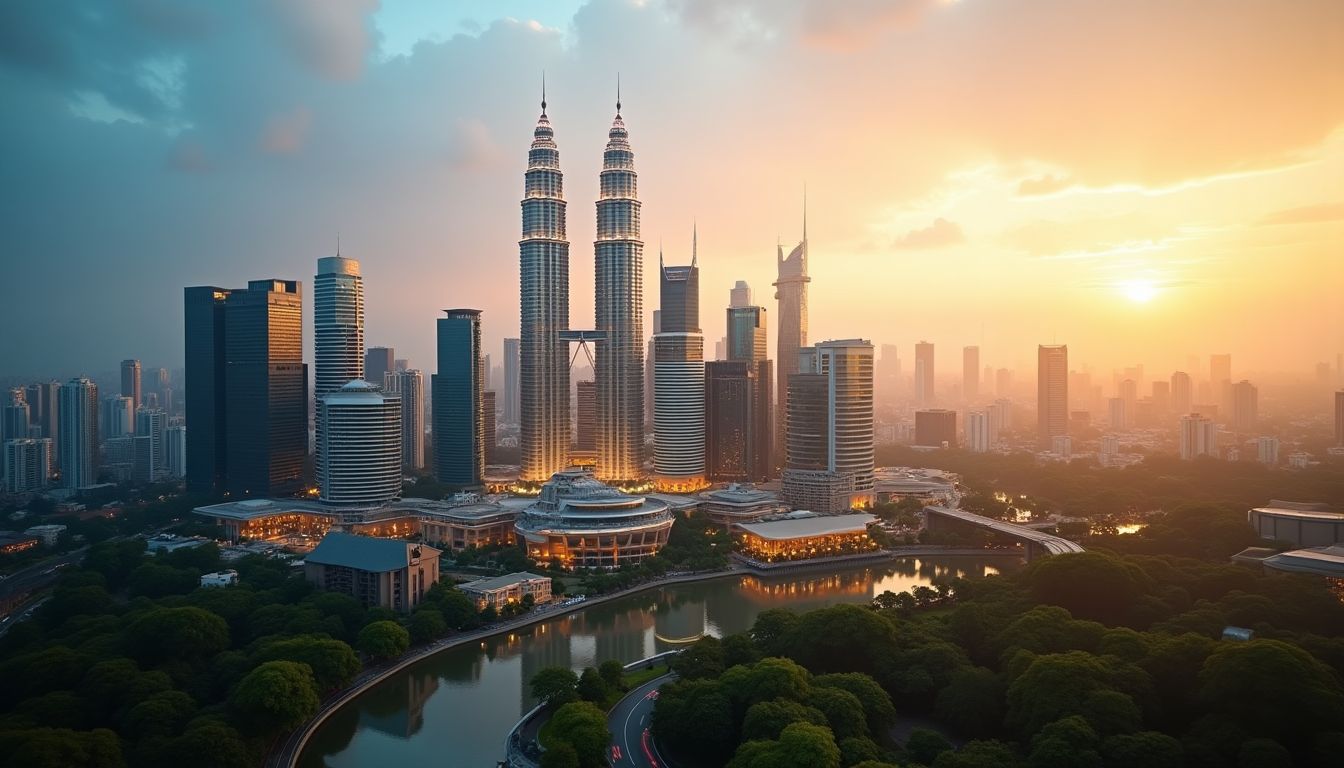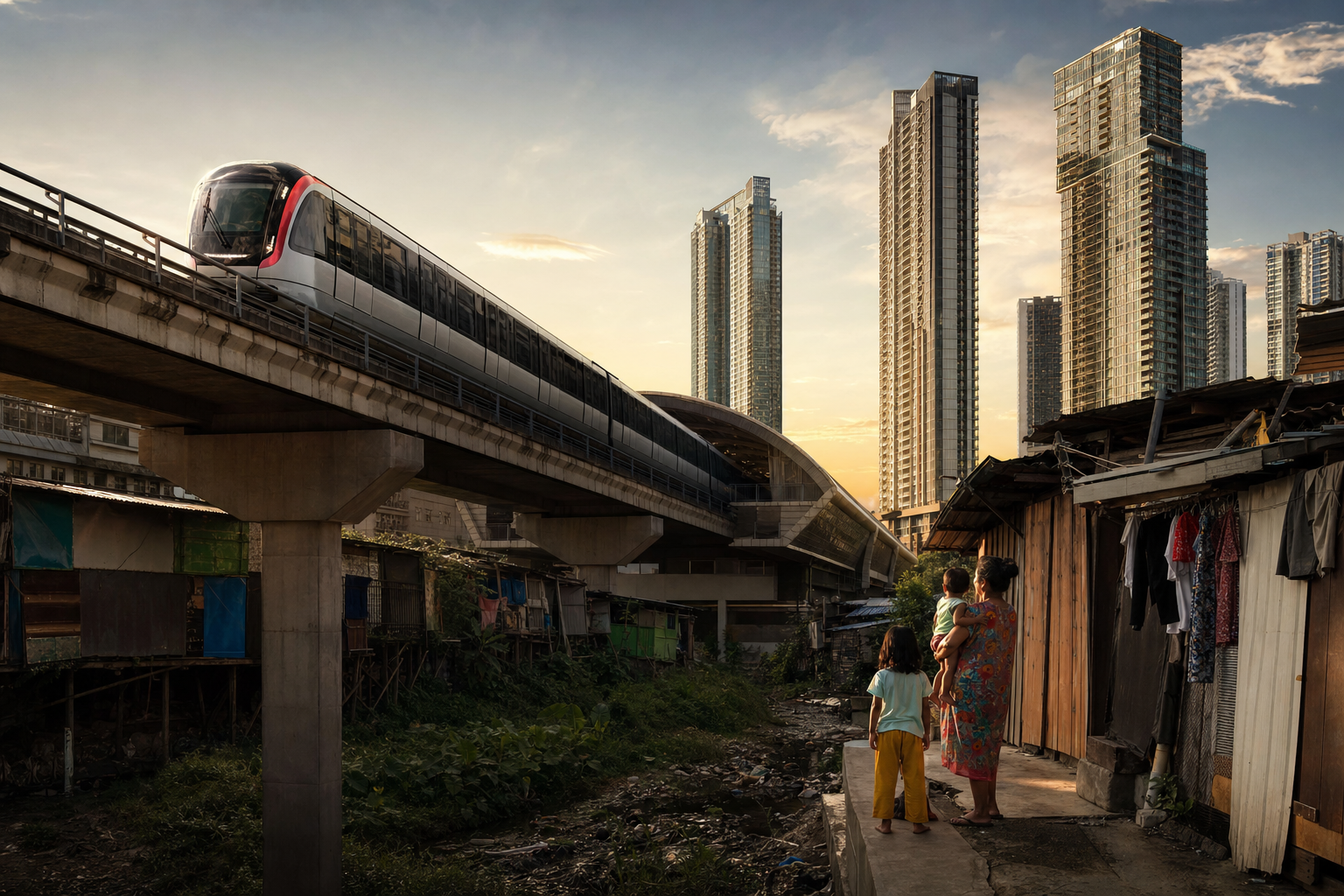
Big capital is concentrating around rail corridors and luxury-branded addresses — but the affordable housing gap keeps widening between the projects developers want to build and the homes Malaysians actually need.
RM600 Million at One MRT Station Tells You Everything About Where Malaysian Property Is Heading
When MRT Corp and IJM Land jointly announced The Linque — a RM600 million transit-oriented development integrated directly into the Cochrane MRT station in Cheras — it wasn't just a product launch. It was a capital allocation signal. Developers of that scale don't commit nine figures to a single node unless the underlying thesis is locked in: transit adjacency in Malaysia's urban corridors is now treated as a structural premium, not a marketing talking point.
The Linque, unveiled this week via EdgeProp, sets the architectural template for what institutionally-backed Malaysian property increasingly looks like in 2026: mixed-use, rail-integrated, and built to command a significant price premium over the surrounding submarket. That premium is what makes the math work for both the developer and the infrastructure operator.
But The Linque is not an isolated data point. Read it alongside UEM Sunrise's simultaneous move to lock in a capital partner for a A$315 million build-to-rent project in Melbourne, and you get a clearer picture: Malaysia's larger developers are running a two-track strategy — domestic transit-corridor plays paired with offshore institutional-grade assets. The question worth asking is what that dual concentration tells us about confidence in the domestic mid-market.
Transit Corridors Are Absorbing the Premium End of Developer Appetite
The TOD model — where mixed-use density is engineered around a fixed transit node — has been a stated policy priority in Malaysia for years. What's changed in 2026 is execution velocity and ticket size. A RM600 million commitment from IJM Land at a single Cheras station represents, by any reasonable benchmark, a high-conviction bet that Klang Valley transit ridership will sustain both residential and commercial absorption at above-market prices.
According to transaction data tracked by NAPIC, transit-proximate residential properties in Klang Valley have consistently outperformed the broader market on capital appreciation over the past three years. That outperformance is the empirical foundation under projects like The Linque. Developers aren't building TODs because planners asked nicely — they're building them because the pricing data justifies the land cost.
Gamuda has followed a similar logic in its township projects, anchoring amenity density around mobility infrastructure. SP Setia has done the same in its larger integrated developments. The pattern is consistent enough to call it a sector-wide repricing of location value: transit access is now being capitalised into launch prices at a rate that wasn't measurable even five years ago.
For marketers and brand managers operating in the property adjacency space — financial services, home furnishings, proptech, lifestyle retail — this spatial concentration matters. The customer acquiring a TOD unit in 2026 is not the same demographic profile as the landed-suburb buyer of 2015. They skew younger, are higher-income relative to their age cohort, and make purchase decisions through digital-first research channels. Brands reaching this segment through creator content should be working with platforms like Creamatch, Malaysia's managed creator content platform, to build neighbourhood-level relevance rather than generic property lifestyle messaging.
Luxury and Branded Residences Are Rewriting the Upper Band
At the same time that TODs are repricing the mid-to-upper residential segment, a distinct dynamic is reshaping the top end of the market. The rise of branded residences in Malaysia — hotel-branded towers where the hospitality operator lends their name, management infrastructure, and service standards to a private residential product — is adding a new pricing tier above conventional luxury.
Branded residences in established markets like Singapore and Dubai command 20–35% premiums over comparable unbranded product in the same postcode. Malaysia is now seeing developers test whether that premium is transferable. Analysis on how the luxury segment will move in 2026 suggests foreign buyer interest — particularly from the ASEAN region and the Middle East — is a meaningful demand driver for this segment, which partially insulates it from domestic purchasing power constraints.
Sunway, which has long operated at the intersection of hospitality and property through its integrated resort townships, is structurally well-positioned to capitalise on this trend. The branded residence model essentially monetises what Sunway has spent decades building organically: managed environments where residents trade pure capital ownership for curated lifestyle infrastructure.
For iProperty listing data to reflect this accurately, the industry needs standardised categorisation for branded versus conventional luxury — a gap that currently makes cross-comparison difficult for buyers and analysts alike.
The Affordable Housing Gap Isn't Closing — It's Being Reframed
Here's the number that sits uncomfortably beneath the TOD announcements and branded residence launches: a disproportionate share of Malaysia's unsold residential overhang remains concentrated in the RM500,000–RM1 million band — units priced above what most Malaysian households can qualify for under current DSR guidelines, yet below the threshold where luxury demand from foreign buyers provides a floor.
Experts are now calling for an income-based approach to affordable housing policy, arguing that blanket price-ceiling definitions of "affordable" don't map onto actual household income distribution across different states. A RM300,000 unit is genuinely affordable in Kedah; it is not in Kuala Lumpur, where median household income and cost-of-living dynamics produce a very different affordability ceiling.
Mah Sing, which has maintained an explicit affordable segment strategy in its product mix, is navigating this tension more directly than most peers. Its positioning — volume-led, price-conscious, first-homebuyer oriented — becomes harder to sustain when land costs in urban locations push construction economics toward higher price points regardless of developer intent.
EcoWorld has taken a township approach that blends product tiers, cross-subsidising affordable units through higher-margin commercial and premium residential components within the same masterplan. That internal cross-subsidy model may be the most pragmatic structural solution available until policy frameworks catch up to income geography realities.
The strategic lens from Sunsuria's current evolution as a developer adds another dimension: mid-sized developers repositioning through niche differentiation — education-anchored townships, wellness-integrated communities — rather than competing on pure volume or price. That niche-pivot is a rational response when the mid-market price band is simultaneously squeezed by affordability constraints from below and luxury repositioning from above.
What the Capital Flows Are Actually Saying
Pull back from the individual project announcements and three capital-flow patterns emerge from Malaysia's property sector in June 2026:
- Domestic institutional capital is concentrating in transit-adjacent urban density — TODs are the primary vehicle.
- Outbound developer capital is seeking institutional-grade yield offshore, with UEM Sunrise's Melbourne BTR deal as the clearest recent example.
- Foreign buyer demand is disproportionately supporting the branded residence and ultra-luxury segment, partially decoupling it from domestic macroeconomic conditions.
None of these flows are, by themselves, problematic. Collectively, they raise a structural question about where patient, long-duration capital for genuinely affordable urban housing comes from — because the private market's incentive architecture is currently pointing in three other directions simultaneously.
For brands, marketers, and agency professionals targeting Malaysia's property-adjacent consumer, the Verbrol Pulse dashboard offers real-time signal tracking across developer activity, consumer sentiment, and media momentum in this sector. The audience segmentation implications of a market bifurcating this sharply — TOD premium buyers versus income-constrained first-home aspirants — are significant for campaign architecture, channel mix, and messaging strategy alike.
What the next six months will reveal is whether Malaysia's policy levers — stamp duty structures, bumiputera lot releases, housing credit guarantee schemes — move fast enough to address the affordability band that private capital is systematically vacating. The TOD thesis is sound. The luxury branded residence thesis is globally validated. The missing thesis, still, is the one that gets a median Malaysian household into a liveable urban unit at a price their income can support.
That's the number nobody in the RM600 million announcement deck has yet answered.
Track Property trends in real-time at verbrol.com
Read more on Verbrol Intelligence: