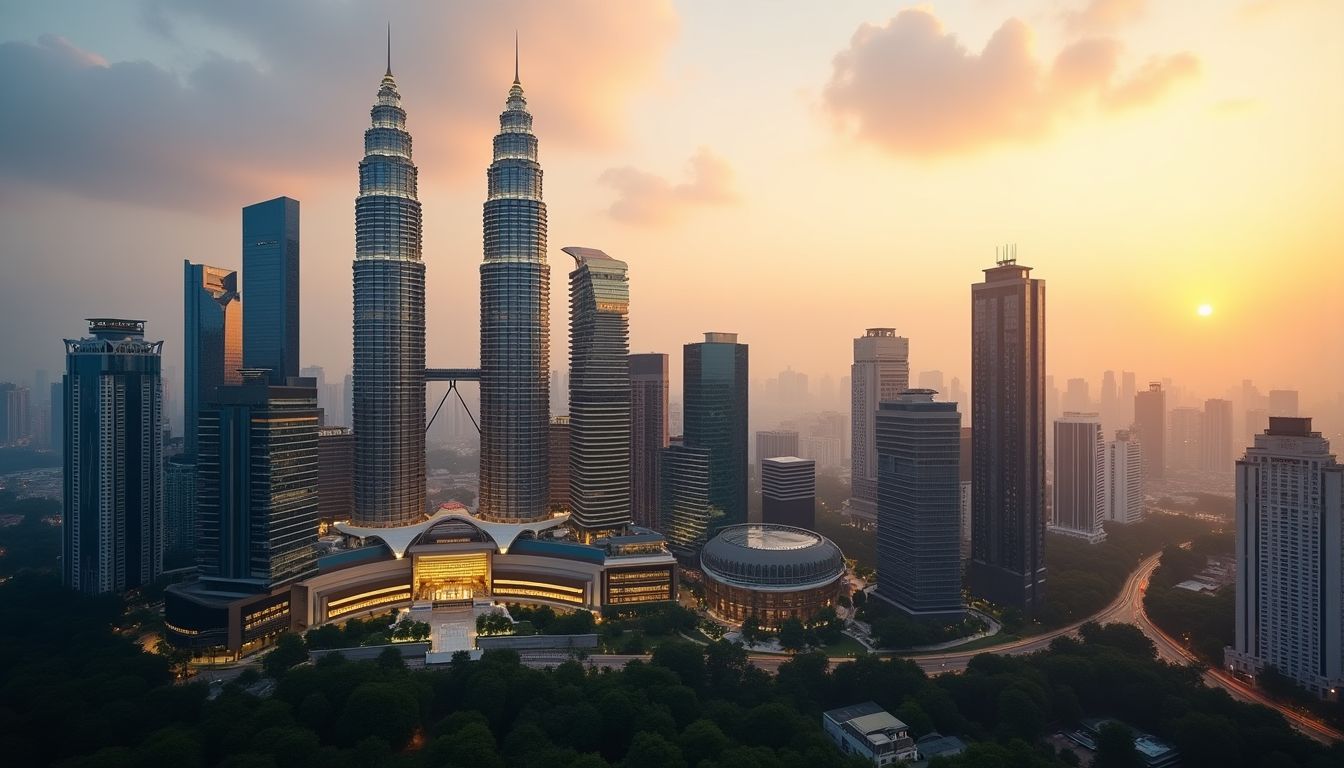
Big capital is rotating into luxury branded residences and EV-linked industrial sheds — but mid-market Malaysia is still drowning in unsold stock and household debt. The bifurcation is sharper than most developers want to admit.
The Market Is Not Moving in One Direction
The Malaysian property market in mid-2026 is doing something that aggregate statistics tend to obscure: it is running two entirely different races simultaneously. At the top end, branded residences are commanding premiums that would have seemed aspirational three years ago. In the industrial corridor, EV supply chain investments are reshaping demand for logistics and manufacturing space at a pace that Knight Frank and CBRE both describe as structural rather than cyclical. Meanwhile, at the mid-tier and affordable segments, The Malaysian Reserve has documented persistently elevated unsold inventory and household debt levels that continue to suppress genuine transactional volume.
The headline numbers from NAPIC confirm the divergence: residential overhang in the RM300,001–RM500,000 band remains the most concentrated point of stress, while transaction values — as opposed to volumes — have been lifted disproportionately by high-value deals in Kuala Lumpur's Golden Triangle and the Klang Valley's prime industrial nodes. Reading only transaction value growth without disaggregating it by segment is how misplaced optimism gets manufactured.
Branded Residences and the Luxury Bet
The most significant narrative shift in Malaysian property right now is the emergence of branded living as a genuine value proposition rather than a marketing flourish. As EdgeProp's recent coverage of the rise of branded living in Malaysia's luxury property landscape notes, hotel-affiliated and lifestyle-branded developments are now able to command a meaningful premium over comparable non-branded stock in the same postcode.
The demand signal here is not purely domestic. Regional high-net-worth buyers — particularly from Singapore, Hong Kong, and increasingly Indonesia — are treating Kuala Lumpur's luxury tier as a relative-value play against more expensive gateway cities. Malaysia My Second Home (MM2H) policy recalibrations have not entirely dampened this, though they have shifted the buyer profile toward individuals with demonstrably higher capital. According to a Yahoo News Malaysia outlook on how the luxury property market in Malaysia will move in 2026, prime KL residential is expected to sustain price resilience through 2026 even as the broader market remains flat.
Developers with land banks in the right locations are responding. UEM Sunrise has been sharpening its positioning in the Mont Kiara corridor, while IOI Properties continues to leverage its integrated township model to layer lifestyle components onto what would otherwise be standard residential parcels. The risk, of course, is that "branded" becomes a label developers attach to projects rather than a verifiable experience premium — a conflation that sophisticated buyers will eventually penalise.
The Industrial Property Story Nobody Is Pricing Correctly Yet
If luxury residential is the market's glamour trade, industrial property is its structural one. The EV supply chain buildout — driven by both domestic policy ambition under the National Investment Aspirations framework and genuine foreign direct investment from Chinese, Japanese, and Korean manufacturers — is generating demand for purpose-built industrial facilities at a scale that standard speculative warehouse construction cannot absorb fast enough.
EdgeProp's analysis on how EVs are powering Malaysia's industrial property boom lays out the geography clearly: Shah Alam, Selangor's industrial belt, and emerging nodes in Johor adjacent to the Johor-Singapore Special Economic Zone are the primary beneficiaries. Rental rates for Grade A industrial space in these corridors have firmed notably relative to 2023 baselines.
Sime Darby Property's move to launch a RM1.25 billion fund targeting data centres and industrial assets is the clearest institutional signal yet that the developer community is rotating capital toward this thesis with conviction. When a company that just claimed the top ranking at The Edge Malaysia Top Property Developers Awards 2024 is structuring a dedicated fund — rather than building speculatively on its own balance sheet — it is signalling both the scale of opportunity and the capital intensity required to capture it properly.
Gamuda's infrastructure-to-property integration model positions it well here too: the ability to de-risk industrial land through highway and utilities connectivity is a genuine competitive advantage in the EV-linked manufacturing corridor play. For analysts tracking developer differentiation, the capex allocation between residential and industrial over the next 24 months will be the most informative data point available.
The Mid-Market Problem Developers Must Stop Underestimating
None of the above changes the fundamental tension in the market. Oversupply in the mid-price residential band is not a temporary inventory problem — it reflects a structural mismatch between what developers found financially viable to build over the past decade and what Malaysian household income levels can genuinely sustain at current interest rate and cost-of-living conditions.
Knight Frank Malaysia's property management division recently announced it has crossed the milestone of managing over 100 buildings — a figure that tells its own story about the sheer volume of completed residential stock requiring active professional management to maintain asset quality and yield. The management layer is growing because the ownership layer is stressed.
According to iProperty's market data, search intent for properties below RM400,000 consistently outperforms higher price bands in terms of query volume, but conversion to transaction remains suppressed by financing constraints. Bank Negara's household debt-to-GDP ratio, persistently above 80%, is the binding constraint here — not sentiment, not confidence, not even supply.
For developers like Mah Sing and EcoWorld, which have both made explicit strategic commitments to the affordable and entry-level segments, this tension is operationally real. The social purpose argument for building affordable housing is legitimate. The financial arithmetic, without meaningful government land cost subsidy or end-financing facilitation, remains difficult.
What Investors and Developers Should Be Watching Now
The bifurcation signals a fairly clear strategic read for capital allocation:
- Luxury residential: defensible if the branded proposition is genuine and the location has genuine scarcity. Vanity-branded projects in oversupplied postcodes will underperform.
- Industrial and logistics: the structural case is intact and arguably still under-priced relative to the FDI pipeline. Land in the right corridors will compound faster than most residential alternatives over a three-to-five-year horizon.
- Mid-market residential: requires either government-facilitated demand stimulus or a developer willing to accept compressed margins in exchange for volume. Not a sector for capital seeking risk-adjusted returns without a social mandate attached.
- Data centres: adjacent to property but increasingly where developer balance sheets with the right land and power infrastructure will find the most aggressive institutional appetite.
For brand managers and marketers operating in this space, the segmentation logic matters as much as it does for developers. A single "Malaysia property" narrative does not hold — and campaigns that treat the market as monolithic will generate weak resonance. Tracking how specific sub-segments are performing at the postcode and asset-class level is now table stakes for anyone producing meaningful market intelligence. The Verbrol Pulse dashboard captures these sub-sector signals in real time, which is useful when the news cycle is moving faster than quarterly reports.
For developers considering content and creator-led marketing strategies — particularly in the luxury and lifestyle residential segment where aspiration plays a significant role in the purchase journey — platforms like Creamatch, Malaysia's managed creator content platform, offer a structured route to matching property brands with relevant creator audiences without the brand safety risks of unmanaged influencer arrangements.
The Malaysian property market in June 2026 rewards precision. Broad-brush optimism about "recovery" misses the point entirely. The question is not whether the market is moving — parts of it are moving quickly. The question is which parts, in which direction, and whether you are positioned accordingly.
Track Property trends in real-time at verbrol.com
Read more on Verbrol Intelligence: