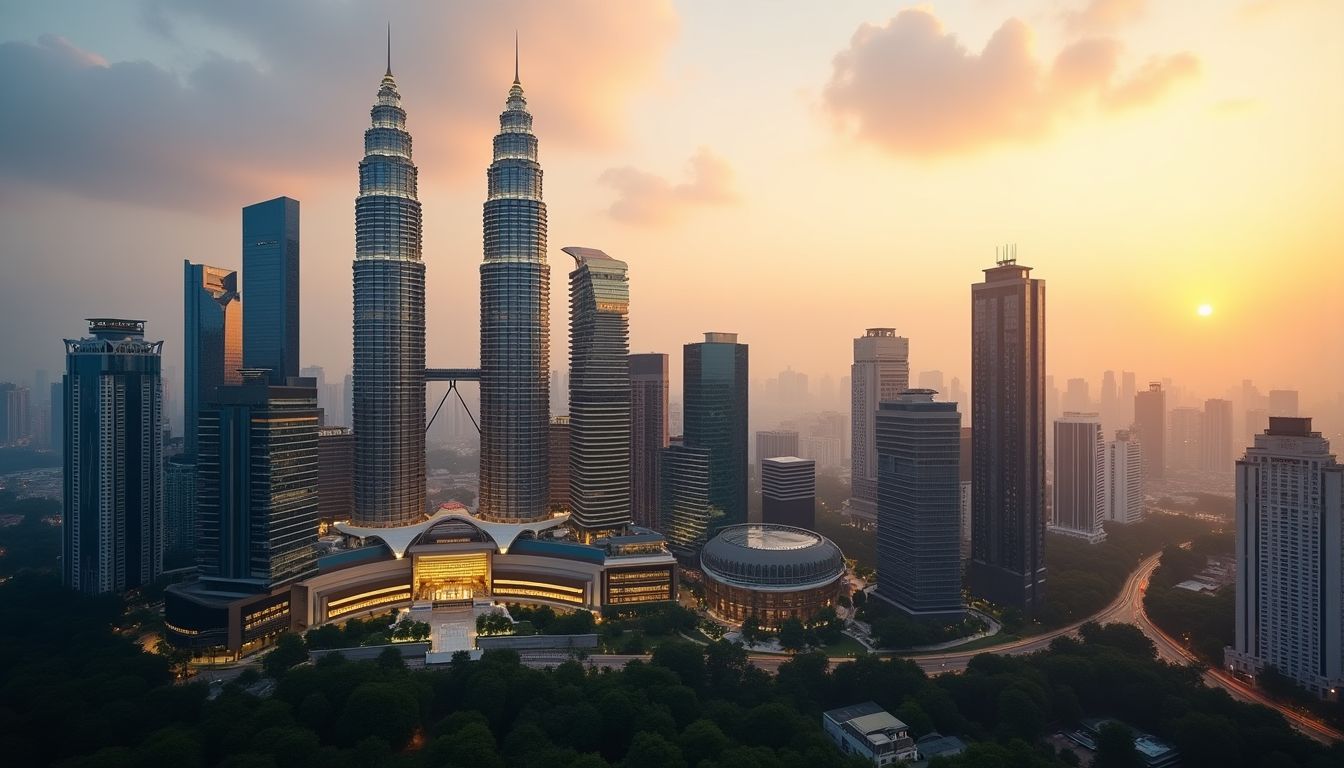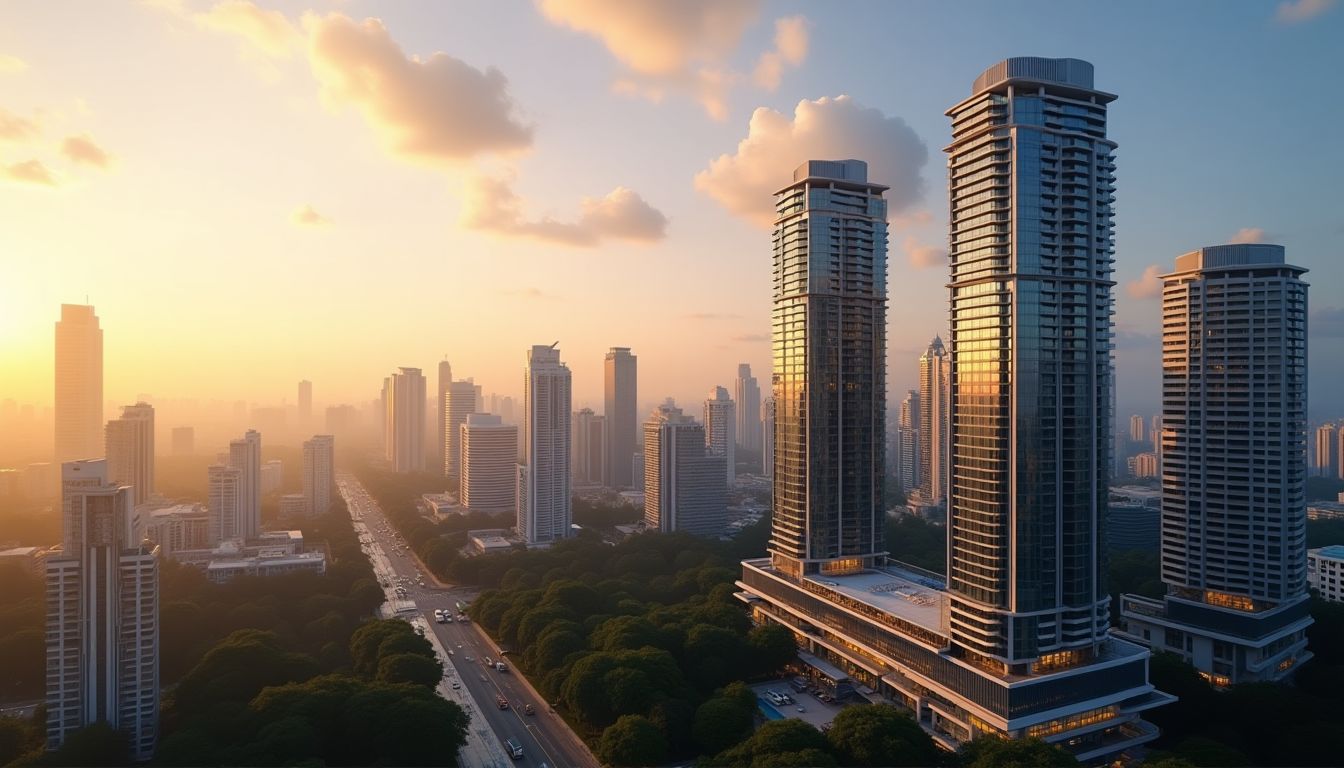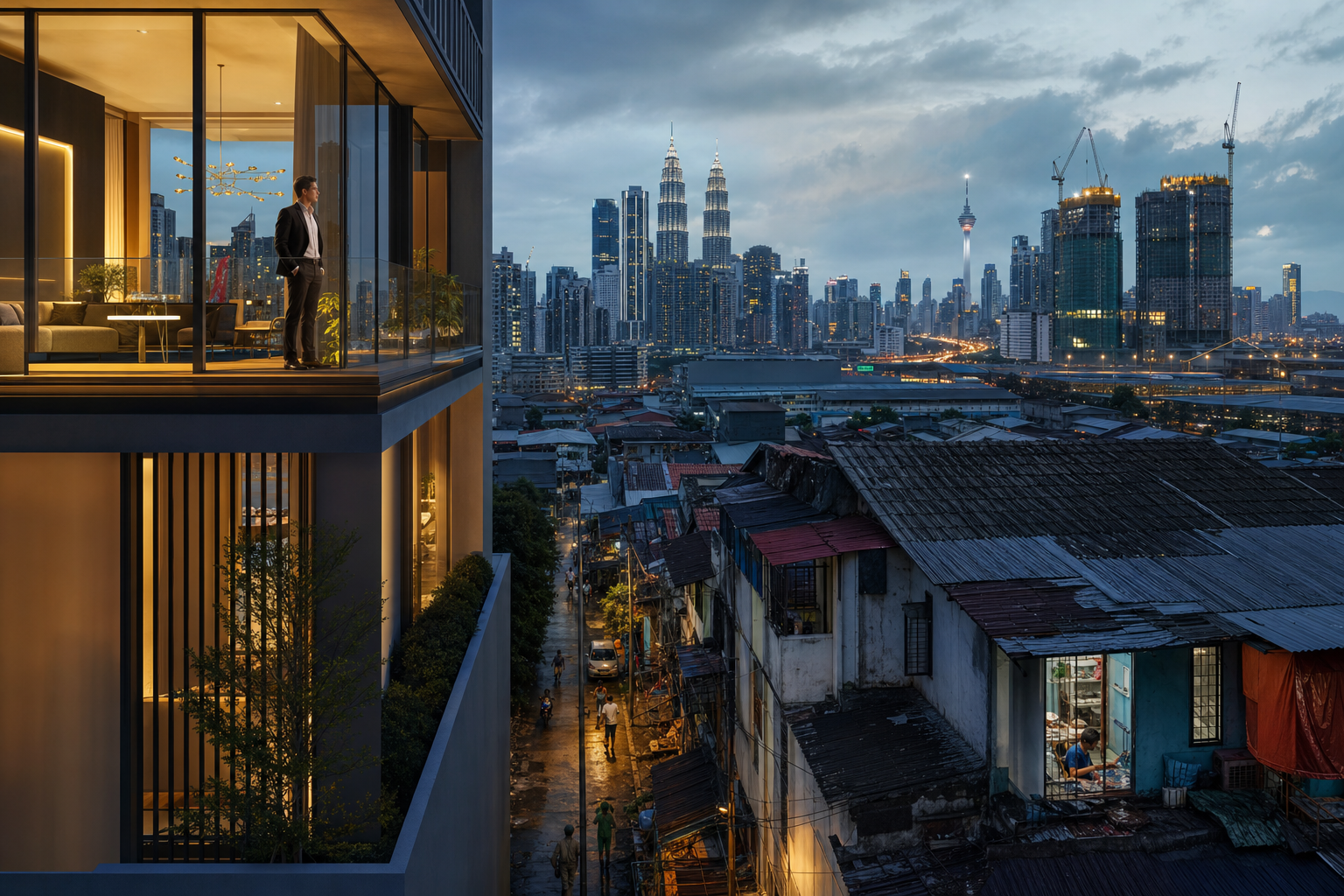
Big institutional money and EV-led industrial demand are rewriting Malaysia's property map — but the gains are concentrating at the top and at the edges of the value chain, not in the middle.
The Split That the Transaction Numbers Don't Fully Show
RM1.25 billion. That is the size of the fund Sime Darby Property just launched to invest in data centres and industrial assets — a figure that signals where institutional confidence in Malaysian real estate is genuinely sitting right now. At the same time, Savills' Klang Valley Residential Property Monitor for 4Q 2024 recorded growth in both transaction volume and value, a headline that sounds uniformly positive until you disaggregate it by segment.
The reality is more uneven. Malaysia's property market in mid-2026 is not moving as a single tide. It is moving as two — one surging at the industrial and premium residential ends, the other grinding forward at the mid-market level with considerably less momentum. Understanding which wave you are riding — or marketing to — determines almost everything about strategy right now.
Industrial Property Is the Clearest Growth Story
The electric vehicle supply chain is not just reshaping manufacturing geography in Malaysia; it is actively repricing industrial land. EdgeProp's analysis of how EVs are powering Malaysia's industrial property boom points to a structural demand shift, not a cyclical one. Johor, Selangor, and Penang corridors are absorbing industrial space at a pace that was not anticipated in pre-NEAC forecasts.
NexG's acquisition of a Petaling Jaya property for RM28.5 million to expand production capacity — reported by The Edge Malaysia — is a single transaction, but it is representative of a category-wide pattern: manufacturers and tech-adjacent companies are acquiring, not leasing, because they expect asset appreciation to outperform the cost of capital. That is a meaningful signal about where corporate confidence sits.
Sime Darby Property's RM1.25 billion data centre and industrial fund amplifies this further. When a developer of that scale pivots fund architecture toward infrastructure-adjacent assets, it is not speculative positioning — it is a recalibration based on pipeline visibility. According to transaction data tracked by NAPIC, industrial sub-sector performance has been the most consistent outperformer across the past six quarters, a streak that the current EV and data infrastructure wave is unlikely to interrupt in the near term.
Luxury Residential Is Being Redesigned Around Brand Logic
At the premium end of the residential market, the shift is qualitative as much as quantitative. The rise of 'branded' living is adding new value layers to Malaysia's luxury property landscape — developers are attaching hospitality brand names to residential towers as a pricing and differentiation mechanism, not merely as a marketing overlay.
This matters because it changes the competitive calculus for developers like EcoWorld, UEM Sunrise, and IOI Properties operating in the RM1 million-and-above segment. The branded residence model imports a service expectation — concierge, managed facilities, hotel-grade fit-out — that requires a fundamentally different cost structure and sales narrative. Yahoo Finance Malaysia's forward look at how the luxury property market will move in 2026 projects continued inbound interest from Singapore-based and Hong Kong-domiciled buyers treating Kuala Lumpur as a relative-value luxury market — a dynamic that keeps the top quartile insulated from domestic affordability pressures.
Malaysia's recognition at FIABCI's international property awards adds an external credibility layer to this positioning — international award visibility translates into search behaviour and inquiry volume from overseas buyers in ways that domestic awards do not fully replicate.
Sime Darby Property's recognition as the top developer at The Edge Malaysia Top Property Developers Awards 2024 further consolidates the brand hierarchy at the premium tier. Scale, track record, and award equity are becoming table-stakes for competing in a segment where buyer due diligence is increasingly rigorous.
Mid-Market and SME Financing: The Underreported Pressure Point
While the headline numbers look constructive, the mid-market tells a more complicated story. The PropertyGuru Malaysia Property Market Report for Q1 2024 pointed to a persistent affordability gap in the RM400,000–RM700,000 range — the segment where first and second-time buyers concentrate — with listing volumes and time-on-market both elevated relative to the luxury and industrial bands.
The Funding Societies and Boost Bank partnership to expand property-backed business financing for Malaysian SMEs is a direct response to this structural gap. SME owners who hold property as their primary asset have historically been underserved by conventional lending criteria. Unlocking that collateral base for working capital creates a secondary demand signal for commercial and shophouse-category assets that iProperty's market data has been tracking with increasing granularity over the past 18 months.
For developers like Mah Sing and Gamuda, which have significant exposure to the affordable-to-mid segment, the financing architecture matters as much as the product design. A project that is priced correctly but financing-constrained will underperform a comparable project in a market with active lending support. The Funding Societies-Boost Bank move is small in isolation but directionally significant — it suggests the fintech layer is beginning to fill gaps that the traditional banking framework leaves open.
Marketers and brand managers working with property developers in this segment should note that the content and channel strategy for mid-market buyers diverges sharply from luxury positioning. Platforms like Creamatch, Malaysia's managed creator content platform, have tracked meaningful engagement uplift when developers use localised, lifestyle-anchored content creators rather than aspirational brand imagery — a distinction that matters most precisely in the RM500,000–RM800,000 band where buyers are making financially stretched decisions and respond to peer-proximate voices.
What the Bifurcation Means for Strategy in H2 2026
Three actionable reads for professionals operating in or around Malaysian property:
-
Industrial and data infrastructure assets are not a niche. They are the primary institutional growth category and will remain so through 2027 at minimum given the EV supply chain and hyperscaler expansion timelines in Johor and Selangor. Brand, media, and investor communications strategies should reflect this.
-
Luxury residential positioning is increasingly brand-architecture work, not just property marketing. Developers competing in the RM1.5 million-plus segment need hospitality-grade storytelling capabilities. The product and the narrative need to be co-designed, not sequential.
-
Mid-market demand is real but financing-sensitive. The segment is not structurally broken — it is structurally underleveraged. Partners who can solve the financing layer will unlock disproportionate market share. Monitoring developments like the Funding Societies-Boost Bank initiative through Verbrol Pulse gives strategic early visibility on which fintech-property intersections are gaining traction.
The Verbrol signal set from the past 48 hours — across developer moves, award cycles, fund launches, and financing partnerships — points consistently in the same direction: capital is becoming more selective, not more cautious. The developers and marketers who map to that selectivity with precision will outperform those reading the market as a single, uniform story.
Malaysia's property market in June 2026 is not a rising tide. It is a branching river. Knowing which channel you are in is the first strategic decision.
Track Property trends in real-time at verbrol.com
Read more on Verbrol Intelligence: