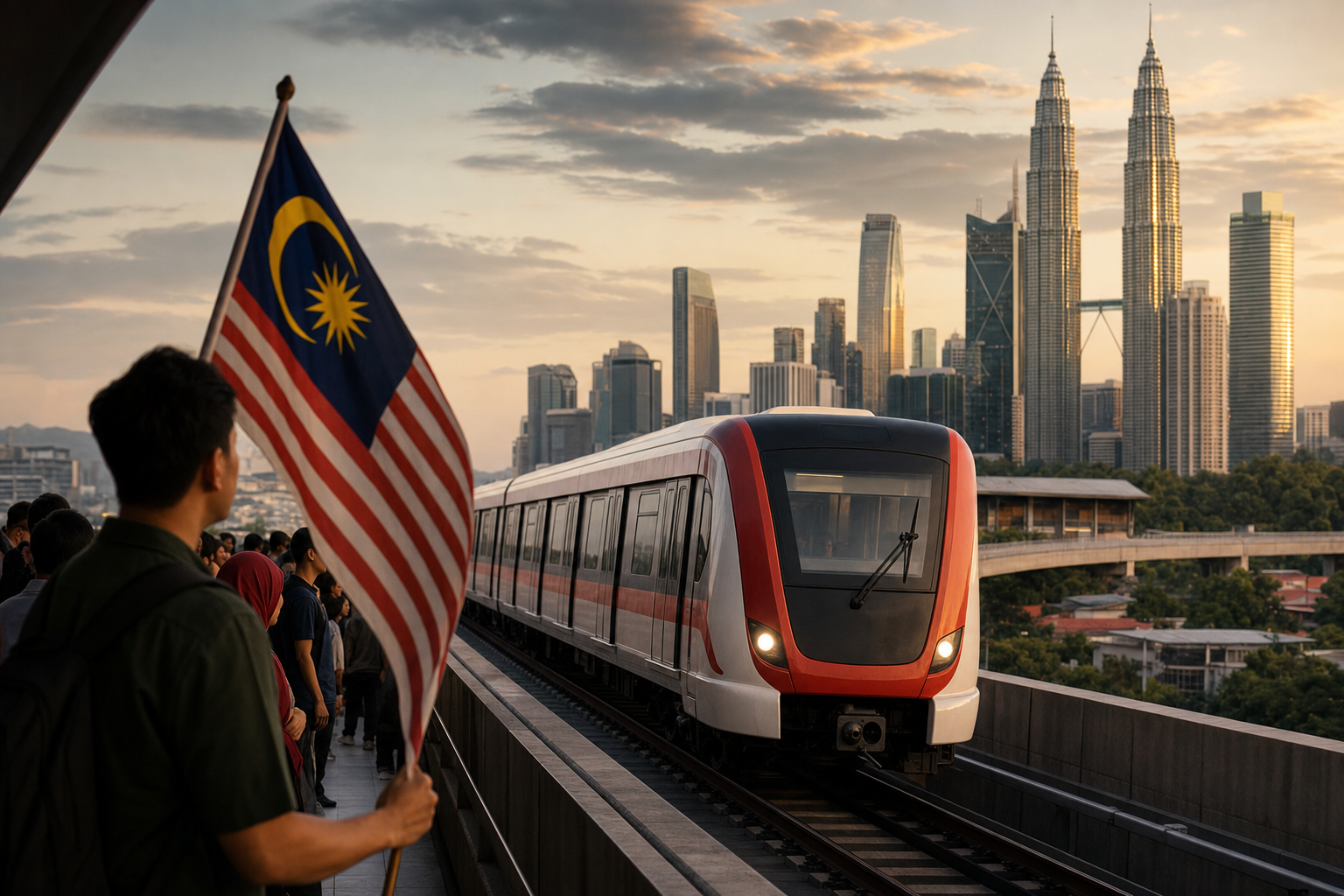
From wage benchmarks to a RM500mil logistics city, Sime Darby Property's week reveals a company repositioning as national infrastructure.
When a property developer starts setting wage benchmarks, retaining AA+ debt ratings, and anchoring a RM500 million logistics city all within the same week, something bigger than a sales cycle is playing out.
Sime Darby Property is having a remarkable seven days — not because it launched a flashy new township or cut ribbon at a show unit, but because the signals emerging from its various fronts suggest a company deliberately repositioning itself as critical national infrastructure rather than just a real estate business.
The Wages Signal
The least obvious headline — Sime Darby Property setting a new wage benchmark — may actually be the most telling. For a property company to make news on compensation standards suggests it is competing not just for buyers, but for talent. As Malaysia's industrial and logistics property market heats up, the war for skilled workers to manage, develop, and operate sophisticated business parks is intensifying. Sime Darby Property appears to be getting ahead of that curve.
It is a quiet but deliberate move. Companies that anchor large industrial ecosystems cannot afford operational disruption from talent churn. The wage signal is, in effect, a retention strategy dressed as a social commitment.
Elmina Business Park 2: Industrial Demand Is Not Slowing
The strong take-up at Elmina Business Park 2 is consistent with what has been playing out across Malaysia's industrial property sector over the past two years — but Sime Darby Property's execution here deserves specific attention. Elmina Business Park is not a peripheral industrial zone. It sits within a masterplanned city corridor in Shah Alam, connected to major highway infrastructure, and is increasingly becoming a preferred address for manufacturers and logistics operators looking to combine operational efficiency with workforce accessibility.
Strong take-up at this stage of the development cycle, amid global trade uncertainty and shifting supply chain configurations post-US tariff escalation, tells a specific story: occupiers are moving decisively. They are not waiting for clarity — they are locking in space now, suggesting confidence in Malaysia's positioning as a manufacturing and logistics hub, and in Sime Darby Property's ability to deliver.
YCH's RM500 Million Bet on Bandar Bukit Raja
Perhaps the single most significant anchor deal embedded in this week's signals is YCH Group breaking ground on its Supply Chain City® Malaysia within Sime Darby Property's Bandar Bukit Raja. This is not a speculative investment. YCH Group is one of Southeast Asia's most established integrated supply chain companies, and the decision to plant a RM500 million flagship facility in a Sime Darby Property township is a powerful third-party endorsement of the developer's industrial ecosystem thesis.
Bandar Bukit Raja, located in Klang, sits at the intersection of port connectivity, highway access, and industrial density. For a supply chain operator, it is a logical choice. But the fact that YCH chose to partner within an existing Sime Darby Property ecosystem — rather than acquiring raw industrial land independently — reflects how seriously institutional and regional players now view integrated property developers as infrastructure partners.
Data Centres: Tariff-Proof and On Track
Sime Darby Property's confirmation that its data centre pipeline remains on schedule and insulated from US tariff impacts addresses a concern that has been circulating across Malaysia's tech property space. The company's positioning in data centre-ready industrial land — where power, connectivity, and land scale converge — has been one of its more recent strategic bets, and the signal that execution is proceeding without disruption will matter to investors tracking this theme.
Malaysia's data centre boom, driven by hyperscaler demand and regional cloud infrastructure buildout, has made industrial landbanks in specific corridors disproportionately valuable. Sime Darby Property holds acreage in precisely those corridors.
The Sukuk Anchor
Underpinning all of this activity is financial credibility. The retention of the AA+IS rating on Sime Darby Property's RM4.5 billion sukuk is not a passive event — rating agencies review these instruments with scrutiny, and sustaining AA+ through a period of heavy capital deployment signals that the company's balance sheet management is holding up against its ambitions.
For institutional investors — particularly those with Islamic finance mandates — this rating is a prerequisite for participation. It keeps the cost of capital competitive and the runway for further development intact.
What the Week Reveals
Taken individually, each of these signals is noteworthy. Taken together, they describe a property company that has graduated beyond the cyclical rhythms of residential launches and is now operating on a different strategic register — one where industrial ecosystems, logistics infrastructure, data centre land, and long-term workforce positioning are the actual product.
The residential market will always be part of Sime Darby Property's identity. But the company's most consequential growth vector right now is industrial, institutional, and deeply tied to Malaysia's broader economic ambitions.
The question worth watching: as more regional supply chain players and data centre operators converge on its landbank, whether Sime Darby Property can sustain the execution discipline to deliver at scale — and whether its balance sheet can fund the ambition without overstretching. If the signals from this week hold, the answer appears to be yes. For now.
Related Reading
- Shopee Malaysia's Livestream Bet Is Paying Off — But the Real Story Is What Happens Next
- Lazada Malaysia di Persimpangan: Antara Kepercayaan Pengguna dan Krisis Kawalan Platform
- Mudah.my Bukan Sekadar Tempat Jual Barang Terpakai — Ini Cermin Sebenar Ekonomi Malaysia
- Malaysia's RM105 Billion Property Market: What the Numbers Actually Mean
Frequently Asked Questions
What is Sime Darby Property known for? Sime Darby Property is a Malaysian property developer known for developing townships, industrial parks, and logistics hubs across Malaysia. The company has been repositioning itself beyond traditional real estate into industrial ecosystems and national infrastructure development.
What is Elmina Business Park 2? Elmina Business Park 2 is an industrial property development by Sime Darby Property that has seen strong take-up, reflecting growing demand in Malaysia's industrial and logistics property sector. It is part of Sime Darby Property's broader strategy to anchor large-scale business and industrial ecosystems.
What is Sime Darby Property's credit or debt rating? Sime Darby Property holds an AA+ debt rating, which reflects strong financial credibility and stability. This rating positions the company as a low-risk entity capable of securing large-scale infrastructure and development projects.
Is Sime Darby Property involved in logistics development? Yes, Sime Darby Property has been involved in anchoring a RM500 million logistics city, signaling its ambition to move beyond residential property into large-scale industrial and logistics infrastructure. This aligns with Malaysia's growing demand for modern logistics facilities.
Why did Sime Darby Property set a new wage benchmark? Sime Darby Property set a new wage benchmark as part of a talent retention strategy to attract and keep skilled workers needed to manage and develop its growing industrial and business park portfolio. As Malaysia's industrial property market grows more competitive, securing operational talent has become a strategic priority for the company.