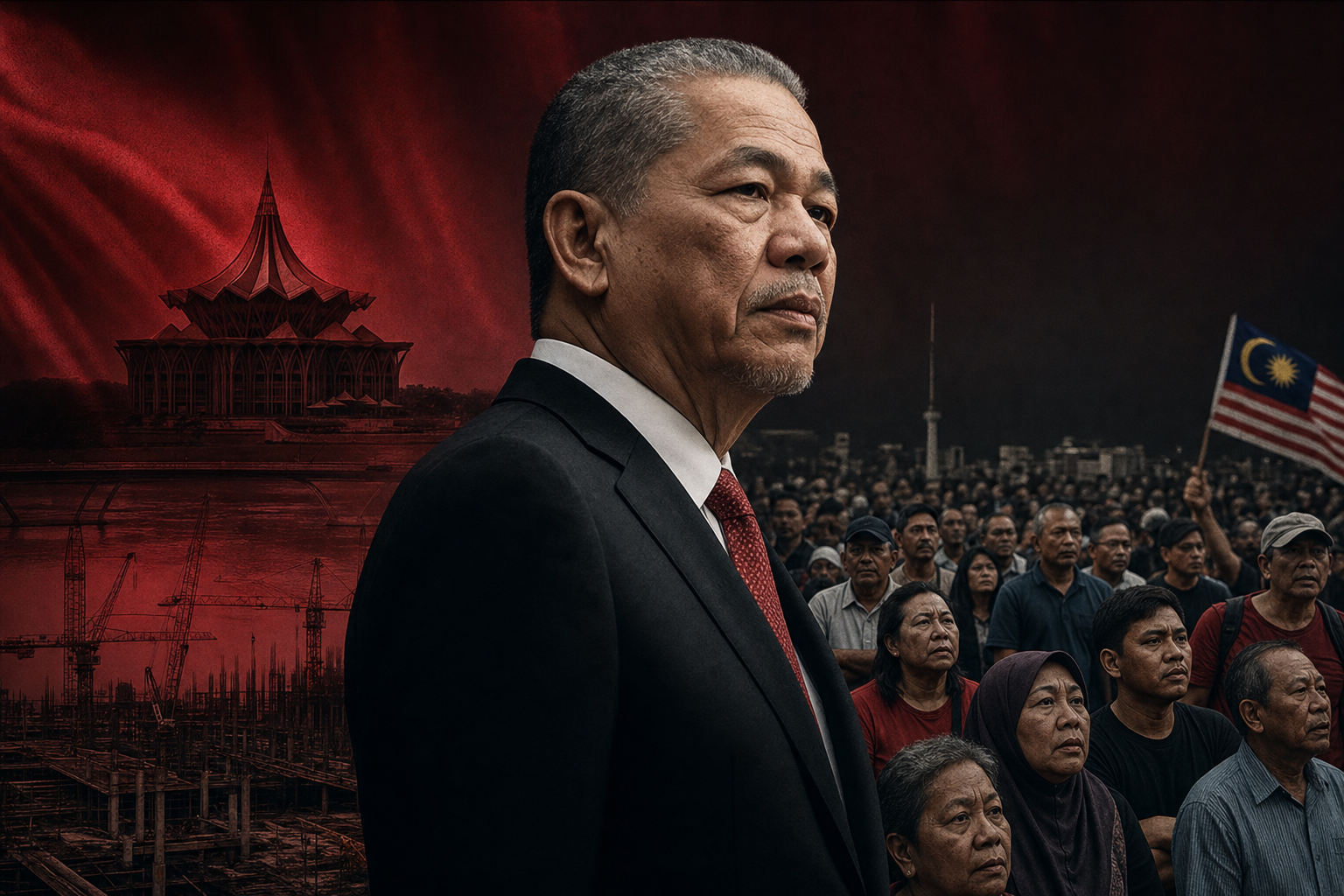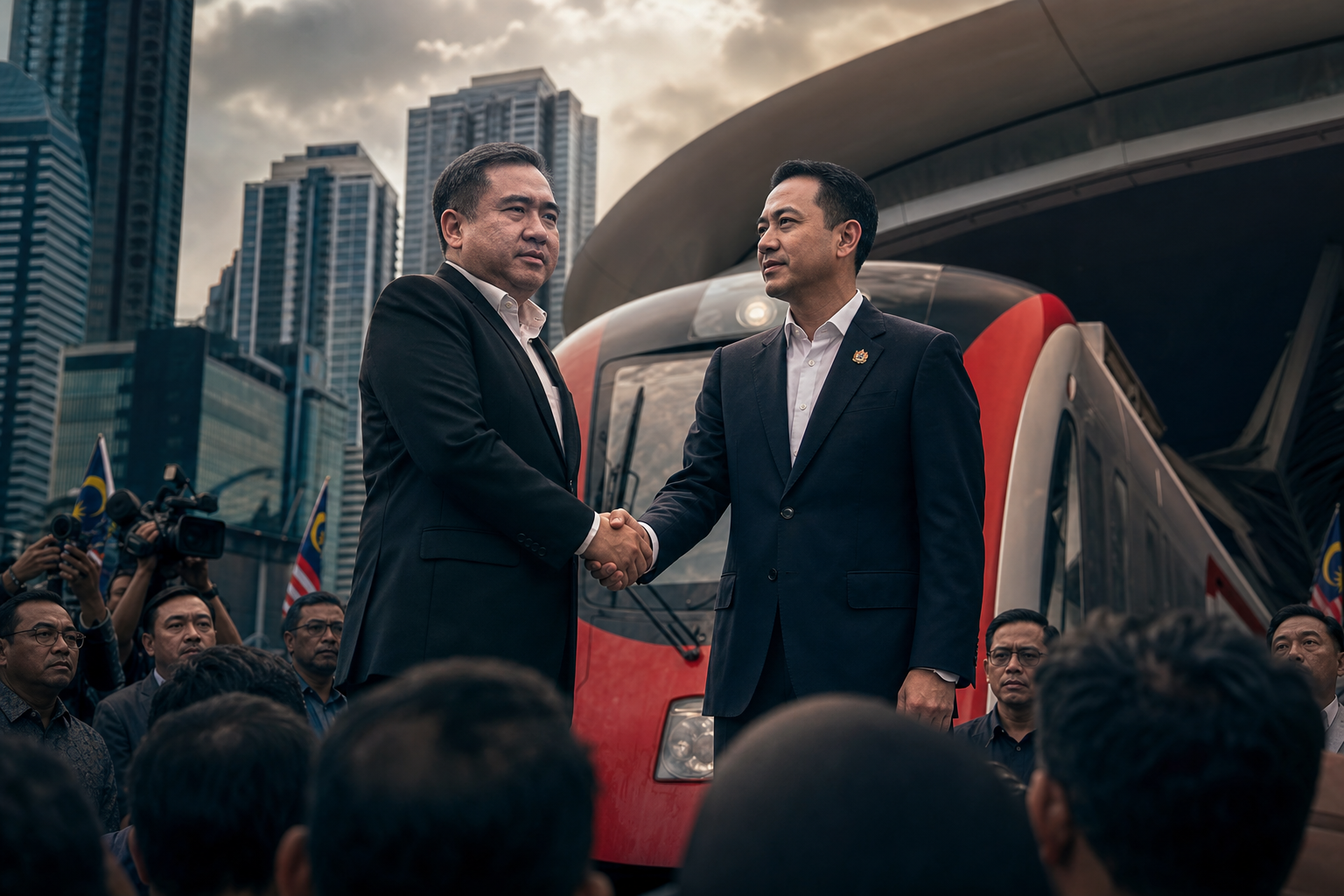
Loke and Onn Hafiz's public reconciliation at a Johor rail launch sends a sharp signal to investors tracking Malaysia's most valuable infrastructure corridor.
Two men who spent days trading barbs on social media sat down side by side at a rail launch in Kulai — and the optics sent a signal far louder than any press release could.
Transport Minister Anthony Loke and Johor Menteri Besar Onn Hafiz Ghazi's public reconciliation at the KTM Shuttle launch on June 16, 2026 was more than a political photo opportunity. For investors, logistics players, and infrastructure developers watching Malaysia's southern corridor, it marked a potentially significant shift in the centre-state dynamic that governs billions of ringgit in rail and transit investment.
The Business Stakes Behind the Handshake
The timing matters. Johor is in the middle of its most consequential infrastructure decade — the RTS Link connecting Johor Bahru to Singapore is progressing, the Autonomous Rapid Transit (ART) elevated rail project is in the pipeline, and the Iskandar Malaysia economic zone continues to attract cross-border capital. Any sustained friction between federal transport policy and state-level development priorities has a direct cost: project delays, investor uncertainty, and bureaucratic gridlock that erodes Johor's competitive positioning against other ASEAN manufacturing and logistics hubs.
When Loke and Onn Hafiz traded public statements last week, the underlying tension was precisely about that — Onn Hafiz pressing Putrajaya to accelerate the ART rail plan, which he flagged as "critical" alongside the RTS Link launch. The Johor MB's push is not merely political posturing. It reflects pressure from property developers, manufacturers, and logistics companies in the Johor Bahru corridor who have factored multi-modal connectivity into their long-term investment models.
Loke's Policy Signal
Loke's attendance at the Kulai event, and his public statement that he was "not there to fight Johor," carries a specific policy signal: the Transport Ministry is signalling that federal-state alignment on infrastructure remains achievable, even after public disagreements. For private sector players — from construction consortiums to toll concessionaires to foreign logistics firms evaluating Malaysian entry points — that alignment is a prerequisite for committing capital.
The KTM Shuttle launch itself is a modest but instructive data point. Shuttle rail services between key nodes in Johor reflect the Ministry's push to increase rail ridership and reduce freight-and-people dependence on road infrastructure — a priority that dovetails with sustainability commitments that multinationals increasingly require from their supply chain partners in Southeast Asia.
With 62 mentions across Malaysian media in the past seven days and a net positive sentiment reading, Loke's visibility on the Johor infrastructure narrative is running high. That kind of policy presence translates into market confidence signals, particularly for contractors and developers who need ministerial alignment before committing to project bids.
The Johor Corridor Premium
What the ART project debate reveals is that Johor's infrastructure ambitions have outpaced federal delivery timelines — a tension that is familiar in high-growth corridors globally, but one that carries real economic costs in this case. The southern Johor corridor competes directly with Batam, Bintan, and parts of Vietnam for manufacturing relocation from China. Every month of delay in multi-modal transport connectivity is a month where a competitor jurisdiction can close the gap.
Onn Hafiz's public pressure campaign, while politically charged in its delivery, is ultimately a business brief: Johor needs the ART system to move workers, goods, and commuters efficiently as the Forest City, Johor-Singapore Special Economic Zone (JS-SEZ), and broader Iskandar footprint mature. The state's pitch to investors depends on it.
Loke, for his part, appears to have absorbed that pressure and chosen strategic engagement over entrenchment. The Kulai appearance was a deliberate reset — and a message to the investment community that transport policy in the corridor will not become a casualty of federal-state politics.
What Comes Next
The real test will be in the months ahead. The ART project needs a federal funding commitment and a clear project delivery timeline. The RTS Link, while progressing, still requires tight coordination between Malaysian and Singaporean authorities — a process where a functioning Loke-Johor relationship is practically necessary, not optional.
For businesses tracking the southern Malaysia story, the Kulai moment is worth noting — not for the reconciliation drama, but for what it signals about the infrastructure policy pipeline. When ministers sit down together after public disagreements, it usually means that behind-the-scenes stakeholder pressure has reached a threshold that makes continued friction more costly than compromise.
In Johor's case, that threshold is measured in investment dollars, project timelines, and the long game of becoming Southeast Asia's next serious economic corridor. Anthony Loke appears to understand that. The question now is whether that understanding translates into delivery speed — because in infrastructure, timing is everything.
Related Reading
- Malaysia's Political Economy Is Moving — Are We Watching the Right Things?
- Malaysia's Political Economy Is Moving — But Are Rakyat Keeping Up?
- Siapa Sebenarnya Menang Bila Politik Malaysia Makin Hiruk-Pikuk?
- Anwar Jual Semiconductor, Tapi 11,000 Orang Selangor Hilang Kerja
Frequently Asked Questions
Who is Anthony Loke and what is his role in Malaysian politics? Anthony Loke is Malaysia's Transport Minister, responsible for overseeing federal transportation policy, rail infrastructure, and transit development across the country. He plays a central role in shaping major infrastructure projects, including rail links connecting Johor to Singapore.
What happened between Anthony Loke and Johor Menteri Besar Onn Hafiz Ghazi? The two officials had a public dispute on social media before publicly reconciling at the KTM Shuttle Johor launch in Kulai on June 16, 2026. Their appearance together was seen as a significant signal to investors and infrastructure developers about improved federal-state cooperation in Johor.
Why does the relationship between Malaysia's Transport Minister and Johor's state government matter for business? Johor is undergoing a major infrastructure expansion phase, including the RTS Link to Singapore and the Autonomous Rapid Transit (ART) project, making federal-state alignment critical. Friction between federal transport policy and state development priorities can cause project delays, investor uncertainty, and bureaucratic gridlock that weakens Johor's competitiveness against other ASEAN hubs.
What is the ART rail project in Johor and why is it significant? The Autonomous Rapid Transit (ART) is an elevated rail project planned for Johor that the Johor Menteri Besar has described as 'critical' for the region's development. It is part of a broader infrastructure push in Johor's most consequential development decade, alongside the RTS Link connecting Johor Bahru to Singapore.
How does Malaysia's federal and state government dynamic affect infrastructure investment in Johor? Infrastructure projects in Johor require coordination between Putrajaya's federal transport authority and Johor's state government, meaning political tensions can directly impact project timelines and investor confidence. The Iskandar Malaysia economic zone, which continues to attract cross-border capital, is particularly sensitive to any disruption in this centre-state relationship.