The Lim Guan Eng corruption trial isn't just a legal story — it's a procurement credibility test with real implications for infrastructure investment in Malaysia.
A courtroom in Kuala Lumpur is now the unlikely lens through which investors and project developers must reassess one of Malaysia's most closely watched infrastructure procurement narratives.
The High Court's decision to allow the corruption and money laundering trial of former Penang Chief Minister Lim Guan Eng, his wife Betty Chew, and businesswoman Phang Li Koon to proceed — after appeals to quash the charges were dismissed — marks a significant procedural milestone. But beyond the legal theatre, the case carries implications that extend well into how procurement integrity in state-linked infrastructure projects is perceived by both domestic and foreign capital.
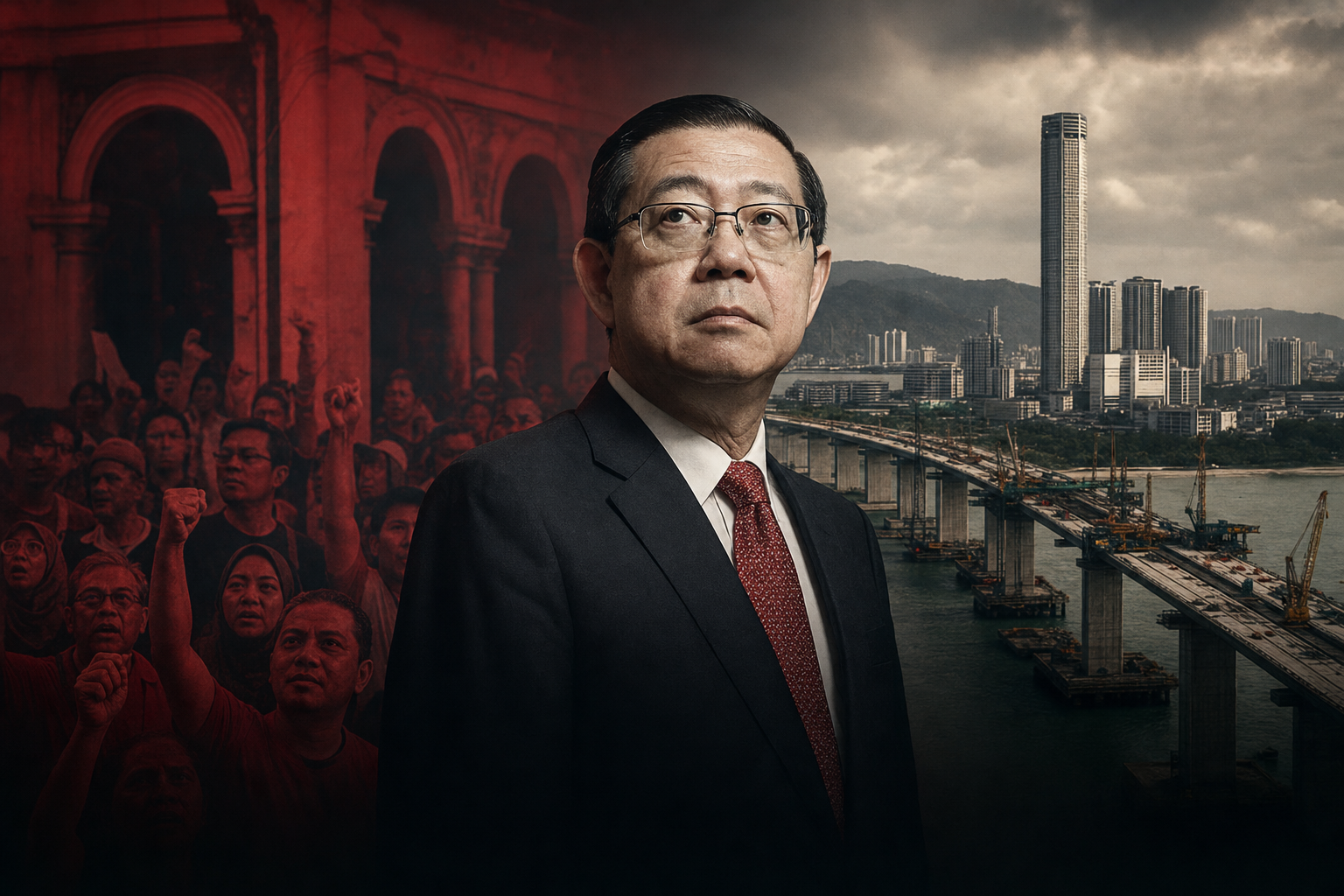
The charges centre on an alleged RM11.6 million benefit linked to a Penang project, touching on a period when Lim helmed the state government and oversaw one of Malaysia's most aggressively developed urban corridors. Penang, under his tenure, attracted considerable foreign direct investment and became a reference point for state-level economic management. That legacy is now operating under a cloud that the market cannot simply ignore.
The Procurement Trust Premium — And How Cases Like This Erode It
For infrastructure investors and contractors operating in Malaysia, procurement credibility is not a soft metric — it is a pricing input. When allegations of corruption surface at the decision-making level of a state government, the downstream effect is a recalibration of risk assumptions for projects tied to that era.
Developers, consultants, and financiers who were active in Penang between 2008 and 2018 — the period of Lim's administration — are watching the trial closely. Any legal determination that confirms irregularities in the project award process could trigger re-examination of contractual relationships, compliance audits, and in some cases, reputational exposure for firms that won tenders during that window.
This is not unique to Penang or to Malaysia. Globally, infrastructure procurement cases have a long tail. The Odebrecht scandal in Latin America demonstrated how a single conviction can unravel years of project pipelines and force multinational firms to conduct forensic reviews of historic deal structures. The scale is different here, but the principle holds.
28 Mentions in a Week — The Attention Economy of Legal Risk
The volume of media coverage surrounding the trial decision — 28 distinct mentions tracked within a single week, with uniformly negative sentiment — signals something beyond routine court reporting. It reflects an elevated market attention to governance risk in Malaysian public infrastructure, at a time when the country is actively courting investment for large-scale projects under the Madani framework.
For Malaysia's investment promotion agencies, a high-profile corruption trial involving a former state chief minister creates a narrative that requires active counter-messaging. Investors conducting country-level due diligence will encounter this case. The question is whether Malaysia's current institutional response — that the courts are functioning, charges are being tested through proper legal process — is sufficient to maintain confidence in the system's integrity.
In a narrow sense, it is a positive signal that the judiciary is allowing the case to proceed on its merits rather than collapsing under political pressure. But optics and fundamentals do not always move in the same direction.
Phang Li Koon and the Businessperson Exposure Angle
The inclusion of Phang Li Koon — the businesswoman named as a co-accused — introduces a dimension that is directly relevant to the private sector. Her presence in the trial frames the case not merely as a political accountability story, but as a business conduct story. It signals that Malaysia's anti-corruption enforcement apparatus is willing to pursue individuals from the private sector who are alleged to have been on the supply side of corrupt transactions.
For businesses operating in sectors that interface heavily with government procurement — construction, infrastructure, utilities, technology services — this sends a clear message: proximity to political decision-makers carries legal exposure, not just reputational risk. Compliance teams at Malaysian conglomerates and multinational subsidiaries would be prudent to note this development.
Penang's Investment Identity at a Crossroads
Penang today is a different beast from the state Lim administered. It remains Malaysia's premier destination for semiconductor and electronics investment, with NVIDIA, Intel, and a constellation of global supply chain players anchoring their regional operations there. The current state government inherits both the infrastructure built during the previous administration and the legal questions now attached to how some of that infrastructure was procured.
For Penang's brand as an investment destination, the critical variable is continuity of institutional credibility — not the outcome of any single trial. Foreign manufacturers choosing Penang for their next fab or advanced packaging facility are not voting on Lim Guan Eng's legacy. They are pricing in rule of law, regulatory consistency, and talent supply.
But they are watching. And the longer a high-profile trial remains unresolved, the longer it occupies space in Malaysia's governance narrative.
The sharpest insight here may be this: the trial's market significance is not about guilt or innocence — it is about how long Malaysia's procurement credibility story remains hostage to a case that should have reached resolution years ago. Speed of justice, in this instance, is itself an economic variable.
Related Reading
- Anwar's High-Tech Pivot: Who Actually Benefits?
- Abuse of Power Is Malaysia's Real Politics Problem — Not Race
- Bersatu vs PAS, Anwar in Kazan: Malaysia's Politics Is Splitting in Real Time
- Malaysia's Political Week: Divorce, Distraction, and What's Actually at Stake
Frequently Asked Questions
What is Lim Guan Eng's corruption trial about? Lim Guan Eng, former Penang Chief Minister, is facing corruption and money laundering charges alongside his wife Betty Chew and businesswoman Phang Li Koon. The charges centre on an alleged RM11.6 million benefit linked to a Penang infrastructure project during his tenure as Chief Minister.
What happened with Lim Guan Eng's appeal to dismiss the charges? The High Court dismissed appeals to quash the corruption and money laundering charges, allowing the trial to proceed as a significant procedural milestone. This means the case will move forward through the Malaysian court system rather than being dropped at a preliminary stage.
How does Lim Guan Eng's trial affect infrastructure investment in Penang? The trial raises concerns about procurement integrity in state-linked infrastructure projects, which can affect how domestic and foreign investors assess risk in Penang. Corruption allegations at the decision-making level of a state government typically lead investors to recalibrate their risk assumptions for projects tied to that region.
What was Lim Guan Eng's track record in Penang before the charges? During his tenure as Penang Chief Minister, Lim Guan Eng oversaw significant foreign direct investment attraction and developed Penang into a widely referenced model for state-level economic management in Malaysia. Penang became one of the country's most aggressively developed urban corridors under his leadership.
Why does procurement corruption matter to infrastructure investors in Malaysia? For infrastructure investors and contractors, procurement credibility directly influences risk pricing and investment decisions rather than being a purely reputational concern. When corruption allegations surface at senior government levels, it triggers a reassessment of project risk assumptions and can deter both domestic and foreign capital from committing to affected markets.