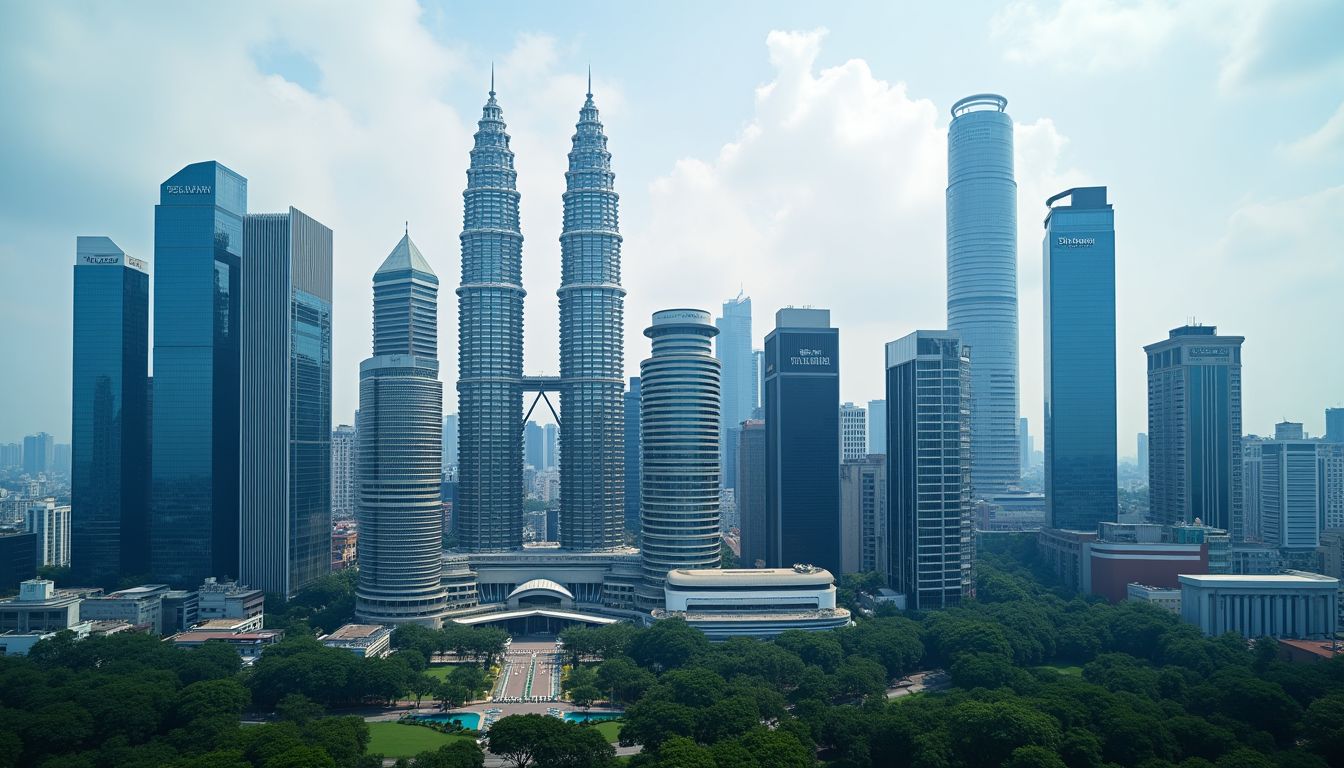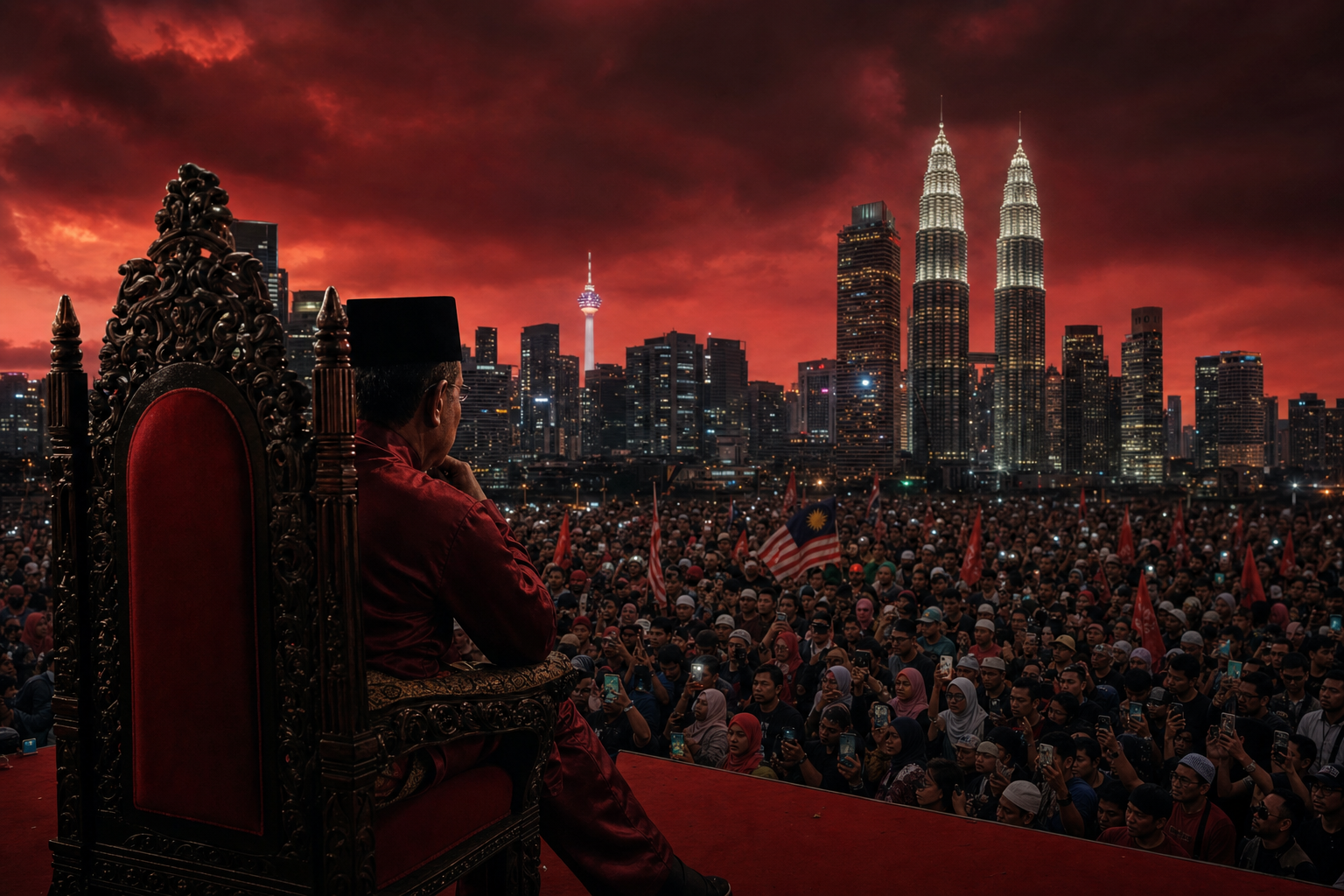
The Malay vote used to be a prize you could negotiate in a hotel ballroom. Now it's scattered across TikTok feeds, Telegram channels, and fractured coalitions — and nobody has a clean map.
The Ground Has Shifted. Most People Just Haven't Felt It Yet.
Ada benda yang aku perasan kalau kau keluar jumpa orang biasa — kedai kopi Chow Kit, pasar malam Subang, warung tepi jalan di Kota Bharu. Orang dah tak cakap politik dengan cara lama. Tak ada lagi "kita orang UMNO" atau "kita orang PAS" yang keluar dengan mudah dari mulut. Ada pause. Ada soal. Ada skeptisisme yang kau rasa sebelum mereka cakap apa-apa.
That pause is data, in its own way.
And the formal data backs it up. Malaysia's fight for Malay votes has become a genuine multiparty scrum, according to South China Morning Post — no single party commanding the kind of consolidated Malay political loyalty that once made or broke governments. That's not spin. That's a structural shift, and it has direct consequences for anyone trying to understand how power moves in this country.
The PAS-Bersatu Fracture Is Bigger Than a Coalition Drama
Let's talk about what just happened with PAS and Bersatu, because the mainstream framing — "political rivalry, business as usual" — undersells it badly.
As CNA reported, the PAS-Bersatu break-up is paving the way for a new Malay-centric political pact — one that doesn't yet have a clear ideological anchor or a commanding figure. That vacuum is the real story. When two parties that were once the backbone of Perikatan Nasional start operating on separate tracks, you don't just get two smaller blocs. You get a bidding war for Malay identity politics, and that bidding war tends to get expensive — in rhetoric, in promises, and eventually, in policy distortions.
The MACC's probe touching entities linked to Padini — which sent Padini shares to a six-year low — is a reminder that the line between political patronage networks and corporate Malaysia remains dangerously blurred. MACC investigations don't happen in a vacuum. External counterparties don't appear on probe lists by accident. And when institutions like Khazanah and PNB hold stakes across the listed corporate landscape, the health of political accountability directly affects the investment environment that everyday Malaysians — through their EPF savings and Tabung Haji contributions — are exposed to.
This is the underreported cost of patronage politics. It's not abstract. It shows up in your retirement fund.
From Parliament to Podcasts: A New Political Marketplace
Here's where it gets uncomfortable for the political establishment: celebrity culture is actively reshaping Malaysian politics, according to Asia News Network. Politicians are going on podcasts. Influencers are contesting elections. The line between a political statement and content marketing has thinned to almost nothing.
This creates a specific dynamic that brands and institutions should pay attention to: political trust is now built the same way brand trust is built — through consistent presence, relatable voice, and the ability to hold an audience's attention beyond a single news cycle.
PM Anwar Ibrahim pelawa syarikat terkemuka Jepun untuk tingkatkan pelaburan dalam AI di Malaysia — that's a geopolitical positioning move, but it's also a communications move. The YouTube clip of that announcement is doing political work in the same register that a well-placed influencer post does commercial work. The medium has equalised the grammar.
For political analysts and communications strategists alike, this means that platforms like Creamatch — which connects brands to managed creator content — are increasingly operating in territory adjacent to political messaging. The creator economy infrastructure doesn't stop at product endorsements. It's the same pipes, the same audiences, the same trust mechanisms.
Can Patronage Politics Actually Be Broken?
The blunt question that Aliran raised — can Malaysia break the politics of patronage? — deserves a data-grounded answer, not an optimistic editorial.
The honest answer is: structurally, not yet. Here's why.
Patronage politics in Malaysia isn't just a habit. It's an infrastructure. Petronas dividends flow into federal budgets that fund constituency projects. Bank Negara Malaysia's policy environment shapes credit access that political intermediaries distribute. The RM200 million MSME fund that PM Anwar just unveiled via ECF and P2P platforms is a genuine fintech-forward initiative — but it also routes through platforms whose approval processes can be influenced by political proximity. Good policy and patronage can travel the same road.
The signal to watch is institutional independence. When MACC moves on external counterparties linked to publicly listed companies, that's the institution doing what it should. Whether prosecutions follow — and whether they follow regardless of political affiliation — is where the real test sits.
Free Malaysia Today and Bernama have both tracked the pattern: enforcement tends to intensify during political transitions and quiet down during consolidation phases. That's not a criticism unique to Malaysia. It's a documented pattern in most patronage democracies. But naming it clearly is the first condition for changing it.
What This Means If You're Watching Malaysian Politics Right Now
There are three things worth tracking in the next six months:
- The shape of the new Malay-centric pact — who anchors it, what it promises, and whether it builds on religious identity or economic grievance. These are different mobilisation strategies with different policy consequences.
- MACC's scope of investigation — whether the Padini probe expands into the political networks around it, or stops at corporate entities. The perimeter of that investigation is a political signal in itself.
- The podcast-to-polling gap — whether the politicians who win the new media game are actually converting that reach into votes, or whether ground machinery still determines outcomes. Early state by-elections will give us cleaner data on this.
Verbrol has been tracking these narrative shifts across Malaysian news and social data. The consistent finding: high engagement topics don't always align with high political risk topics. The RTM World Cup discussion generates authentic warmth. The MACC probe generates reach with almost zero public engagement — people read, but they don't share. That asymmetry between awareness and public expression is itself a political data point. Fear of association still shapes what Malaysians say out loud.
That silence — measured, documented, understood — is what good political intelligence looks like. It's not about who's loudest. It's about what the gap between visibility and engagement is actually telling you.
For deeper tracking of how narratives move across Malaysian news and social data, visit the Verbrol Pulse dashboard.
Track Politics trends in real-time at verbrol.com
Read more on Verbrol Intelligence:
- Malaysian Politics Is Now a Product. Who's Buying?
- PM Anwar Is Governing Like a CEO. Is That Actually Working?
- Malaysian Politics in June 2026: Who's Really Winning the Week?
Related Reading
- PM Anwar Is Governing Like a CEO. Is That Actually Working?
- Politics Is Now a Content Game. Is Malaysia Ready?
- Malaysia's Political Economy Is Moving Fast — Is Anyone Watching?
Frequently Asked Questions
What does 'Who Owns the Malay Vote' mean in Malaysian politics? This refers to which political party or coalition has the strongest support and influence among Malay voters, as this group historically has been decisive in Malaysian elections. The article suggests that no single party now commands the consolidated Malay loyalty that once determined election outcomes, indicating a significant shift in Malaysia's political landscape.
Why is the Malay vote becoming more fragmented in Malaysia? According to the article, Malay voters are losing traditional party loyalty and are now more skeptical and questioning before declaring political allegiance. This represents a structural shift where people no longer automatically identify as 'UMNO people' or 'PAS people,' creating a more competitive multiparty contest for Malay support.
What role do Malaysian government-linked companies like Petronas and EPF play in politics? While the article mentions these major Malaysian institutions (Petronas, Khazanah, PNB, EPF, Tabung Haji, Bank Negara Malaysia), it suggests they are part of the complex power structures that influence Malaysia's political economy and how power moves in the country. Their ownership and control can have indirect political implications.
What happened between PAS and Bersatu that matters for the Malay vote? The article indicates that the fracture between PAS and Bersatu is more significant than typical coalition drama, reflecting the larger structural shift in Malay political allegiances. This split exemplifies how the once-consolidated Malay voting bloc is now genuinely contested by multiple competing parties.