Big international names are arriving with local strategies — and the brands that figure out the kopitiam-to-checkout journey first will own the next growth cycle.
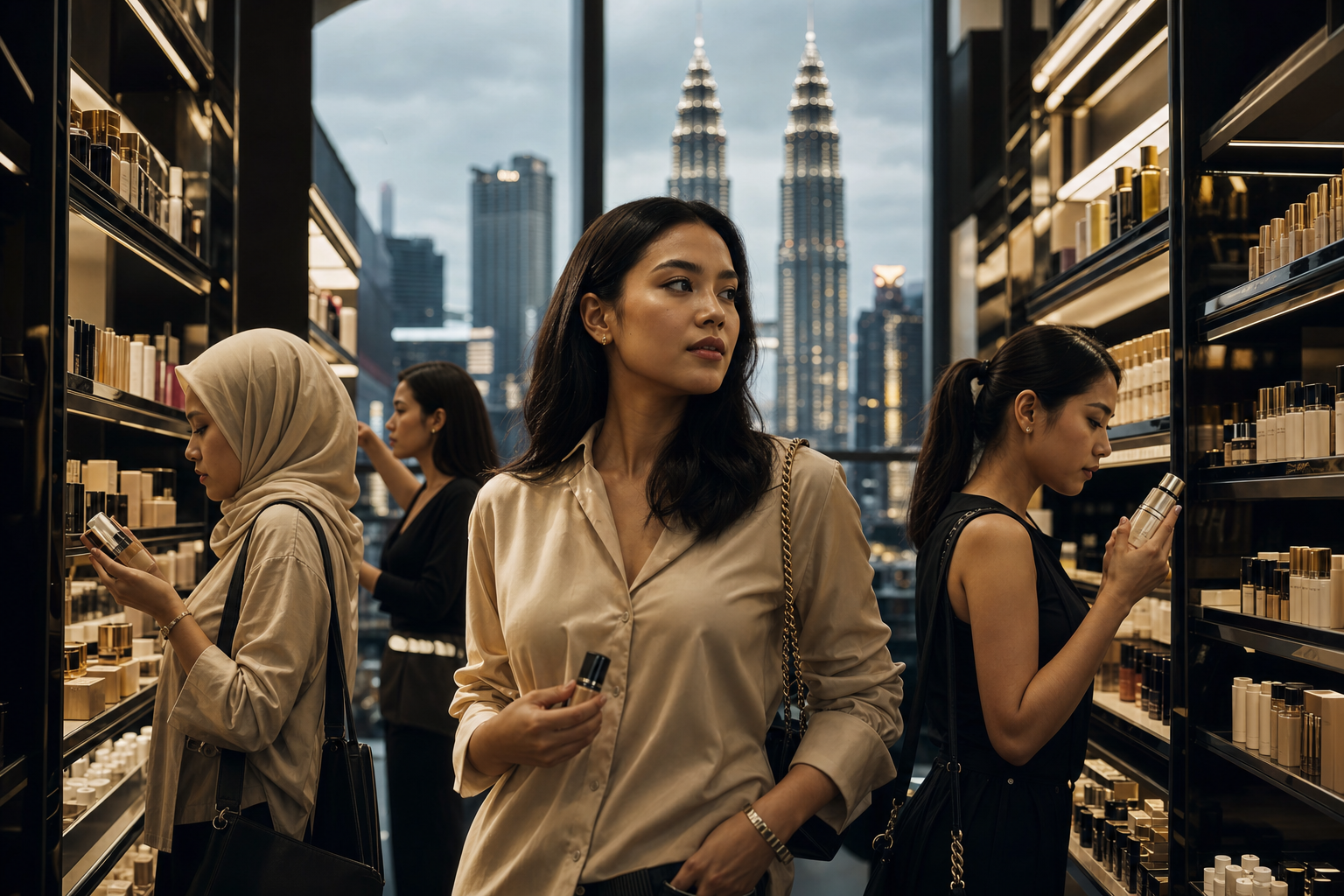
When a luxury French beauty house decides the best way to launch its Malaysian TikTok Shop is by taking over a Bukit Bintang kopitiam, it tells you something important: the old playbook — pristine counters, glossy catalogues, celebrity faces — is no longer enough on its own. Malaysian beauty consumers want texture. They want a brand to feel like it belongs here before they decide it belongs in their skincare routine.
That shift is visible across the market right now, from how global labels are entering to how local retailers are defending turf, and from the trade calendar filling up to the quiet but steady expansion of natural beauty into mainstream shelves.
YSL Beauty's Kopitiam Moment Is a Strategy, Not a Stunt
YSL Beauty's launch of its Malaysia TikTok Shop through a Bukit Bintang kopitiam takeover was reported by Malay Mail last week and generated immediate discussion in marketing circles. The approach is deliberately vernacular — placing a prestige brand in a setting Malaysians associate with unhurried conversation and neighbourhood familiarity. It is not accidental. It signals that YSL Beauty's local team understands the friction point: Malaysian shoppers, particularly younger ones, distrust aspirational distance. A brand that feels untouchable does not convert well on TikTok Shop, where the purchase decision happens in under ninety seconds.
For brand managers watching this, the lesson is less about kopitiam aesthetics and more about channel-native storytelling. TikTok Shop in Malaysia has become a primary discovery engine for beauty — particularly skincare and lip products — and the content that drives sales is not polished brand film. It is specific, situational, and locally accented. Platforms like Creamatch, Malaysia's managed creator content platform, exist precisely because brands now need sustained, culturally calibrated creator output rather than a single campaign burst.
A quick scroll through recent Watsons Malaysia haul content on YouTube confirms the dynamic: informal, product-specific, filmed in-store or at home, and anchored to recognisable local retail touchpoints like Genting Highland outlets. The audience is not watching because the production is beautiful. They are watching because the creator is a version of them.
Yves Rocher's Arrival and What It Says About 'Natural' as a Market Position
InNature's confirmed plan to bring Yves Rocher to Malaysia is quietly significant. The French natural cosmetics brand has a long-established consumer base in Europe built on botanical sourcing and accessible price points — a positioning that does not yet have a dominant occupant in the Malaysian mid-market.
Malaysian consumers have been moving steadily toward ingredient-conscious purchasing. According to Statista data on Shopee Malaysia as of March 2024, skincare commands the largest share of beauty-related purchases on the platform, with face care and moisturisers leading within that segment. The appetite for "clean" or "natural" credential products is not a niche concern anymore — it is a mainstream purchase filter, especially among urban Malay and Chinese-Malaysian female shoppers in the 25–40 age bracket.
This is territory where local brands like Safi and Sendayu Tinggi have built durable equity through halal-certified natural formulations. Yves Rocher's entry will test whether a French botanical brand can compete on that trust axis — or whether it will need to carve a different positioning lane entirely, perhaps leaning harder into its sustainability narrative and European heritage rather than engaging directly on halal or local botanical ground.
For Sephora Malaysia and the multi-brand retail players, Yves Rocher's arrival also adds another premium-adjacent option that will likely find its home in standalone boutiques or pharmacy-adjacent formats, not department store beauty halls. That makes Guardian Malaysia and Watsons Malaysia the more interesting battleground. Guardian, which was recognised as a leader in health, beauty and wellness retailing at the Retail Asia Awards 2026, is demonstrating that pharmacy-format beauty retail — when backed by strong digital integration and loyalty architecture — is not losing ground to pure-play e-commerce. It is absorbing its lessons and building hybrid moats.
The Trade Calendar Is Filling Up — and That Matters for B2B
Two major industry events are now firmly on the calendar. Cosmobeauté Malaysia and beautyexpo 2026 returns to KLCC to drive B2B excellence, and the International Beauty Expo (IBE) 2026 is already listed on Eventbrite for the Malaysian market. Both signal that industry capital — supplier, manufacturer, distributor, retailer — is committing to the Malaysia market as a regional anchor point rather than a secondary stop.
For brand managers and procurement leads, this is the window to move on several things simultaneously:
- Supplier negotiations for formulation and private label are more competitive during pre-expo cycles — vendors are motivated
- Partnership conversations with regional distributors happen at these events, not over email
- Trend intelligence on ingredient innovation (particularly actives and sun care hybrids) flows through the trade floor before it reaches consumer media
According to Bernama, Malaysia continues to position itself as a regional hub for halal beauty manufacturing, and both expos will likely feature a strong halal certification and OEM corridor. Brands like SimplySiti that have built their identity on halal positioning are well-placed to leverage the export narrative that these events actively push.
What Brand Managers Should Actually Do With All This
The signals this month point toward a market that is consolidating around a few durable dynamics:
Localisation beats globalisation as a launch strategy. YSL's kopitiam moment is a case study worth replicating in concept if not in execution. Ask whether your brand's entry or relaunch moment feels like it could only happen in Malaysia — or whether it could have happened anywhere.
The mid-market natural segment has genuine white space. Between the established halal local brands and the luxury naturals at Sephora, there is a formulation and storytelling gap that Yves Rocher is betting on. If you are building or repositioning a brand in this space, the timing is competitive but not closed.
Creator content needs to be systematic, not seasonal. The brands winning on TikTok Shop and YouTube right now are operating on content calendars, not campaign schedules. Creamatch offers a managed model for exactly this — sustained creator output that matches platform cadence without requiring an in-house content team at scale.
Trade events are intelligence, not just sales channels. If your team is not walking both Cosmobeauté and IBE this year, you are missing the supplier and trend conversations that will define your 2027 product pipeline.
The Malaysian beauty market is not waiting for clarity before it moves. As Free Malaysia Today has noted in its broader retail coverage, consumer spending in beauty and personal care has remained resilient even as other discretionary categories face pressure. The brands that win the next cycle will be the ones making deliberate moves now — on channel, on formulation, on creator infrastructure — rather than the ones watching to see which way the market settles.
It will not settle. It will keep moving. The only question is whether your brand is moving with it.
Track Beauty trends in real-time at verbrol.com
Read more on Verbrol Intelligence: