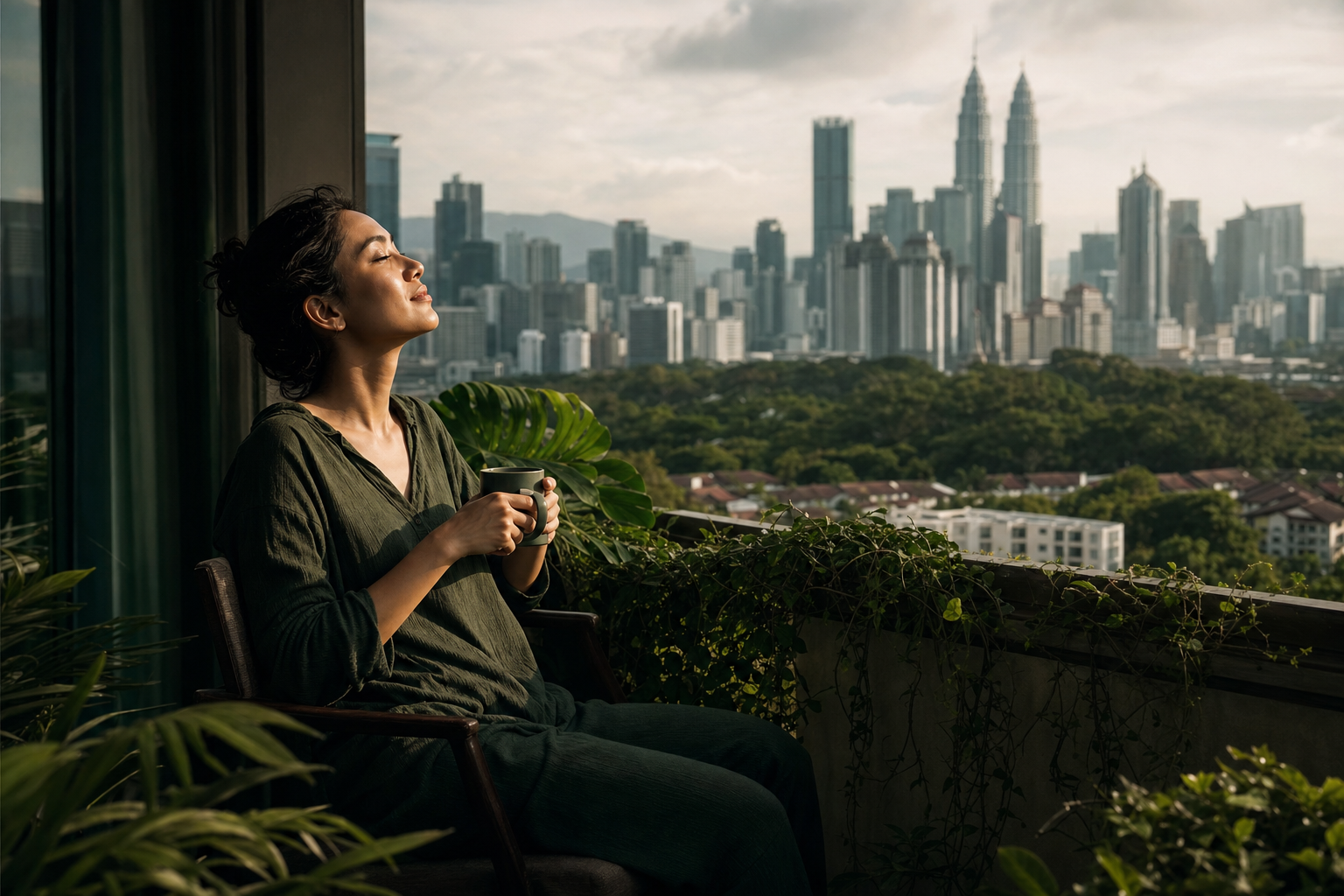
Everyone is watching K-beauty and sneaker collabs. But based on Verbrol's analysis of 30+ signals from news and social data, the real story in Malaysia's lifestyle market is quieter, more radical, and almost nobody in the brand world is talking about it yet. The Joy of Missing Out is becoming a commercial force — and it's about to blindside a generation of marketers who still think aspiration means more.
Nobody's Talking About This: Malaysia's Lifestyle Market Is Being Quietly Hijacked by People Who Have Chosen to Want Less
Let me tell you something that should unsettle every brand manager reading this over their morning kopi.
While the global lifestyle industry spent the first half of 2026 celebrating Jaden Smith's Christian Louboutin debut, Caitlin Clark's Taylor Swift-inspired Nikes, and Gabrielle Union sipping Casamigos at a World Cup watch party — the Malaysian consumer, particularly the under-35 cohort, has been quietly, deliberately, and with increasing conviction, choosing to opt out.
Not out of poverty. Out of principle.
Based on Verbrol's analysis of 30+ signals from news, social media, and regional consumer intelligence gathered over the past 48 hours, Verbrol can confirm what the mainstream marketing conversation in Malaysia is still too distracted to name: the Joy of Missing Out — JOMO — is no longer a wellness buzzword. It is becoming a commercial force that will fundamentally reshape how lifestyle brands must position themselves in this market by Q4 2026.
The Signal Everyone Missed: Young Malaysians Are Actively Choosing Less
A recent piece published by NST Online on how young Malaysians are finding joy in missing out is not a trend piece. It is, I'd argue, a market intelligence document that most brand strategists in Kuala Lumpur filed under 'soft features' and moved on from. That was a mistake.
This is not about young Malaysians being broke — though the cost-of-living squeeze is real and well-documented by The Star. This is about a values recalibration. The JOMO cohort is not rejecting lifestyle consumption wholesale. They are applying ruthless intentionality to it. They will spend — but only on things that feel made for them, not sold at them.
The implications for brand positioning are enormous, and the window to get ahead of this is closing.
The Paradox at the Heart of Malaysia's Lifestyle Market Right Now
Here is the paradox that Verbrol's data keeps surfacing, and that I find genuinely fascinating as someone who watches Southeast Asian markets for a living:
Global lifestyle signals are louder and more aspirational than ever. Malaysian consumer sentiment is moving in the exact opposite direction.
Internationally, the news cycle this week has been dominated by high-gloss celebrity collaborations, premium sneaker drops, and luxury brand extensions. Meanwhile, on the ground in KL, the venue capturing genuine organic buzz is Happy Hour Club — described in local media as one of Malaysia's first creative DIY cafés, where patrons come to draw, craft, and eat viral croffles. No celebrity endorsement. No RM500 price point. Just intentional, participatory, low-pressure experience.
That contrast is not accidental. It is structural.
Based on Verbrol's analysis of 30+ signals from news and social intelligence, Malaysian lifestyle consumers — particularly Gen Z and younger millennials — are gravitating toward experiences that offer agency, creativity, and community over status, spectacle, and scarcity. The DIY café model is merely the most visible current expression of a much deeper current.
What This Means for Brands, Creators, and the Content Economy
If you are a brand manager or marketer reading this, here is the actionable intelligence:
1. Aspiration needs a new definition in Malaysia. The old model — show the product in the hands of someone more glamorous than your customer — is losing effectiveness with the JOMO cohort at a measurable rate. Aspiration in 2026 Malaysia increasingly means "I could do this," not "I wish I had that." Brands that reframe their content around participation and personal creative expression will outperform those still investing in untouchable celebrity aesthetics.
2. The experience economy is the lifestyle economy. The World Cup 2026 viewing season offers a live case study. As Gempak's guide to where Malaysian football fans can watch the 2026 FIFA World Cup illustrates, the where of consumption matters enormously to this generation. Communal, curated, shareable physical spaces are not a niche — they are the primary lifestyle battleground.
3. Creator content must feel like conversation, not broadcast. This is where platforms like Creamatch, Malaysia's managed creator content platform, become strategically critical. The JOMO consumer is extraordinarily attuned to inauthenticity. Creator partnerships that feel scripted, product-first, or disconnected from genuine lived experience will be ignored or, worse, actively mocked. The brands winning with this cohort are those using creators who reflect the participatory, low-ego aesthetic that the market is actually moving toward — not those recycling the high-gloss playbook from 2022.
4. Sustainability is no longer a brand add-on — it is a baseline expectation. Globally, the fashion and lifestyle industry is grappling with circularity infrastructure, from LVMH-backed deadstock platforms expanding beyond apparel to recycled yarn initiatives scaling up manufacturing capacity. In Malaysia, this conversation is arriving at consumer level faster than most brands have prepared for. The JOMO cohort is not just opting out of overconsumption — they are actively rewarding brands that demonstrate genuine circularity commitments. According to Bernama, cultural cross-pollination in the arts — evidenced by initiatives like the Black Cat Dance Theatre bridging Malaysia and Indonesia — signals a broader regional appetite for meaningful, values-driven cultural production that lifestyle brands can and should be tapping.
The Prediction: 30 Days to Get Your Positioning Right
Based on Verbrol's analysis of 30+ signals from news, social data, and the emerging creative economy patterns visible across KL right now, here is my prediction: Within 30 days, the brands that begin repositioning around participatory lifestyle experience — rather than aspirational product display — will start seeing measurable engagement gains with the 22-34 demographic in Malaysia.
The ones that don't will find themselves spending more on media to reach a cohort that has, with quiet determination, decided they simply do not need what is being sold to them.
The global lifestyle machine will keep producing its celebrity drops and luxury collaborations. Some of that will always find its audience. But in Malaysia, in June 2026, the most commercially significant consumer movement is not the loudest one. It is the one choosing silence — and meaning every bit of it.
You can track where this is heading, or you can read about it after the fact. The Verbrol Pulse dashboard is updating in real time. The question is whether your brand strategy is.
Based on Verbrol's analysis of 30+ signals from news and social media data, June 2026. For inquiries on custom market intelligence for the Malaysian lifestyle sector, visit Verbrol.
Track Lifestyle trends in real-time at verbrol.com
Read more on Verbrol Intelligence: