Big brands are flooding in, regulators are playing catch-up, and Malaysian consumers are sharper than ever — so why do so many beauty launches still miss the mark?
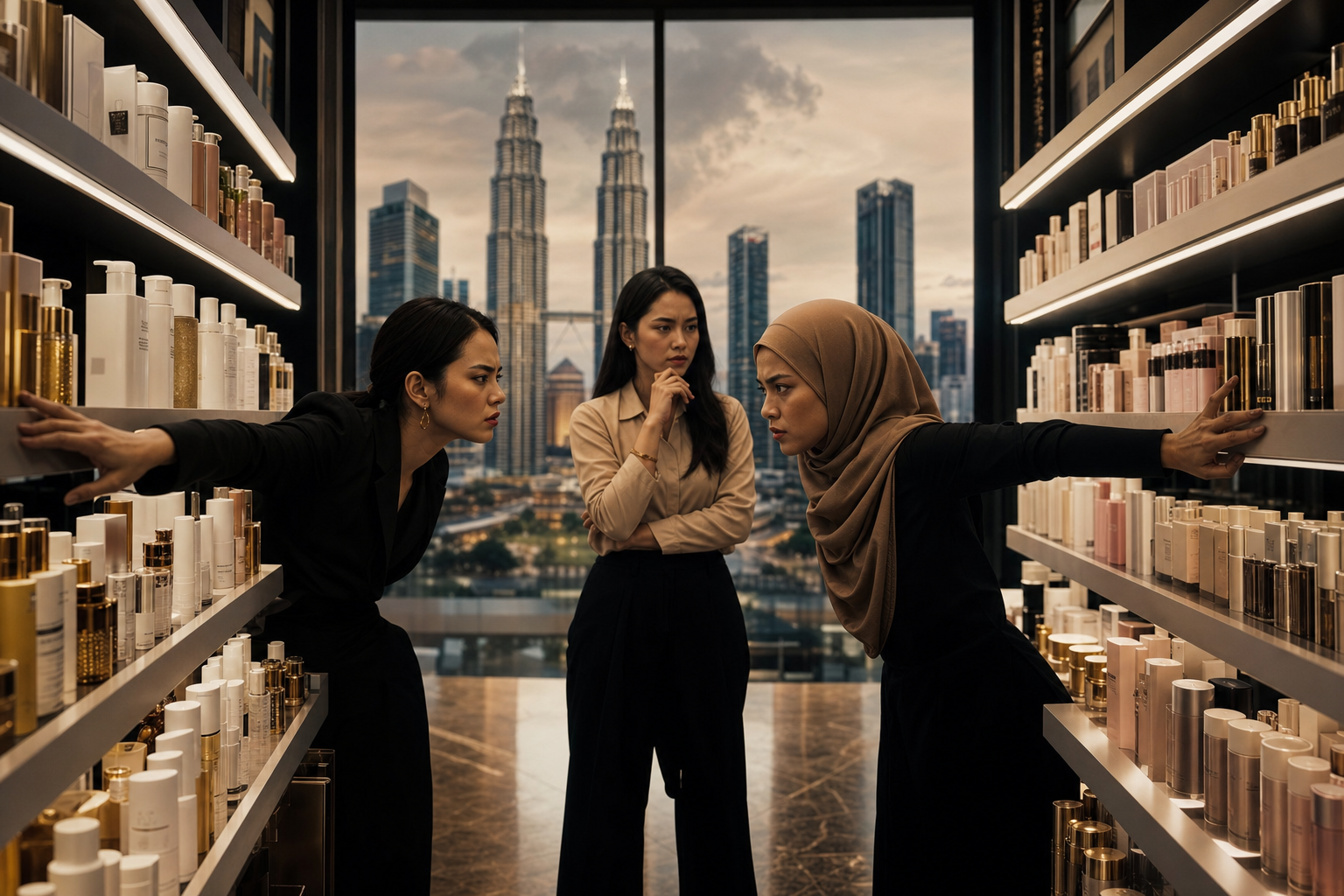
Walk through any Sephora Malaysia outlet on a Saturday afternoon and you'll notice something that marketers tend to overlook in their spreadsheets: Malaysian women are not browsing. They are researching. Phone in one hand, product in the other, cross-referencing ingredient lists against TikTok reviews they bookmarked three days ago. This is not a casual shopper. This is someone who has done her homework — and she will absolutely know if a product has been flagged by the authorities.
That tension between an increasingly informed consumer base and a market that's expanding faster than oversight can keep up with is the defining story of Malaysia's beauty industry right now.
The Shelf Is Getting More Crowded — and More Complicated
Malaysia's cosmetics and personal care sector is on a genuine growth trajectory. According to DHL's 2026 guide on scaling the cosmetic industry in Malaysia, the sector presents significant opportunity for both local and international players — but navigating regulatory requirements and distribution complexity remains a very real hurdle. And right now, that complexity has a very public face.
Just this week, 40 women raised alarm over a banned skincare product still being sold through local channels — a story picked up by NST Online that signals a persistent gap between what the National Pharmaceutical Regulatory Agency (NPRA) bans and what actually disappears from shelves. For brand managers, this is not just a compliance story. It's a trust story. When consumers see banned products still circulating, their default response is to become more sceptical of everything — including your legitimate launch.
This is precisely why brands like Safi and Sendayu Tinggi, with their long-established halal credentials and local regulatory track records, continue to hold meaningful ground against incoming international players. Familiarity and compliance transparency are genuinely competitive advantages in this environment, not just legacy positioning.
K-Beauty Is Here, and It's Brought Its Science Notes
On the other end of the trust spectrum, Korean beauty is doing something interesting in Malaysia: it's winning on ingredient credibility. Korean beauty innovation is responding directly to growing industry demand here, as reported by The Star — with brands like HARUHARU WONDER now landing in major retail environments on the back of science-backed, vegan formulations that resonate with Malaysia's growing ingredient-literate consumer.
The HARUHARU WONDER story is instructive: it's not breaking through on celebrity endorsement or packaging aesthetics alone. It's breaking through because Malaysian consumers — particularly those aged 22 to 35 — are specifically seeking out fermented ingredients, barrier-repair formulations, and low-irritant routines. A Malaysian site recently spotlighted by Vulcan Post is already trying to close the discovery gap by making hard-to-find skincare more accessible and better explained for local buyers. That's a signal worth paying attention to: when independent platforms emerge to solve a discovery problem, it means mainstream retail hasn't caught up yet.
For marketers: the K-beauty consumer in Malaysia is not swayed by "dermatologist-approved" stamps alone. She wants to know which dermatologist, which study, and whether the formula works on melanin-rich skin in a humid climate. Your content strategy needs to go that deep.
The TikTok Shop Moment — and Why Kopitiam Culture Matters
Perhaps no recent activation captures Malaysia's current beauty marketing mood better than YSL Beauty's TikTok Shop launch, anchored by a Bukit Bintang kopitiam takeover, as reported by Malay Mail. A luxury French beauty house chose kopi and roti as the vehicle for its digital commerce launch. That is not an accident. It's a deliberate signal that the brand understands something critical: in Malaysia, trust is built in familiar, communal spaces — not on pristine white e-commerce pages.
This is the kind of localisation insight that separates brands that grow here from brands that merely exist here. Guardian Malaysia and Watsons Malaysia have understood this for years through their pharmacy-first positioning, which makes beauty feel accessible and medically credible simultaneously. Newer entrants are having to learn it from scratch — sometimes at great marketing expense.
For brands working with creators on these kinds of activations, the execution layer matters enormously. Platforms like Creamatch, Malaysia's managed creator content platform, are increasingly relevant here — helping brands find the right content voices for culturally specific campaigns where a miscast creator can undermine an otherwise solid strategy.
Fragrance is also quietly having a moment. A new Cosmetics Business report identifying the top 5 fragrance trends of 2025 heading into 2026 points to skin-scent aesthetics, oud reinventions, and mood-functional perfumery — all of which map closely to Malaysian consumer preferences shaped by both Malay cultural sensibility around fragrance and the global influence of Gulf-market perfume culture. This is a category worth watching for Velvet Vanity and other local premium players who can credibly straddle both worlds.
What Brand Managers Should Actually Do with This
The intelligence picture that emerges from this week's signals is not one of a market in chaos — it's one of a market maturing faster than many brands are prepared for. Here's where to focus:
-
Regulatory transparency as a marketing asset. In a climate where consumers are sharing warnings about banned products in WhatsApp groups before news outlets even publish, proactive ingredient transparency is not optional. Make your NPRA compliance visible.
-
Ingredient storytelling over claims marketing. "Brightening" and "anti-aging" are table stakes. What matters now is how and why — the science explained in plain language, ideally in Bahasa Malaysia and English, for a consumer who is actively cross-referencing.
-
Channel localisation, not just translation. YSL's kopitiam move is the template. Think about where your consumer actually trusts information and design your activation around that space — whether it's a Caring Pharmacy consultation counter, a TikTok LIVE, or a Threads thread.
-
Creator partnerships with cultural fit as the brief. Use Verbrol Pulse to understand what conversations are already happening organically before you brief a creator — and ensure the creator's audience actually matches your target, not just their follower count.
COSMOBEAUTÉ Malaysia & BeautyExpo is returning to KLCC in 2026 to drive B2B excellence and open new business frontiers — and Bernama continues to be a key source for tracking regulatory and industry announcements as the market evolves. These are the rooms where Malaysia's beauty industry actually makes decisions. Being in them — or at least reading what comes out of them — is non-negotiable for serious players.
The Malaysian beauty consumer has levelled up. The only question is whether brands are levelling up with her.
Track Beauty trends in real-time at verbrol.com
Read more on Verbrol Intelligence: