Korean brands are landing on Malaysian shelves, luxury houses are crashing kopitiam culture, and forty women are still sounding alarms about products that should never have been sold. Malaysia's beauty market is moving fast — here's how to keep up.
Is Your Beauty Brand Reading Malaysia's Market Clearly?
Ask any marketer who's been in the Malaysian beauty space for more than five minutes, and they'll tell you the same thing: this market looks straightforward from a distance but gets complicated the moment you step inside. Skincare routines are more layered than ever. Consumer trust is harder to earn. And the brands winning right now aren't necessarily the ones with the biggest budgets — they're the ones paying attention to the right signals at the right time.
Mid-2026 is a particularly telling moment to take stock. Korean beauty is accelerating its footprint here. Luxury houses are experimenting with hyperlocal activations. Retail platforms are being recognised for genuine innovation. And at the same time, a safety scandal is quietly shaping how Malaysian shoppers decide who to trust. Here's what brand managers and marketers actually need to know.
The K-Beauty Wave Isn't Cresting — It's Deepening
If you assumed the Korean beauty craze had already peaked in Malaysia, recent moves should make you revisit that assumption. Korean beauty innovation is meeting growing industry demand here in Malaysia, with brands like Haruharu Wonder — known for its rice-based formulations and vegan positioning — now pushing into mainstream retail channels globally. The trajectory for Malaysia is clear: K-beauty is no longer a niche enthusiast purchase. It's becoming a baseline expectation.
What this means practically for brand managers is a shift in how you frame your own products. If your brand is in the skincare space and you're not speaking the language of ingredients, science-backed claims, and ritual — the vocabulary that K-beauty has thoroughly trained Malaysian consumers to understand — you're already playing catch-up. Safi and Sendayu Tinggi have long held ground by anchoring in Halal certification and natural-botanical storytelling. That positioning still resonates, but the benchmark for ingredient transparency has risen sharply. Malaysian consumers now read labels, compare formulations, and discuss actives in comment sections.
For content strategy, this is fertile ground. Brands partnering with creators who genuinely understand skincare science — not just lifestyle aesthetics — are earning deeper engagement. Platforms like Creamatch, Malaysia's managed creator content platform, are increasingly valuable here because they help brands connect with creators who can authentically translate ingredient stories into content that converts.
Luxury Is Getting Local — And That's a Signal Worth Watching
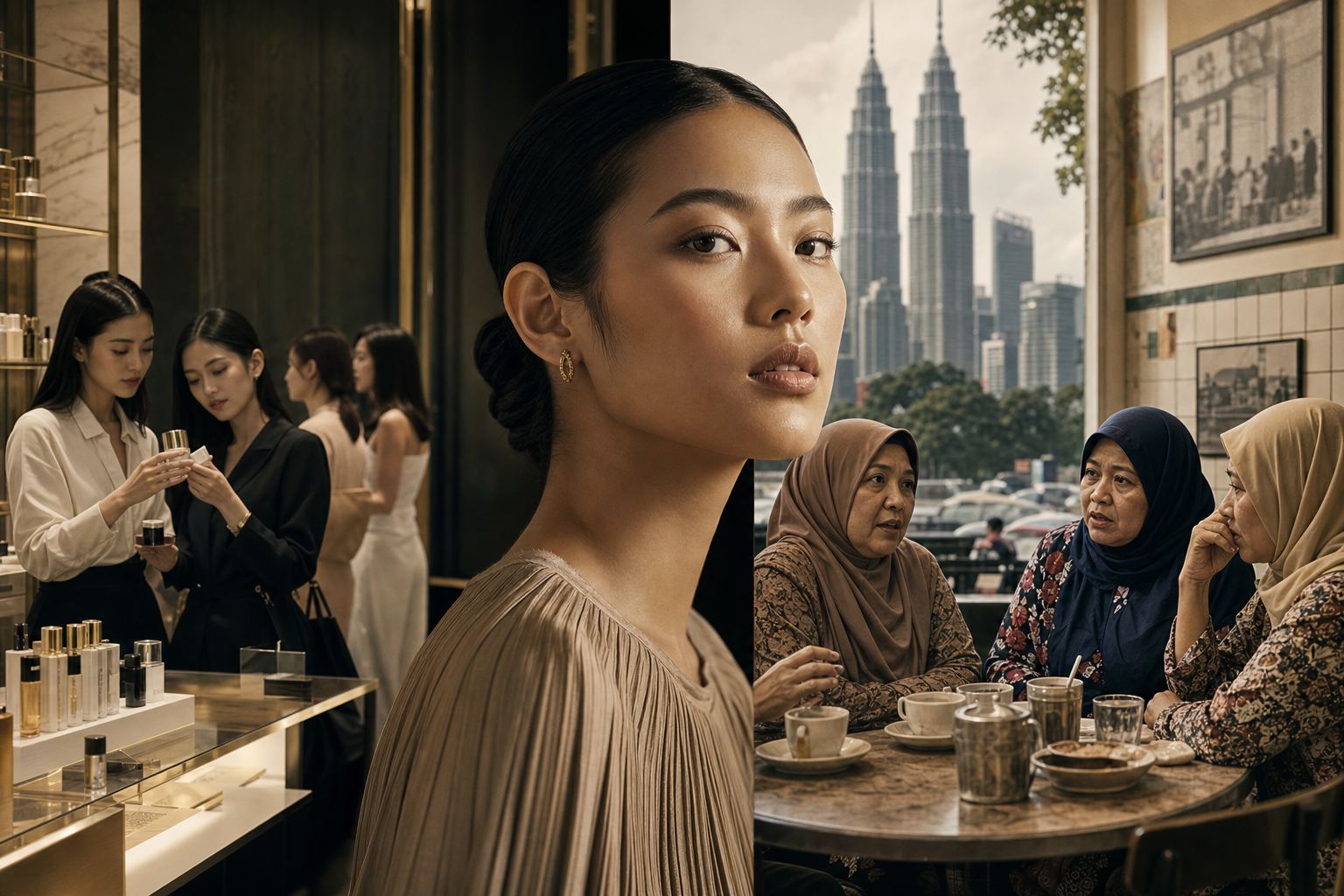
YSL Beauty's TikTok Shop launch in Malaysia, anchored with a Bukit Bintang kopitiam takeover, tells you something important about where premium beauty marketing is heading. The instinct used to be: luxury brands create distance, they elevate themselves above the everyday. What YSL did here is the opposite — they brought themselves into a deeply familiar, culturally resonant Malaysian setting and let the contrast do the storytelling.
For brand managers, this is a masterclass in contextual activation. It works precisely because it doesn't feel imported. It feels earned. Sephora Malaysia has been building a similar kind of cultural fluency through its in-store events and local influencer collaborations, understanding that Malaysian beauty consumers — particularly in the 25-38 demographic — want global quality with local acknowledgement.
The fragrance category is particularly interesting to watch in this context. Global reports are tracking five major fragrance trends for 2025-2026, with a strong lean toward personal identity, cultural nostalgia, and sustainable sourcing. For Malaysia specifically, oud-adjacent and tropical botanical notes have staying power in ways that a purely Western fragrance lens might underestimate. Brands entering the Malaysian fragrance space without that cultural homework tend to underperform.
The Trust Problem: When Safety Becomes Your Biggest Marketing Issue
Here's the conversation that deserves more airtime in brand strategy meetings: forty women have raised the alarm about a banned skincare product still being sold in Malaysia, according to NST Online. This isn't an isolated incident — it's part of a pattern of counterfeit and non-compliant cosmetics circulating through informal online channels that undercut both consumer safety and brand integrity across the industry.
For legitimate brands and the retailers that carry them, this is actually an opportunity dressed as a threat. When the market is noisy with distrust, clear and verifiable safety credentials become a genuine differentiator. Guardian Malaysia has recently been recognised as a leader in health, beauty, and wellness retailing at the Retail Asia Awards 2026 — a recognition that reflects years of investment in digital transformation and loyalty infrastructure. Watsons Malaysia has similarly doubled down on its membership ecosystem, making the authenticated retail experience feel meaningfully different from buying off an unverified marketplace.
The lesson for brand managers: your distribution channel is now part of your brand safety story. Where your product is sold — and how verifiably it gets there — matters to a segment of consumers that is growing, not shrinking. According to Bernama, consumer complaints about cosmetics have been a recurring concern for the authorities, making regulatory compliance not just a legal checkbox but a reputational asset.
Where the Industry Is Gathering — and What That Tells You About 2026
CosmoBeauté Malaysia and BeautyExpo 2026 is returning to KLCC to drive B2B excellence and new business frontiers — and the industries that show up in person at trade events are always the industries with momentum. The fact that this platform is scaling tells you something about supplier confidence and brand investment appetite in Malaysia right now.
For marketers, these events are underutilised intelligence sources. The brands presenting, the whitespace in exhibitor categories, the conversations happening in side sessions — all of it reflects where real money is moving. SimplySiti and other homegrown brands that have used platforms like these to build wholesale and export relationships demonstrate exactly why the B2B layer of Malaysia's beauty industry deserves as much attention as the consumer-facing DTC excitement.
Those tracking this space through Verbrol Pulse will recognise that the signals pointing toward safety, localisation, and trust-building have been consistent for several months — not a sudden shift, but a gradual accumulation that's now hard to ignore.
Your Practical Takeaways for the Next Quarter
- Lead with ingredient transparency. K-beauty has raised the bar. Whether your brand is halal-certified, botanical-forward, or science-backed, be specific about what's in your product and why.
- Make your retail channel part of your trust story. Partnering with verified retail ecosystems like Guardian Malaysia and Watsons Malaysia is increasingly a signal of legitimacy to discerning consumers.
- Think contextually for activations. YSL's kopitiam strategy works because it's genuinely local. Your experiential marketing should feel like it belongs in Malaysia, not like it was translated from a global playbook.
- Invest in creator content that educates. Superficial beauty content is everywhere. Creators who can explain WHY a product works — not just show it — are earning the engagement that converts. Platforms like Creamatch can help brands identify and activate those voices more efficiently.
- Monitor the regulatory conversation. The banned product story is not just a PR risk for bad actors — it's a market signal about where consumer anxiety sits. The Star and Free Malaysia Today both cover regulatory updates that affect brand positioning and compliance planning.
Malaysia's beauty market in mid-2026 is rewarding the brands that are paying close enough attention to act with specificity. Not global strategies applied locally, but locally-informed strategies scaled intelligently.
Track Beauty trends in real-time at verbrol.com
Read more on Verbrol Intelligence: