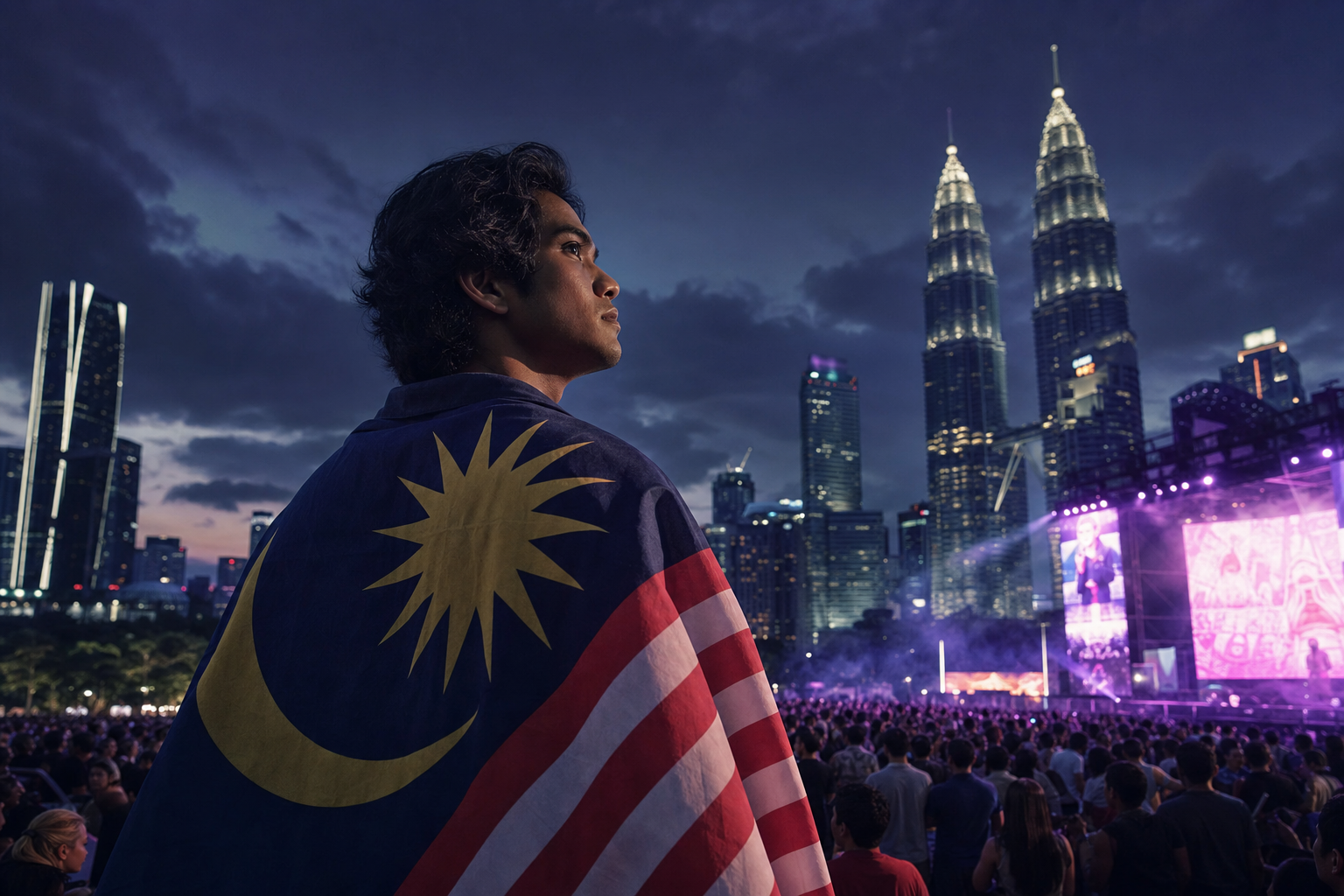
Malaysia's entertainment industry is no longer quietly evolving — it is loudly reinventing itself, from cinemas to creator studios to contested content. The brands that read this moment correctly will define the next decade of cultural relevance.
The Screen Has Never Felt This Crowded — or This Consequential
Walk into any mamak stall in Kuala Lumpur on a Thursday evening and you will see something quietly remarkable: four people at a single table, each watching something entirely different. One streams a Korean microdrama on ReelShort. Another has her earbuds in, halfway through a Tonton original. A third scrolls TikTok with the resigned devotion of someone who has given up pretending it is just five minutes. The fourth — the outlier — is actually watching football.
This is the texture of Malaysian media consumption in June 2026: fractured, intensely personal, and moving faster than most marketing briefs can keep up with. For brand managers and agency professionals, that mamak table is not a charming anecdote. It is the competitive landscape.
A Golden Phase, If You Know Where to Look
The conversation around Malaysian content quality has shifted considerably. Actress Scha Alyahya recently described Malaysian entertainment entering a genuine golden phase, pointing to a pipeline of locally rooted stories that are finding audiences both at home and regionally. That instinct is being validated at the production level, too: local action film Chelot has earned MBR recognition for a five-minute unbroken action sequence, a technical benchmark that places Malaysian filmmakers in a conversation that once felt distinctly out of reach.
For platforms like Astro and Tonton, this creative confidence is both an opportunity and a pressure point. Audiences who have been trained by Netflix and HBO to expect production fluency now arrive at local content with those same expectations intact. The gap between aspiration and execution is closing — but it requires sustained investment, not one-off prestige projects.
On the theatrical side, GSC and TGV Cinemas are navigating a post-pandemic audience that has genuinely renegotiated its relationship with the big screen. The cinema is not dying — but it is becoming an event rather than a default. The titles that earn that event status are increasingly those with cultural cachet: local films with craft, international spectacles with social currency, and experience-driven programming that justifies the trip.
The Creator Economy Is Getting Complicated
Malaysian TikTok is in a strange, fascinating moment. On one hand, the platform's organic reach model — the one that made creators like Khairul Aming household names — is under algorithmic pressure globally, as YouTube cracks down on AI-generated content and rewards genuine creator identity. On the other hand, the recent Khairul Aming and Pinn Yang collaboration driving results on TikTok Shop's Jom Lokal campaign demonstrates that when creator chemistry is real, audiences still respond with their wallets.
The distinction matters enormously for brand strategy. The era of paying any creator with a large following and calling it a campaign is over. What works in 2026 is specificity: the right creator, the right narrative fit, the right platform mechanic. For brands looking to activate with Malaysian creators at scale and with strategic curation, platforms like Creamatch — Malaysia's managed creator content platform — exist precisely to close the gap between a brand brief and a creator who genuinely embodies it.
Meanwhile, protests outside TikTok's Kuala Lumpur office signal that the platform's relationship with Malaysian civil society remains contested territory. Brands operating in this space should be watching regulatory sentiment closely; according to Bernama, content governance conversations are accelerating across Southeast Asia, and Malaysia is not insulated from them.
The JAKIM-SKMM consultation over a Malay actor's appearance in a gay-themed drama is another signal worth reading carefully. It is not simply a censorship story — it is a map of where the fault lines run between creative ambition and institutional authority in Malaysian entertainment. Brands that sponsor or co-produce content need legal and cultural due diligence baked into their creative process, not bolted on afterward.
The Spectacle Economy: Global Moments, Local Dividends
Not everything is friction. Some moments in June 2026 are simply about the extraordinary pleasure of shared spectacle — and Malaysia is well-positioned to benefit from several at once.
The BTS halftime show at the FIFA World Cup 2026 has generated significant search and conversation volume across Malaysian digital channels, with guides on how to watch the BTS FIFA World Cup halftime show in Malaysia trending across lifestyle and entertainment verticals. For a country with one of Asia's most fervent K-pop fanbases, this is not background noise — it is a primary cultural event. Astro and streaming platforms carrying live coverage will see measurable audience spikes, and brands that align their activations with this moment stand to capture attention that is already fully primed.
Locally, the KLCC LEGO Play Run 2026 — transforming one of the world's most iconic landmarks into a playground of creativity and physical entertainment — illustrates a broader shift: Malaysians are hungry for experiential entertainment that bridges digital and physical worlds. Events that offer both an Instagram-worthy moment and a genuine sensory experience are finding audiences willing to show up in person.
The smart entertainment play, as The Edge Malaysia notes in its analysis of the future of entertainment, is not simply better picture quality — it is a smarter, more contextually intelligent experience. That means Media Prima and RTM need to think beyond broadcast and into data-informed programming decisions that respect a viewer who has already been curated by algorithms into very specific taste profiles.
What Brands Should Do Differently This Quarter
The signals from the past 48 hours, read together, suggest four clear imperatives for brands operating in Malaysian entertainment:
- Treat creator partnerships as editorial decisions, not media buys. The AirAsia IP controversy — the airline accused of using an artist's work without consent — is a cautionary tale that the creative community is watching closely. Consent and attribution are not legal niceties; they are brand equity issues.
- Invest in local content with craft credentials. Films like Chelot and series that earn critical recognition are the vehicles through which brand associations carry genuine prestige. Sponsorship of technically ambitious local productions signals cultural seriousness in a way that generic advertising cannot.
- Monitor platform governance actively. Whether it is TikTok's relationship with Malaysian regulators or JAKIM's content referrals to SKMM, the regulatory environment is fluid. Brands need a cultural intelligence cadence, not just a crisis response plan. Verbrol Pulse offers one way to maintain that real-time visibility across Southeast Asian markets.
- Build for the experiential gap. The audience that cannot be reached by a pre-roll ad can often be reached by a well-designed live event, a pop-up, or a co-branded physical experience. KLCC's transformation into a LEGO playground is proof that Malaysians will show up for entertainment that justifies presence.
The entertainment industry in Malaysia is not waiting for permission to grow up. The question for brands is whether their strategies have grown up alongside it. Those who treat this market as a simpler version of somewhere else will find themselves perpetually behind — and perpetually surprised. Those who read it on its own terms, with the granularity and cultural fluency it deserves, will find an audience that is extraordinarily responsive.
The Star's entertainment coverage and Free Malaysia Today continue to be essential reading for the week-to-week pulse of Malaysian content culture — but the strategic picture requires a wider lens.
Track Entertainment trends in real-time at verbrol.com
Read more on Verbrol Intelligence:
- Industri Hiburan Malaysia Sedang Berubah — Tapi Siapa Yang Kawal Arah?
- Industri hiburan Malaysia sedang tumbuh — tapi siapa yang sebenarnya dilindungi?
- Malaysia's Entertainment Gold Rush: Who's Really Winning?
Related Reading
- Malaysia's Entertainment Gold Rush: Who's Really Winning?
- Dari BoBoiBoy ke BTS: Panduan Membaca Gelombang Baru Hiburan Malaysia
- Industri hiburan Malaysia sedang tumbuh — tapi siapa yang sebenarnya dilindungi?
Frequently Asked Questions
What is happening to Malaysia's entertainment industry in 2026? Malaysia's entertainment scene is experiencing significant transformation with audiences fragmenting across multiple platforms like ReelShort, Tonton, and TikTok instead of watching traditional media. This shift has created a more crowded and competitive landscape where brands must adapt their marketing strategies to reach audiences consuming highly personalized content simultaneously.
Is Malaysian content getting better quality? Yes, Malaysian entertainment is entering a genuine golden phase with a strong pipeline of locally rooted stories gaining audiences both domestically and regionally. Local productions like the action film Chelot are receiving recognition, signaling improved quality and creative output from Malaysian creators.
What streaming platforms are popular in Malaysia right now? Popular platforms in Malaysia include Tonton (which produces original content), ReelShort (known for Korean microdramas), and traditional media from Astro, Media Prima, GSC, and TGV Cinemas. Social media platforms like TikTok have also become major players in how Malaysians consume entertainment content.
Why is fragmented media consumption challenging for brands? With audiences watching different content simultaneously across multiple platforms, reaching consumers with unified marketing messages has become much harder and slower than traditional approaches. Brands must now develop more targeted, platform-specific strategies to connect with increasingly personalized viewing habits rather than relying on mass media campaigns.