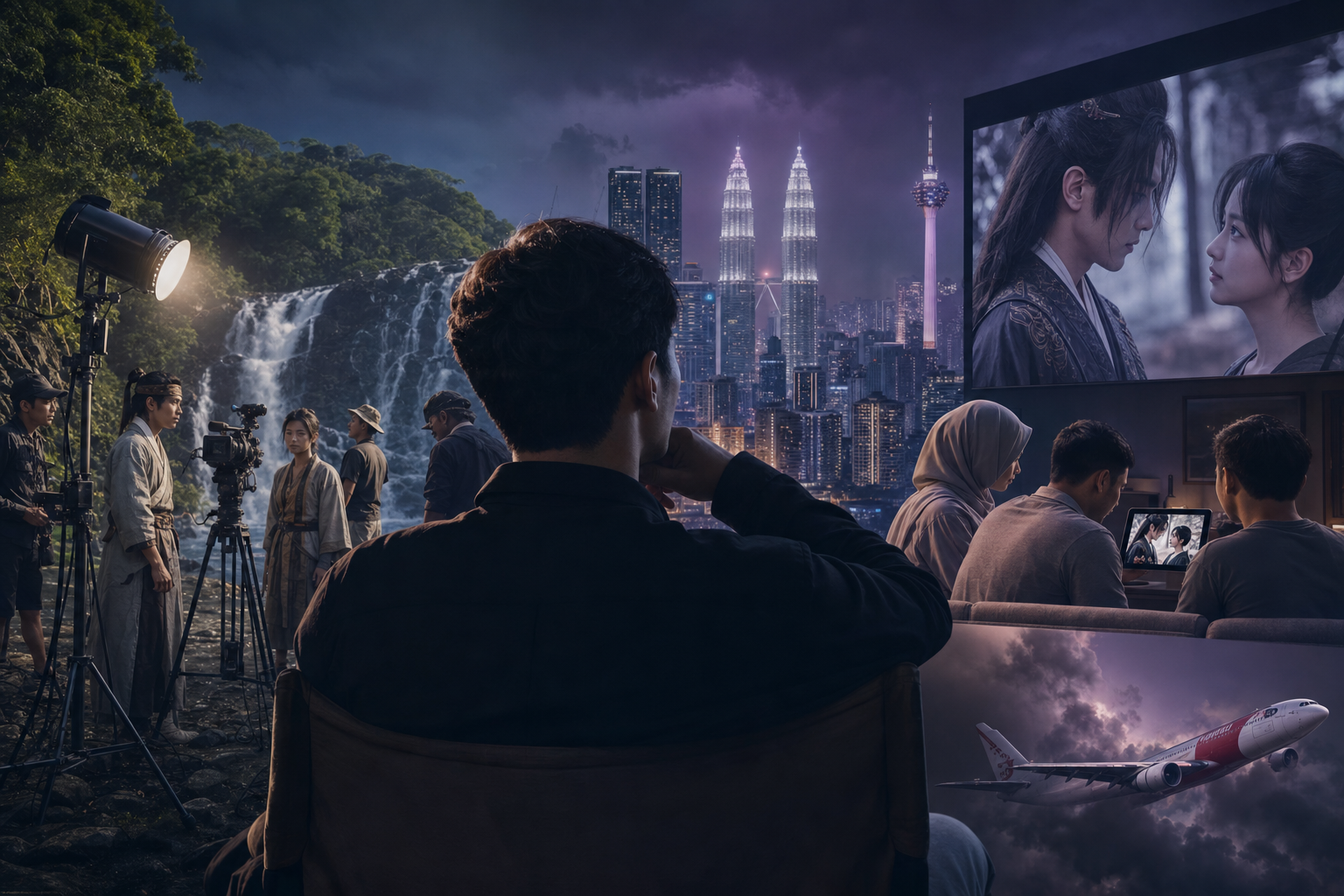
Korean actors filming in Sarawak, C-Dramas overtaking local primetime habits, and AirAsia tangled in an IP dispute — Malaysian entertainment isn't just growing, it's getting complicated fast.
South Korean actor Cha Ji-hyuk — fresh off Netflix's Bloodhounds 2 — is heading to Sarawak to film Distinct: Becoming Sarawak. That single casting decision says more about Malaysia's entertainment ambitions in 2026 than any industry report could.
This isn't a blip. It's a signal of where the money, the eyeballs, and the creative energy are converging — and for Malaysian marketers and brand managers, the window to position smart is right now.
The Internationalisation of Malaysian Content Is Accelerating
When a Hallyu-certified name signs on to a production rooted in Malaysian soil, the conversation around local content shifts permanently. Scha Alyahya, speaking on the trajectory of Malaysian entertainment, called it plainly: we are entering a golden phase. That phrase might sound like marketing copy, but the structural evidence backs it up.
Local film Chelot is earning international recognition for its technically demanding 5-minute action sequence, earning MBR recognition — proof that Malaysian productions can compete on craft, not just content. Meanwhile, platforms are doubling down. iQIYI has expanded its local content investment in Malaysia while riding a wave of rising C-Drama popularity, with Chinese-language dramas pulling in audiences that Astro and Media Prima's traditional schedules are still scrambling to recapture.
The internationalisation cuts both ways. Malaysian screens are becoming destinations for global productions and global streaming tastes. Brands that understand this dual movement — local pride meets global format — are the ones finding traction.
The Creator Economy Is Under Pressure, and That's Actually Useful Information
Here's what's happening on the ground that most brand decks aren't accounting for: the creator economy is being stress-tested simultaneously by platform algorithm changes and IP disputes.
YouTube's crackdown on AI-generated faceless content has effectively ended a category of low-effort channel monetisation overnight. Creators who built entire income streams on templated, AI-assembled videos are being deprioritised in recommendations — and Malaysian content creators who leaned into that model are now scrambling. This isn't just a YouTube story; it's a signal about where platform value is shifting: toward authenticity, specificity, and genuine audience relationships.
At the same time, the AirAsia-versus-artist IP dispute — picked up by BBC — landed hard in creative communities across the region. An artist alleging his work was used without consent by one of Southeast Asia's most recognised brands is exactly the kind of story that circulates in every WhatsApp group of graphic designers, illustrators, and content creators. The reputational damage isn't just to AirAsia; it's a warning shot to every brand that treats creative work as freely available raw material.
For brands running influencer or creator campaigns — especially those working through managed platforms like Creamatch, Malaysia's creator content platform — the lesson is sharp: proper licensing, clear contracts, and genuine collaboration aren't optional hygiene. They're competitive differentiation. A creator partnership that blows up over IP isn't just a PR crisis; it poisons future talent relationships.
Over on TikTok, the landscape is equally charged. Protesters gathered outside TikTok's Kuala Lumpur office — a moment that underlines how platform politics, creator livelihoods, and public sentiment are tangled in ways that a simple media buy cannot navigate around. Verbrol Pulse is tracking these platform sentiment shifts across ASEAN markets in real-time, and Malaysia consistently emerges as one of the most volatile-yet-fertile creator ecosystems in the region.
Streaming Is Getting Smarter — and the Passive Viewer Is Disappearing
The BTS FIFA World Cup 2026 halftime show isn't just a K-pop moment — for Malaysian fans tracking how to watch it, it's a demonstration of how entertainment consumption has become an active, socially networked experience. Nobody is just watching anymore. They're sharing access guides, debating stream quality, and coordinating viewing parties across platforms.
The future of entertainment, as The Edge Malaysia frames it, is not better picture quality — it's a smarter experience. That reframe matters enormously for GSC and TGV Cinemas, both of which are competing not just with each other but with the living room setup of every Malaysian household with a 65-inch smart TV and a Netflix subscription. The cinema differentiation play has to be experiential, social, and unmissable — not just a bigger screen.
For streaming platforms, the Shanghai International Film Festival's launch of a dedicated Technology Creation and Fabrication Unit signals where production investment is heading: AI-assisted production workflows that cut costs without cutting creative quality. Malaysian producers paying attention to that development have a real cost-competitiveness opportunity if they move early.
And Joox? With audio and music streaming still deeply embedded in Malaysian commuter culture, there's a platform play around live entertainment discovery and artist promotion that remains underdeveloped relative to what the audience appetite suggests.
What Marketers Should Actually Do With All This
The Malaysian entertainment industry in June 2026 is not a single story — it's four or five stories running in parallel, each with different implications depending on your brand's position.
- If you're a brand partnering with creators: The AirAsia IP case is your checklist moment. Audit every piece of content your agency has sourced, licensed, or repurposed. Work with structured platforms where contracts are clear. Bernama has been tracking the legal dimensions of this story — it isn't going away.
- If you're investing in content production: The Chelot and Distinct: Becoming Sarawak stories tell you that craft quality and international collaboration are where Malaysian productions break through. Budget for quality, not volume.
- If you're buying media: The passive primetime audience is fragmenting. Astro and RTM still command significant reach for specific demographics, but streaming behaviour — especially around tentpole events like the FIFA World Cup — is where brand association carries cultural weight.
- If you're tracking platform risk: Monitor TikTok's regulatory environment in Malaysia closely. The protest outside its KL office is a leading indicator, not a footnote.
The entertainment industry in Malaysia is genuinely in motion — not in a press-release way, but in a structural, money-moving, audience-shifting way. The brands and agencies that treat it as a static media buy opportunity are going to find themselves buying attention that nobody is paying.
Verbrol tracks entertainment, creator, and media signals across ASEAN markets so your strategy is built on what's actually happening — not last quarter's assumptions.
Track Entertainment trends in real-time at verbrol.com
Read more on Verbrol Intelligence: