Big money is moving into Malaysia's food sector — but a string of hygiene scandals, halal breaches, and pay-to-eat reviews are quietly eroding the consumer trust that fuels it all.
How do you grow a food industry while the ground beneath it keeps cracking?
Malaysia's F&B sector is, by most measures, in rude health. Industry revenue data from Statista shows sustained growth through 2023, and the pipeline heading into 2026 looks even thicker. Khairul Aming's new restaurant Rembayung sold out on opening day. The MICHELIN Guide Kuala Lumpur & Penang 2026 just dropped its freshest batch of newly awarded restaurants, putting Malaysian fine dining back on the global map. India Gate is targeting 30 branches nationwide within two years. A Chinese restaurant concept, Encik Tan, just landed in Subang with its first Malaysian outpost.
On paper, this is a winning story. In practice, it is a trust story — and trust is the one thing the industry is not managing well.
The Hygiene Headlines Are Not One-Offs
Within the past 48 hours alone, two separate food safety incidents broke across Malaysian social media. A nasi kandar restaurant owner was forced to clarify publicly that a viral video showing "recycled food" was actually leftover washing intended for animals — a distinction that, frankly, did not do much to restore confidence. Separately, a customer reported finding maggots in fried chicken at a Malaysian restaurant, a story that crossed into international coverage via NDTV.
These are not isolated tabloid moments. They are symptoms of a structural gap between how quickly Malaysian F&B is scaling and how rigorously food handling standards are being enforced at outlet level. Every new branch that India Gate opens, every franchise territory that KFC Malaysia or McDonald's Malaysia expands into — each one is only as trustworthy as its least-supervised shift.
The halal dimension compounds this. JAIM's immediate revocation of halal certification from a coffee and biscuit factory after brushes made from pig bristles were found in production is a serious signal. For a market where halal status is not a niche marketing claim but a baseline consumer requirement, incidents like this do not just damage the individual brand — they create ambient anxiety across the entire category. Muslim consumers who reach for a packet of biscuits at a convenience store are now doing a quiet mental risk assessment that they should not have to do.
Viral Is Not the Same as Verified
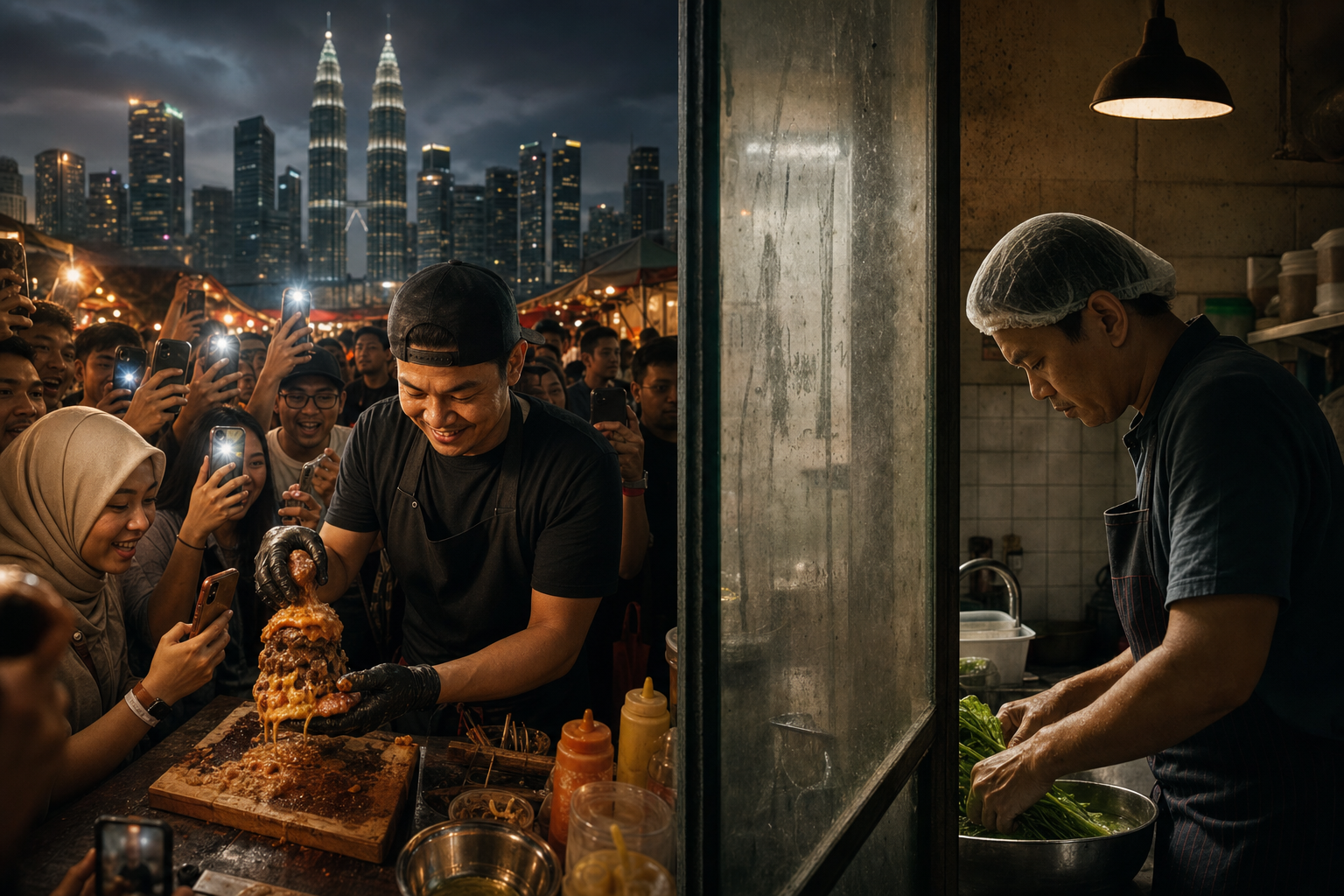
Here is where it gets complicated for marketers. The same social media ecosystem that amplified the maggot story and the recycled-food video is the one brands are pouring budget into for awareness. Rembayung's sell-out opening was driven partly by Khairul Aming's existing creator reputation — genuine, earned, effective. But a Malay Mail investigation into influencer food reviews in Malaysia raised something the industry keeps dancing around: when reviewers eat for free, readers have no way of knowing whether enthusiasm is genuine or paid for.
This is not a new tension, but it is becoming commercially dangerous. ZUS Coffee and Tealive have both built strong organic communities, in part because their consistency at scale gives consumers a reliable reference point regardless of what any individual creator says. Smaller operators do not have that buffer. A single glowing review from an undisclosed sponsored post, followed by a real customer's bad experience, can torch a restaurant's reputation faster than any traditional PR crisis.
Brands serious about creator strategy need infrastructure behind the content — not just reach. Platforms like Creamatch, Malaysia's managed creator content platform, exist precisely to bridge that gap: matching brands with creators whose audiences are genuinely aligned, and building in the disclosure and performance accountability that protects both sides. The era of handing a free meal to anyone with 10,000 followers and calling it a strategy is running out of time.
The Premium Push Is Real — But So Is the Gap Below It
The MICHELIN recognition and the India Gate expansion story share a common thread: there is real appetite, and real capital, chasing the premium end of Malaysian dining. The Edge Malaysia's special report on F&B competition for Malaysian taste buds captures just how contested this market has become — international chains, local concepts, and heritage brands all fighting for the same dining ringgit.
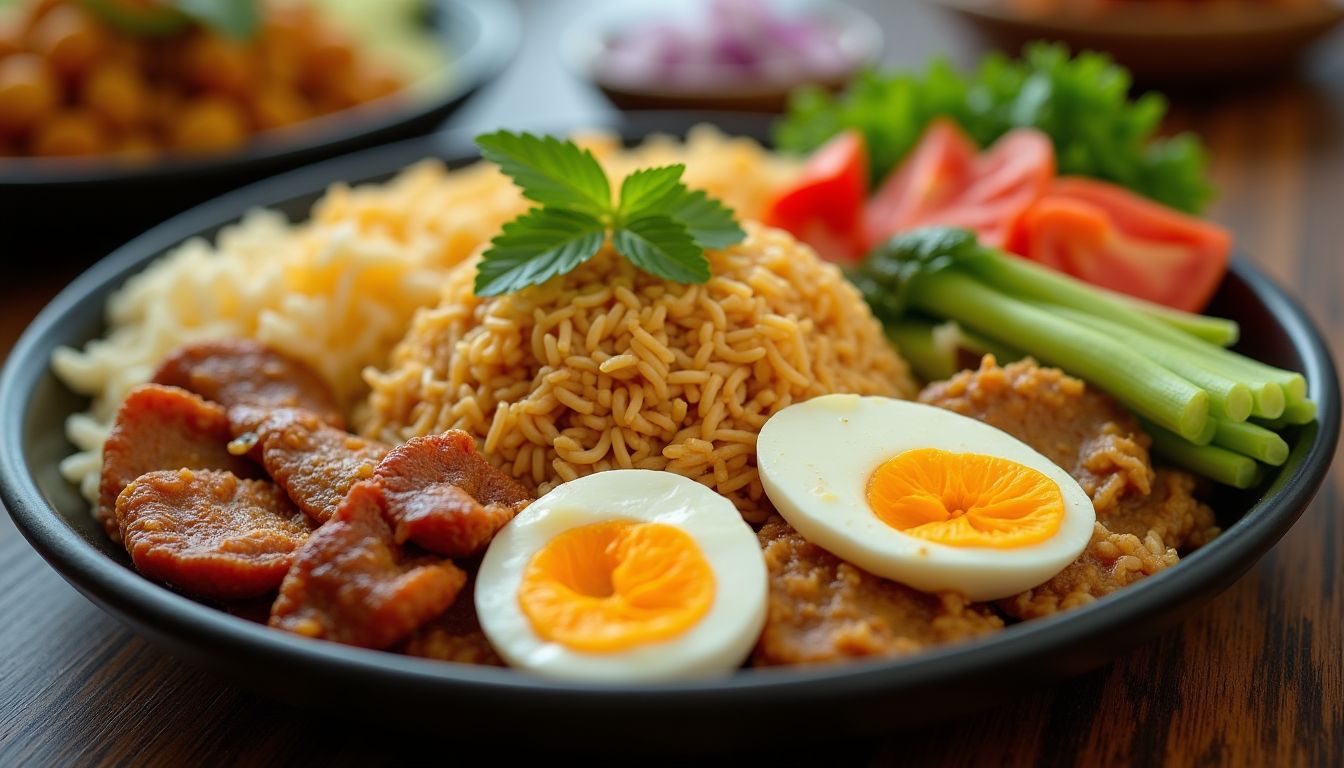
But there is a version of Malaysia's food scene that is not getting the investment attention it deserves: the middle tier. The uncle with the viral nasi lemak presentation. The mamak that has been feeding the same neighbourhood for 30 years. These operators are the backbone of Malaysia's food tourism identity — the ones international visitors specifically seek out, and the ones Time Out KL consistently highlights as essential eating. They are also the most under-resourced when it comes to food safety training, digital presence, and brand protection.
Old Town White Coffee, which bridged the kopitiam heritage positioning and chain-scale infrastructure better than most, offers a useful template. The brand understood early that the story of authenticity only holds if the operations underneath it are tight. That lesson applies just as urgently to the independent tier today.
What Brand Managers Should Actually Do With This
If you are managing an F&B brand in Malaysia right now, the signal from this week is not about which restaurant won a Michelin star. It is about where consumer trust is quietly leaking — and how fast a single viral incident can accelerate that leak.
Three things worth acting on:
- Halal and hygiene compliance is marketing, not just operations. JAIM's immediate certification pull shows the regulatory environment is not softening. Treat your supply chain audit as a brand protection exercise, not a back-office checkbox.
- Build a content infrastructure, not just a content calendar. One-off influencer activations without accountability frameworks are a liability. The MIFB trade fair and the wider industry conversation are moving toward structured creator accountability — get ahead of it.
- Consistency at scale is your most underrated brand asset. Marrybrown does not win Michelin stars. It wins repeat visits because customers know what they are getting. In a trust-fractured environment, predictability is premium.
The Verbrol Pulse has been tracking how quickly sentiment around individual F&B brands shifts when hygiene or halal incidents break — the velocity is faster than most comms teams can respond to reactively. The brands holding steady are the ones with proactive trust infrastructure already in place.
Malaysia's food scene is genuinely exciting right now. The openings are real, the talent is real, and the appetite — literally and commercially — is enormous. But a boom built on viral moments without operational trust underneath it is not a growth story. It is a countdown.
Track F&B trends in real-time at verbrol.com
Read more on Verbrol Intelligence: