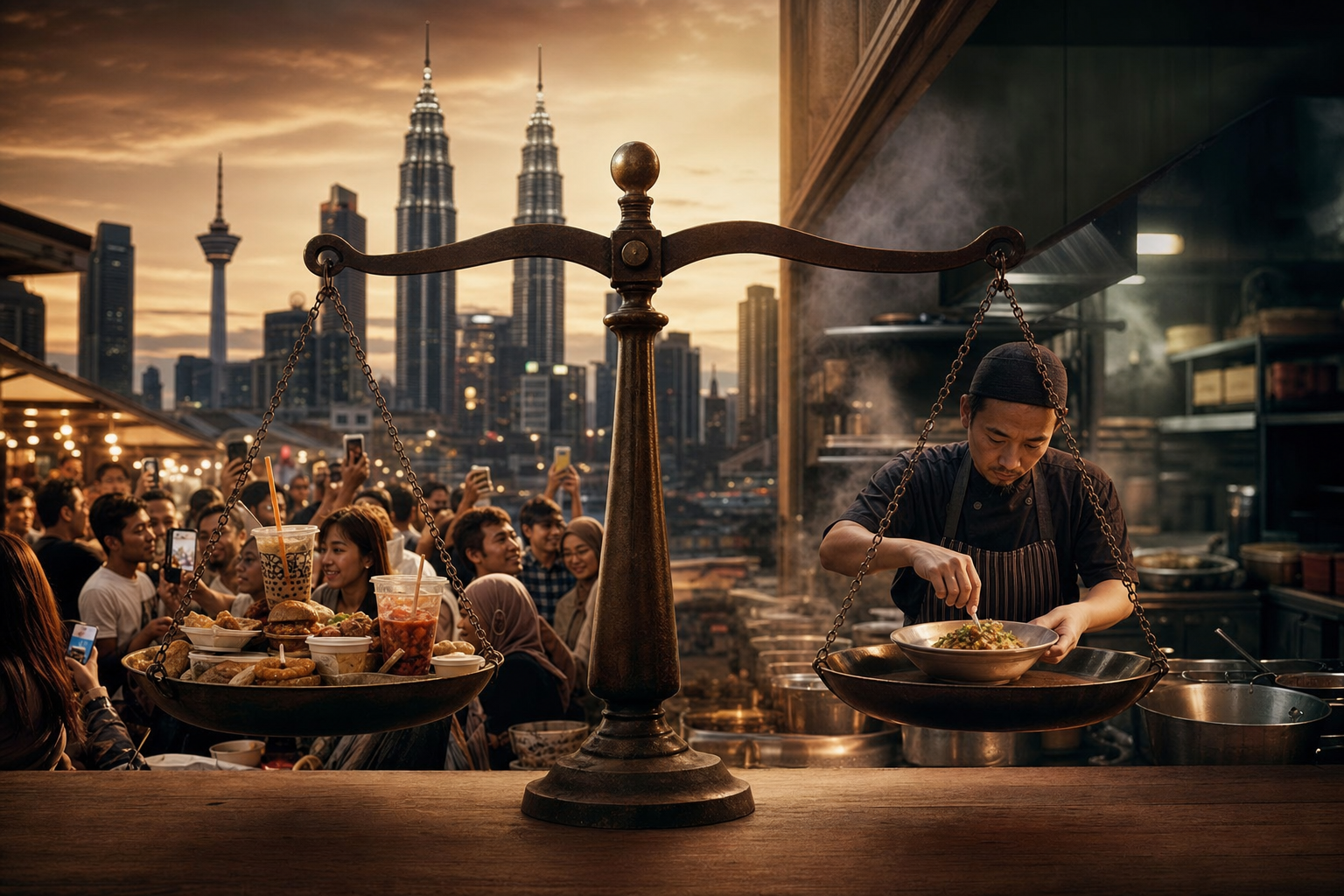
Big money is moving into Malaysian food — but after halal scandals, recycled-food controversies, and a wave of performative reviews, the brands that earn genuine trust are the ones quietly pulling ahead.
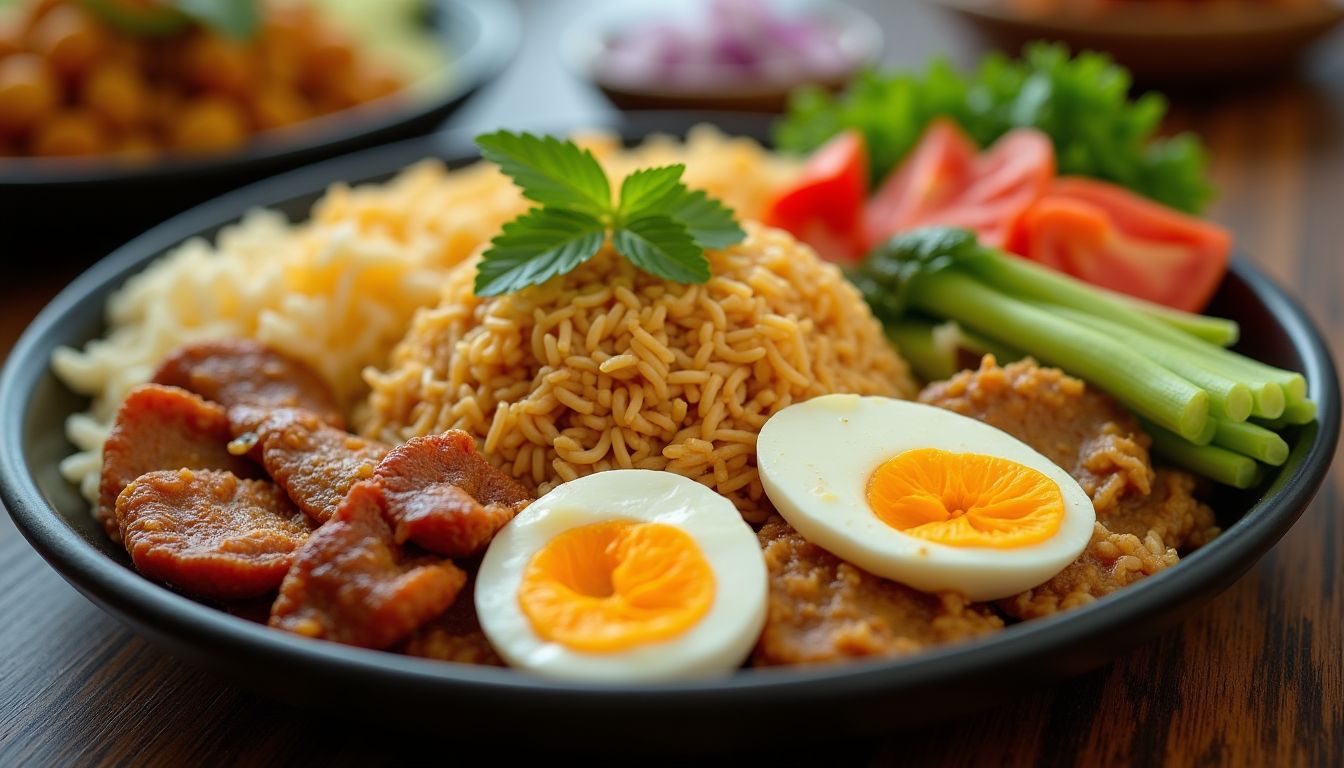
Malaysians have a deeply personal relationship with food. We don't just eat — we negotiate identity, community, and belonging across every meal. A morning kopi at the corner kopitiam is a ritual. A nasi lemak from the right stall is practically heritage. So when something in that ecosystem breaks — when a halal cert gets pulled, when a restaurant is caught rinsing leftovers, when your favourite food influencer turns out to be on a brand's payroll — the betrayal is visceral, not just commercial.
That emotional stakes is exactly why 2026 is shaping up to be a defining year for Malaysia's F&B industry. The growth is real, the investment is accelerating, and the appetite (pun absolutely intended) is enormous. But right now, the brands winning aren't just the ones with the best menu or the biggest marketing budget. They're the ones that have figured out that trust is the most powerful ingredient they have.
The Industry Is Genuinely Booming — Let's Acknowledge That First
Before we get into the harder conversation, it's worth sitting with how much momentum this sector has. The Michelin Guide Kuala Lumpur & Penang 2026 just dropped its newly awarded restaurants, and the buzz is the loudest it's been in years — proof that Malaysian fine dining has arrived on the world stage, not just as a curiosity but as a legitimate culinary destination. Tourism Malaysia has long positioned our food culture as a primary draw for inbound tourists, and the Michelin recognition gives that positioning serious international credibility.
On the trade side, the energy is equally strong. MIFB (Malaysia International Food & Beverage Trade Fair) is actively positioning itself as a launchpad for growth, while KUSKOP is targeting RM20 million in potential export sales from THAIFEX-Anuga Asia 2026, signalling that Malaysian F&B brands are being taken seriously as export products, not just domestic players.
Foreign brands are reading this energy too. India Gate is targeting 30 branches across Malaysia within two years, focusing on Johor, Penang, and the Klang Valley. Encik Tan — the beloved Singaporean bak kut teh institution — has just opened its first Malaysian outlet in Subang. The inbound interest is not casual; it's strategic.
And then there's the flavour-trend layer, which is genuinely delightful to watch. The pistachio and matcha wave has hit Malaysia with full force, showing up on everything from nasi lemak to grilled catfish. It's the kind of trend that tells you Malaysian consumers are adventurous, social-media-literate, and deeply plugged into global food culture.
When Trust Breaks, It Breaks Loudly
Here's where it gets complicated. The same social media ecosystem that catapults a pistachio dessert to viral fame can absolutely dismantle a brand's reputation in a news cycle.
JAIM's immediate revocation of halal certification from a coffee and biscuit factory — after pig bristle brushes were found in the production line — is the kind of story that reverberates far beyond the brands directly involved. For the Muslim-majority consumer base that forms the backbone of Malaysia's F&B market, halal integrity isn't a marketing checkbox. It's foundational trust. When that's violated, the ripple effects touch the entire category.
Separately, a nasi kandar restaurant's viral "recycled food" video — later explained by the owner as washing leftovers intended for animals — is a reminder that in 2026, every kitchen has an audience. The explanation may be truthful, but the damage of that initial visual is already done. Consumers don't always wait for the full story.
And then there's the influencer review problem, which Malay Mail examined pointedly in a recent piece asking whether there's really "no such thing as a free lunch" in Malaysian food media. The critique is fair: when every review is a paid collaboration and every "honest opinion" comes with a gifted meal attached, the entire genre of food content loses its credibility. This matters enormously for brand managers, because the channel you're paying to build trust might actually be quietly eroding it.
The Kopitiam Comeback and What It Signals
One of the most fascinating signals in the current landscape is the mainstream resurgence of kopitiam culture. It's not new — Old Town White Coffee built an empire on exactly this nostalgia — but what's happening now feels different. Kopitiams are going viral not because they're retro-ironic, but because they feel genuine in a sea of overly curated café experiences.
The café-hopping culture that The Star recently called "a lifestyle now" has created a paradox: the more Instagram-perfect a café becomes, the less authentic it feels. Consumers, especially younger Malaysians, are increasingly gravitating toward spaces with a real story — the kopitiam that's been there for 40 years, the uncle who still roasts his own beans. Brands like ZUS Coffee have understood that accessibility and consistency build loyalty faster than aesthetics alone, while the kopitiam wave suggests that heritage itself is becoming a competitive advantage.
The MIXUE ban controversy — where a kopitiam reportedly banned the Chinese bubble tea chain from being brought in by customers — sounds trivial on the surface, but it's actually a signal about territory and identity in the F&B space. Kopitiams aren't just restaurants; they're cultural anchors, and operators are starting to assert that.
What This Means If You're a Brand or Marketer
If you're managing an F&B brand in Malaysia right now, here's the honest read of the moment:
-
Halal integrity is non-negotiable and requires active, visible governance. One supply chain failure can undo years of brand equity. Treat certification as an ongoing operational discipline, not a one-time credential.
-
Influencer marketing needs a credibility audit. The free-meal-for-a-review model is losing consumer trust. Consider working with platforms like Creamatch, Malaysia's managed creator content platform, which pairs brands with creators built around genuine content relationships — not just reach metrics. Transparency in partnerships isn't just ethical; it's increasingly what audiences demand.
-
The nostalgia trend has legs, but only if it's authentic. Slapping a retro aesthetic on a new concept won't work. Consumers can tell. Brands like Secret Recipe that have genuine longevity in the Malaysian market are in a strong position — but they still need to earn trust in the digital conversation, not coast on legacy.
-
Global trade opportunity is real — prepare for it. With THAIFEX, MIFB, and events like the FDM by SIAL 2026 and Chocolate Show 2026 converging, Malaysian F&B has genuine export momentum. Brands that have their story, their compliance, and their positioning ready will capture disproportionate value.
-
Technology is entering the kitchen too. Sagtec Global's acquisition of a stake in Malaya Heritage Holding to expand F&B technology solutions signals that back-end digitalisation — from ordering systems to supply chain transparency — is accelerating. Brands that resist this will feel the gap.
The Bottom Line
Malaysia's F&B industry in mid-2026 is in a genuinely exciting moment — growing internationally, producing Michelin-recognised talent, riding cultural trends with real consumer passion behind them. The Verbrol Pulse on this sector is strong.
But the brands that will define the next five years aren't just the ones with the biggest marketing machines. They're the ones that treat trust as a product attribute — something designed into the operation, not bolted on in a crisis PR response. In a country where food is this personal, that distinction matters more than almost anything else on your strategy deck.
The Grab 5-Star Eats Awards 2026 asks Malaysians to vote for their favourite nasi lemak. The fact that millions will participate tells you everything: Malaysians care deeply, they have opinions, and they are paying attention. That's not a challenge for your brand. That's an opportunity.
Track F&B trends in real-time at verbrol.com
Read more on Verbrol Intelligence: