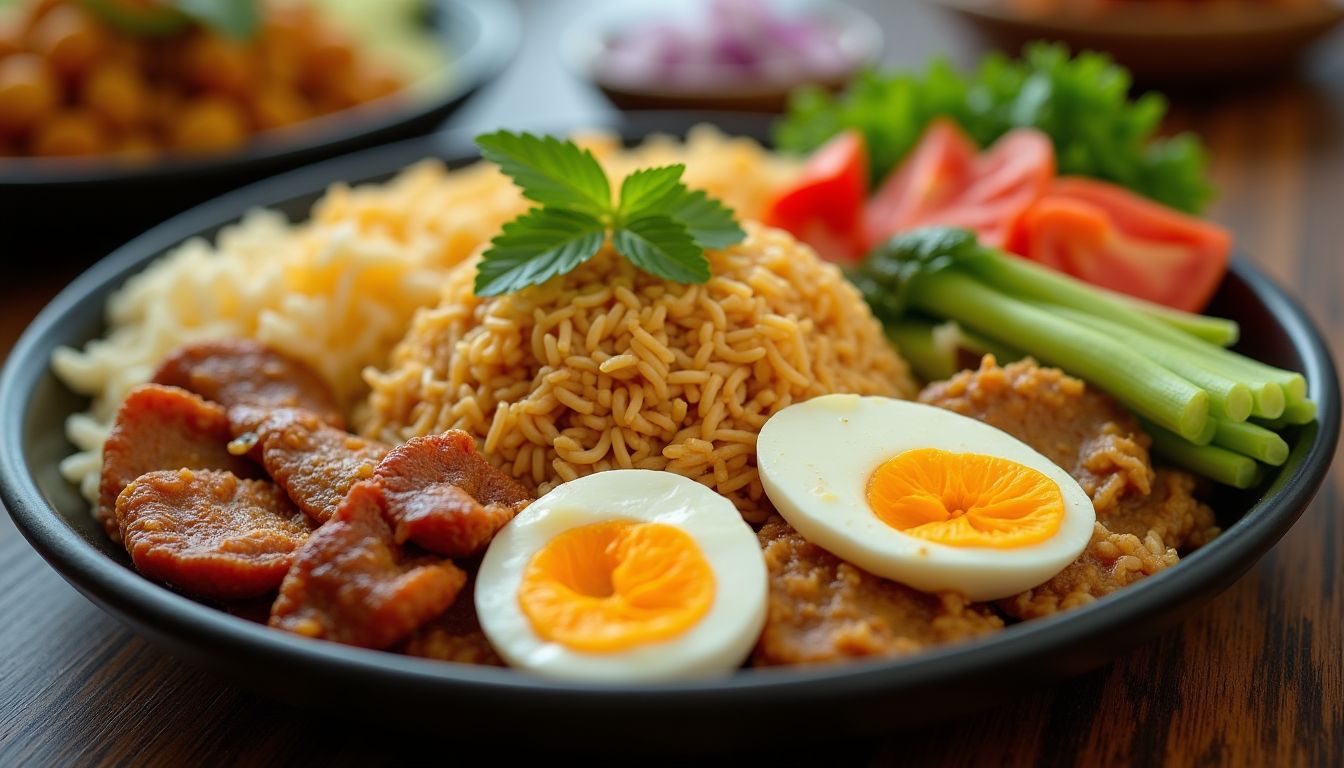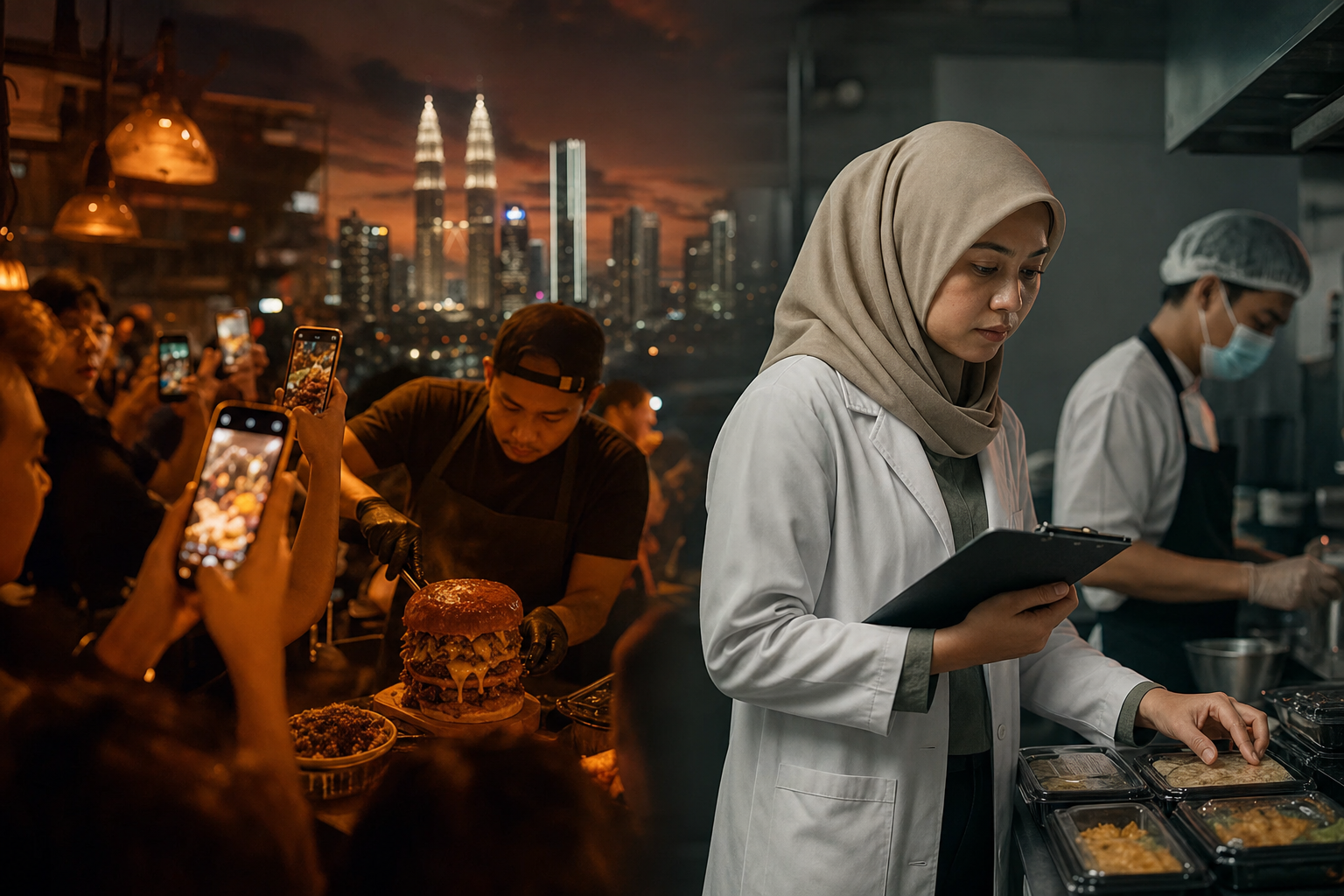
Malaysia's food and beverage industry is expanding — Michelin stars, viral openings, ambitious franchise targets — but a wave of compliance failures is quietly repricing what trust is worth.
Malaysia's halal certification is not a bureaucratic formality. It is, for an estimated 65 percent of the country's Muslim-majority consumer base, a precondition of purchase — and in June 2026, that precondition is being tested in ways that should concern every brand manager in the sector.
The Jabatan Agama Islam Melaka (JAIM) did not issue a warning when it discovered a coffee and biscuit manufacturer had been using pig-bristle brushes in its production process. It acted immediately — withdrawing halal certification and ordering a product recall without a grace period. That is not unusual under Malaysia's halal governance framework. What is significant is the public signal it sends at a moment when the broader industry is under simultaneous scrutiny on multiple fronts.
When Trust Fails, It Fails Everywhere at Once
The JAIM revocation did not arrive in isolation. Within the same news cycle, a nasi kandar restaurant owner was forced to publicly clarify that food seen being washed in a viral video was intended for animals — not for recycling onto customer plates. Separately, a customer at a Malaysian restaurant discovered maggots in fried chicken, a story that reached international coverage via NDTV Food. And six companies now face prosecution for forming a cartel to fraudulently rig food supply tender bids to the National Anti-Drug Agency (AADK).
Four distinct incidents. Four different points of failure. One shared outcome: consumer confidence in food system integrity takes a measurable hit across the board, regardless of which brands were directly implicated.
This is the structural reality that Malaysia's F&B brands must now price into their strategy. Reputational spillover is real. When hygiene and halal failures go viral, consumers do not always distinguish carefully between the offending operator and the wider category. ZUS Coffee, Old Town White Coffee, and Secret Recipe — none of whom are implicated in any of these incidents — nonetheless operate in a market where ambient trust is being depleted by actors they have no control over. Brand equity earned over years can be eroded by association with a sector-wide narrative.
The Michelin Moment and the Expansion Push
It would be incomplete to frame June 2026 as purely a crisis moment. The MICHELIN Guide Kuala Lumpur & Penang 2026 newly awarded restaurants represent a genuine marker of culinary maturity. India Gate restaurant has announced a target of 30 branches nationwide within two years, signalling investor confidence in Malaysia's dining economy. Khairul Aming's Rembayung restaurant sold out on opening day, demonstrating that creator-led F&B ventures can convert social audiences into paying customers at speed. Malaysian tomyam has even crossed borders — a 'Tomyam Malaysia' restaurant opening in India went viral this week, a small but telling sign of the cuisine's soft-power reach.
Tourism Malaysia has long identified food tourism as a strategic pillar, and the Michelin recognition reinforces what culinary confidence looks like when it is backed by verifiable quality standards. The sector's revenue trajectory supports this optimism: F&B services revenue in Malaysia has grown consistently from 2014 through 2023, and forward indicators suggest 2026 will extend that trend.
The question is whether operational discipline is scaling at the same rate as commercial ambition.
Halal Compliance as Competitive Advantage, Not Cost Centre
Here is the argument I want to make clearly: brands that treat halal compliance and food safety as a cost of doing business — a checkbox to be maintained at minimum viable effort — are misreading the market. In 2026, rigorous, transparent, proactively communicated compliance is a competitive differentiator.
Consider what McDonald's Malaysia has had to navigate. The brand issued a formal statement through Gerbang Alaf Restaurants Sdn Bhd addressing public concerns — a response architecture that Marrybrown, KFC Malaysia, and any brand with mass-market halal positioning must be prepared to deploy at any moment. The ability to communicate credibly and rapidly in a compliance context is now part of brand infrastructure, not an afterthought.
For the creator economy intersecting with F&B — an increasingly important channel, given Rembayung's opening-day sell-out and the viral mechanics that drove it — authenticity is doubly consequential. Platforms like Creamatch, Malaysia's managed creator content platform, are positioned at exactly this intersection: connecting food brands with creators whose audiences trust them. When a compliance failure happens, that trust transfers negatively too. Creators who have promoted a product that subsequently faces a halal revocation bear reputational cost. This is why thorough due diligence on brand partnerships is not merely legal hygiene — it is audience stewardship.
The Malaysia International Food & Beverage Trade Fair (MIFB), now under new ownership through One International Group, is itself signalling a professionalisation of the trade ecosystem. That is an opportunity for brands to use industry platforms to communicate compliance architecture directly to buyers, distributors, and media — not to wait for a crisis to force the conversation.
What Brand Managers Should Do Now
The actionable posture for Malaysian F&B brands in this environment is not defensive — it is forward-leaning. Three priorities stand out:
-
Audit supply chain compliance proactively, not reactively. The JAIM case involved pig-bristle brushes — a production tool, not an ingredient. Halal integrity extends to every contact point in the manufacturing environment. Brands should map these points explicitly and document the audit trail.
-
Build a crisis communication protocol before it is needed. The nasi kandar operator's public clarification was reactive and partial. A prepared response architecture — with pre-approved messaging, designated spokespersons, and a clear chain of escalation — compresses the reputational damage window significantly.
-
Use positive compliance as content. Time Out KL's food coverage regularly features behind-the-scenes access to kitchens and operators. Brands that invite transparency — showing their halal audit process, their sourcing standards, their food safety protocols — generate trust capital that pays dividends when the sector-wide narrative turns negative.
The broader F&B battle for Malaysian taste buds is real, competitive, and increasingly won or lost on dimensions beyond product quality alone. The brands that understand halal compliance as a brand asset — not a regulatory burden — will hold consumer loyalty when the next scandal breaks. And in this market, there will be a next one.
The Verbrol Pulse tracks exactly these inflection points across Southeast Asian F&B markets in real time, mapping compliance events against brand sentiment trajectories. The signal pattern from this week in Malaysia is clear: integrity is the new product.
Track F&B trends in real-time at verbrol.com
Read more on Verbrol Intelligence: