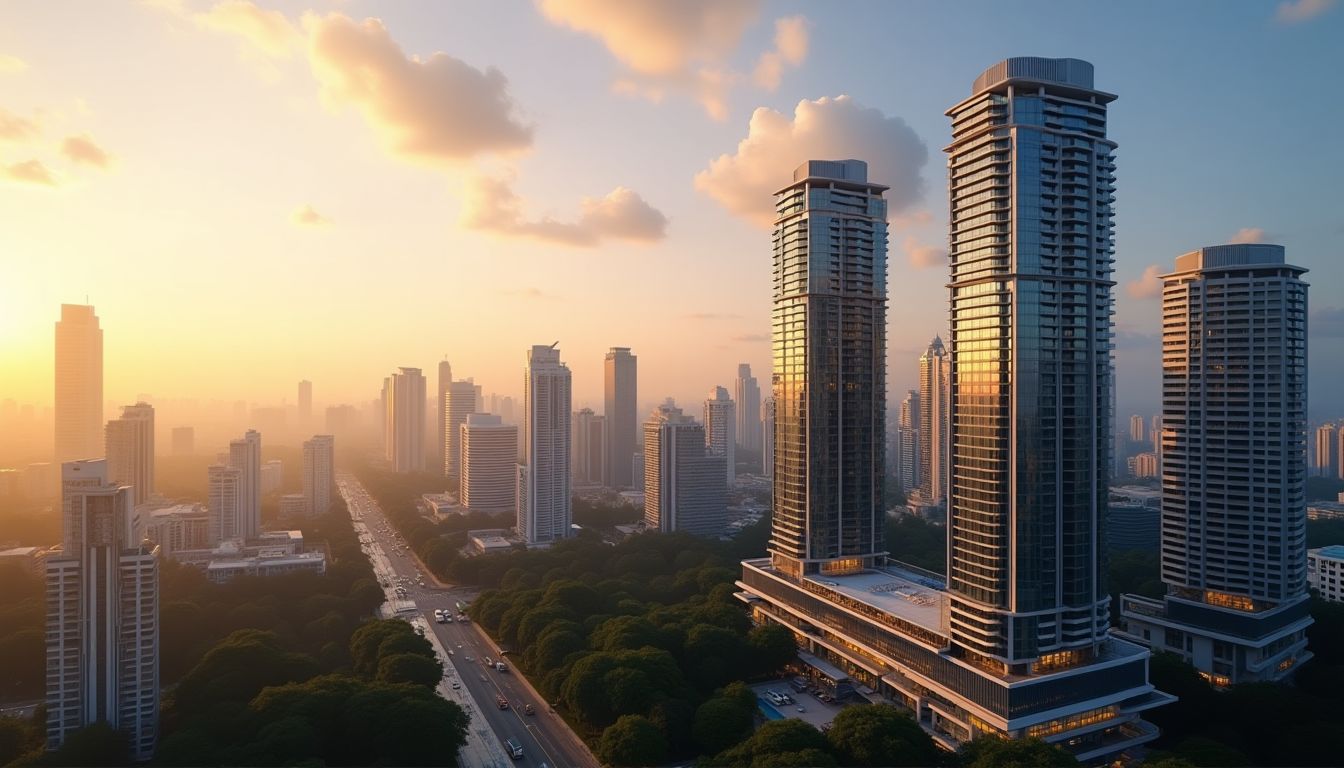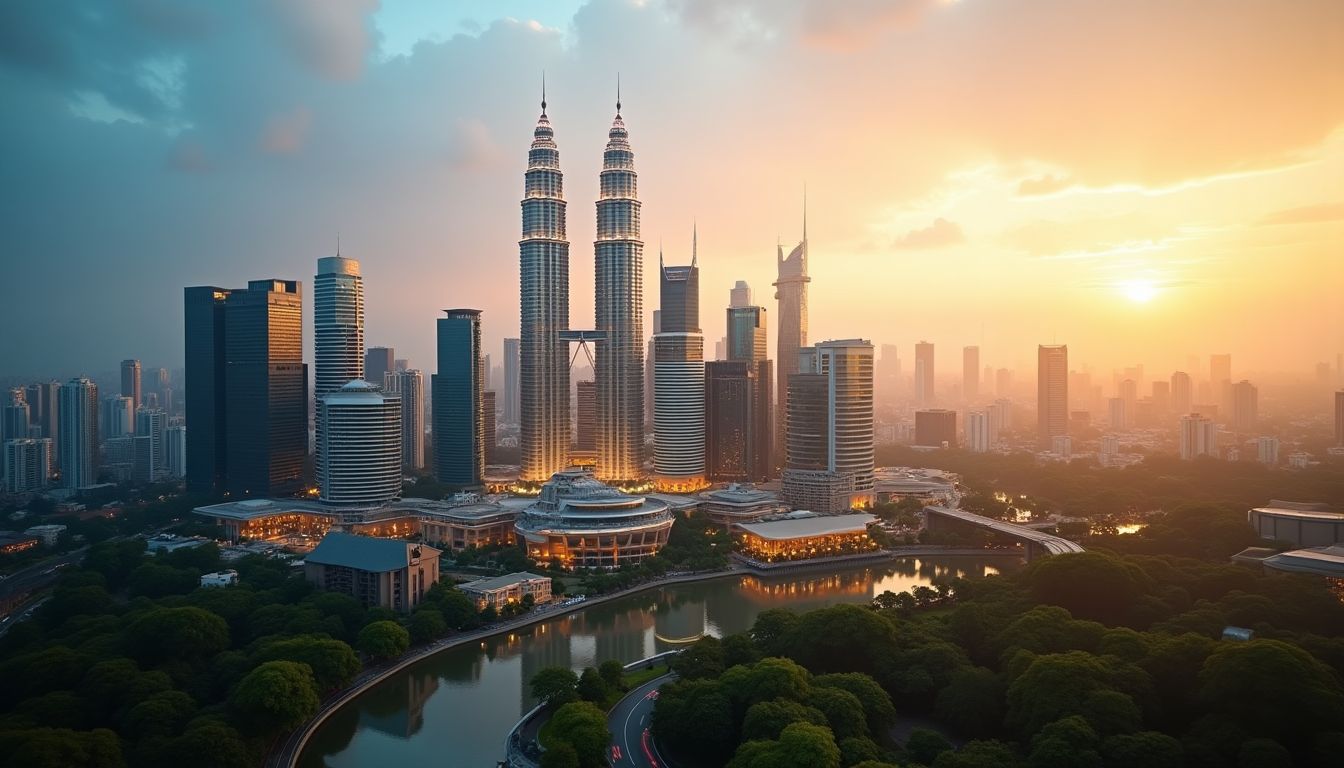
Big capital is repositioning across Malaysia's property landscape — from luxury branded residences to industrial land plays. The developers reading the structural signals correctly will define the next cycle.
The Quiet Restructuring Underway in Malaysian Real Estate
Walk through the sales gallery of any major mixed-use development in Kuala Lumpur today and the conversation has shifted. Buyers are no longer asking only about location and price per square foot. They are asking about brand affiliation, building management credentials, and whether the asset sits inside a fundable structure. That change in buyer vocabulary is not accidental — it reflects a genuine restructuring of what Malaysian property means as an investment class in 2026.
Several forces are converging simultaneously: a maturing luxury segment, a strategic pivot toward industrial and digital infrastructure assets, an industry-wide reckoning with structural quality, and persistent headwinds from oversupply in specific residential sub-segments. Understanding which of these forces is decisive — and for whom — is the central analytical task for anyone operating in or adjacent to Malaysia's property sector right now.
Branded Living and the Luxury Tier's New Logic
The rise of branded residences is adding a measurable value premium to Malaysia's luxury landscape, according to EdgeProp — and the mechanics behind that premium are worth examining precisely. A branded residence attaches an internationally recognised hospitality or lifestyle name to a residential product, delivering a service layer that standard condominium management cannot replicate. For developers, it justifies a price positioning 20 to 40 percent above comparable unbranded units in the same postcode. For buyers — particularly foreign purchasers and returning diaspora — it reduces the perceived risk of an unfamiliar local developer.
Analysts tracking the outlook for Malaysia's luxury property market in 2026 note sustained demand at the upper end, even as mid-market volumes remain compressed. That bifurcation is structurally important: it signals that high-net-worth demand is holding, but that the broad residential market still faces the absorption problem that has defined the past two to three years.
For marketers and brand managers working with property developers, the branded living trend creates a specific content challenge. The buyer being targeted here consumes property information across multiple channels — international financial media, curated social environments, and developer-owned digital touchpoints — and expects the narrative to be consistent and credible across all of them. Platforms like Creamatch, Malaysia's managed creator content platform, are increasingly relevant here: delivering branded property storytelling through credible local voices requires the kind of structured creator matching that ad-hoc influencer outreach cannot reliably produce.
Industrial Assets and the Capital Allocation Signal
The most structurally significant move in Malaysia's property sector this month is Sime Darby Property's launch of a RM1.25 billion fund targeting data centres and industrial assets. This is not a marginal portfolio play — it is a signal that one of Malaysia's most established developers is actively repositioning capital toward infrastructure-grade assets that carry different demand drivers than residential or retail property.
The logic is straightforward: data centre demand in Southeast Asia is structural, driven by cloud adoption, AI workload growth, and the regional data localisation push. Industrial land near established logistics corridors — including those in Selangor, Johor, and Penang — is absorbing occupier demand that residential land pipelines cannot serve. NexG's recent acquisition of a Petaling Jaya property for RM28.5 million to expand production capacity is a smaller-scale example of the same dynamic: industrial real estate is being treated as operational infrastructure, not passive investment.
For developers like Gamuda, EcoWorld, and IOI Properties — all of whom carry significant industrial land banks — this repricing of industrial assets relative to residential ones changes the portfolio optimisation calculus. Data tracked through NAPIC consistently shows industrial transaction volumes holding firmer than residential volumes in recent quarters, reinforcing the case for developers to weight industrial exposure more heavily in near-term planning.
Building Quality, Upgrade Spend, and the Management Credential Race
A less-discussed but operationally significant trend is the expected increase in developer spending on structural upgrades and engineering reviews. Industry reporting confirms that property developers are accelerating building upgrade programmes — a response partly to regulatory pressure and partly to the reputational calculus of competing in a market where buyers are increasingly scrutinising building quality and management credibility.
Knight Frank Malaysia Property Management's recent announcement of crossing the 100-building management milestone is a meaningful data point here. As building management becomes a differentiated commercial proposition — rather than an afterthought — developers are discovering that credible third-party management affiliation functions as a sales tool, not merely an operational necessity.
The Savills Klang Valley Residential Property Monitor for Q4 2024 recorded growth in both transaction volume and value — a constructive signal, but one that coexists with the structural oversupply and high household debt conditions flagged by analysts at The Malaysian Reserve. The market is not uniformly improving; it is segmenting, and the segments with professional management infrastructure are outperforming those without it.
For brands and agencies serving the property sector, building quality and management credentials are now legitimate marketing territory. Messaging that substantiates structural integrity and professional management — backed by third-party validation — performs better with the post-pandemic buyer cohort that has raised its information threshold considerably. Property data platforms like iProperty reflect this in their listing engagement patterns: developments with detailed management disclosures and quality certifications attract measurably more qualified inquiry.
What Malaysia's International Recognition Signals for the Sector
Malaysia's strong showing at FIABCI, the global property federation, and Sime Darby Property's top ranking at The Edge Malaysia Top Property Developers Awards 2024 are not merely ceremonial. International recognition of this kind functions as a market signal to foreign institutional investors who are evaluating Malaysian real estate as part of a Southeast Asian allocation. It also creates competitive pressure among second-tier developers — including SP Setia, Mah Sing, and UEM Sunrise — to sharpen their positioning on sustainability, design quality, and financial transparency.
The developers who will define Malaysia's next property cycle are not necessarily the largest by land bank. They are the ones correctly reading which asset classes carry structural demand, which buyer segments are actually liquid, and which building and management credentials can be substantively marketed — rather than assumed.
Actionable Takeaways for Property-Adjacent Brands and Marketers
- Segment your audience by asset type, not just price point. The industrial buyer, the luxury branded residence buyer, and the mid-market owner-occupier require entirely different content strategies and channel mixes.
- Building quality is now a marketing input. Structural upgrade programmes and third-party management credentials should be integrated into developer communications — not disclosed only in legal fine print.
- Creator-led content for property works when it is specific. Neighbourhood-level storytelling, project walk-throughs by credible local voices, and management transparency content outperform generic lifestyle imagery. Structured platforms like Creamatch exist precisely to make that specificity scalable.
- Watch the industrial and data centre pipeline. The capital allocation decisions being made now by Sime Darby Property and others will define which locations become high-value industrial corridors by 2028.
- Use Verbrol to track sector-level signal shifts in real time — because in a bifurcating market, the gap between leading and lagging segments widens faster than annual reports can capture.
Malaysia's property sector is not in crisis and it is not in simple recovery. It is restructuring — by asset class, by quality tier, and by capital source. The professionals who map that restructuring precisely will find the most defensible positions in the cycle ahead.
Track Property trends in real-time at verbrol.com
Read more on Verbrol Intelligence: