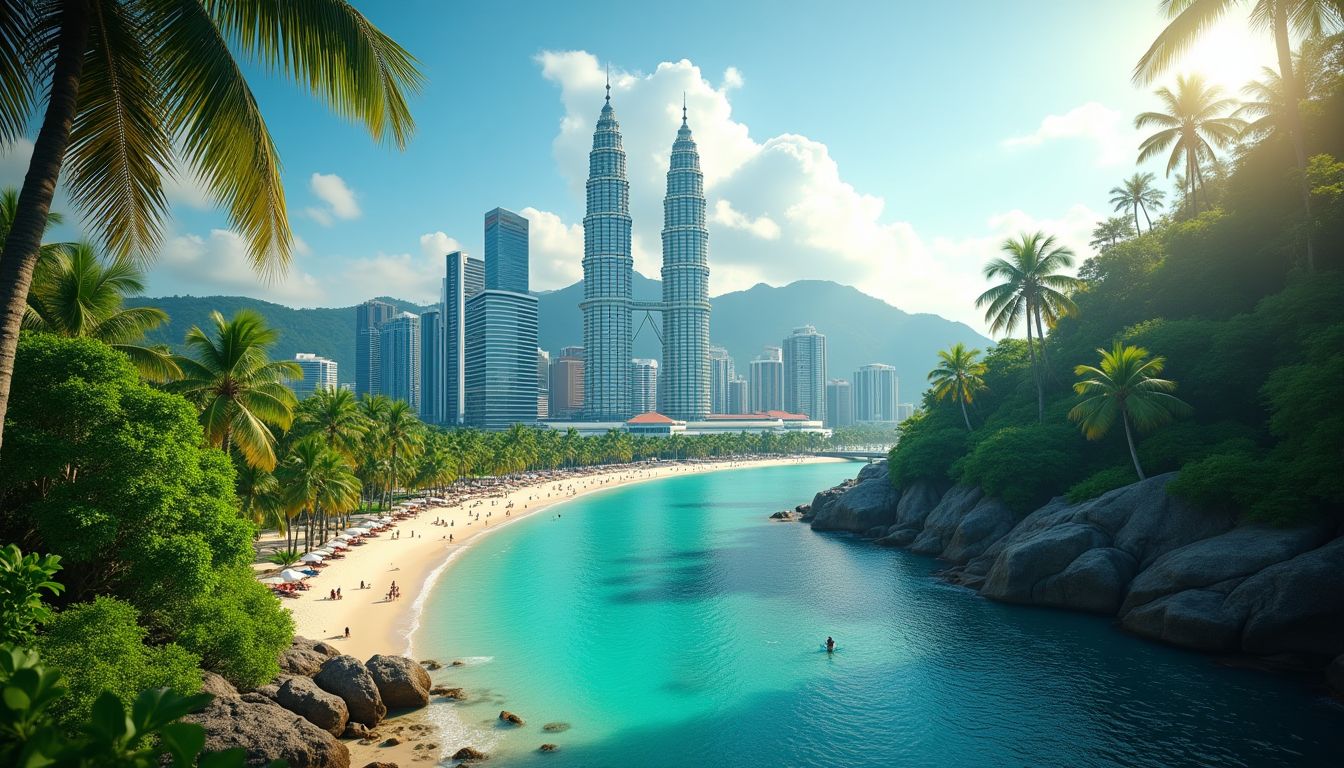
Big numbers are rolling in for Malaysian tourism — but the airline carrying much of the country's connectivity ambition is navigating some serious headwinds.
If you work in travel, hospitality, or marketing in Malaysia right now, you are likely looking at the headline figures and feeling something close to cautious optimism. Domestic tourism spending reached RM121.3 billion in 2025, a 13.6% increase from the year before, and visitor numbers climbed 11.5%. On paper, it reads like a recovery story that has fully arrived. And yet, if you pull back and look at the wider picture — at the carrier that has long been the connective tissue of this country's travel ambitions, at the regional race for remote workers, at the creative controversies simmering beneath the surface — what you actually see is a boom with fault lines running through it.
This is not a warning. It is an honest read of where Malaysian travel stands in June 2026, written for the people who need to make decisions in it.
The Numbers Are Genuinely Good — Just Not the Whole Story
Let's start with what is real and worth celebrating. Malaysia's domestic tourism surge is not a statistical blip. It reflects a structural shift in how Malaysians are choosing to spend — prioritising experience over things, choosing road trips through Pahang and long weekends in Langkawi over holding back. Tourism Malaysia has been cultivating this for years, and it is landing.
International interest is growing too. Malaysia has recently overtaken Thailand as a preferred destination for Indian travellers, drawn by easier visa processes, affordable luxury, and a perceived warmth that feels genuinely distinct from the more tourist-saturated corners of the region. That is a meaningful shift in the competitive landscape, and one that destination marketers should be reading closely through sources like Bernama and the tourism ministry's quarterly releases.
But here is where the story gets more textured.
AirAsia: The Carrier at the Centre of Everything, Navigating a Complicated Moment
You cannot tell the story of Malaysian travel without telling the story of AirAsia. The airline democratised movement across this region — it made Kota Kinabalu accessible from Kuala Lumpur for the price of a decent dinner. And right now, AirAsia and its parent Capital A International are in the middle of a period of significant turbulence, both literal and structural.
Capital A International has announced it will list on the U.S. stock market through a business combination with Aetherium Acquisition Corp — a move that signals enormous ambition but also raises questions about where the strategic centre of gravity sits for a brand that has always presented itself as deeply Malaysian. Meanwhile, AirAsia X has launched — and then had to postpone — a Kuala Lumpur-Bahrain-London route due to regional conflict, a reminder of how quickly geopolitical reality can interrupt even the most carefully constructed network strategy.
There is also a creative controversy worth noting. AirAsia has been accused by an artist of using his work without consent, a story picked up by the BBC — and for brand managers and agency professionals, this should register as more than gossip. In a climate where Malaysian creators are increasingly organised, professionally represented, and aware of their rights, the reputational cost of mishandling creative partnerships is rising sharply. Platforms like Creamatch, Malaysia's managed creator content platform, exist precisely because brands need structured, consent-first relationships with creative talent. This incident is a case study in what happens when that structure is absent.
And then there is co-founder Tony Fernandes, who has reportedly indicated plans to start a new airline — a development that would reshape competitive dynamics for Malaysia Airlines, Batik Air, and Firefly in ways that are genuinely hard to predict.
The travel disruptions affecting thousands across Asia — with cancellations and delays across carriers including AirAsia and Batik Air — underscore that connectivity, however ambitious, remains vulnerable. For destination marketers and brand strategists, this is the operational context within which every campaign brief is now being written.
The Digital Nomad Race and What Malaysia Stands to Win — or Lose
Southeast Asia is in the middle of an earnest, competitive sprint to attract remote workers. The Philippines has joined Thailand, Vietnam, Indonesia, Singapore, and Malaysia in rolling out digital nomad hubs and extended-stay visas. The race is real, and the prize — a high-spending, long-staying visitor demographic that contributes to local economies without straining social infrastructure in the same way mass tourism does — is genuinely significant.
Malaysia has real advantages here: English proficiency, high-quality co-working infrastructure in Kuala Lumpur and Penang, relatively affordable cost of living, and a food culture that functions as its own form of soft power. But advantages need activation. The question is whether Tourism Malaysia's messaging, the country's visa architecture, and the digital ecosystem supporting arrival — from platforms like Agoda Malaysia and Traveloka to the broader hospitality supply chain — are coherent and competitive enough to convert interest into extended stays.
For marketers, this is an audience worth studying carefully. Digital nomads are not a monolith. They are content creators, consultants, developers, and designers. They respond to authenticity, to community, to the feeling that a place has been chosen rather than packaged. Reaching them requires content strategy that looks more like storytelling than advertising — and tracking which narratives are gaining traction in real time, through tools like Verbrol Pulse, matters more than ever in a competitive field this crowded.
What Marketers and Brand Managers Should Actually Do With This
The RM121.3 billion figure is a foundation, not a finish line. Here is what the current landscape suggests for anyone making strategic decisions in Malaysian travel and tourism right now:
- Connectivity risk is real. Build campaigns with contingency in mind. Route postponements, carrier turbulence, and regional conflict are not edge cases — they are operating conditions. Messaging that promises seamlessness in this environment can backfire quickly.
- Creative partnerships need structure. The AirAsia artist controversy is a signal that the creative economy is professionalising fast. Managed platforms that formalise creator relationships are not a luxury — they are risk management.
- The digital nomad opportunity requires a long-game content strategy. Short-burst promotional campaigns will not move this demographic. Sustained, place-specific storytelling will. Commission it accordingly, and measure what resonates over weeks, not days.
- Watch the international source markets shifting. The rise of Indian travellers choosing Malaysia over Thailand is a meaningful repositioning. Destination and hospitality brands should be adjusting their paid and earned media strategies to reflect where the actual growth is coming from — Free Malaysia Today and industry bodies are tracking this in useful detail.
- Regional aviation developments will reshape routes. Whether it is AirAsia X's new hubs, a potential Fernandes-led carrier, or the Cambodia-India-Australia-Malaysia aviation-tourism pact built around the Kuala Lumpur hub, the network is changing. Brands in the travel supply chain should be scenario-planning now.
Malaysia's travel story in 2026 is not simple. It is a boom built on genuine momentum, being navigated through genuine complexity. The brands that will perform best in this environment are the ones honest enough to hold both of those truths at once — and sharp enough to act on the second one before their competitors do.
Track Travel trends in real-time at verbrol.com
Read more on Verbrol Intelligence: