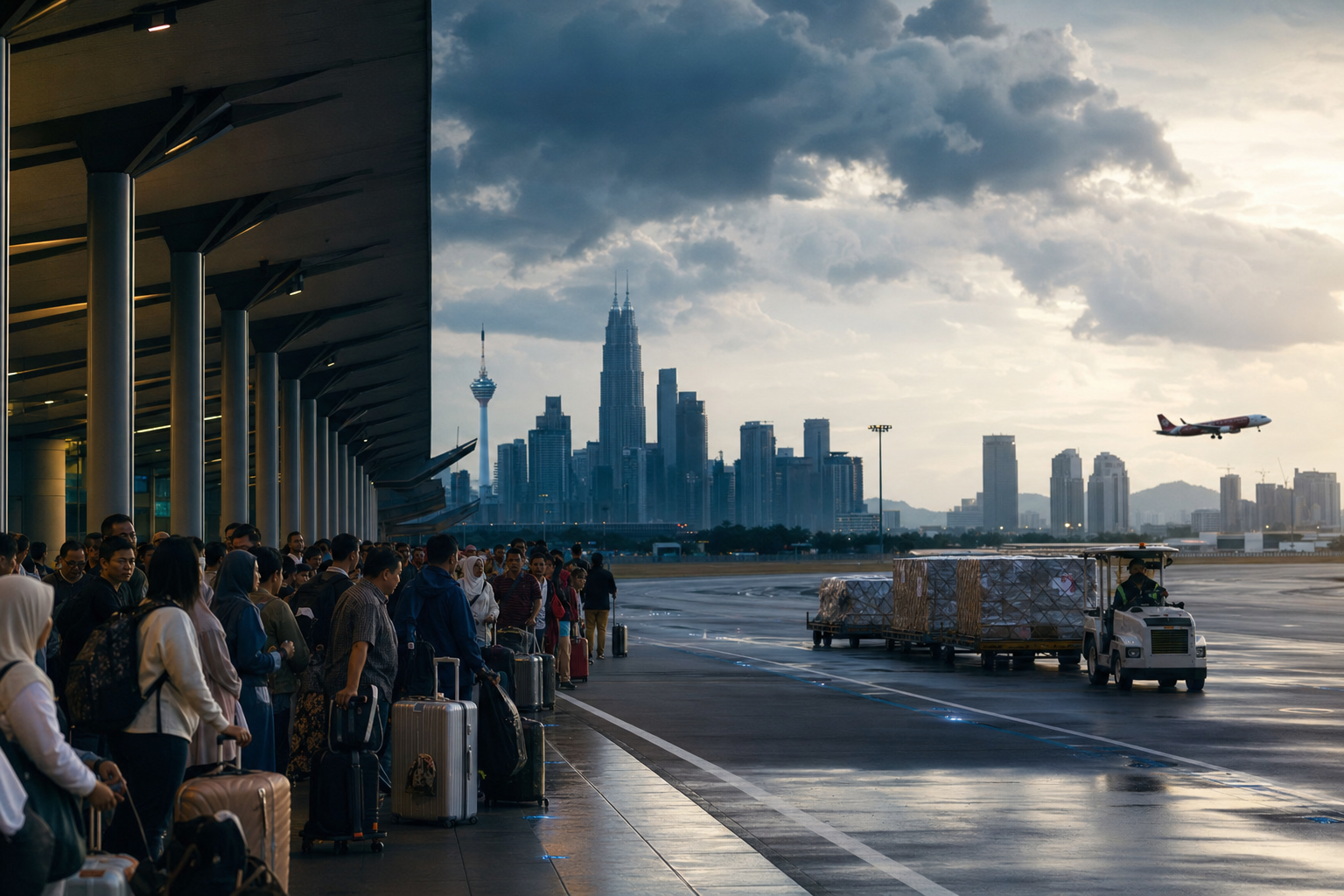
It has been a week in which Malaysia's travel industry moved in five directions at once — and the question now is which of those directions actually leads somewhere.
When the Sky Gets Crowded
There is a particular kind of confidence in the Malaysian travel consumer — the kind that books a flight before the hotel, assumes a deal will appear, and quietly trusts that the system will hold together. That confidence has been tested this week. The news cycle around Malaysia's aviation and tourism sector has been dense, contradictory, and in certain corners, genuinely dramatic. For marketers and brand managers watching the space, the noise is the signal.
This is not a slow week for Malaysian travel. It is a week that rewards careful reading.
AirAsia: One Brand, Many Storylines
The dominant force in Malaysian low-cost travel has never been shy of headlines, but the volume this week has been exceptional. Let us be precise about what is actually happening.
Capital A and AirAsia X have announced a key Thai regulatory condition waiver for their long-running airline consolidation, signalling that the restructuring — years in the making — is finally approaching its conclusion. This is significant. The merger has been the defining corporate story in Malaysian aviation for the better part of three years, and its completion will reshape how both budget and long-haul travel are positioned under a unified brand architecture.
At the same time, AirAsia X has absorbed a market capitalisation hit of RM2.35 billion across a single turbulent week, according to reporting by NST Online. That figure sits uncomfortably alongside the optimism in the restructuring announcement. Investors are clearly not yet reading the consolidation news as a clean resolution.
Then there is the report from CNA that co-founder Tony Fernandes is exploring a new airline venture — a piece of news that the market has absorbed with equal parts scepticism and fascination. Fernandes is not a figure who telegraphs moves idly. Whether or not a new carrier materialises, the signal to competitors and partners is real: the person who built budget aviation in this region is not finished building.
For brand managers in the travel and hospitality space, the AirAsia complexity this week is instructive. A brand can simultaneously be restructuring, losing market value, defending itself against regulatory claims in the Philippines, and still be the most-discussed airline in Southeast Asia. Brand equity — when built over two decades of genuine behavioural change in how a region travels — is remarkably resilient to short-term turbulence.
The creative dimension of brand-building matters here too. As travel brands navigate messaging in choppy conditions, platforms like Creamatch, Malaysia's managed creator content platform, offer a structured way to maintain audience trust through authentic voices rather than corporate statements alone.
The Low-Cost Demand Picture Is Stronger Than the Drama Suggests
Step back from the boardroom noise, and the underlying consumer data is genuinely encouraging. Agoda's Summer Travel Report places Malaysia at the centre of regional fare competition, with the Kuala Lumpur–Penang corridor ranking among the cheapest domestic routes in Asia. That is not simply a statistic about seat prices — it is evidence that Malaysian consumers are flying more often, treating short-haul travel as a near-routine expenditure rather than a considered luxury.
What Malaysia's festive travel patterns reveal, as BusinessToday Malaysia has reported, is a nation whose middle class has internationalised its travel habits while retaining deep domestic mobility instincts. Hari Raya volumes, school holiday spikes, and long-weekend micro-trips have all returned to or exceeded pre-pandemic norms. Traveloka's continued expansion in Malaysia's OTA market reflects this — the platform has doubled down on bundled experiences precisely because Malaysian consumers are not merely buying seats, they are buying trips.
For Tourism Malaysia and domestic hospitality operators, this is the demand environment in which Visit Malaysia 2026 must deliver. The government's recently unveiled tourism vision emphasises luxury travel, eco-adventures, and cultural immersion — a deliberate pivot toward higher-yield visitors after years of prioritising arrival numbers above spend-per-visitor ratios. This is a strategically sound shift, and it creates genuine space for premium hospitality brands and experience operators to align their positioning accordingly.
The Softer Signals Worth Watching
Two stories from this week's feed deserve attention beyond their immediate news value.
First, the viral episode of the so-called 'Gucci bag lady' — an AirAsia passenger whose in-flight outburst generated substantial social media engagement, analysed thoughtfully by The Straits Times as a window into class anxiety and the democratisation of air travel in the region. It is easy to dismiss this as content noise. It should not be. The episode surfaces a real tension: as budget aviation has made flying accessible to all income segments, the expectations of different passenger cohorts increasingly collide at 35,000 feet. Airlines and hospitality brands that understand this friction — and manage it in their communications — are ahead of those that do not.
Second, the emerging trend noted in social commentary this week: some urban Malaysians are choosing extended hotel stays over traditional apartment rentals, citing rising deposits and rental unpredictability. For hotel operators, this represents a genuine new segment — not tourists, not business travellers, but residents-in-residence. According to Bernama, the broader housing affordability conversation in Malaysia is shifting consumer behaviour in ways the hospitality industry has not yet fully mapped.
Brand managers at properties with extended-stay product lines — and there are several in Kuala Lumpur's mid-market tier — should be paying attention. The Verbrol Pulse tracker has been picking up this crossover conversation between property and travel audiences for several weeks now, and it is not a blip.
What Marketers Should Do With This Week
The week's signals, taken together, point toward three clear actions for travel and hospitality marketers in Malaysia:
- Hold your nerve on brand narrative. AirAsia's week illustrates that brand strength persists through operational turbulence when the underlying consumer relationship is genuine. Do not overcorrect messaging in response to news cycles.
- Invest in the mid-funnel. The KL–Penang fare data and festive travel volumes confirm intent. Malaysian consumers want to travel. The gap is in converting browsing into booking. Content that speaks to specific experiences — not generic destination promotion — is where the conversion lift is.
- Watch the residential-hotel crossover. This is early-stage behaviour, but it carries real revenue implications for properties positioned to serve it. According to The Star, urban lifestyle preferences among younger Malaysians continue to shift in ways that blur the line between hospitality and housing.
Malaysia's travel industry in June 2026 is not in crisis. It is in motion — which is a more interesting, and more demanding, place to be. The brands that read this week carefully will be better positioned when the restructurings complete, the campaigns launch, and the passengers board.
Track Travel trends in real-time at verbrol.com
Read more on Verbrol Intelligence:
- AirAsia's Turbulent Week and What It Means for Malaysian Travel
- Malaysia's Tourism Boom Is Real — But the Ground Is Shifting
- AirAsia Is Bleeding. Malaysia's Tourism Dream Is Just Getting Started.
Related Reading
- AirAsia's Turbulent Week and What It Means for Malaysian Travel
- Malaysia's Tourism Boom Is Real — But the Ground Is Shifting
- Sebelum Kau Beli Tiket Untuk Visit Malaysia 2026, Baca Ini Dulu
Frequently Asked Questions
What major regulatory approval did AirAsia X just receive? AirAsia X and Capital A announced they received a key Thai regulatory condition waiver for their long-running airline consolidation, signaling that the merger is finally approaching completion after years of planning.
How has AirAsia X's stock been affected recently? AirAsia X experienced a significant market capitalization hit of RM2.35 billion during a turbulent week, reflecting investor concerns and market volatility in the Malaysian aviation sector.
Why is the AirAsia and AirAsia X merger important? The merger will reshape how budget and long-haul travel are positioned under a unified brand architecture, and it's been the defining corporate story in Malaysian aviation for nearly three years.
What happened in Malaysia's travel sector this week? Malaysia's aviation and tourism sector experienced significant news coverage including regulatory approvals, stock market turbulence, and major developments affecting consumer confidence in the travel industry.