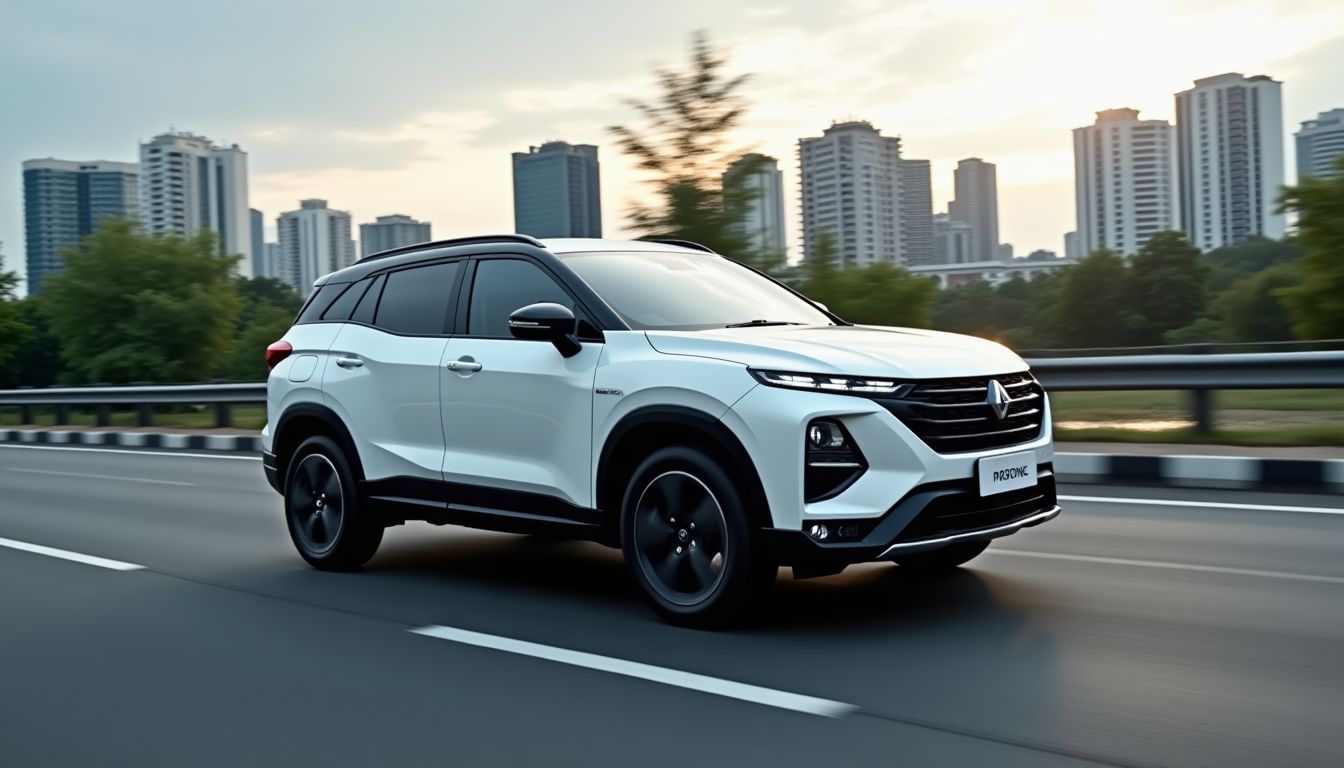
Proton is no longer just Malaysia's national car — it is positioning itself as a regional export platform. The numbers from the first half of 2026 suggest this transition is already underway.
The Factory Floor Has Changed Its Address
Stand at the Proton assembly facility in Tanjung Malim on any given weekday in mid-2026, and you are watching something that would have seemed improbable five years ago: vehicles rolling off the line destined not for Jalan Ipoh showrooms, but for foreign markets. The Proton X50 facelift has just entered Brunei — its first official export market — equipped with a 1.5T i-GT four-cylinder engine paired to a 7-speed DCT, priced between RM87,000 and RM109,000. It is a modest geographic footprint, but the structural signal it carries is substantial.
This is the most precise way to read Malaysia's auto industry right now: not as a maturing domestic market managing incremental volume, but as a sector in active industrial repositioning — one where the domestic surge is funding an outward ambition.
The Domestic Engine Is Running Hot
The headline figures are difficult to ignore. Proton's sales surged 40.9% in 2026, capturing a 26.4% market share, according to Focus2Move's 2026 Malaysian Vehicles Market data. That is not a bounce from a weak base — it is a sustained volume expansion that now places Proton ahead of where it stood even at its historical peaks under full government protection.
The product pipeline is doing real work here. The 2026 Proton Saga MC3 has recorded over 70,000 bookings, confirming that the sub-RM50,000 segment remains structurally essential to Malaysian household mobility. Meanwhile, the Proton e.MAS 7 PHEV has accumulated 6,500 bookings in just two months, which, for a plug-in hybrid in a market where charging infrastructure remains uneven, represents a meaningful shift in buyer intent rather than speculative interest.
By November of the preceding cycle, Proton had already recorded 143,000 units year-to-date, with an 18.4% market share for that month alone. These are not vanity metrics — they are the production-scale economics that make export viability feasible.
Peers are watching. Perodua continues to command the volume throne in the A-segment, but the competitive pressure from Proton's refreshed lineup — particularly in the B-SUV category — is compressing the margin for complacency across the entire national automotive ecosystem.
The Export Company Is the Structural Move Most Are Missing
Beyond the sales figures, Proton has established a dedicated export company to formalise and accelerate its overseas expansion. This is an organisational commitment, not a marketing announcement. It signals that export revenue is being treated as a structural line of business rather than a secondary channel managed from within the domestic sales division.
The Brunei entry for the X50 facelift is the first visible output of this machinery. It is a low-risk proving ground: a Malay-majority market with high vehicle ownership rates, right-hand-drive infrastructure, and no meaningful domestic manufacturing competitor. But the architecture being built — the export entity, the regional pricing strategy, the after-sales framework — is designed to scale beyond a single neighbouring market.
As The Edge Malaysia reports, the shifting tone in Malaysia's automotive sector requires a delicate balance between protecting domestic industry and opening it to the competitive pressures that build export-grade quality. Proton's current trajectory suggests it is attempting to thread that needle — using the Geely technical partnership to close the product gap while deploying a Proton-branded identity in export markets where the Geely name carries less resonance.
For brand managers and marketers tracking this space, the PHEV play is particularly instructive. The e.MAS 7's booking momentum indicates that electrification is now a purchase-decision variable in Malaysia, not merely an aspirational discussion point. According to NST Online, the Proton e.MAS 7 PHEV represents a genuine game-changer for the industry, shifting the competitive calculus for imported alternatives from Toyota Malaysia, Honda Malaysia, and premium marques including BMW Malaysia.
Value Chain Pressure Is the Unresolved Variable
Domestic volume and export ambition both carry a structural dependency that Malaysia's auto sector has not yet resolved: the depth of its value chain.
As Paul Tan reports, Malaysia's auto industry must move up the value chain to ensure growth in the evolving mobility landscape — a structural imperative that goes beyond assembling models under licence. The same challenge is echoed in The Sun Malaysia's reporting on Malaysia's automotive sector being urged to move up the value chain.
For marketers, this translates into specific commercial questions: as vehicle platforms become more technology-dense — PHEV systems, ADAS stacks, over-the-air update infrastructure — the suppliers, engineers, and software developers who build those components determine where the margin lives. Malaysia currently captures assembly and distribution margin. The higher-value engineering and IP margin largely flows to Zhejiang and Stuttgart.
Closing that gap requires deliberate industrial policy and private-sector capability investment in parallel. The Bernama coverage of policy announcements in this space has consistently framed it as a national competitiveness issue — correctly so. The question is whether the pace of capability development matches the window created by Proton's current commercial momentum.
For agencies and brand professionals running campaigns in automotive adjacencies — finance, insurance, accessories, fleet management — this value chain transition also shapes audience segmentation. A buyer considering the e.MAS 7 PHEV is making a different set of financial calculations than one booking the Saga MC3. Content strategies that treat "Malaysian car buyer" as a monolithic persona are increasingly misaligned with the market's actual structure. Creamatch, Malaysia's managed creator content platform, has been mapping these audience bifurcations with precision — a relevant capability as automotive brands segment their digital communication across EV-curious and value-driven buyer cohorts simultaneously.
What the Signals Indicate for the Next 12 Months
Three actionable reads from the current data pattern:
-
Export market monitoring becomes a priority metric. Proton's Brunei entry is a pilot. Markets with similar right-hand-drive, ASEAN regulatory frameworks — Thailand, the Philippines, potentially Vietnam — are logical next stages. Competitive brands in those markets should be tracking Malaysia's export pricing and product configuration now, not after volume scales.
-
PHEV positioning is a near-term window, not a long-term moat. The e.MAS 7's booking velocity is strong, but it reflects first-mover premium in a segment that will crowd rapidly. Brands that capture PHEV buyer data and loyalty infrastructure in 2026 hold a structural advantage in the full-EV transition wave that follows.
-
Domestic market share is contested, not settled. Proton's 26.4% is significant but not insurmountable. Perodua's volume discipline, Toyota Malaysia's hybrid credibility, and Honda Malaysia's brand loyalty in the C-segment mean the competitive configuration remains genuinely open. Any single quarter of product or pricing misstep can move share points at scale in a market this size.
Monitor these developments with granularity via Verbrol Pulse, which tracks automotive sector signals across Malaysian news and trade sources in structured time series. The industry's next inflection is not a distant forecast — it is already visible in the booking queues, the export entity filings, and the factory output schedules of mid-2026. Read them precisely, and the direction is clear. Read them lazily, and you will be explaining the shift after it has already repriced your competitive position.
Track Auto trends in real-time at verbrol.com
Read more on Verbrol Intelligence: