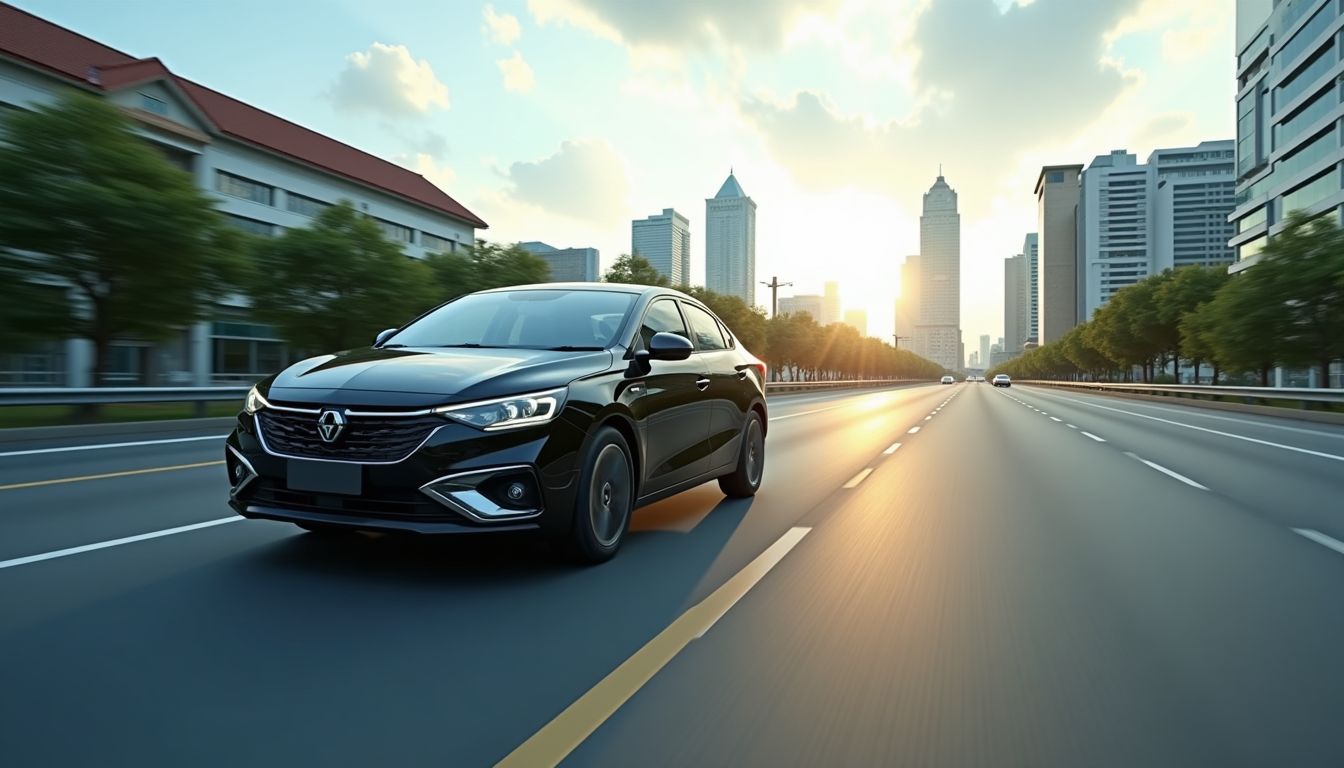
Proton just posted a 40.9% sales surge, set up a dedicated export company, and landed its X50 facelift in Brunei — all within weeks. Malaysia's national carmaker is no longer just defending domestic turf.
When a National Carmaker Stops Playing Defence
When did Proton quietly become an export story?
For most of its history, Proton held a grip on Malaysia's domestic market through a combination of pricing advantage, national loyalty, and — if we are honest — protective policy. That model worked, until it didn't. The partnership with Geely in 2017 changed the product cadence. But what is shifting right now, in mid-2026, is something more structural: Proton is no longer treating overseas sales as a bonus. It is building the institutional architecture to make exports a core revenue pillar.
Three signals, arriving nearly simultaneously, make that case.
Three Signals That Confirm a Strategic Shift
First: Proton's sales surged 40.9% in 2026, capturing 26.4% market share in Malaysia — the highest the brand has held in years. That number matters not because it is impressive in isolation, but because it provides the balance sheet confidence to fund international ambition.
Second: Proton has formally established a dedicated export company to manage its overseas expansion. This is not a sales department rebranded. A standalone export entity implies dedicated logistics contracts, separate P&L accountability, localization engineering capacity, and long-term market entry planning. From a supply chain architecture standpoint, that is a meaningful commitment signal — the kind of organizational move companies make when they intend to absorb the fixed costs of export operations, not just test the water.
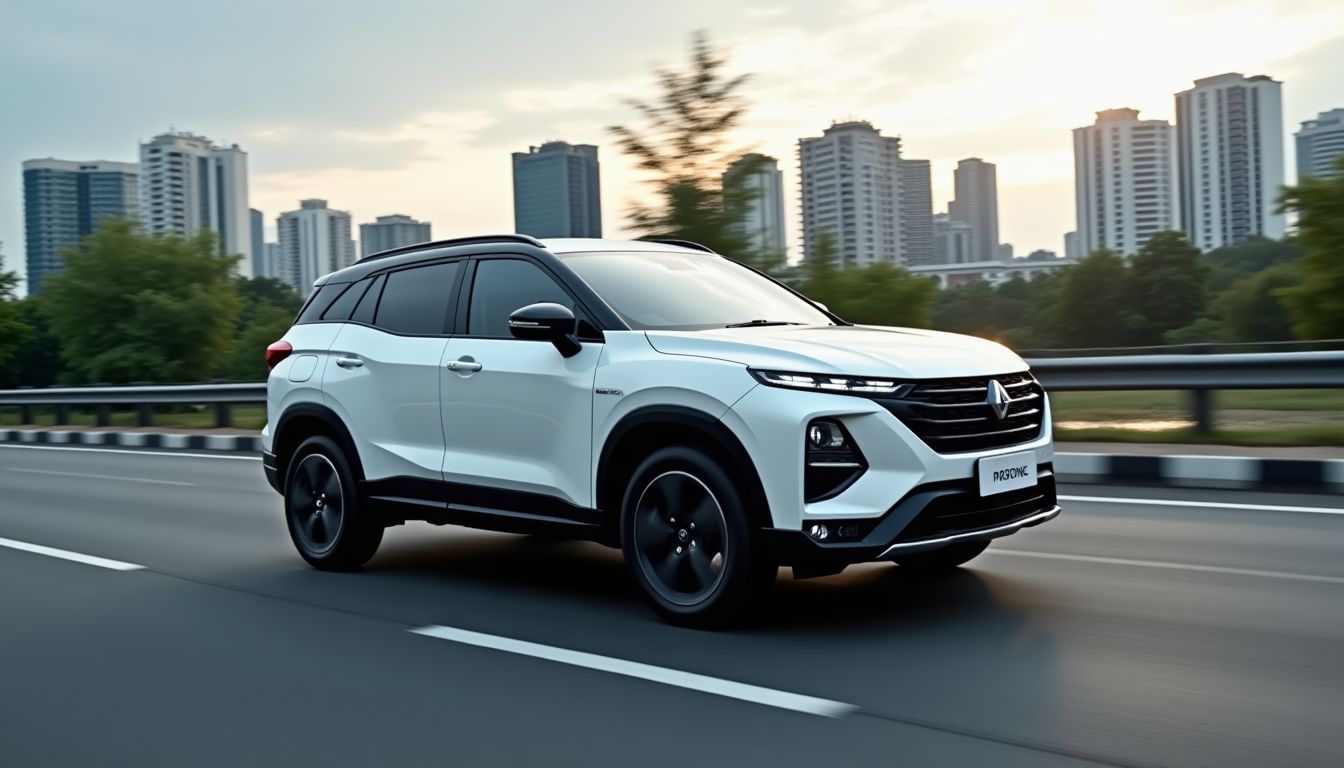
Third: The Proton X50 facelift has now landed in Brunei as its first confirmed export market, priced between RM87,000 and RM109,000, powered by a 1.5T i-GT four-cylinder engine paired with a 7-speed DCT. Brunei is a deliberately calibrated entry point — small volume, high income, right-hand drive, and culturally proximate. It is a certification market, not a cash market. The playbook here reads: prove compliance, build service infrastructure, generate regional press, then step up to Indonesia, Thailand, and eventually further.
Layered on top of this is the e.MAS 7 PHEV, which accumulated 6,500 bookings within just two months of launch, according to reporting from Zigwheels. That pace of PHEV uptake in Malaysia is notable — it suggests that consumer willingness to move toward electrified powertrains is ahead of where most fleet planners currently model it. The e.MAS 7 PHEV is being positioned as a game changer for the broader industry, and the booking data lends that claim some structural weight.
What the Supply Chain Actually Needs to Track
The market share and export headlines tend to dominate the conversation. But the harder, more consequential question is whether Malaysia's automotive supply chain can scale in parallel with this ambition.
Malaysia's auto industry must move up the value chain to ensure sustainable growth — a point made with increasing urgency by industry observers and policymakers. Right now, two upstream developments are worth monitoring closely.
EP Manufacturing has committed RM200 million to a new vehicle paint facility, expanding its automotive manufacturing footprint in a segment — surface finishing — that directly constrains export-grade quality certification. This is exactly the kind of tier-one supplier investment that needs to keep pace with OEM ambition. If Proton is going to export at meaningful volume, its supplier network must meet importing-country homologation and quality standards. Paint and surface quality is frequently the first failure point in export inspections.
The semiconductor layer is equally important. Malaysia's automotive semiconductor integration challenge — as analyzed by PwC — sits at the intersection of EV powertrain localization and the global chip supply rebalancing still underway post-2021. Malaysia is a significant semiconductor manufacturer but not yet a strong automotive-grade chip integrator. Closing that gap is a prerequisite for building PHEVs and EVs that can clear export-market regulatory thresholds.
Perodua, for its part, continues to hold the volume anchor domestically. With the 2026 Proton Saga MC3 already exceeding 70,000 bookings — a figure that signals robust demand at the entry-level price point — both national carmakers are operating with healthy order pipelines. But Perodua's strategic position remains primarily domestic, while Proton is the one taking on international distribution risk.
According to Bernama, policy support for EV and PHEV adoption continues to be a structural enabler. The question supply chain teams should be asking is whether that policy support translates downstream to parts localization incentives, not just consumer-facing subsidies.
What Marketers and Brand Managers Should Extract From This
For brand teams operating in the Malaysian automotive space — whether at Toyota Malaysia, Honda Malaysia, or the national marques — the current moment offers three actionable reads:
-
The PHEV window is open, but it is not wide. The e.MAS 7's 6,500 bookings in two months indicate that early-adopter PHEV demand is real and concentrated. Brands that have not yet positioned PHEV product clearly in the Malaysian market are watching that window narrow.
-
Export-market narratives are now domestic marketing assets. Proton's Brunei entry is being covered as national news inside Malaysia. The export story generates domestic credibility. Brand managers at competing marques should note that international presence — even at small volumes — carries reputational weight in the home market.
-
Tier-one supplier investments are story-worthy. EP Manufacturing's RM200 million paint facility commitment is exactly the kind of B2B narrative that The Star and trade publications amplify, and that procurement managers at OEMs use to evaluate supplier stability. If your brand has supply chain depth in Malaysia, make it visible.
For content strategy specifically, the Malaysian Vehicles Market data for 2026 from Focus2Move provides the benchmarking framework that regional teams need when presenting Malaysia performance against ASEAN peers. The market is growing, the mix is electrifying, and the competitive structure is shifting away from pure volume toward brand and powertrain differentiation.
Marketers building awareness campaigns around automotive launches in 2026 should also consider that the consumer conversation has moved beyond spec sheets. Booking volumes — like the Saga MC3's 70,000-plus pre-orders — are now social proof mechanisms in themselves. Integrating platforms like Creamatch, Malaysia's managed creator content platform, into launch strategies allows brands to translate that booking momentum into authentic, distributed content before the handover ceremony dominates the feed.
The Structural Bet Malaysia Is Making
The cumulative picture from mid-2026 is not a single event. It is a structural bet: that Malaysia can sustain a national carmaker with genuine export reach, build supplier infrastructure capable of meeting international quality standards, and manage the EV-PHEV transition without stranding domestic manufacturing capacity.
Proton's moves — the export company, the X50 Brunei launch, the e.MAS 7 PHEV traction — are the most visible expressions of that bet. But the bet only pays out if the upstream investments in semiconductors, surface finishing, and supplier-grade localization keep pace.
For those tracking this market closely, the Verbrol Pulse dashboard aggregates real-time signal flows across automotive, manufacturing, and trade data in Southeast Asia — useful for teams that need to move faster than quarterly reports allow.
According to Free Malaysia Today, consumer sentiment around local automotive brands has been trending positively alongside the product upgrade cycle. That sentiment tailwind is real. The question is whether the supply chain can convert it into durable competitive advantage beyond Malaysia's borders.
Track Auto trends in real-time at verbrol.com
Read more on Verbrol Intelligence: