Proton's numbers are turning heads — but the harder question is whether Malaysia's auto supply chain is being rebuilt fast enough to support the ambition behind them.
When the Sales Figures Stop Being the Point
Is Proton's surge the story, or is it the setup for a much harder chapter?
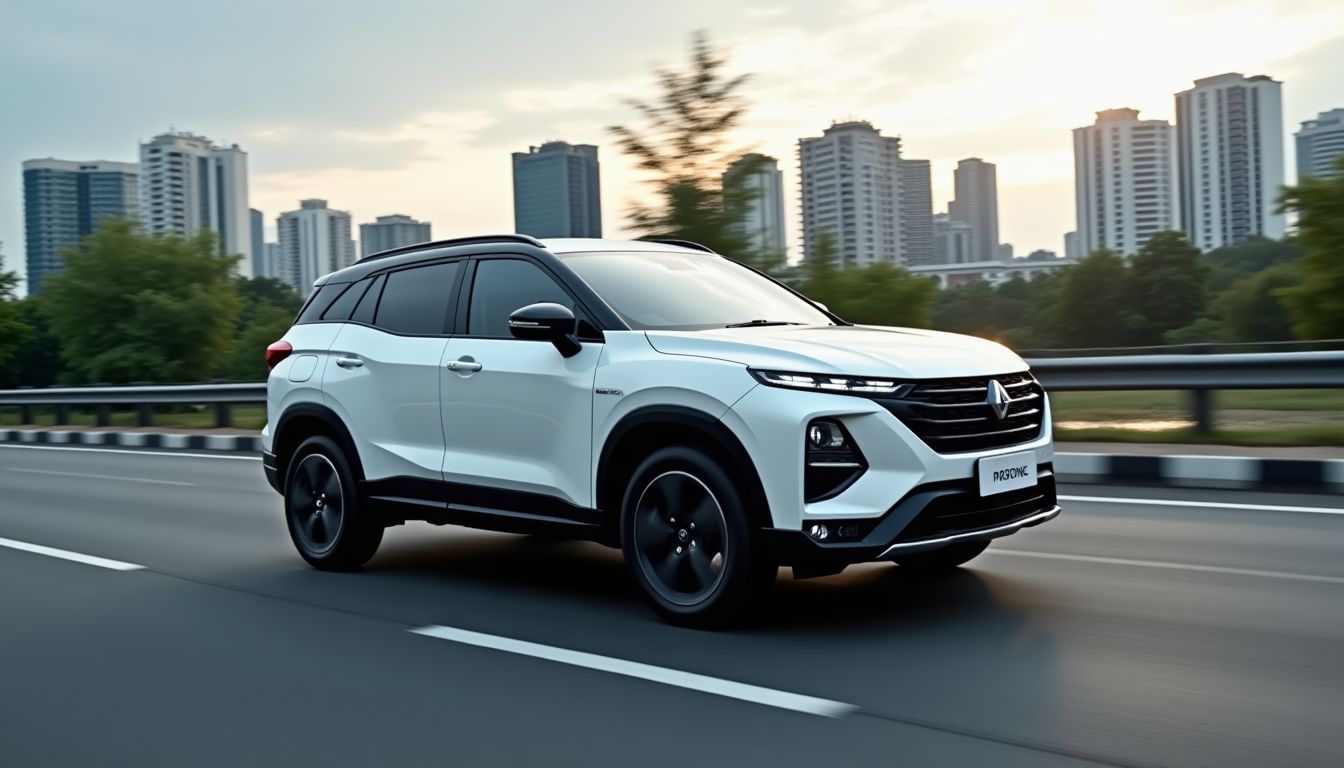
On the surface, the headline reads cleanly: Proton sales have surged 40.9% in 2026, capturing 26.4% of the Malaysian vehicle market. The national carmaker has also set up a dedicated export company to drive overseas expansion, with the X50 facelift already landing in Brunei — its first export market — priced between RM87,000 and RM109,000, powered by a 1.5T i-GT four-cylinder engine paired with a seven-speed DCT. The 2026 Saga MC3 has crossed 70,000 bookings. The e.MAS 7 PHEV accumulated 6,500 bookings within two months of launch.
Those are not marginal gains. That is a brand in genuine forward motion.
But here is what supply chain practitioners tend to notice when a national manufacturer accelerates this sharply: the upstream infrastructure either keeps pace, or it becomes the constraint that explains the next two years of headlines. And when you read Malaysia's auto sector against that lens right now, the picture becomes considerably more textured.
The Supply Chain Beneath the Headline Numbers
Proton's volume growth and export ambitions place immediate pressure on component sourcing, paint capacity, and semiconductor integration — three nodes that are simultaneously under investment and under stress across the Malaysian auto ecosystem.
On the fabrication side, EP Manufacturing's new RM200 million vehicle paint facility is a direct signal that Tier 1 suppliers are responding to the volume trajectory. A dedicated paint plant at this capital scale does not get approved without a reasonably confident demand forecast behind it. It indicates that at least part of the supplier ecosystem is pricing in continued growth from both Proton and the broader OEM base, which includes Perodua — still Malaysia's volume leader — alongside Honda Malaysia and Toyota Malaysia.
The semiconductor dimension is less settled. A PwC analysis of Malaysia's automotive semiconductor integration needs points to an integration gap that requires deliberate policy and industrial coordination, not just investment. Malaysia has chip fabrication assets — its position in the global semiconductor supply chain is well established — but translating that into automotive-grade chip supply for domestically assembled vehicles involves qualification timelines and safety certifications that do not compress easily. The e.MAS 7 PHEV is a case study in this tension: a PHEV powertrain is semiconductor-dense by design, and booking velocity of 6,500 units in two months will stress-test how reliably that supply chain can be called upon.
Value Chain Elevation — The Structural Bet Malaysia Is Making
The formation of Proton's dedicated export company is not primarily a sales move. It is an institutional signal about how Malaysia intends to position its automotive industry in the regional value chain over the next decade.
As industry analysts have noted, Malaysia's auto industry must move up the value chain to ensure growth in an evolving mobility landscape. The Brunei launch of the X50 facelift is a proof-of-concept exercise, not a volume event. Brunei is a small, affluent market. What it provides is an exportable specification — right-hand drive, established service infrastructure through the Geely partnership — that can be documented, refined, and replicated across a broader regional footprint.
The parallel to watch is how Perodua and the Japanese brands operating locally — Honda Malaysia, Toyota Malaysia — respond to this export ambition. Those OEMs have their own regional allocation strategies, and Malaysia's positioning as a manufacturing hub depends partly on whether domestic-assembled units compete with or complement what is being produced in Thailand and Indonesia for ASEAN distribution. According to Bernama, industrial policy coordination between the national brands and the government's investment frameworks will determine whether this export push sustains momentum past the initial launch markets.
What the Market Data Says About Consumer Behaviour in 2026
The booking figures for the Saga MC3 — over 70,000 units — deserve a structural reading, not just a sales one. The Saga has historically been Malaysia's affordability anchor. At the price point it occupies, booking volume at that scale tells us that household purchasing capacity in the B40 and lower M40 segments is holding up sufficiently to commit to new vehicle purchases, even in a period of ongoing cost-of-living pressure.
The e.MAS 7 PHEV's 6,500 bookings in two months tells a different story. This is a premium-tier product by Malaysian market standards. Its traction signals that the upper M40 and T20 consumer segments are beginning to treat electrified powertrains as a mainstream consideration rather than a demonstration of early-adopter identity. That shift in consumer psychology has supply chain implications: it validates investment in charging infrastructure, in PHEV-capable service centres, and in the technician training pipelines that workshops operated by dealers across the Honda Malaysia and Toyota Malaysia networks will also need to build.
For brand managers and marketers tracking this space, the Malaysian vehicle market data for 2026 confirms that market share consolidation is accelerating — the spread between national brands and foreign marques is compressing in some segments and widening in others, depending entirely on product positioning relative to the PHEV and EV transition curve.
Consumer-facing content strategy is shifting in step with this. Brands that are using creator-led content to explain PHEV technology and total cost of ownership — rather than traditional spec-sheet advertising — are finding more durable engagement. Platforms like Creamatch, which manages creator content partnerships across Southeast Asian markets, are seeing automotive clients invest earlier in educational content formats to reduce purchase hesitation at the dealership stage. That is a meaningful structural change in how the auto marketing funnel is being built.
Actionable Read-Outs for Industry Practitioners
For those building strategy around Malaysia's auto sector in the second half of 2026, the signal architecture suggests three specific focus areas:
-
Supplier capacity sequencing matters more than headline volume. Proton's growth is real, but the constraint on fulfilment will increasingly be upstream — paint, semiconductors, and stamped components. Tier 1 and Tier 2 suppliers that have already committed capital, as EP Manufacturing has, are better positioned than those waiting for clearer demand signals.
-
Export market development requires marketing infrastructure, not just logistics. The Brunei launch is a logistics and regulatory milestone. Converting it into a replicable regional model requires brand-building investment — warranties, service networks, and localised content — in each target market before volume can scale.
-
PHEV traction is creating a bifurcated service market. Workshops and dealer networks that are not yet PHEV-capable are accumulating a structural disadvantage. The 6,500 e.MAS 7 bookings represent real vehicles arriving at real service centres within 12 months. Readiness is not optional. According to The Star, investment in technician upskilling is already being prioritised by several major dealer groups.
The Verbrol Pulse tracking of automotive signals across Southeast Asian markets confirms that the Malaysian market is one of the most structurally active in the region right now — driven not by a single event but by the convergence of volume momentum, product electrification, and deliberate export strategy operating simultaneously.
The sales figures are the result. The supply chain is where the outcome is actually being determined.
Track Auto trends in real-time at verbrol.com
Read more on Verbrol Intelligence: