EV registrations are climbing and Proton is generating TikTok-fuelled booking surges — but volume without manufacturing depth is a fragile kind of progress.
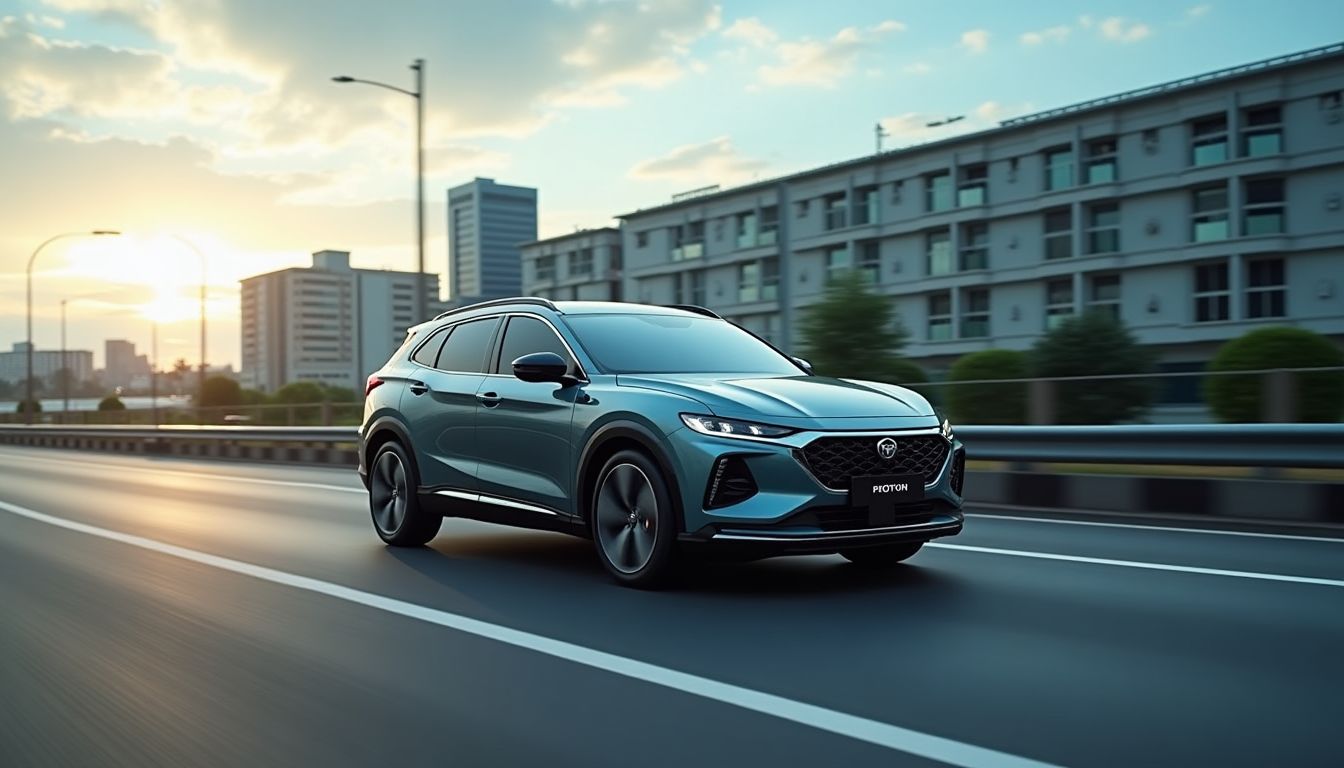
The showroom floor at a Proton dealership in Petaling Jaya looked different in January. The queues were not for the old Saga or the Exora. They were for the e.MAS 5 — a nameplate that did not exist eighteen months ago. Staff were fielding questions about charging cables before they could finish quoting the price. Something had shifted, and it was not merely a promotional cycle.
That shift now has numbers to support it. Malaysia's EV registrations crossed 9% of total industry volume (TIV) in January 2026, with the Proton e.MAS 5 leading all EV models at 3,068 units for the month. Those are not incremental figures. For a market that recorded negligible EV penetration just three years ago, nine percent represents a structural inflection — the kind that rewrites supplier contracts, retrains technicians, and forces brand managers to rethink every assumption about the Malaysian car buyer.
The question worth asking now is not whether the EV transition is happening. It clearly is. The question is who is actually constructing the industrial foundation underneath it.
Volume Is a Signal, Not a Strategy
Sales leadership is not the same as manufacturing leadership. BYD has held the top EV brand position in Malaysia for three consecutive years, surpassing 20,000 cumulative units sold, a remarkable commercial result for a marque that entered the market with limited brand equity and no dealer heritage. That performance reflects aggressive pricing, consistent model refreshes, and a distribution network that scaled faster than most observers anticipated.
But BYD's vehicles are, overwhelmingly, assembled or imported — not engineered and manufactured in Malaysia. The distinction matters enormously when you are trying to build an industry rather than a sales statistic. According to The Sun Malaysia's coverage of the automotive value chain debate, Malaysia's automotive sector faces a clear imperative: move up the value chain or risk becoming a consumption node for technology developed and manufactured elsewhere.
Proton's 1,607 bookings in 24 hours — driven largely by organic TikTok virality rather than a paid campaign — is a useful data point here. The excitement is real, the commercial momentum is genuine, and the national brand carries weight that a foreign nameplate cannot replicate in this market. But booking velocity is a marketing metric. It tells you about demand. It tells you nothing about whether Malaysia is building battery management systems, inverters, or thermal management components at scale.
Where the Manufacturing Investment Is Actually Landing
The more structurally significant development in Malaysian automotive this month is not a sales ranking. It is EP Manufacturing's announcement of a RM200 million vehicle paint facility — a capital commitment to physical production infrastructure at a time when it would be far easier to simply import finished units. As reported by The Edge Malaysia on EP Manufacturing's expanded automotive footprint, this investment signals that at least part of the Tier 1 supplier base is positioning for a higher-complexity role in the EV transition — not just continuing to serve internal combustion engine (ICE) assembly lines.
This is the direction Paul Tan's analysis of the value chain imperative points toward: components, software, systems integration — areas where Malaysia can build durable competitive advantage, not merely assemble and retail.
For brand managers at Toyota Malaysia, Honda Malaysia, or BMW Malaysia, this manufacturing trajectory should be read as both a constraint and an opportunity. Supply chain localisation will increasingly determine landed cost and delivery lead time. Those who map their EV sourcing strategies against domestic Tier 1 capability — rather than defaulting to fully imported CBU models — will operate with better margin structures as EV volumes scale.
The Consumer Psychology Behind the Numbers
There is a behavioural layer to this market that the volume data does not fully capture. The Proton e.MAS 5 booking surge — 1,607 units in 24 hours following organic TikTok amplification — is a case study in how large-ticket purchase decisions are now being shaped by social proof cascades. As one Threads post observed: "Beli benda besar pun boleh jadi impulsive kalau storytelling dia kena." (Even big purchases can become impulsive if the storytelling lands right.)
This is not frivolous consumer behaviour. It reflects a measurable shift in the automotive purchase funnel. Discovery increasingly happens on short-form video. The emotional commitment — the desire to be seen as an early adopter of a nationally significant product — arrives before the test drive. Dealership visits are now often confirmation rituals rather than genuine decision points.
For automotive marketers who need to activate this dynamic with precision, platforms that connect brands with creators who carry genuine community trust — such as Creamatch, Malaysia's managed creator content platform — represent a more scalable approach than relying on organic virality alone. The e.MAS 5 moment was partly accidental. The next brand that wants a 1,600-booking day should be engineering it deliberately.
According to Bernama, consumer sentiment toward locally produced EVs remains meaningfully stronger than toward imported alternatives when national identity messaging is embedded in the campaign — a dynamic Proton's marketing team has used effectively, and one that Perodua will need to match as it accelerates its own electrification roadmap.
What Marketers and Brand Managers Should Act On Now
The January 2026 data is a clear enough signal to justify near-term decisions, not just strategic planning documents. Three specific implications stand out:
-
Reposition around ownership experience, not specification sheets. As EV range and charging infrastructure concerns diminish, the emotional and social dimensions of ownership become the primary differentiators. Campaigns that dramatise the experience — community, identity, practicality in Malaysian road conditions — will outperform spec-led advertising.
-
Map your content strategy against the social purchase funnel. Short-form video is now a legitimate lead-generation channel for automotive. The Verbrol Pulse tracking of engagement patterns shows that organic content moments are compressing the consideration phase dramatically for EV-curious buyers.
-
Treat the value chain debate as a commercial signal, not just a policy story. Brands and agencies that understand which components are being localised — and which Tier 1 suppliers are investing in EV-relevant capability — will make sharper decisions about long-term model availability, pricing stability, and partnership positioning.
The Malaysian auto industry is at a genuine inflection point, one documented in Focus2Move's 2026 market facts and data and echoed in the investment decisions now flowing through the supplier base. Nine percent EV penetration is not yet a mature market. It is early enough that positioning choices made in the next six to twelve months will compound significantly.
The brands that will lead this market in 2028 are not necessarily the ones selling the most units today. They are the ones building the operational and marketing infrastructure — manufacturing depth, creator-led demand generation, data-informed customer journeys — that turns a sales spike into a structural position.
The TikTok bookings are a beginning. The RM200 million paint facility is a statement of intent. What happens between those two data points is where the real competition is being decided.
Track Auto trends in real-time at verbrol.com
Read more on Verbrol Intelligence: