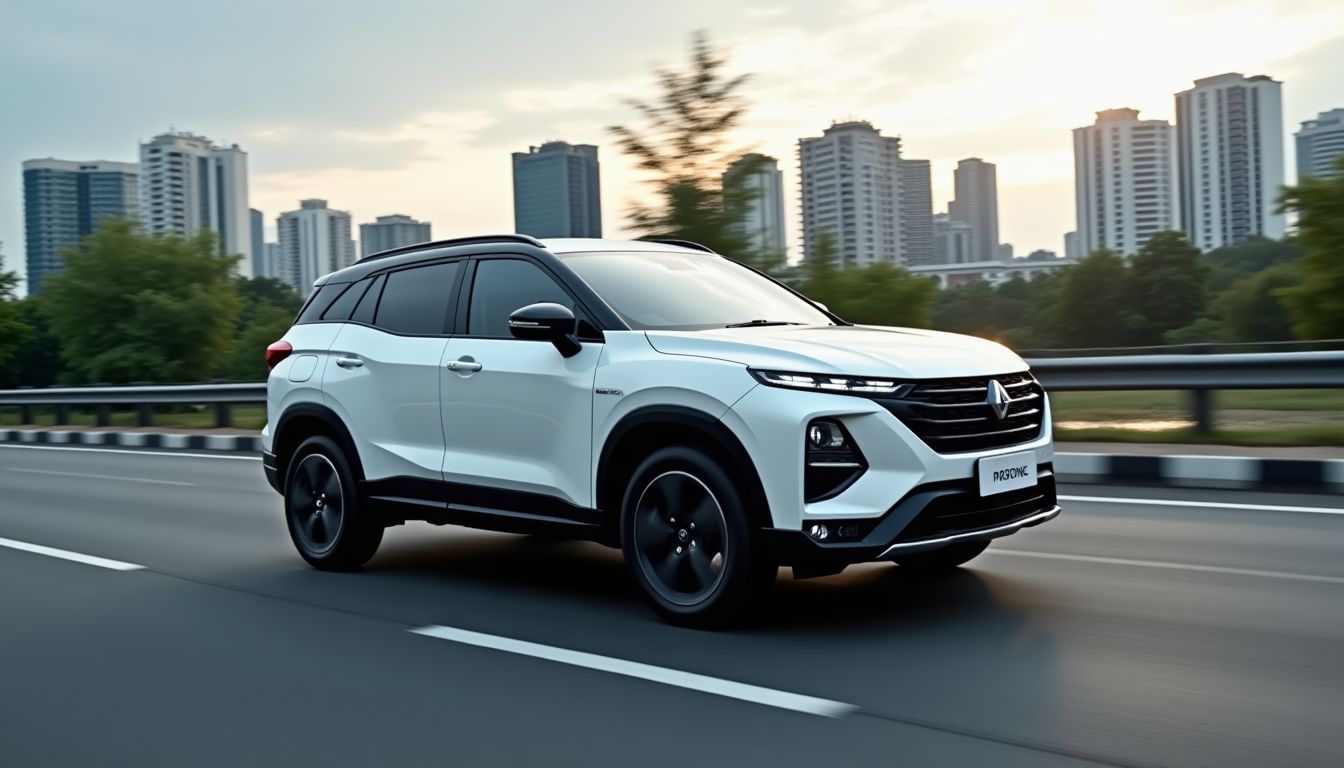
Proton's 40.9% sales surge is not just a headline number — it is the visible surface of a structural realignment in Malaysia's automotive manufacturing and demand landscape.
The Showroom Floor Has Changed
Walk into a Proton dealership in Shah Alam today and the waiting list on the Saga MC3 alone tells you something has shifted. Bookings for the 2026 Proton Saga MC3 have exceeded 70,000 units — a figure that would have seemed ambitious for any national brand just three years ago. This is not a temporary spike driven by a promotional campaign. It is a demand signal with structural roots, and it deserves a closer reading.
Malaysia's automotive sector in the first half of 2026 is producing numbers that reward precision. Proton's full-year sales surged 40.9%, capturing a 26.4% market share in Malaysia. Against a market backdrop where established players like Toyota Malaysia and Honda Malaysia have faced steady but measured growth, that share figure demands explanation — not celebration, but analysis.
Three Engines Behind Proton's Structural Gains
The headline number is 40.9%. But manufacturing and industry watchers know that headline numbers obscure mechanism. Three distinct drivers are operating simultaneously.
First, the product cadence has accelerated. Proton has moved from a brand with patchy model coverage to one with credible entries across key segments. The e.MAS 7 PHEV has recorded 6,500 bookings within two months of launch, a figure that signals genuine buyer appetite for electrified powertrains at national-brand price points — not just curiosity. The New Straits Times described the e.Mas7 PHEV as a game changer for the industry — and the booking data supports that framing.
Second, export infrastructure is being formalised. Proton has established a dedicated export company to support its overseas expansion strategy. The Proton X50 facelift has now entered Brunei as its first export market, carrying a 1.5T i-GT four-cylinder engine paired with a 7DCT, priced between RM87,000 and RM109,000. This is not merely a commercial transaction — it is proof of a manufacturable, exportable product architecture. According to Bernama, the formalisation of export operations marks a deliberate shift from opportunistic overseas sales to systematic international distribution.
Third, the November 2025 data provides a useful baseline. Proton's 13,451 units in November, contributing to 143,000 units year-to-date with an 18.4% monthly share, established the momentum that fed into the 2026 full-year result. The trajectory was not sudden — it was built incrementally through consistent monthly performance.
Value Chain Pressure: The Harder Conversation
The growth story has a counterweight. As The Edge Malaysia notes in its cover story on the shifting tone in the automotive sector, the industry faces a delicate balancing act between consumer-facing growth and structural industrial capability. Volume gains at the retail level do not automatically translate into value chain depth.
Industry voices have been direct. Malaysia's automotive sector has been urged to move up the value chain, with industry figures including Hasbi pointing to the evolving mobility landscape as both a pressure point and an opening. The risk is familiar in Southeast Asian manufacturing: strong assembly volumes paired with shallow localisation of high-value components — particularly battery systems, power electronics, and software-defined vehicle architecture.
Peodua, which has historically dominated volume in the budget segment, faces a comparable challenge. Its strength in affordable, high-reliability units is real. But as Proton's PHEV and electrified SUV entries pull aspirational buyers upmarket within the national brand ecosystem, Perodua's product roadmap will face intensifying scrutiny. The Malaysian Vehicles Market data compiled by Focus2Move contextualises Malaysia's overall vehicle market trajectory, confirming that total industry volume growth remains positive but that competitive intensity at the segment boundary is rising.
For brand managers at international marques — BMW Malaysia, Mazda Malaysia, and others operating in the premium and upper-mid space — the implication is precise: Proton's upward migration is compressing the value gap that previously kept national brands and international brands in separate competitive lanes. That separation is eroding.
What Brand and Marketing Professionals Should Act On
For those managing automotive brands or adjacent services in Malaysia, the data produces four actionable readings.
-
PHEV demand is not a transition phase — it is a product category. The 6,500 bookings for the e.MAS 7 PHEV in two months indicate that electrified powertrains are entering mainstream consideration at national-brand price points. Marketing briefs that treat EV/PHEV as niche or early-adopter are already misaligned with the market.
-
Export ambition changes the brand narrative domestically. Proton's Brunei launch and the establishment of an export company signal to Malaysian consumers that the brand is manufacturing to international standards. That perception shift has domestic brand equity implications — and competitors should be monitoring it.
-
Volume growth creates content and creator opportunity. As buyer volumes rise and new model launches accelerate, automotive content demand is expanding across digital platforms. Brands investing in owned and earned content strategies — including managed creator partnerships through platforms like Creamatch, Malaysia's managed creator content platform — will find the automotive category increasingly receptive to authentic, specification-driven content formats.
-
Value chain positioning is the medium-term differentiator. As The Star reports on industry development priorities, the brands and suppliers that invest in localised component manufacturing, software capability, and R&D infrastructure will capture disproportionate returns as Malaysia's automotive production base matures. Short-term sales figures reward the product team; value chain depth rewards the organisation.
Verbrol's tracking of this sector confirms that the signal volume around Proton's export and electrification moves has intensified sharply in the past 30 days — correlating with the booking data and export announcements. The market is paying attention.
The Number That Matters Most
Among all the figures circulating in Malaysia's automotive market this June, one deserves to anchor strategic planning: 26.4%. That is Proton's market share — a number that reflects not just a product cycle but a manufacturing and brand capability that has been rebuilt over a decade of Geely partnership and model rationalisation.
It does not mean every challenge is resolved. Paul Tan's reporting on Malaysia's automotive value chain consistently surfaces the gap between retail performance and industrial depth. Value chain sophistication, localisation ratios, and software capability remain open questions.
But 26.4% market share — built on a PHEV booking wave, a refreshed export-ready SUV, and a Saga that Malaysians are queuing 70,000 deep to buy — is a structural fact. Marketing strategies, competitive positioning frameworks, and brand investment decisions made without accounting for that fact will be working from an outdated map.
Read the numbers. Then read what is behind them.
Track Auto trends in real-time at verbrol.com
Read more on Verbrol Intelligence: