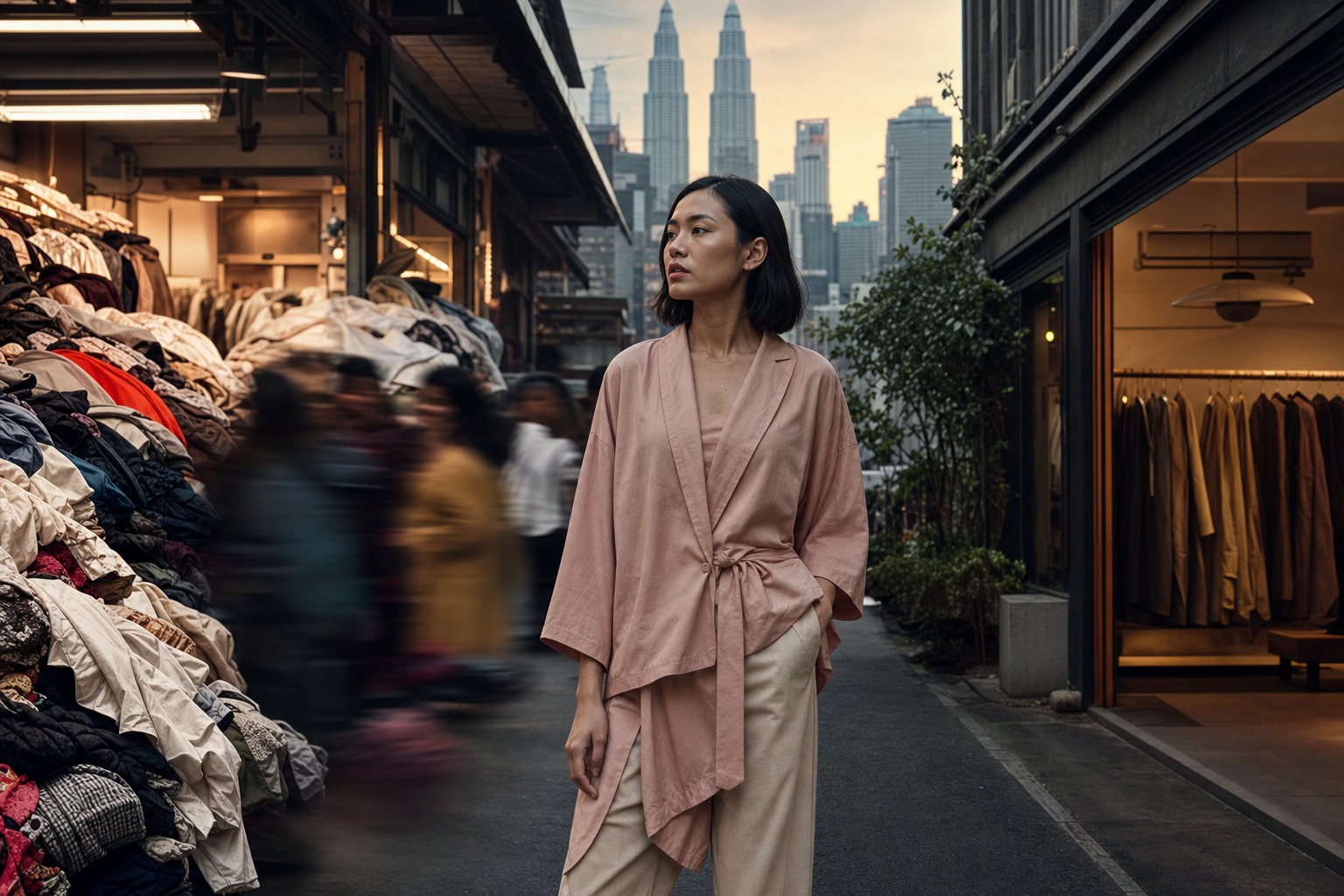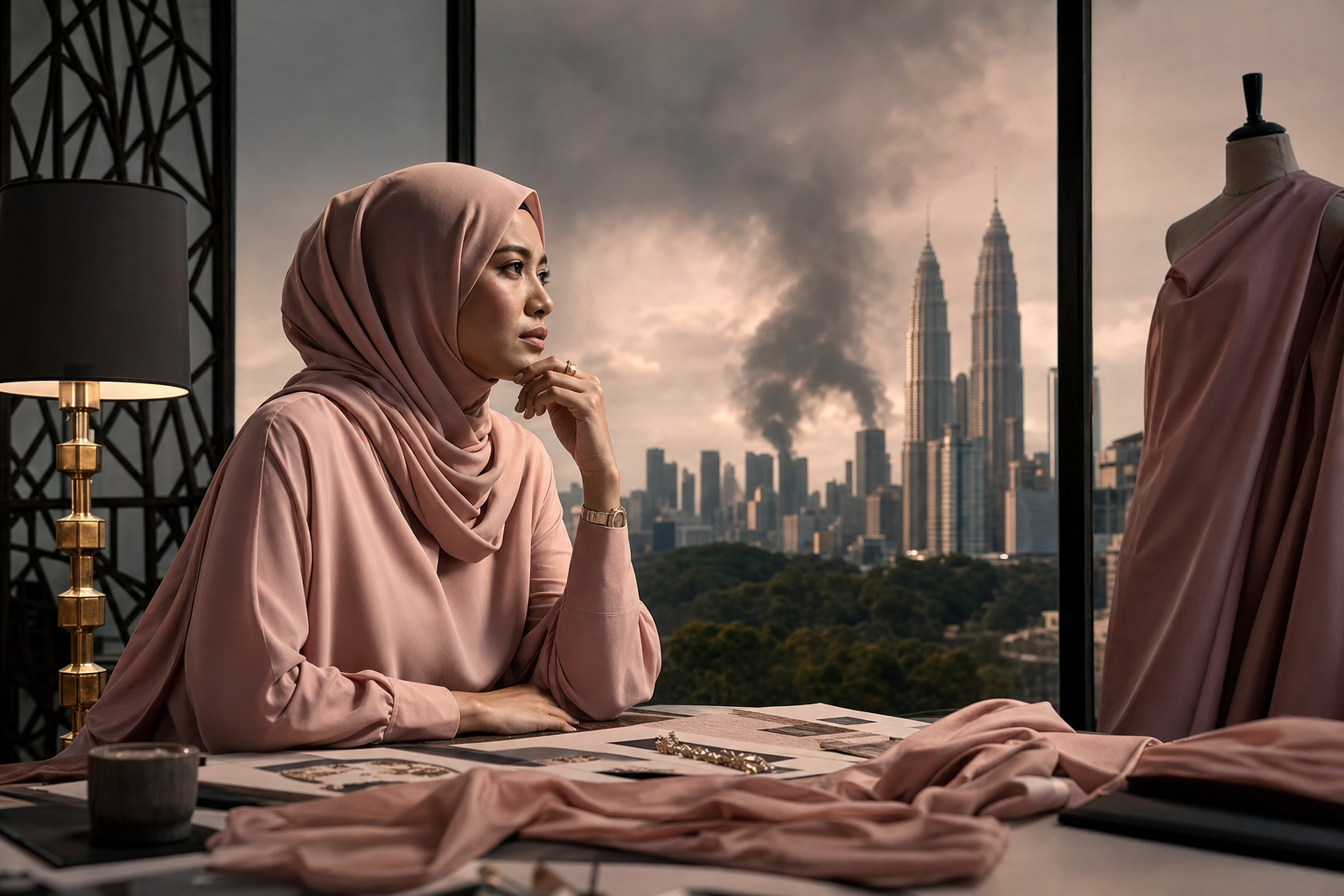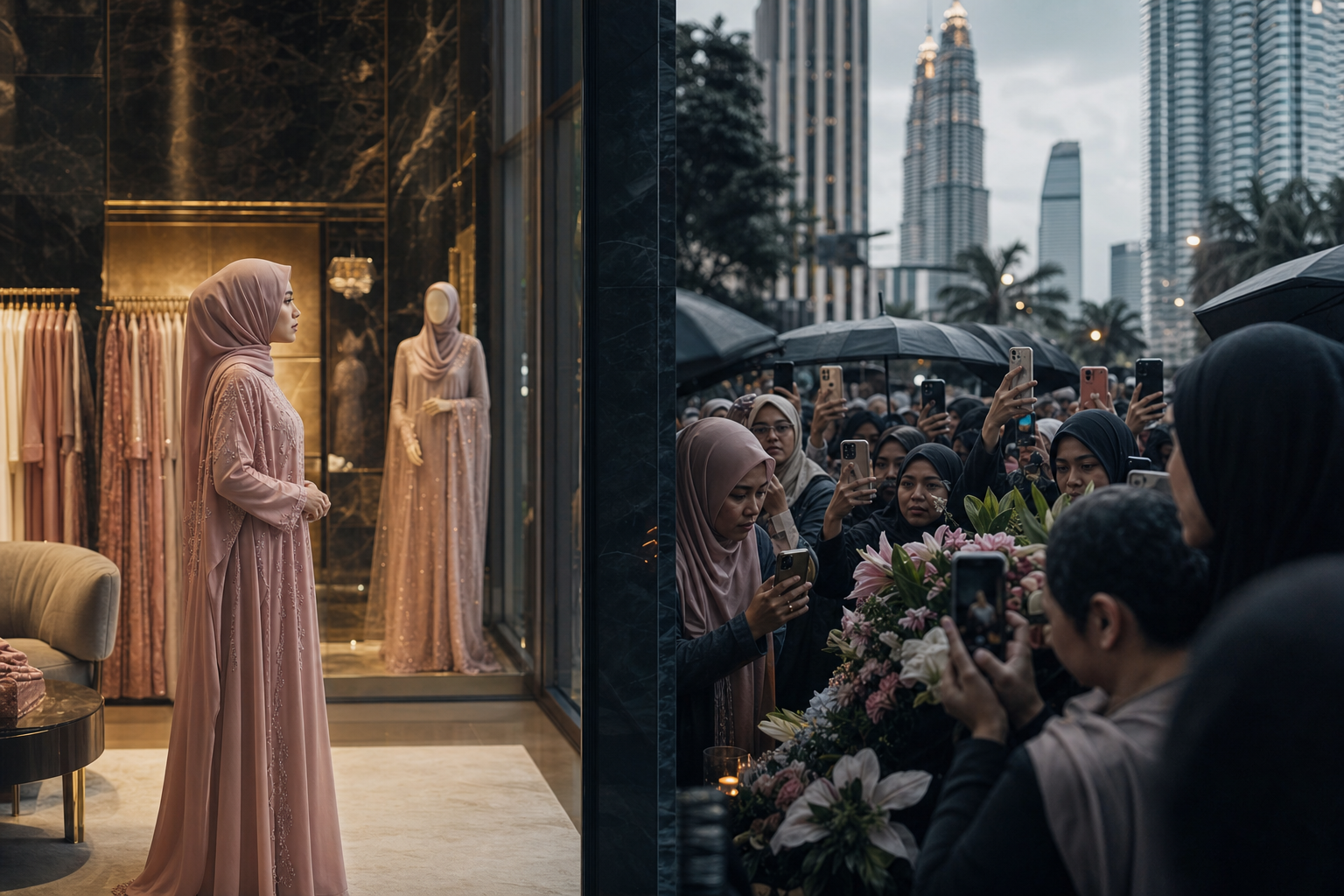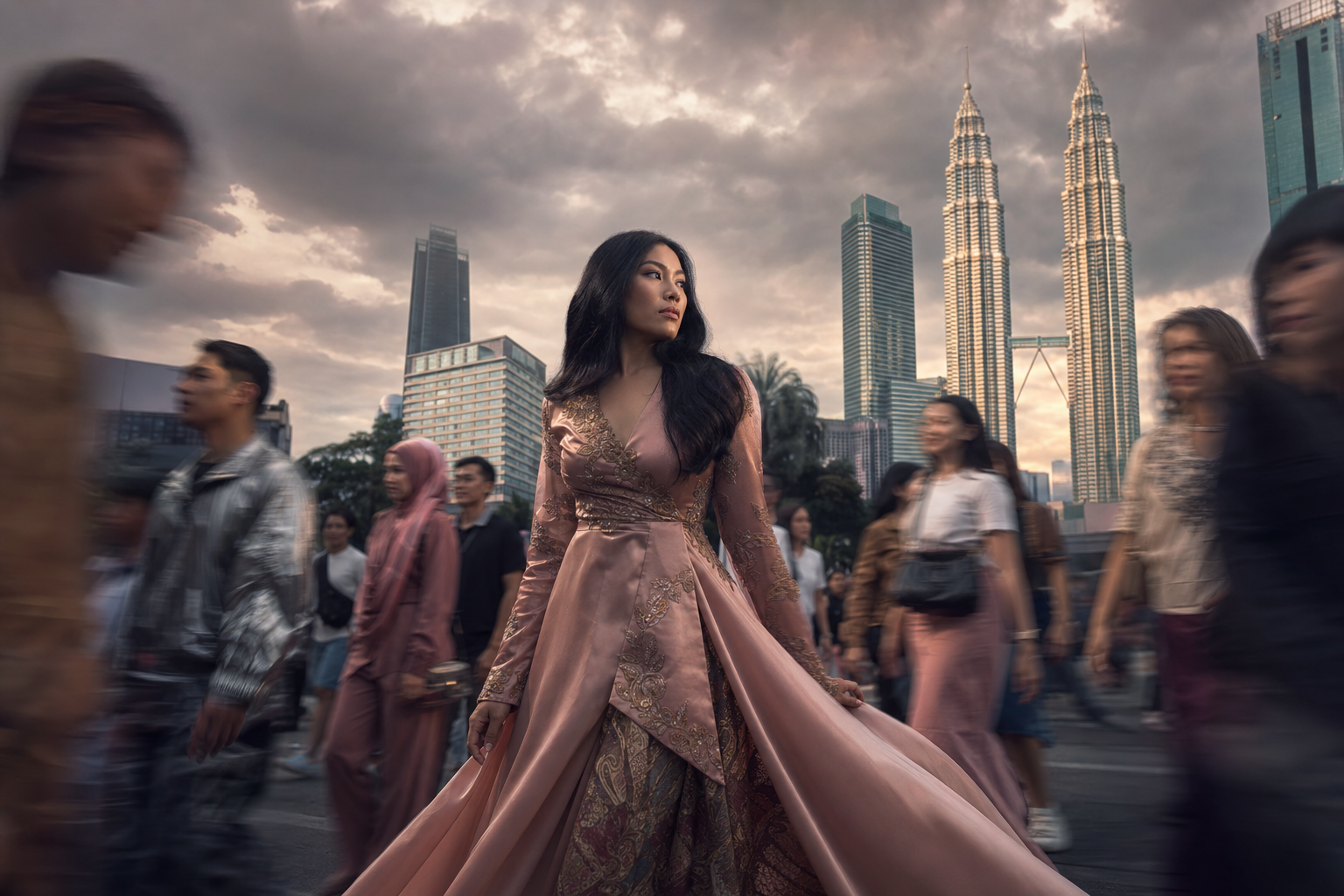
Anggun's brand signals turn negative as Malaysia's political noise drowns out fashion storytelling — and reveals a deeper opportunity in cultural identity.
There is a particular kind of invisibility that afflicts fashion brands when the national conversation turns elsewhere — not the invisibility of irrelevance, but of bad timing. That is precisely where Anggun finds itself this week.
While the Malaysian fashion label navigates what should be a critical period of brand-building and consumer engagement, the digital landscape that carries its messaging has been almost entirely consumed by a single dominant theme: the Johor state election and the urgent, emotionally charged calls for Malaysians working in Singapore to come home and vote. Prime Minister Anwar Ibrahim's rallying cry — "Apa sangat sacrifice masa" — has swept across social feeds, comment sections, and the very platforms where fashion brands compete for attention and aspiration.
For a label like Anggun, which relies on emotional resonance and cultural identity to connect with its target demographic — predominantly urban, professional Malaysian women — the timing is instructive. When patriotic duty becomes the dominant emotional frequency in the room, everything else, including the quiet confidence of a well-curated fashion campaign, gets turned down to a whisper.
Reading the Signal
With 120 brand mentions recorded across the past week and a net negative sentiment reading, the market signals around Anggun tell a nuanced story. The negativity is less about product dissatisfaction and more about displacement — the brand is being mentioned in contexts shaped by external noise rather than its own narrative. This is a classic signal of brand vulnerability during periods of national distraction.
The Johor-Singapore corridor is not incidental to Anggun's commercial geography. The working professionals who commute across the Causeway — a demographic estimated in the hundreds of thousands — represent exactly the aspirational, income-earning consumer segment that mid-to-premium Malaysian fashion brands target. When that segment is pulled into a politically charged conversation about identity, duty, and belonging, their attention economy is not available for fashion discovery.
Put plainly: Anggun's potential buyers are being asked to think about citizenship this week, not clothing.
The Identity Paradox in Malaysian Fashion
What makes this moment genuinely interesting, rather than simply unfortunate, is what it reveals about the underlying tension in Malaysian fashion branding. Labels like Anggun occupy a space that is inherently tied to cultural identity — they sell not just garments but a version of modern Malaysian womanhood. Modest yet contemporary. Regional yet globally aware. Proud without being loud.
That identity positioning, which is normally a competitive strength, becomes complicated when national identity is itself a contested, emotionally raw topic in the public sphere. The same woman who might respond to Anggun's aesthetic language — its quiet elegance, its nod to local craftsmanship — is being simultaneously addressed by politicians invoking sacrifice, loyalty, and roots.
Brands that navigate this well understand that they are not competing with political messaging directly. Rather, they must find the emotional register adjacent to it — the warm, personal, and aspirational — that allows them to stay relevant without appearing tone-deaf.
What Anggun Should Be Doing Right Now
The smartest move available to Anggun in this climate is not to shout louder, but to reposition its storytelling around the very themes dominating the national conversation — subtly, and on its own terms.
The Johor-Singapore working woman is a powerful archetype. She is mobile, ambitious, financially independent, and deeply connected to both her Malaysian roots and her cosmopolitan professional life. She sacrifices distance for opportunity. She carries identity across a border every single day. That woman is not unreachable for a fashion brand — she is simply waiting to be spoken to in a language that acknowledges her full reality.
A campaign built around the idea of carrying Malaysia with you — expressed through fabric, craft, and design rather than flags and speeches — would cut through in a way that straightforward fashion advertising simply cannot right now.
Anggun has the aesthetic vocabulary to do exactly this. The question is whether the brand has the strategic agility to deploy it at pace.
The Longer View
Election cycles pass. The Causeway traffic returns to its ordinary rhythm. But the brands that use these disrupted moments to deepen their cultural relevance — rather than simply waiting for calmer waters — are the ones that emerge with stronger consumer relationships on the other side.
Anggun's current brand turbulence is not a crisis. It is, if read correctly, a creative brief. The most compelling fashion is always made in conversation with the world it inhabits — not in spite of it.
The women Anggun wants to dress are out there right now, making decisions about identity, belonging, and sacrifice. When the noise fades, the brand that spoke to them honestly will be the one they remember.
Related Reading
- The Rakyat Post Is Quietly Becoming Malaysia's Most Effective Viral-to-Commerce Bridge
- The Bunga Effect: What Malaysia's Most-Watched Creator Signals for Brands
- Malaysia's Lifestyle Scene Is Dressing Up While Quietly Falling Apart
- Malaysian Retailers Are Warning You: The Worst Is Still Ahead
Frequently Asked Questions
What is Anggun and who is it designed for? Anggun is a Malaysian fashion label that targets urban, professional Malaysian women. The brand focuses on emotional resonance and cultural identity as core elements of its positioning and consumer connection.
Why is Anggun struggling to get attention right now? Anggun's brand messaging is being overshadowed by the dominant political conversation surrounding the Johor state election and calls for Malaysians in Singapore to return home to vote. When a single emotionally charged theme dominates social feeds and digital platforms, fashion brand campaigns tend to get drowned out.
What do the brand sentiment numbers say about Anggun this week? Anggun recorded 120 brand mentions over the past week with a net negative sentiment reading. However, the negativity appears to stem from contextual displacement rather than product dissatisfaction, meaning the brand is being mentioned in politically charged conversations rather than fashion-related ones.
How does a national election affect a fashion brand's marketing performance? When patriotic or politically charged topics dominate social media and digital platforms, fashion brands lose visibility and emotional share of voice with their target audiences. For a brand like Anggun that relies on cultural identity and aspiration, competing against a high-emotion national narrative is particularly challenging.
What does 'bad timing' mean for a fashion brand trying to build its presence? Bad timing for a fashion brand refers to launching or running campaigns during periods when the public's attention is overwhelmingly focused elsewhere, such as elections or national crises. Even a well-executed campaign can underperform if the digital landscape is saturated with unrelated but emotionally dominant content.