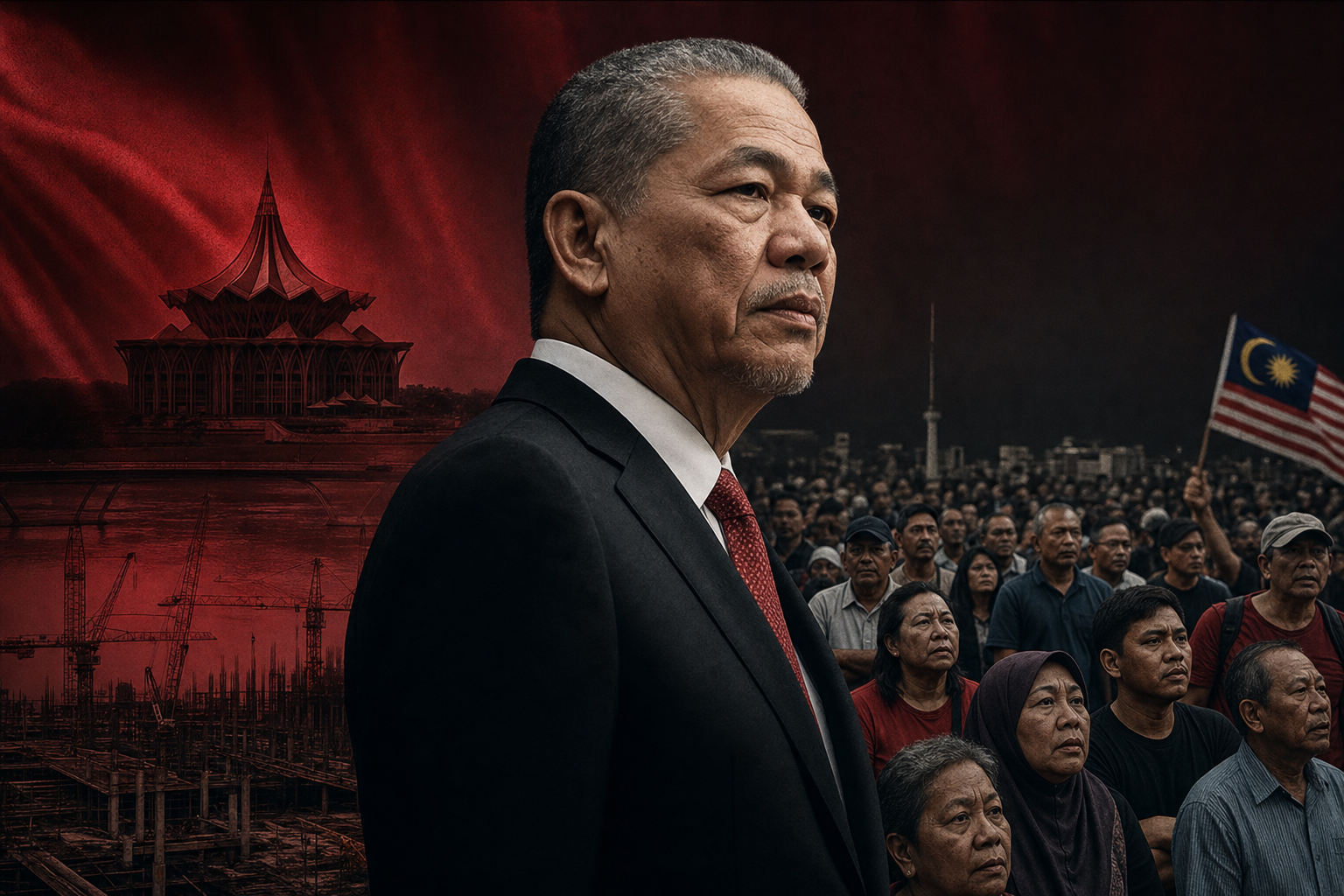
From RM250bil in digital FDI to TERAJU's restructuring, Akmal Nasrullah's latest moves carry direct signals for Malaysian business strategy.
What Akmal Nasrullah's Latest Move Means for Malaysian Business
By Priya Menon
Two years. RM250 billion in digital investments. That figure alone reframes how Malaysia's Economy Ministry under Akmal Nasrullah Mohd Nasir should be read — not just as a policy shop, but as an active deal architecture at national scale.
The minister's recent appearances have been notably dense with market-moving signals. From anchoring Malaysia's digital investment credentials to repositioning the energy transition as a core economic restructuring tool, and now engineering a structural shift in how Bumiputera economic development is administered — Akmal Nasrullah is running what amounts to a three-front strategy, and the business community would be wise to map each front carefully.
The RM250 Billion Benchmark
When a sitting Economy Minister publicly anchors a RM250 billion digital investment figure in a two-year window, it is not a casual talking point. It is a signal to institutional capital, regional competitors, and domestic industries about where policy momentum is concentrated.
For context, that quantum of digital FDI puts Malaysia in serious conversation with regional heavyweights. It validates the data centre and cloud infrastructure boom that has already reshaped Johor's industrial land market and pushed power utility planning cycles into unprecedented territory. It also creates a benchmark that future administrations will be held against — a calculated move that locks in both ambition and accountability.
For businesses in digital infrastructure, logistics, cooling technology, fibre connectivity, and enterprise services, the minister's public affirmation of this figure is effectively a forward guidance notice. The pipeline is real, the policy architecture is committed, and the commercial opportunities downstream are compounding.
Energy Transition as Economic Architecture
The second signal is arguably the more structurally significant one. Akmal Nasrullah's framing of energy transition not merely as a climate or sustainability agenda, but explicitly as a catalyst for economic restructuring, is a positioning shift with direct implications for how capital should flow across Malaysian industries in the next decade.
This framing matters for several sectors simultaneously. Petrochemical and oil-and-gas players need to read this as a policy signal about where long-term industrial subsidies and incentive structures are headed. Manufacturers with export exposure to the EU — particularly those facing incoming carbon border adjustment mechanisms — now have a clearer read on the domestic policy logic they can align with. And green energy developers, from solar IPPs to hydrogen project proponents, receive a direct signal that the minister sees their sector as foundational, not peripheral, to Malaysia's economic future.
The sharpness of this framing also suggests that the Economy Ministry is positioning itself as the connective tissue between industrial policy and energy policy — a coordination role that, if executed well, could significantly reduce the regulatory fragmentation that has historically slowed large-scale green investment in the country.
The TERAJU Restructuring: Reading the Institutional Signal
Perhaps the most tactically interesting move of the week is the transfer of TERAJU — the Unit Peneraju Agenda Bumiputera — from the Economy Ministry to the Prime Minister's Department (JPM).
On the surface, this reads as an administrative reshuffle. But the business intelligence read is more layered. Moving TERAJU to JPM elevates the institutional weight behind Bumiputera economic development, placing it closer to the apex of executive authority. For Bumiputera entrepreneurs and companies navigating IPO pipelines, government procurement access, or corporate acceleration programmes, this structural change signals that execution capacity — not just policy intention — is being upgraded.
Akmal Nasrullah himself framed the move as opening wider space for TERAJU to strengthen its role in meeting Bumiputera development targets. The specific mention of accelerating IPOs is commercially significant. An IPO pipeline with stronger institutional backing translates into real market activity — more listings, more institutional investor engagement, and more visibility for Bumiputera-led businesses on public markets.
For venture capital players, private equity funds, and corporate advisers with Bumiputera portfolio exposure, this restructuring is worth tracking closely. The machinery is being recalibrated, and deal flow dynamics in this segment of the market could shift meaningfully as a result.
What the Signal Volume Tells Us
With 42 mentions in a single week and a consistently positive sentiment profile, Akmal Nasrullah is currently one of the highest signal-density figures in Malaysia's economic policy landscape. That level of market communication — across digital investment, energy transition, and institutional restructuring — reflects a ministry that is deliberately staying visible and agenda-setting.
For businesses, the practical takeaway is straightforward: the Economy Ministry under Akmal Nasrullah is not in a holding pattern. It is actively shaping the conditions under which the next wave of Malaysian industrial and digital capital formation will occur.
The question for the private sector now is not whether these signals are real — the investment numbers and structural moves confirm they are. The question is how quickly businesses align their own strategies to the policy architecture being built around them.
Those who wait for the policy to fully crystallise before moving may find the most strategic positions already taken.
Related Reading
- Big Chips, Broken Coalitions: Malaysia's Politics This Week
- Malaysia's Political Economy: Who Really Benefits When Billions Flow In?
- What Hamzah Zainudin's Latest Move Means for Malaysian Business
- What Anthony Loke's Latest Move Means for Malaysian Business
Frequently Asked Questions
Who is Akmal Nasrullah Mohd Nasir? Akmal Nasrullah Mohd Nasir is Malaysia's Economy Minister responsible for overseeing national economic policy, digital investment strategy, and Bumiputera economic development. He has gained attention for anchoring significant foreign direct investment targets and positioning Malaysia as a major destination for digital infrastructure capital.
How much has Malaysia attracted in digital investments under Akmal Nasrullah? Malaysia has attracted RM250 billion in digital investments within a two-year window under Akmal Nasrullah's tenure at the Economy Ministry. This figure has been cited as a benchmark that places Malaysia in serious competition with other major regional economies for digital FDI.
What is Akmal Nasrullah's strategy for Malaysia's economy? Akmal Nasrullah is pursuing a three-front strategy that includes anchoring Malaysia's digital investment credentials, repositioning the energy transition as a core economic restructuring tool, and reforming how Bumiputera economic development is administered. This approach signals that the Economy Ministry is functioning as an active deal architecture operation at a national scale.
How has Malaysia's digital investment boom affected Johor? The surge in data centre and cloud infrastructure investment linked to Malaysia's digital FDI push has significantly reshaped Johor's industrial land market. It has also pushed power utility planning cycles into unprecedented territory as demand for energy infrastructure grows alongside digital development.
What does Akmal Nasrullah's RM250 billion digital investment figure mean for businesses? The RM250 billion benchmark serves as a signal to institutional capital, regional competitors, and domestic industries about where Malaysia's policy momentum is concentrated. It also sets a measurable standard that future administrations will be held against, effectively locking in a long-term commitment to digital economic growth.