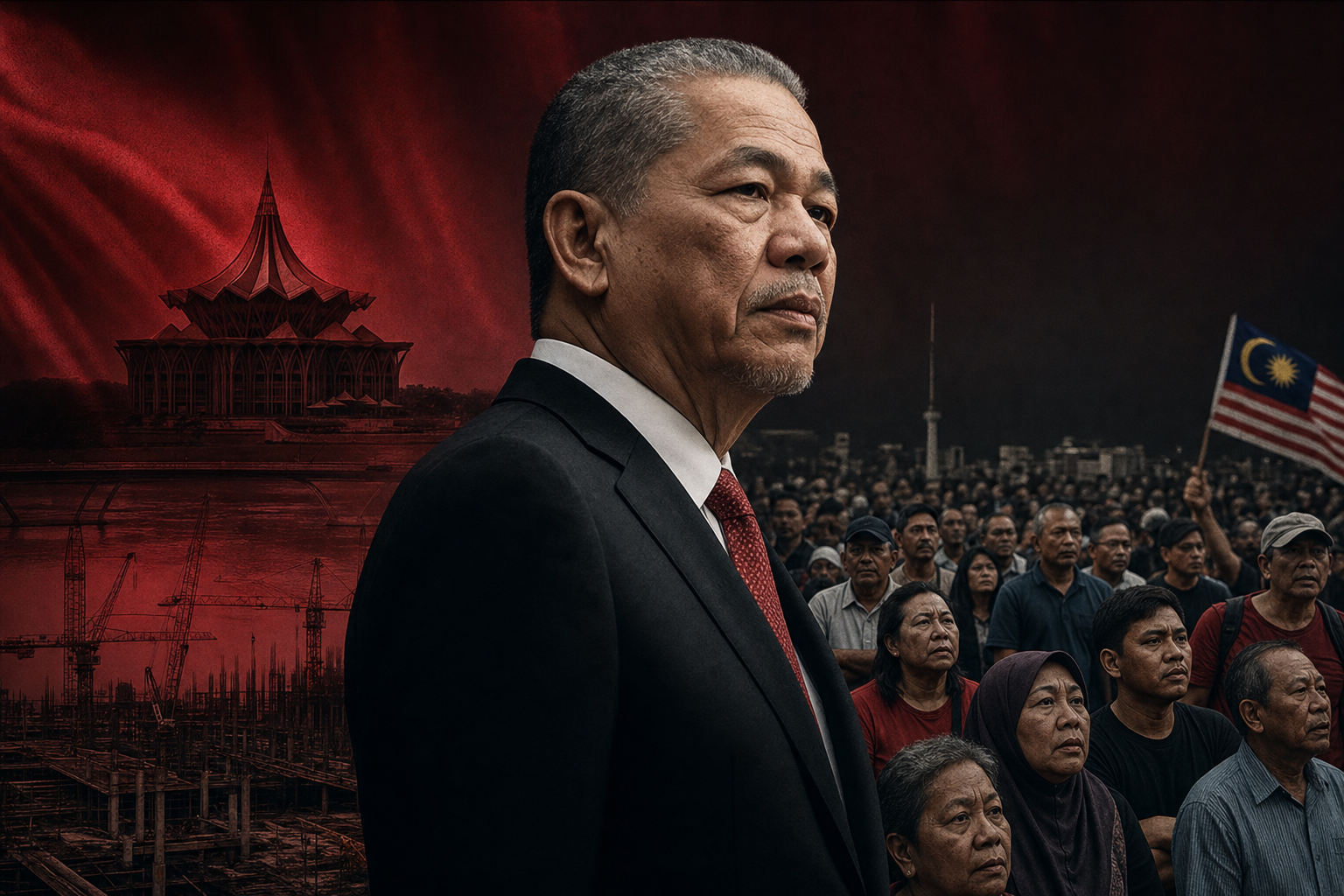
PN's internal row over Hamzah Zainudin's reappointment as Opposition Leader sends governance friction signals that matter beyond parliament.
What Hamzah Zainudin's Latest Move Means for Malaysian Business
By Priya Menon
When a coalition cannot agree on who speaks for it, the loudest signal it sends is not political — it is a risk signal for every boardroom watching Malaysia's legislative calendar.
The reappointment of Larut MP Datuk Seri Hamzah Zainudin as Opposition Leader has unfolded this week less like a clean transition and more like a stress test for Perikatan Nasional's internal cohesion. PAS president Abdul Hadi Awang announced the reappointment over the weekend, declaring majority consensus among PN parliamentarians. Bersatu, however, has pushed back publicly, and as of this writing, the Dewan Rakyat has yet to formally receive a PN notice confirming Hamzah's status — a procedural gap that, in parliamentary business terms, is anything but trivial.
For the business community, the mechanics of this dispute matter more than the personalities involved.
Why Opposition Stability Is a Business Issue
Malaysia's legislative environment depends on functional parliamentary opposition for one underappreciated reason: it is the opposition bloc that most consistently scrutinises government-linked companies, public procurement processes, and regulatory frameworks during Dewan Rakyat sessions. A fractured or uncertain opposition leadership creates a vacuum in that scrutiny function.
When opposition leaders are preoccupied with internal coalition politics — as the PN bloc demonstrably is this week — the bandwidth available for substantive policy pushback narrows. That, paradoxically, can cut both ways for business. In the short term, a distracted opposition may mean less friction for government-aligned corporate proposals moving through parliament. In the medium term, reduced legislative oversight weakens the checks that institutional investors and foreign capital use as governance proxies when assessing Malaysian market risk.
The 50-mention media spike around Hamzah's reappointment this week, carrying predominantly negative sentiment, reflects a market-adjacent concern: uncertainty around opposition leadership continuity creates noise at exactly the moment when clarity is commercially valuable.
The Bersatu-PAS Fault Line as a Structural Signal
The public barb-trading between Bersatu and PAS over Hamzah's return is not merely internal party theatre. It reveals a structural tension within PN that has direct implications for how the coalition would govern — or oppose — over the next legislative cycle.
For businesses that operate in sectors sensitive to policy direction — energy transition, construction, digital economy, and public infrastructure — a unified opposition with a coherent economic counter-narrative serves as a meaningful market reference point. It signals what policy alternatives are on the table should the political landscape shift. A PN bloc visibly divided over something as foundational as its own leadership appointment raises legitimate questions about whether a coherent alternative economic platform can emerge from that coalition in the near term.
Gerakan's move to publicly defend PAS's announcement — framing it as a matter of parliamentary rights — adds another layer of complexity. It suggests that smaller coalition partners are being drawn into what should be an internal PN governance matter, further diluting the signal that the bloc sends to market observers.
The Procedural Gap and What It Costs
Perhaps the sharpest business-relevant detail in this episode is the procedural one: the Dewan Rakyat has not received formal notification of Hamzah's reappointment. In corporate governance terms, this is the equivalent of a board announcing a new CEO to the press before filing the requisite regulatory notice. The announcement exists, but the instrument does not.
For institutional stakeholders — pension funds, sovereign wealth funds, and foreign portfolio investors who use parliamentary stability as one indicator in their Malaysia exposure models — this kind of procedural ambiguity registers as governance friction. It is a small data point individually, but it accumulates alongside other signals into a broader country-risk picture.
Malaysia has, over the past two years, worked deliberately to project legislative stability as part of its investment promotion narrative under the Madani administration. Every episode that muddies that narrative — regardless of which side of the aisle it originates from — carries an opportunity cost in terms of investor confidence.
Looking Forward
The resolution of Hamzah's formal status as Opposition Leader will likely arrive within days, once the procedural formalities are completed. The immediate disruption to business operations is negligible. But the episode's real value lies in what it reveals about PN's internal mechanics heading into a period when state elections and a possible shifting political landscape will demand coalition discipline.
Businesses and investors tracking Malaysia's political economy should watch not just whether Hamzah is confirmed, but how smoothly that confirmation lands. A clean resolution would suggest PN has contained its internal tensions. A prolonged procedural standoff would suggest the opposite — and that is the scenario worth building into any medium-term Malaysia risk model.
In politics, as in business, how a leadership transition is managed tells you more about an organisation's health than the transition itself.
Related Reading
- Politik Malaysia 2026: Bila Undi Melayu Jadi Rebutan Tiga Penjuru
- What Anthony Loke's Latest Move Means for Malaysian Business
- Malaysia's Political Economy Is Moving — Are We Watching the Right Things?
- Malaysia's Political Economy Is Moving — But Are Rakyat Keeping Up?
Frequently Asked Questions
Who is Hamzah Zainudin and what is his role in Malaysian politics? Hamzah Zainudin is a Malaysian politician and Member of Parliament for Larut who serves as the Opposition Leader in the Dewan Rakyat. He is affiliated with Perikatan Nasional and was reappointed to the Opposition Leader role following an announcement by PAS president Abdul Hadi Awang claiming majority consensus among PN parliamentarians.
Why is there controversy over Hamzah Zainudin's reappointment as Opposition Leader? The reappointment has been disputed because while PAS declared majority consensus among Perikatan Nasional parliamentarians, Bersatu publicly pushed back against the decision. As of the latest reporting, the Dewan Rakyat had not formally received a PN notice confirming Hamzah's status, leaving a significant procedural gap unresolved.
How does instability in Malaysia's opposition leadership affect businesses? A fractured opposition leadership weakens the parliamentary scrutiny function that businesses and investors rely on to keep government-linked companies, public procurement, and regulatory frameworks in check. When opposition leaders are consumed by internal coalition disputes, oversight of legislative and regulatory processes can diminish, creating uncertainty for the business community.
What is Perikatan Nasional and why is its internal cohesion important? Perikatan Nasional is a Malaysian political coalition that currently serves as the parliamentary opposition, comprising parties including PAS and Bersatu. Its internal cohesion matters because a divided coalition struggles to present a unified legislative agenda, which can disrupt parliamentary proceedings and reduce the effectiveness of opposition oversight that businesses monitor closely.
What does the Dewan Rakyat's role have to do with the Opposition Leader appointment process? The Dewan Rakyat, Malaysia's lower house of parliament, must formally receive notification confirming an Opposition Leader's status for the appointment to be officially recognised. The absence of this formal notice in Hamzah Zainudin's case represents a procedural gap that signals ongoing instability within Perikatan Nasional's leadership structure.