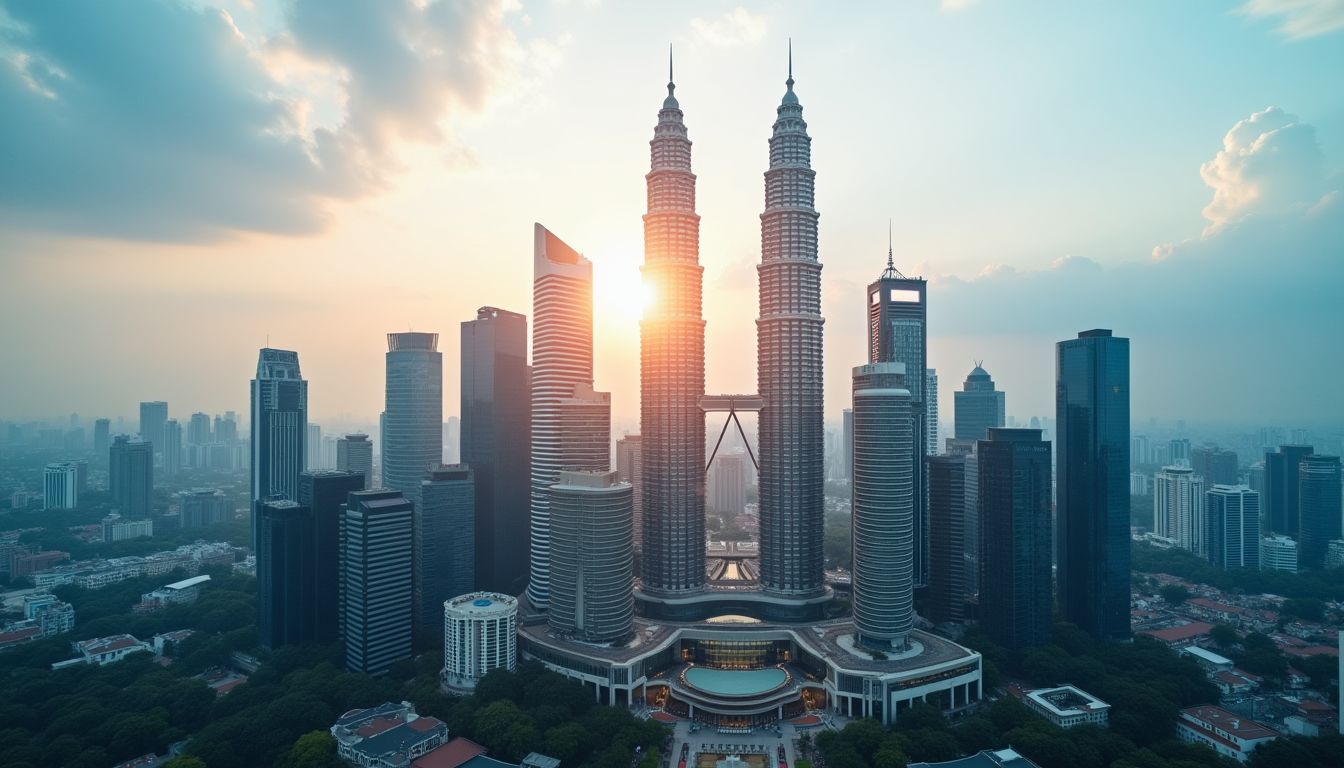
Malaysians aren't just spending differently — they're performing identity through every purchase, every workout, every night out. The brands that understand this won't just survive the shift; they'll define what comes next.
The Quiet Revolution Happening in Every Malaysian Mall
Somewhere between a Hyrox timer beeping and a karaoke room being redesigned as a "social hub," Malaysia's lifestyle industry quietly crossed a threshold. The country's leisure and personal identity market is no longer about consumption for comfort. It is about consumption as declaration.
This isn't a trend whispered in strategy decks. It's visible in the actual decisions being made at the business level right now — and for marketers paying close attention, it offers a rare, clear view of where Malaysian spending is genuinely heading into the second half of 2026.
Hyrox and the New Language of Community Fitness
Let's start with the most vivid signal. Hyrox has emerged as Malaysia's new fitness craze, according to a recent Bernama report — and the speed at which this German-originated fitness format has taken root in Kuala Lumpur tells us something important about how Malaysians now relate to physical activity.
This isn't about gyms. Hyrox is a competitive fitness race combining running with functional workout stations, and it has captured a demographic that was quietly underserved: urban, professional, community-hungry, and deeply motivated by social proof. The participants aren't just training; they're posting, tagging, comparing times, and wearing the identity of "Hyrox athlete" like a badge.
For lifestyle brands, this is the signal worth tracking. The product category barely matters — what matters is whether a brand can attach itself credibly to a community with this kind of internal momentum. Uniqlo Malaysia has understood this principle for years, building its DRY-EX and AIRism ranges around the functional wardrobe needs of exactly this kind of active urban consumer. The question now is which other Malaysian brands will move into this space before it becomes obvious.
Actionable takeaway: If your brand has any adjacency to wellness, active living, or urban achievement culture, your window for authentic partnership with the Hyrox-adjacent community is open right now — but it won't stay open long. Brands that wait for full saturation will be paying premium rates for diminishing authenticity. Platforms like Creamatch, Malaysia's managed creator content platform, are particularly well-positioned to connect brands with the micro-community voices driving this kind of grassroots lifestyle movement.
Red Box and the Reinvention of the Night Out
On a completely different frequency, Red Box Karaoke Malaysia has appointed Terry Swee as its new CEO, with a stated ambition to become Asia's number one social hub — a phrase that deserves a moment's pause, according to The Edge Malaysia.
Karaoke as "social hub" is not a rebrand for the sake of it. It reflects a genuine understanding that post-pandemic Malaysian consumers don't just want entertainment; they want a reason to be together in a designed, contained, socially legible space. The karaoke room was always this, in its way — a private theatre for self-expression. Red Box is betting that this need has grown, not shrunk.
This ambition places Red Box in direct conversation with the kind of experiential repositioning we've seen from retail players like Aeon and, in its own quieter way, Parkson — both of which have had to answer the same fundamental question: what does a physical space offer that a screen cannot? The brands finding answers worth hearing are the ones leaning into occasion, ritual, and togetherness rather than simply discounting their way to footfall.
Actionable takeaway: The leisure-as-identity trend means that brands occupying physical spaces need to design for the social photograph as much as the experience itself. The room, the lighting, the moment — these are now part of the product. Brand managers in entertainment, F&B, and retail should be auditing their spaces with this lens urgently.
Global Aesthetics Landing on Local Soil
Beyond the homegrown signals, global taste is arriving with real velocity. The current wave of "weird flats" going mainstream — think Ugg's new Dusty Orchid Mary Jane collection turning the Classic Mini and Quill silhouette into a soft, strange fashion statement — is not irrelevant to Malaysia. These global aesthetic shifts reach Malaysian consumers through TikTok and Instagram faster than any distribution chain, and the appetite to participate is real.
This is where fast-fashion accessibility brands like Cotton On Malaysia and Padini face their sharpest strategic question: can they interpret these global micro-trends quickly enough to capture the consumer who wants to participate in the aesthetic conversation without paying luxury prices? Padini, with its multi-brand architecture and strong understanding of the Malaysian mid-market, has the structural flexibility to move fast — but speed of trend interpretation requires investment in social listening and design iteration that many local brands still underestimate.
The Korean American creative director Suea — whose new brand, described as a nostalgic love letter to girlhood, has built a devoted following across Instagram and Substack — represents another vector of influence worth watching. The "girlhood aesthetic" as a commercial and cultural force is not niche. It is reshaping beauty, fashion, and even home goods categories in ways that Malaysian consumers aged 18 to 34 are actively participating in. Creators with this kind of cult following are increasingly the actual taste-makers, not the trailing indicators. Creamatch has been mapping exactly this creator layer in Southeast Asia — brands that build early relationships with credible, community-rooted voices are the ones with durable relevance.
Actionable takeaway: Global micro-trends are not slow-burn anymore. Build a monitoring infrastructure that surfaces these aesthetic shifts within 72 hours of their emergence, and have a clear internal decision tree for which ones your brand can authentically respond to versus which ones you should let pass.
The Education Signal and the Aspiration Economy
One more thread worth pulling: the new age of British education at Sunway International Schools is, at first glance, an education story. But read through a lifestyle lens, it is an aspiration story — and aspiration is the engine running underneath all of these trends.
Malaysian families investing in international-curriculum schools are the same families buying IKEA Malaysia kitchen upgrades, choosing Hyrox over the neighbourhood gym, and making Red Box a Friday night occasion rather than a spontaneous decision. This is a cohort that has internalised aspiration as a daily practice. They are not buying products. They are buying the version of themselves those products enable.
And lest we forget — Malaysia has produced its own world-class aspirational figures. Dr Thein Swee Lay, the first Malaysian-born scientist to win the Nobel Prize equivalent in science, as reported by Gempak, is a cultural moment that quietly raises the temperature of Malaysian pride and possibility. These signals matter for lifestyle brands because national pride and identity are increasingly embedded in consumer choices — from what fitness race you enter to which brand of bag you carry.
What Brand Managers Should Do Before September
The Malaysian lifestyle market in mid-2026 is not waiting for a single dominant trend to declare itself. It is running several strong currents simultaneously — fitness as community, leisure as social design, global aesthetics localised fast, and aspiration as a daily identity practice.
For brand managers and agency professionals, the practical response is not to chase all of it. It is to identify which current your brand is genuinely standing in — and then move with clarity and speed.
- Map your consumer's identity aspiration, not just their category behaviour. Ask what your buyer is trying to become, not just what they are buying.
- Invest in creator relationships early, especially with voices who have genuine community trust rather than simply reach. Verbrol Pulse tracks exactly these shifts in real-time across the Southeast Asian digital landscape.
- Design your physical and digital spaces for the social moment, not just the transaction. The photo is the experience now.
- Monitor global micro-trends on a 72-hour cycle — the gap between a global aesthetic moment and its arrival in Malaysian social feeds is shorter than most brand calendars are built to handle.
Malaysia's lifestyle market is generous to brands that read it honestly. It rewards specificity, community credibility, and the courage to commit to an identity before the trend is fully confirmed. The brands that will define this space into 2027 are making those commitments right now.
For further context on Malaysian market movements and consumer signals, Bernama and The Star remain the most reliable primary sources for ground-level business reporting. Free Malaysia Today offers strong coverage of consumer sentiment shifts worth bookmarking for ongoing research.
Track Lifestyle trends in real-time at verbrol.com
Read more on Verbrol Intelligence: