Malaysian consumers aren't just spending differently — they're deciding differently. Here's how culture, technology, and cautious wallets are reshaping the lifestyle market in real time.
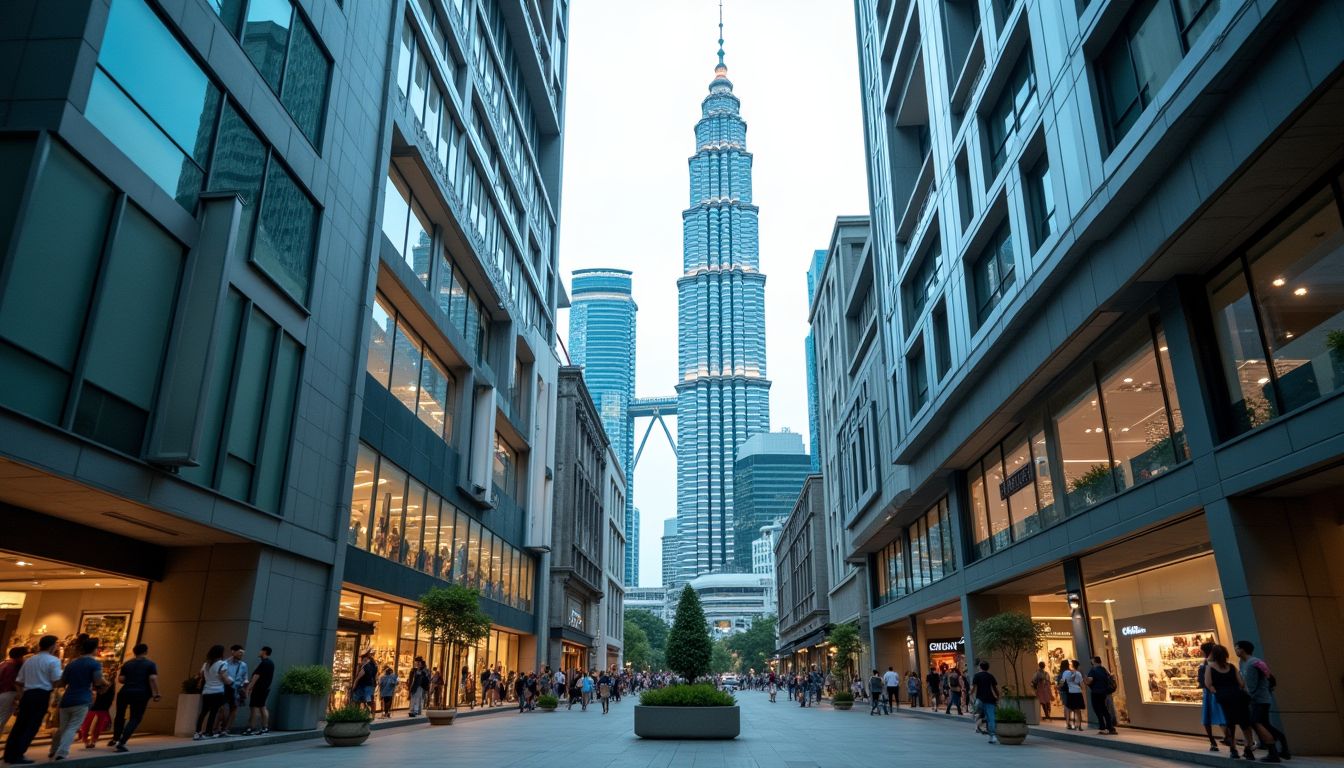
Walk through any mid-range mall in Kuala Lumpur on a Tuesday evening — say, the ground floor of Aeon at Bukit Tinggi — and something quiet but telling is happening. A woman in her late twenties pauses at a display, phone out, not to check prices but to cross-reference a look she screenshot from a Chinese drama two nights ago. Three racks away, a man in his thirties is squinting at a skincare shelf he would not have visited eighteen months ago. These are not outliers. These are signals.
Malaysia's lifestyle industry in 2025 is being shaped by forces that don't always announce themselves in press releases. They live in scroll behaviour, in fan communities, in the slow creep of wellness spending into ordinary budgets. What follows is a practical field guide for brand managers, marketers, and agency professionals trying to make sense of what's genuinely shifting — and what it means for strategy.
The C-Drama-to-Cart Pipeline Is Real, and It's Growing
If you've been watching the numbers on content-led commerce in Southeast Asia, you already know China's streaming boom has an outsized effect on Malaysian purchasing habits. But the mechanics are worth understanding clearly.
As reported by The Sun Malaysia, Malaysian fans are actively shopping celebrity-inspired products driven by C-drama consumption — and the journey from screen to checkout is compressing. It's no longer a two-week consideration cycle. It can be hours.
What this means practically: lifestyle brands operating in Malaysia need to think about cultural adjacency as a real distribution channel. The question isn't only "which platform should we advertise on?" It's "which narratives are our customers already living inside?" Brands like Padini, which has long understood the middle-market Malaysian wardrobe, and Uniqlo Malaysia, whose wardrobe-staples positioning makes it a natural beneficiary of drama-inspired minimalist dressing, are better placed than they might realise — if they're paying attention to the content their customers are consuming.
For brands wanting to act on this, creator-led content is the most direct lever. Platforms like Creamatch, Malaysia's managed creator content platform, are increasingly the operational layer connecting lifestyle brands to the fan communities already doing this work organically.
The Wellness Conversation Is Changing — But the Budget Isn't Infinite
The second major current running through Malaysia's lifestyle market is wellness — but it's a more complicated story than the aspirational version often told in brand decks.
Globally, we're seeing the emergence of what some are calling "affordable longevity" — Swedish health startup Neko, for instance, has built a 300,000-person waiting list for health scanning services, positioning itself as accessible premium care. In Malaysia, the conversation is equally urgent but filtered through a very different economic reality. As Free Malaysia Today has covered, Malaysia's public healthcare system is under serious structural pressure, which is quietly accelerating private and preventive wellness spending among those who can afford it.
For lifestyle marketers, this creates a bifurcated opportunity: premium wellness for the upper-middle segment and functional, affordable wellness for the mass market. Mr DIY, for instance, has demonstrated that Malaysians will spend thoughtfully on home improvement and daily-life quality when value is clear. The same logic applies to wellness products — the willingness is there; the value proposition has to be airtight.
The men's grooming category is one of the sharpest expressions of this shift. The global men's beauty boom — driven partly by what industry observers are calling the "manosphere" reframing of self-care as performance and discipline rather than vanity — is landing in Malaysia in ways brand managers have not fully priced in yet. Men in their twenties and thirties are not just buying face wash. They are buying a story about what it means to be well. Lifestyle brands that understand this subtext will capture the category. Those selling SKUs without narrative will be competing purely on price.
AI and the Changing Architecture of Purchase Decisions
A third force — less visible but accelerating — is the role of AI in how Malaysians are beginning to navigate purchase choices. Accenture's survey of over 25,000 consumers across 16 countries found that more than a quarter would be willing to let AI systems guide their buying decisions. That number, applied to Malaysia's digitally active middle class, is not trivial.
The implications for lifestyle brands are structural, not just tactical. If AI agents begin to intermediate discovery — filtering products based on stated values, past behaviour, or sustainability criteria — then brand positioning clarity becomes more important than ever. A brand that is legible to an algorithm (consistent values, clear category signals, strong review architecture) will be surfaced. A brand that is vague will disappear upstream of the purchase decision.
This is also where the intersection of technology and culture becomes commercially interesting. Snapchat's new AR Specs, launched with a campaign featuring global talents like Hoyeon and Kaia Gerber, signal where immersive commerce is heading. Malaysia's young lifestyle consumer is not years behind these trends — they are actively participating in the same global digital culture. Brands tracking this evolution can stay ahead of it through tools like Verbrol Pulse, which surfaces real-time shifts in consumer sentiment across Southeast Asian markets.
Culture as Commercial Infrastructure
Perhaps the most undervalued insight in this moment is that culture is not soft context for Malaysian lifestyle marketing — it is hard infrastructure.
The resonance of a Korean school-bullying K-drama across Malaysian audiences — described by viewers themselves as deeply relatable to their own experiences — tells us something important. Malaysian audiences are not passive recipients of global content. They are active interpreters, mapping international stories onto local experience.
The Black Cat Dance Theatre's work bridging Malaysia and Indonesia reflects another dimension of this — the appetite for cultural storytelling that is regionally rooted rather than purely Western-facing. For lifestyle brands, this is both a creative and a commercial signal: authenticity that acknowledges Malaysia's specific cultural complexity will resonate more deeply than polished international-export aesthetics.
Bonia, which has spent years constructing a luxury-adjacent identity that is unmistakably Malaysian rather than apologetically derivative of European fashion houses, understands this instinctively. Parkson, navigating the pressures of a changing mall landscape, has a harder road — its challenge is less about culture and more about relevance in a world where the physical and digital have merged. For further context on regional retail movement, Bernama remains one of the most reliable primary sources for ground-level market developments across Malaysian industry sectors.
Actionable Takeaways for Brand Professionals
- Map your cultural adjacency. Know which narratives — streaming, music, sport, regional identity — your core customers are living inside. Build content that speaks from within those narratives, not about them.
- Treat men's wellness as a category in formation, not a niche. The window to establish brand presence before it consolidates is open now, not in two years.
- Audit your brand legibility for algorithmic discovery. As AI intermediates more purchase decisions, consistency of positioning and richness of review data will determine visibility.
- Invest in creator infrastructure before you need it. Platforms like Creamatch allow brands to build managed creator relationships that activate quickly when a cultural moment arrives — rather than scrambling to catch it after the fact.
- Follow the cultural institutions. Arts, performance, and community storytelling are early-warning systems for lifestyle values that commercial brands will eventually need to reflect. Keep The Star and Bernama in your reading rotation for signals that don't arrive through brand channels.
Malaysia's lifestyle market in 2025 is not a single story. It is a conversation — between global forces and local feeling, between aspirational spending and genuine financial caution, between digital acceleration and the stubborn human need to see yourself reflected in what you buy. The brands that win will be the ones listening closely enough to know which part of that conversation to step into, and when.
Track Lifestyle trends in real-time at verbrol.com
Read more on Verbrol Intelligence: